Repairs · Binbrook
Garage Door Bottom Seal Replacement in Binbrook
The strip under the door has gone as hard as a hose left out for ten summers.
In plain words
What you have afterwards is a door that closes onto a single soft line of contact from jamb to jamb. Daylight under the door is much reduced, the draft across the floor eases, wind-blown leaves and snow are kept out more effectively, and the tighter gap makes the route in harder for mice. The opener has been reset so the door lands gently on the new strip instead of pressing it flat. You also leave knowing the seal's profile and size, which makes the next replacement a matter of one phone call, and a couple of simple habits for winter that keep the new seal from freezing to the floor.
How the visit goesAfter a spring rain there is a puddle inside the door that reaches the tires. The driveway slopes toward the garage, the slab has a low corner, and the flattened old seal is not making up the difference.
Garage Door Bottom Seal Replacement
How the visit goes
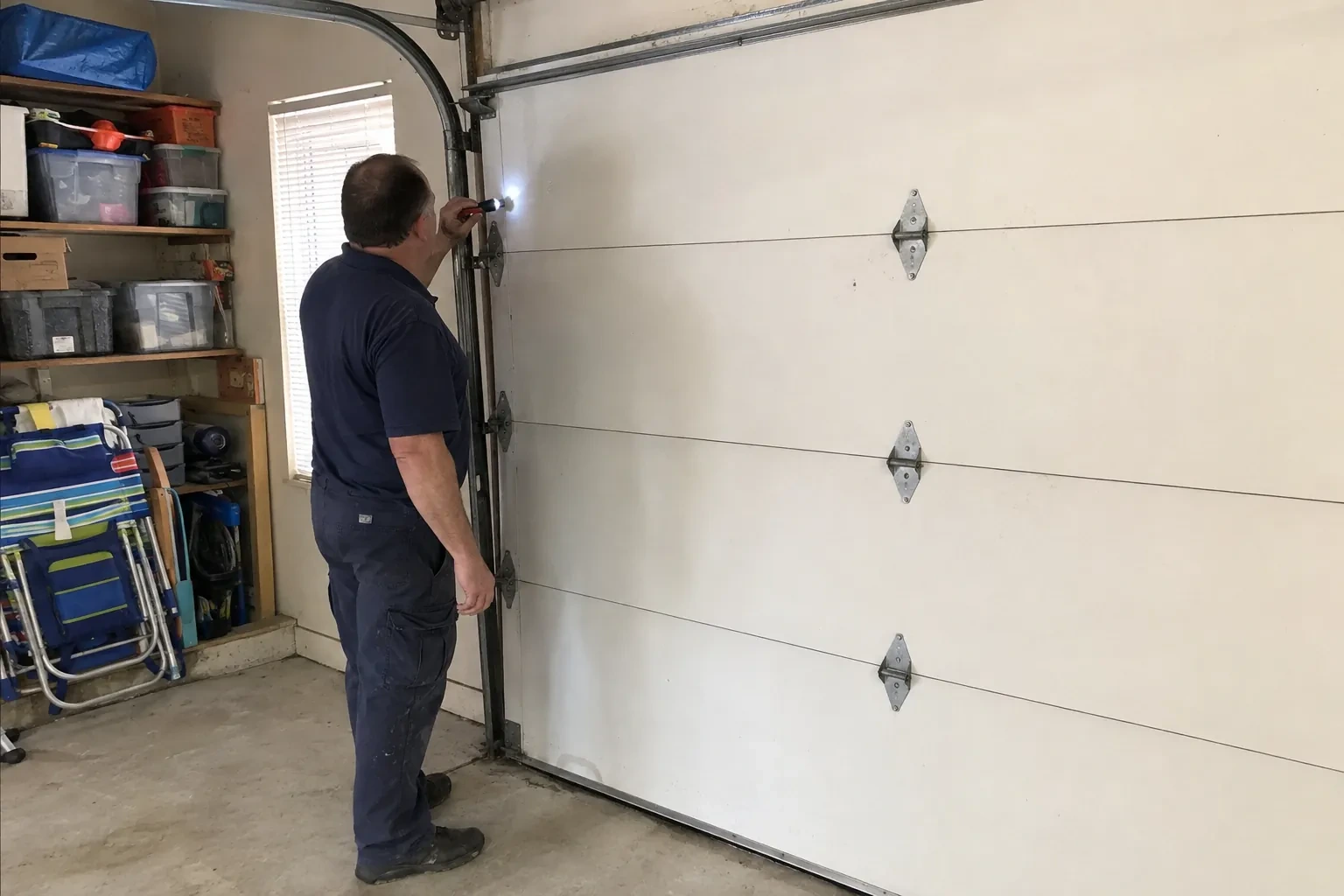
The bottom section and its rail
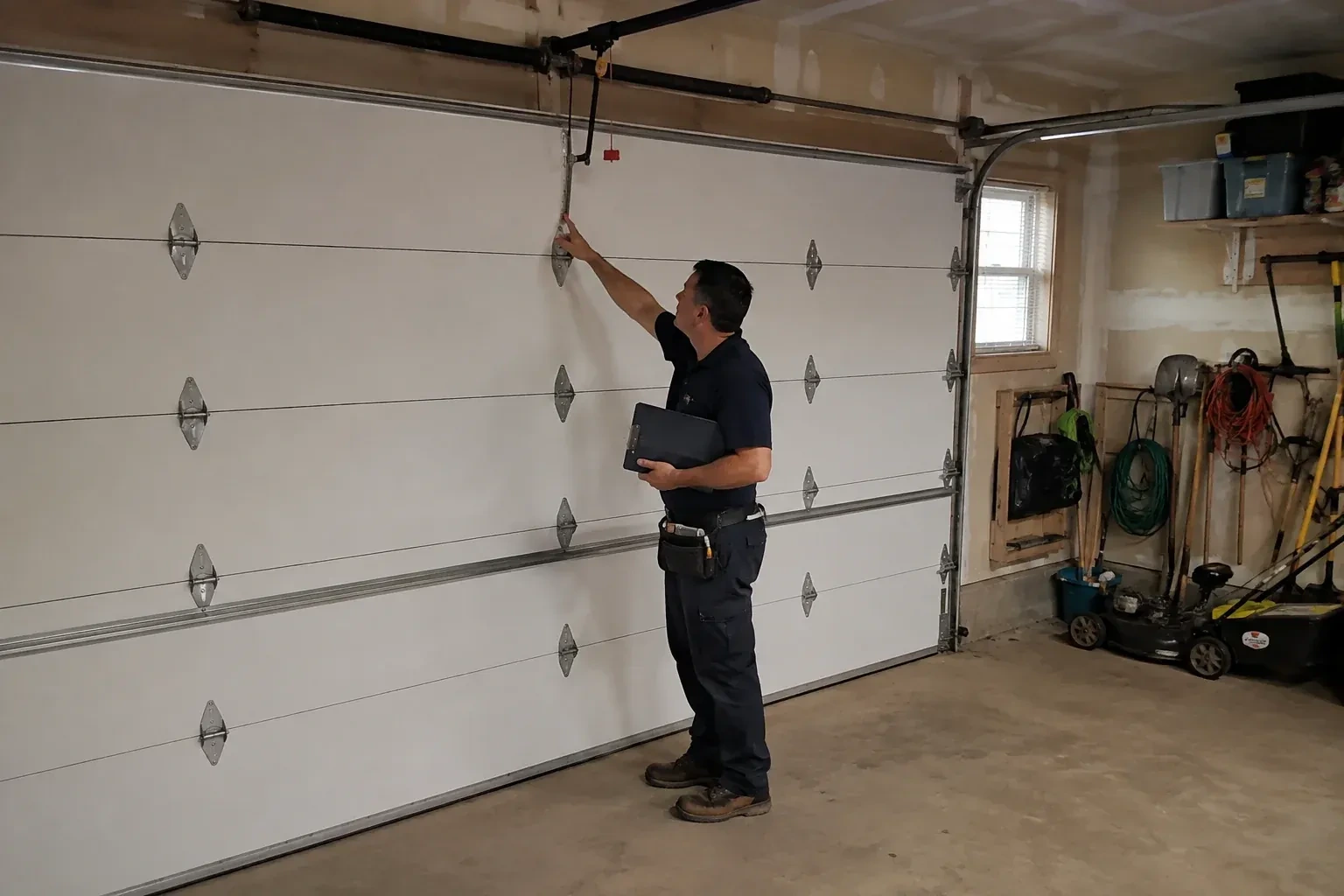
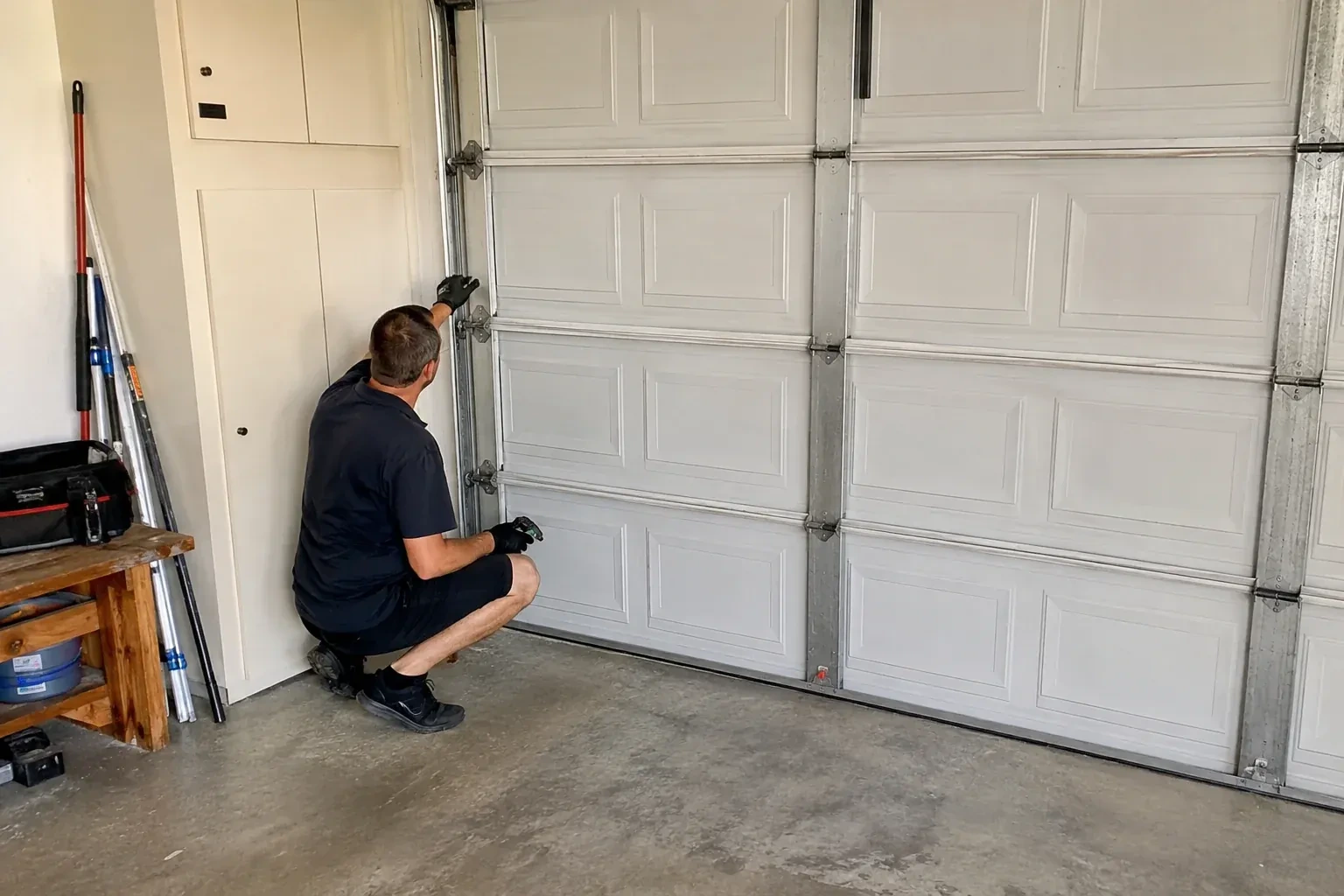
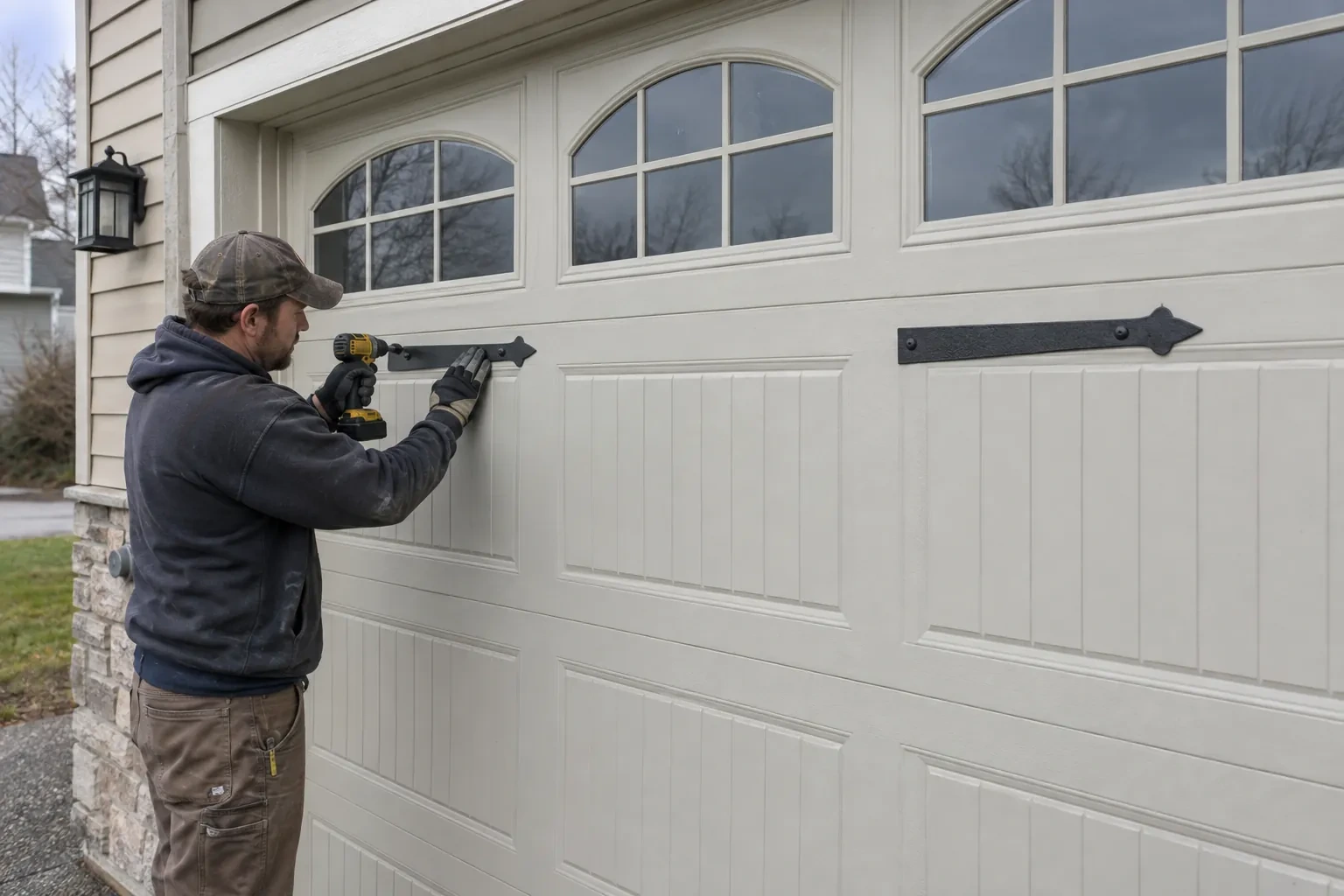
The seal can only be as straight as the edge it hangs from, so the bottom section gets a careful look. On a steel door the technician checks the bottom rail for rust where salt water has sat, dents from a bumper or a shovel, and any bow across the width. On a wood door the rail is checked for rot, cupping and the upturned corners of an old door that has dried unevenly. Fasteners for the retainer and the bottom brackets are checked for corrosion. A sound, straight rail lets a standard seal do its job; a damaged one is pointed out so you can decide on repair, a taller seal, or both.
Fitting a new retainer where needed
If the inspection found a retainer that is bent, corroded or spread open, it is replaced before the seal goes in. The old extrusion is unscrewed or its rivets drilled out, the bottom rail is cleaned and any rust treated, and a new aluminum retainer is fixed straight along the rail with fresh self-drilling screws, checked with a straightedge so the channels run true. Fastener heads are sealed against meltwater. On a door whose channel was moulded into a plastic bottom cap, a screw-on retainer is fitted over the rail so a standard seal can be used from now on.
A door that meets the floor in one line
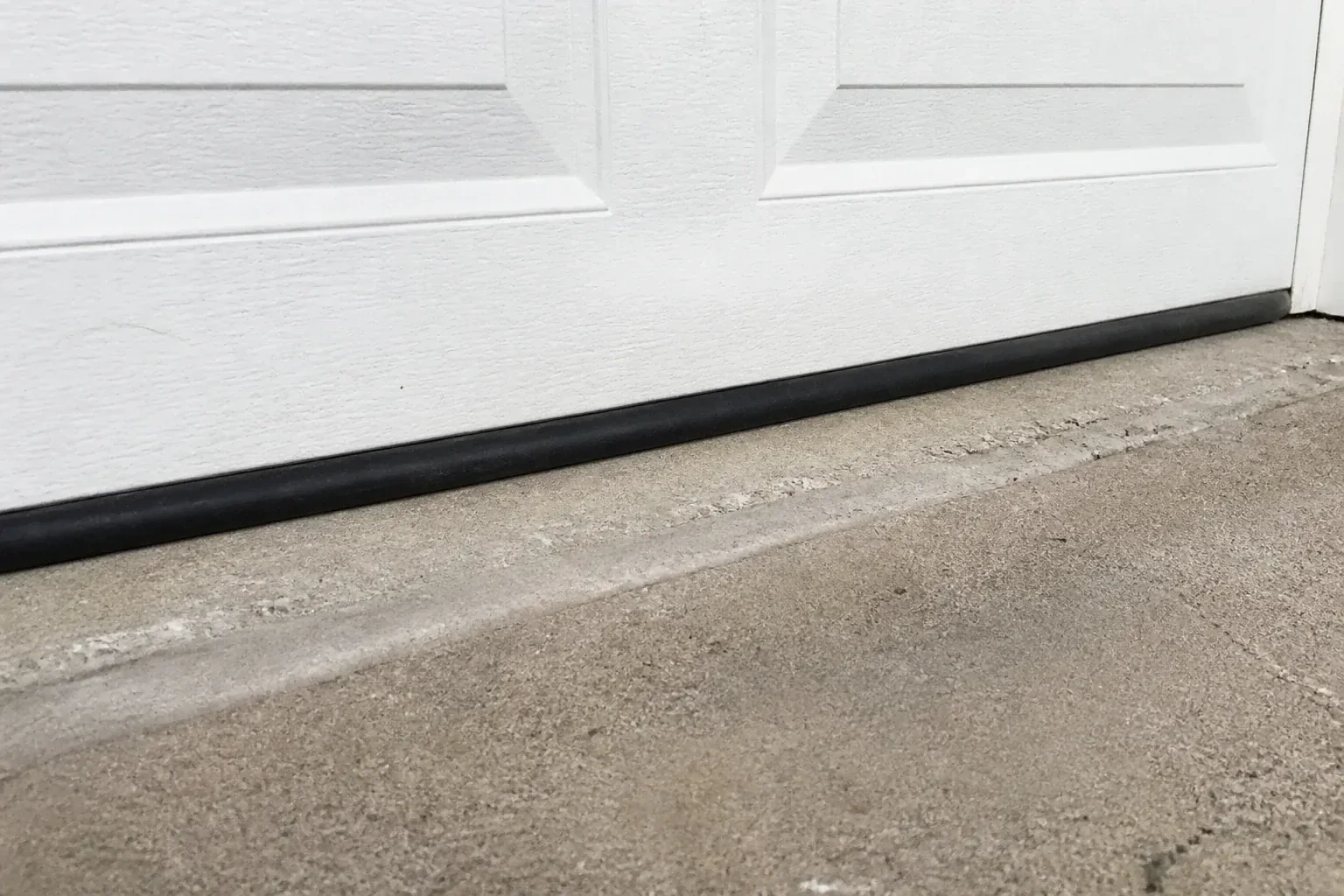
The first thing you notice is the absence of daylight. With the door closed and the lights off, the floor line is dark from one jamb to the other, and the draft that used to move across the floor is much reduced. The door lands softly, because the opener now stops when the seal is gently compressed rather than driving the section into the concrete. Leaves, grit and drifting snow are kept out far more often. If you crouch and look, the new bulb sits evenly along the slab, filling the low corner the old strip used to hover above.
Garage Door Bottom Seal Replacement
In the van
Track clamps
Seal end caps
Self-drilling retainer screws
Threshold seal and adhesive
T-style bottom seal
Garage Door Bottom Seal Replacement
What affects the quote
Bottom section repairs
A rusted, dented or bowed steel bottom rail, or a rotted wood rail, is pointed out and any repair or reinforcement offered as an option beside the seal work.
Opener adjustment
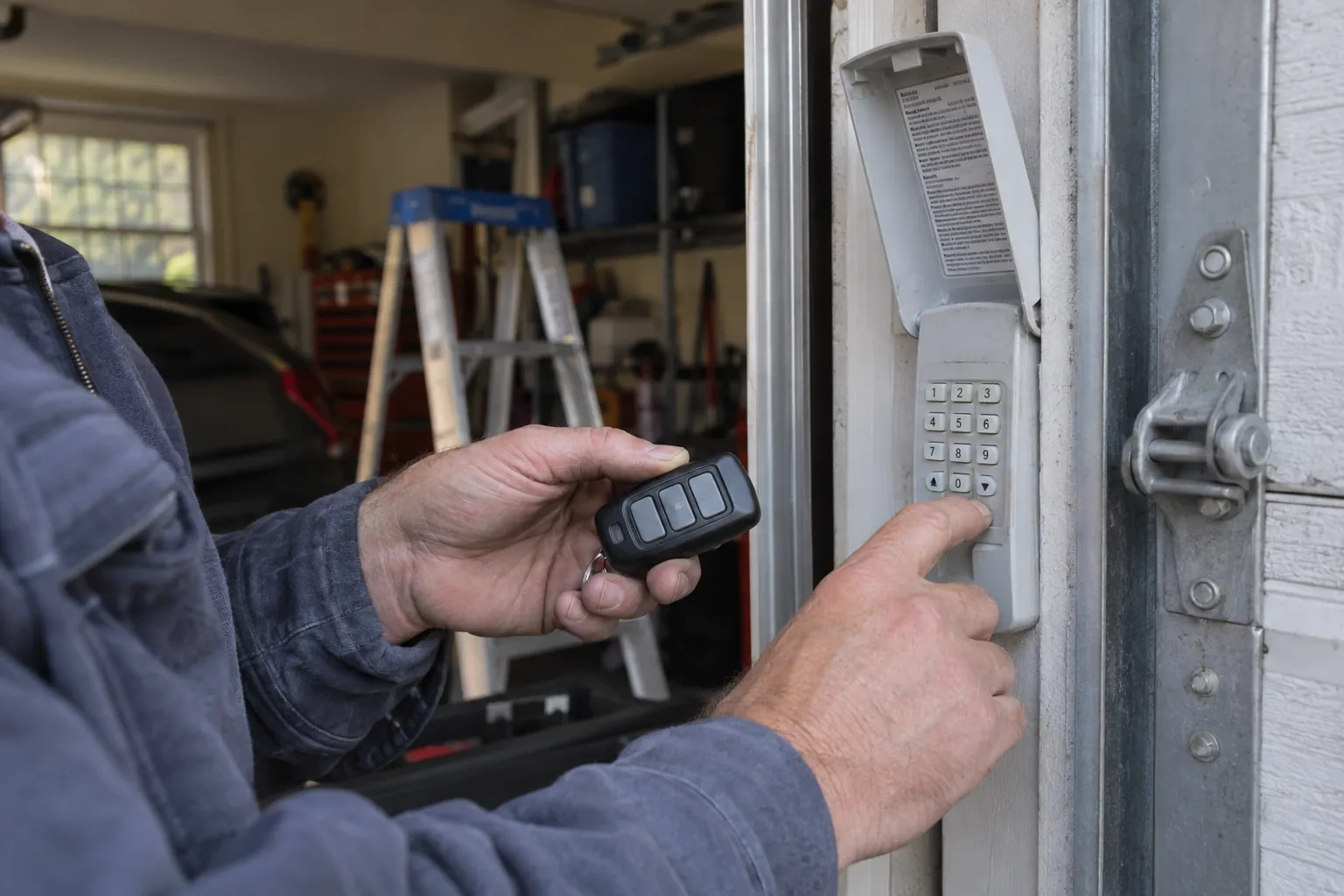
Resetting the down limit and force and repeating the reversing test after a taller seal is fitted is a short step that the quote names whenever the door has an opener.
Floor and threshold shape
A dished, sloped or heaved slab may call for a taller bulb profile or a threshold seal on the floor, each of which is quoted as a separate choice you can accept or leave.
What to have ready
- Is the door a single or a double, and roughly how wide?
- Does the door stop short of the floor or reverse before it closes?
- Has the seal frozen to the floor this winter?
Garage Door Bottom Seal Replacement: questions
QuestionsShould the side and top weatherstripping be replaced at the same time?
It is worth having them looked at while the technician is there. The vinyl fin on the stop moulding around the jambs and header shrinks, tears and hardens on the same schedule as the bottom seal, and a draft that survives a new bottom seal usually comes from the sides. Doing the perimeter in the same visit saves a return trip and leaves the door sealed on all four edges.
Can the seal be replaced in the middle of winter?
Yes, and winter is when most people notice they need one. Vinyl is stiffer in the cold, so the technician keeps the new roll warm until it is fed and takes a little longer working it across the channels. A seal frozen to the floor is freed by hand first. The door is then closed onto the new strip and the opener reset exactly as in summer, and the garage is sealed for the rest of the season.
How do I look after the new seal?
Wipe it clean of salt and grit a few times a year, and give it a light coat of silicone spray each autumn so meltwater has nothing to bond to. Keep petroleum products and solvents away from it, since they soften vinyl. Clear ice and packed snow from the threshold before running the door in winter. Once a season, look under the closed door for daylight. That is the whole routine.