Springs · Hamilton
Torsion Spring Replacement
After pulling the red release cord, you tried lifting the door yourself and it would barely leave the floor.
In plain words
Think of the opener as a helper, not a lifter. It is built to push and pull a door that already weighs almost nothing thanks to the springs; asking it to hoist a full-weight door strains the trolley, bends the top section and wears the gear drive. Spring replacement puts the load back where it belongs. After fitting and winding the new spring, the technician balances the door, then reconnects the opener and resets its force and travel settings so it runs within its design limits. Owners usually notice the opener sounds calmer and the door moves more evenly afterwards.
How the visit goesThe door starts to rise, gets about the height of your knee, then shudders and reverses. The opener sounds strained, and the top section flexes as the trolley pulls on it, because the motor is doing work the spring used to do.
Torsion Spring Replacement
How the visit goes
Reading the spring itself
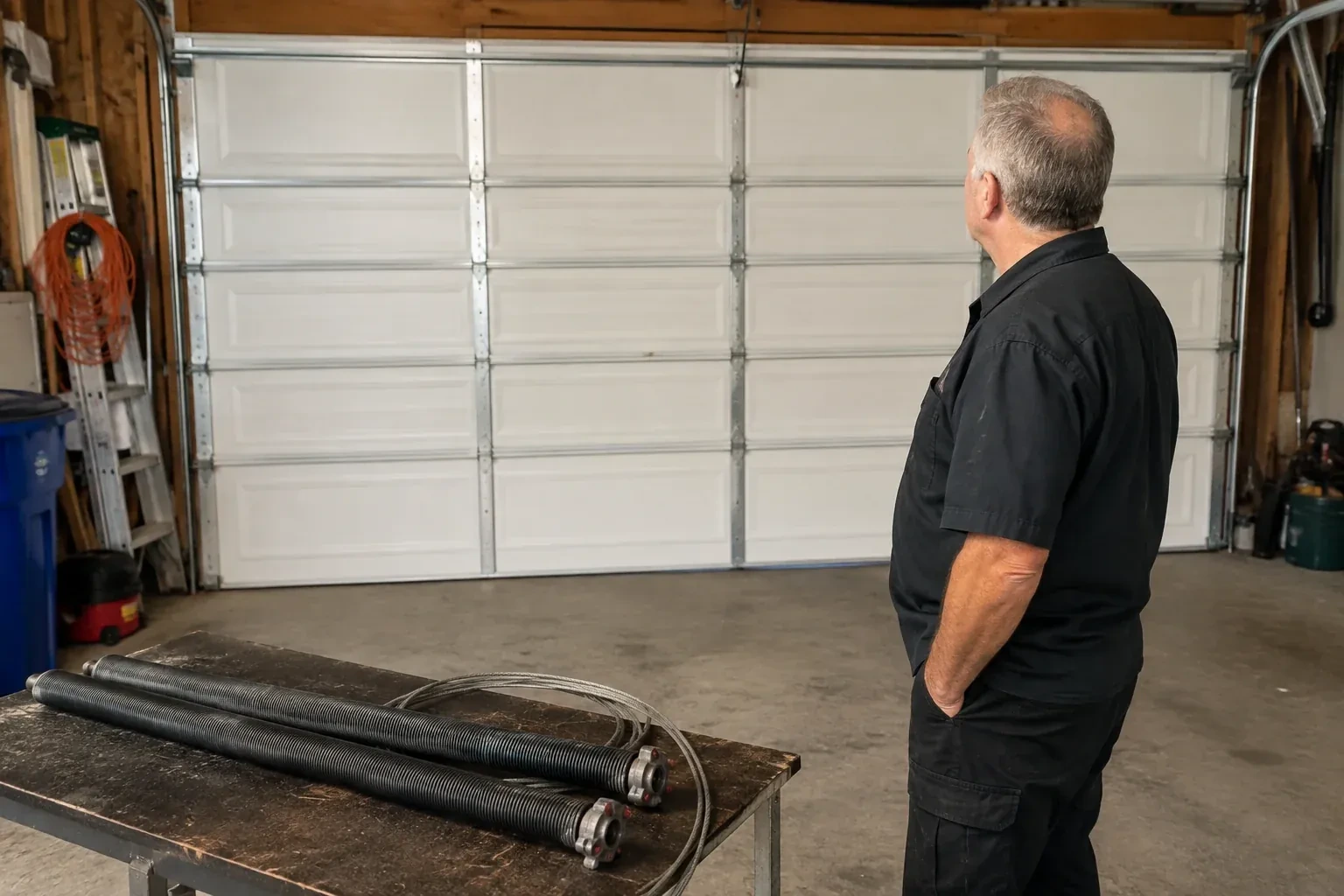
The first measurements come from the spring that is already on the shaft. The technician measures wire thickness across a run of ten or twenty coils, the inside diameter of the coil, the overall length of the spring when relaxed, and the wind direction, which is read from how the coils lean. On a two-spring door each spring is checked separately, because a left-wound and a right-wound spring sit on either side of the centre bracket. Any tag or colour marking is noted too. These numbers narrow down what the door was built with, and together with the door's weight they point to the correct replacement.
Winding with control
Winding is where a spring takes on its working tension, and it is done with two solid steel bars sized to the holes in the winding cone. The technician stands to the side of the cone, inserts one bar, turns a quarter turn, inserts the second bar, and transfers the load from bar to bar so the spring is never held by less than a full bar. The number of quarter turns is counted against the door height and drum type. When the count is reached, the spring is stretched slightly toward the drum and the set screws are tightened to the shaft while the last bar still carries the load.
What cycle life means for you
The spring you chose is rated for a number of full open-close cycles, and that number translates into years according to your routine. A standard-cycle spring on a door used four times a day works out to several years of service; a household with teenagers and a home workshop will use cycles sooner, while a high-cycle spring stretches the same routine considerably further. Knowing your rating and your habits gives you a rough sense of when the next replacement falls due, so spring service becomes a planned item like furnace maintenance rather than a surprise on a cold morning.
Torsion Spring Replacement
In the van
Torsion springs, oil-tempered or galvanized
Torsion shaft and coupler
Lift cables
Cable drums
Wire gauge and tape measure
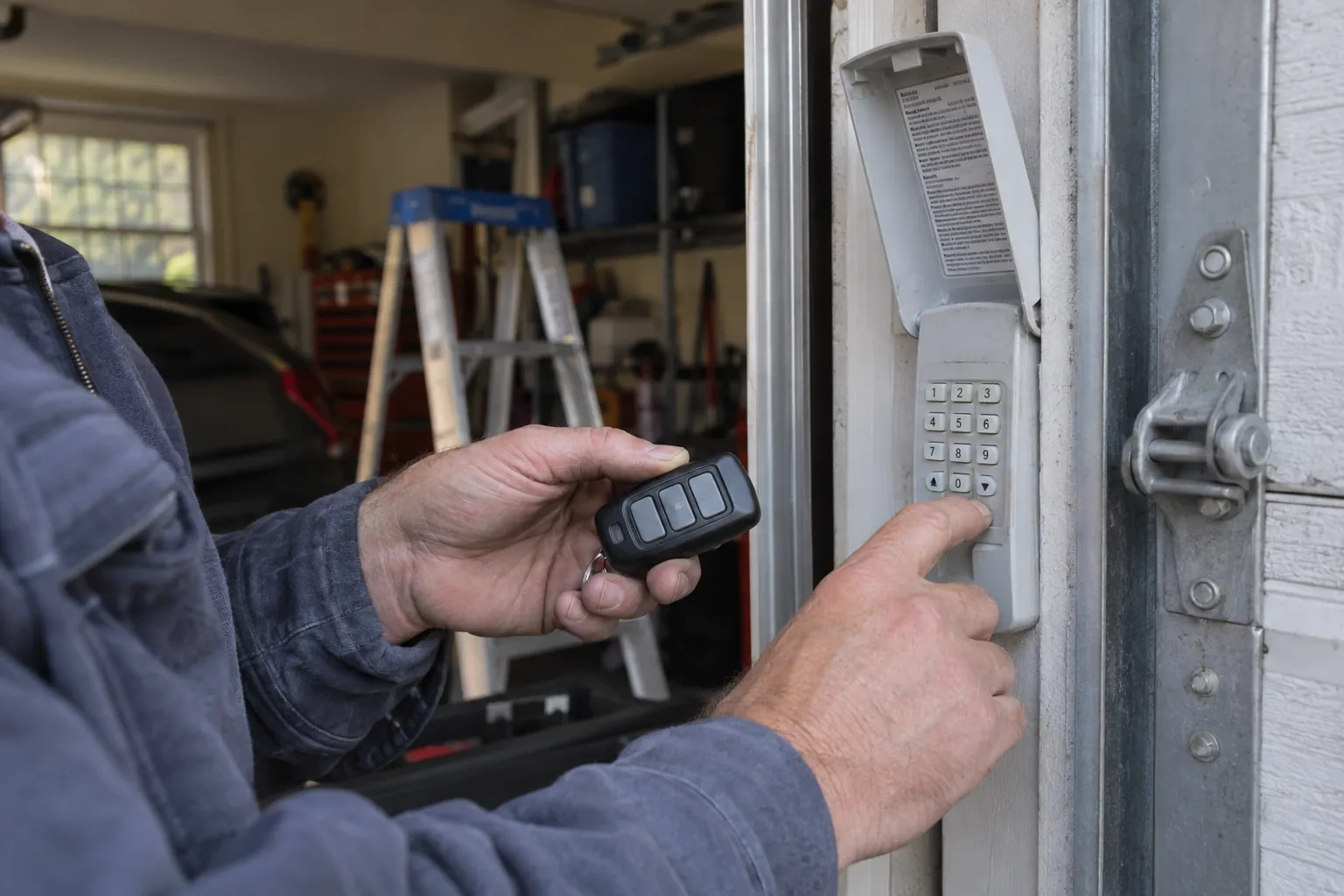
Torsion Spring Replacement
What affects the quote
Drum type and lift configuration
Standard-lift drums are the common case. High-lift, vertical-lift or low-headroom arrangements use different drums, cable lengths and turn counts, which changes the parts and the time involved.
Access and working space
A vehicle that stays inside, shelving under the shaft, a very high ceiling or a tight side clearance affects how the technician sets up and how long the visit runs.
Oversize or non-standard doors
Very wide doors, tall doors, carriage-house doors with heavy overlays and light-commercial doors may need duplex springs, multiple springs or larger drums, which changes both the hardware and the method.
What to have ready
- Do you know the door's age or when the springs were last replaced?
- About how many times a day does the door open and close?
- Is the door currently closed, open, or stuck partway?
Torsion Spring Replacement: questions
QuestionsWhat is the difference between torsion and extension springs?
Torsion springs mount on a shaft above the door and twist to store energy, lifting the door through cables and drums. Extension springs run alongside the horizontal tracks and stretch as the door closes, pulling it up through pulleys. Torsion systems tend to lift more evenly, take up less space beside the tracks and are the standard on most modern doors. Both are professional service items because of the energy they hold.
What other parts are often replaced with the spring?
The shaft is free during a spring change, which makes it the natural time to renew the centre bearing and end bearings if they grind or wobble. Lift cables that show fraying or rust at the bottom brackets are replaced so the new spring pulls on sound steel, and cracked or worn drums are swapped. On older doors, a corroded centre bracket or loose lag bolts may also be addressed. Each item is shown and explained before it is added.
Will the new spring look the same as the old one?
Not necessarily, and that is fine. The paint colour on the winding cone or coil is a code that identifies wire size and wind direction, and different suppliers use their own schemes, so a matched replacement can carry a different colour than the spring it replaces. What matters is that the wire size, diameter, length and wind direction suit the door's weight and height, which is confirmed by the balance test.
Related services
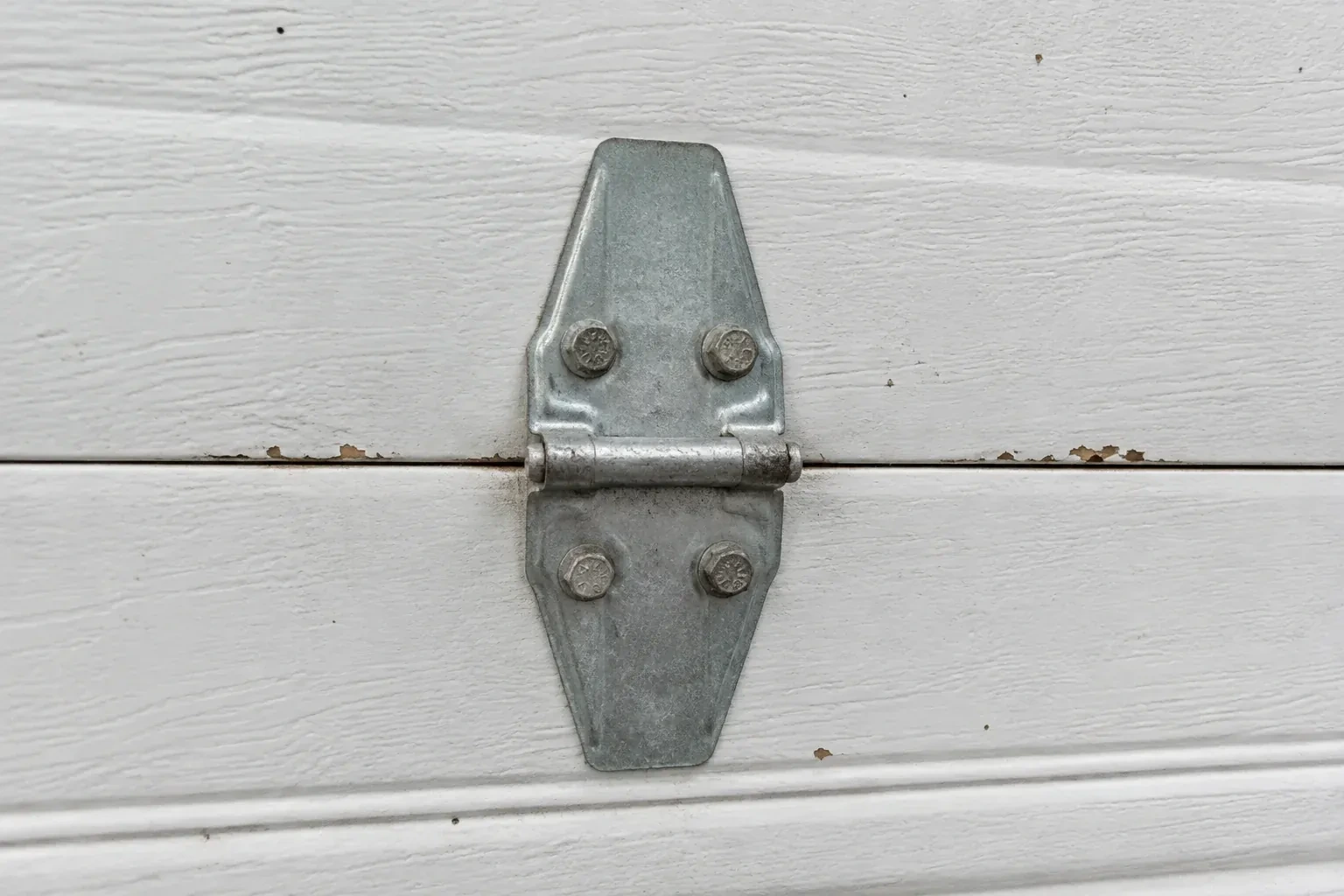
- Garage Door Hinge ReplacementPressing a hand against one of the middle hinges makes it rock on the panel.
- Garage Door Track Repair or ReplacementThe horizontal rail toward the back of the garage sags noticeably.
- Garage Door Cable ReplacementYour older door has springs along the tracks, and one cable has slipped off its pulley and dangles slack.