New Doors · Hamilton
Wind-Rated Garage Door Replacement
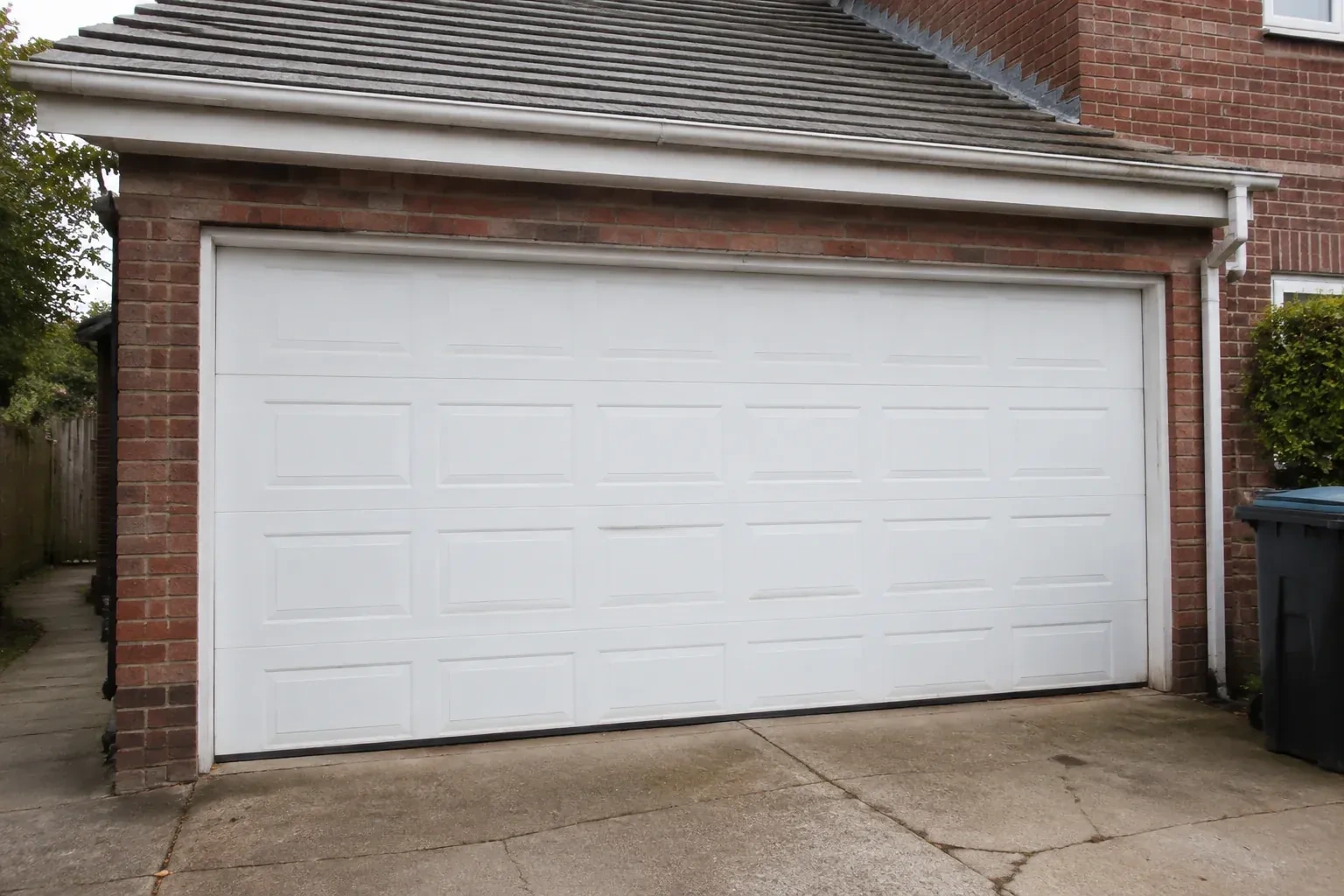
The current double door shudders when pressure changes outside, and daylight appears briefly along one edge.
In plain words
Wind-rated garage door replacement matches a complete new door system to the wind demands identified for a particular opening. Width, height, building exposure, framing, and project documentation guide the selection. Reinforced sections work together with specified struts, tracks, rollers, brackets, and anchors; the label alone is only one part of the picture. After the old assembly is removed, the new configuration is installed into sound jambs, balanced for its weight, connected to a suitable operator, and tested for controlled travel and safety reversal.
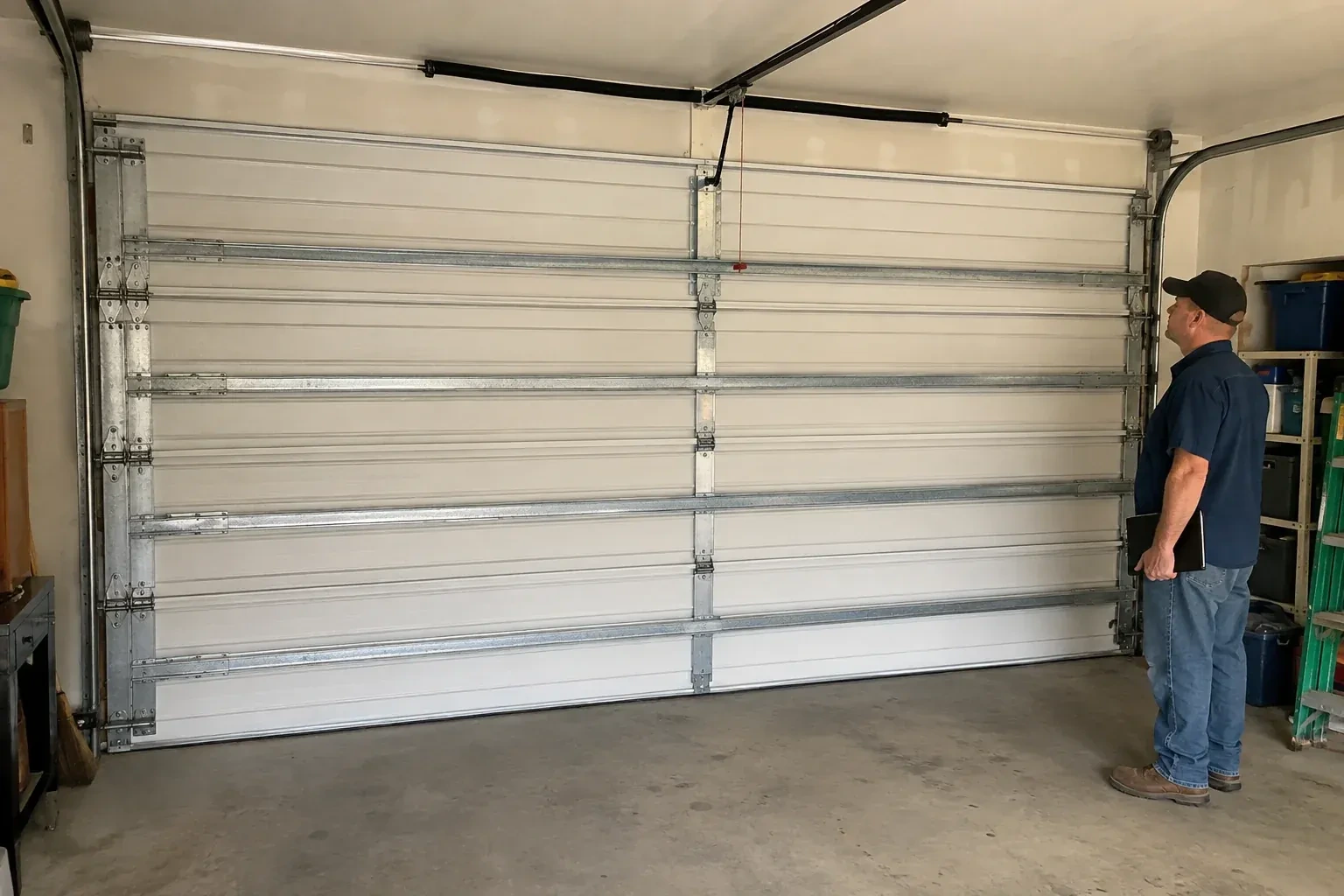
How the visit goesThe current double door shudders when pressure changes outside, and daylight appears briefly along one edge. Its tracks are light, the jamb material is aging, and no one knows which reinforcement was originally specified.
Wind-Rated Garage Door Replacement
How the visit goes
Map access and installation conditions
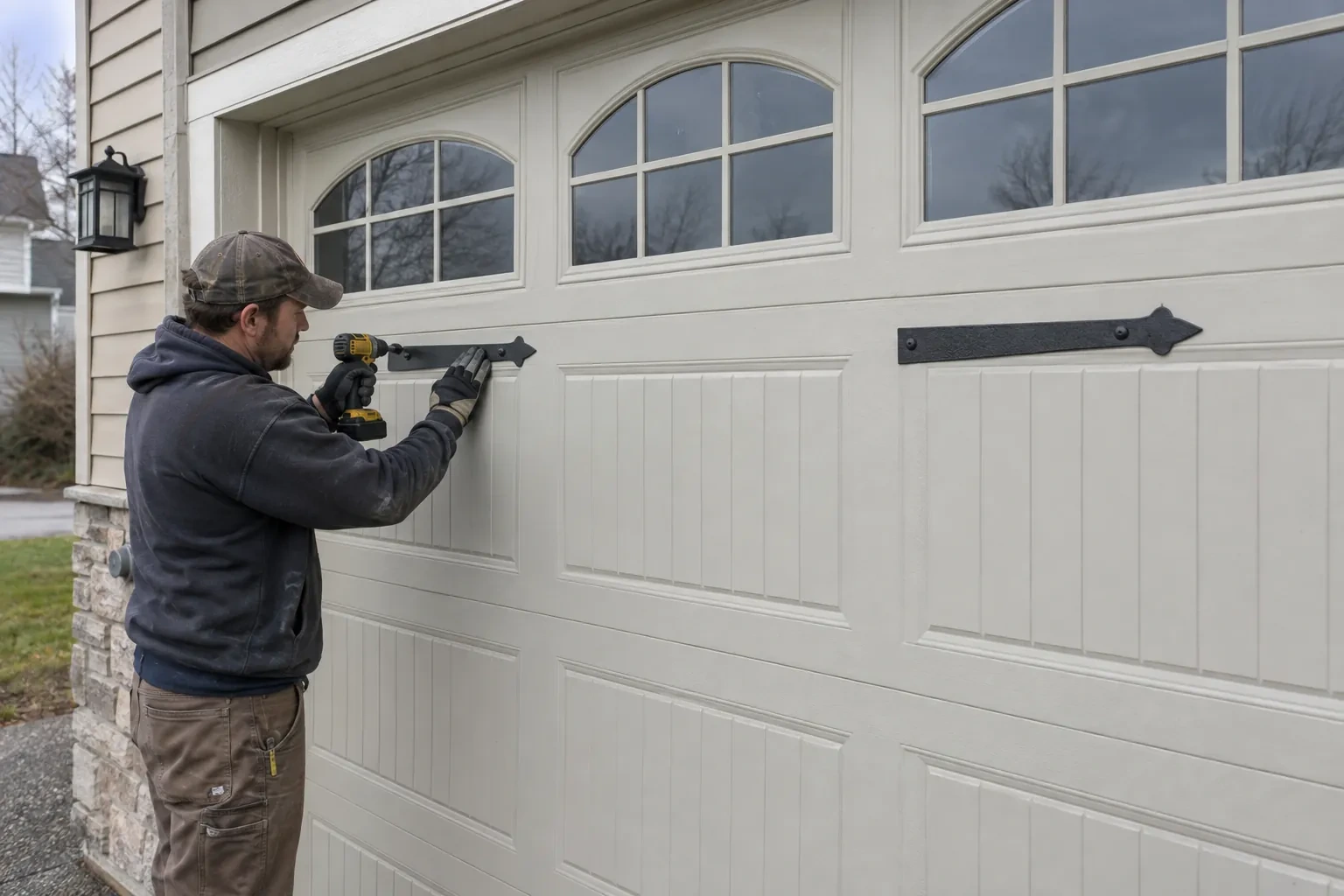
The final pre-work check covers the room needed to dismantle the old system and assemble the new one. Vehicles, storage racks, lighting, heaters, ducts, low ceilings, and finished walls can affect safe access or track support locations. The technician confirms a clear route for full-width sections and identifies surfaces that should be protected. Disposal requirements, electrical disconnection, permit responsibilities, and documentation handoff are also reviewed, turning the replacement from a product choice into an organized site plan.
Complete a documented handover
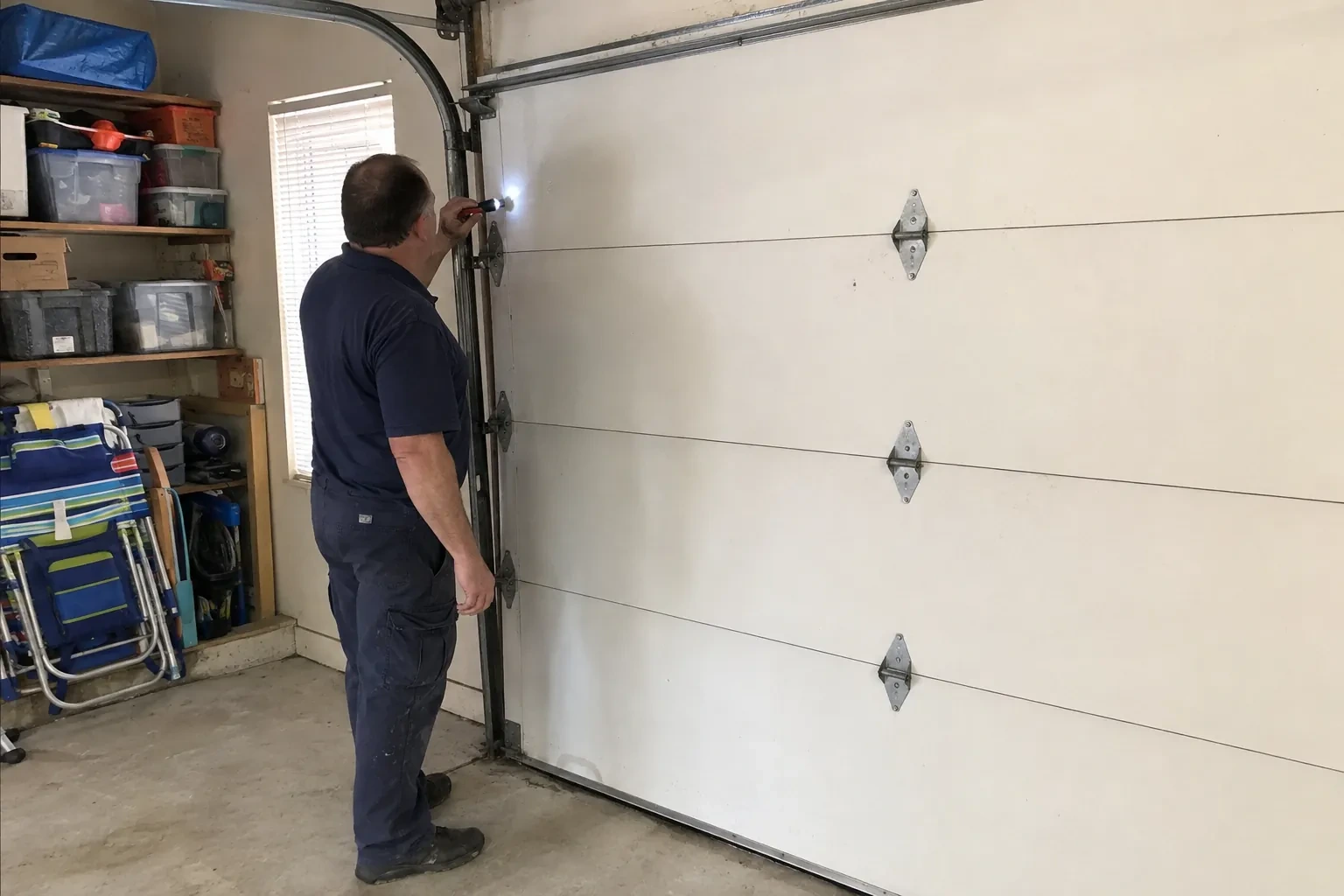
The finished system is inspected with the door closed, partly open, and fully raised. Technicians verify roller position, hinge and strut fasteners, track clearances, cable seating, spring balance, seal contact, locks, and operator behaviour. Labels and installation information are photographed or recorded, along with the door configuration and any coordinated framing work. The owner receives operating guidance and the relevant documents, creating a useful reference when future maintenance calls for matching hinges, rollers, reinforcement, or other components.
A steadier wide opening
The completed door brings sections, reinforcement, tracks, rollers, brackets, and anchors together as a system selected for the opening's criteria. During ordinary use, it should travel in a controlled line and close squarely against the perimeter seals. In windy weather, the purpose of the added structure is to manage pressure across the broad surface and carry those forces into the jambs. Owners can simply observe from indoors and report any new flex, rubbing, or hardware movement for assessment.
Wind-Rated Garage Door Replacement
In the van
Specified structural anchors
Winding bars and levels
Reinforced door sections
Wind-load track system
Jamb and flag brackets
Wind-Rated Garage Door Replacement
What affects the quote
Insulation and finish
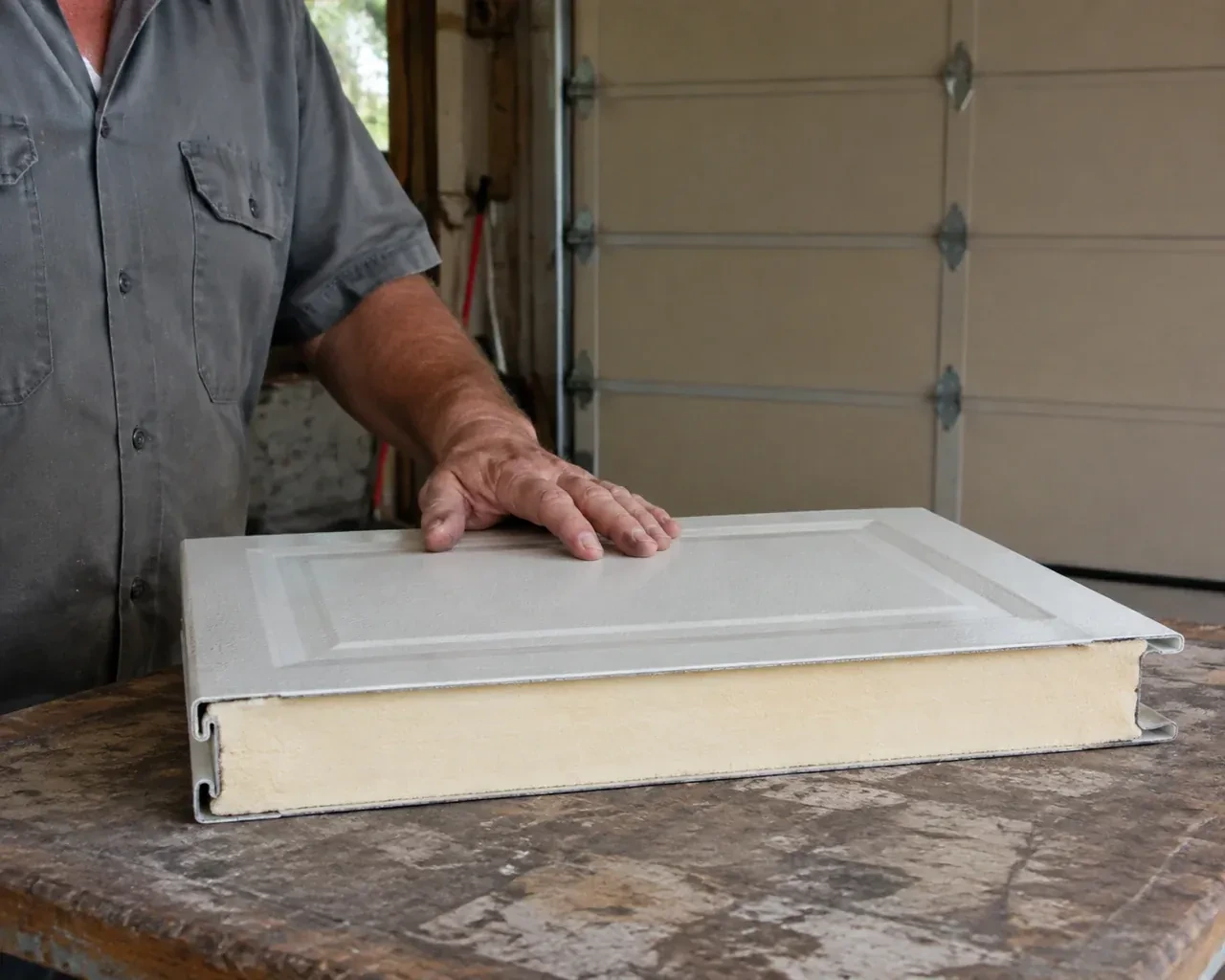
Thermal construction, interior backing, panel profile, exterior colour, decorative elements, and corrosion-resistant finishes determine the selected door sections and related hardware.
Section construction
Single-skin, insulated, and composite-core sections differ in weight and structure. The chosen profile and thickness affect the door package and counterbalance requirements.
Track and roller specification
Heavier track, additional brackets, longer roller stems, different hinges, or revised fastener spacing can be part of the assembly needed for the opening.
What to have ready
- Are the jambs wood, masonry, concrete, steel, or unknown?
- Can you share photos of the door labels and interior hardware?
- Does the current door bow, rattle, or shift during strong winds?
Wind-Rated Garage Door Replacement: questions
QuestionsHow are springs chosen for the new assembly?
Spring selection uses the completed door's weight, height, lift arrangement, drum geometry, and expected operating cycle. Reinforcement and windows are included in that calculation. After installation, technicians apply tension with proper winding tools and check manual balance through the travel range, adjusting both sides so cables remain even and the door stays controlled.
Should the door be inspected after a severe wind event?
An assessment is sensible when the door shows a new shape, sound, gap, scrape, or operating change. A technician examines sections, struts, hinges, rollers, tracks, anchors, cables, springs, and the opener connection as one system. Comparing those findings with the installation record helps identify whether adjustment, a matched component repair, or broader work is appropriate.
Why are both positive and negative pressures important?
Wind can push a closed door toward the garage or create suction that draws it outward. Those actions load sections and hardware differently, including rollers, hinges, tracks, and attachments at the jambs. A suitable configuration addresses both directions using the pressure values and details established for the project rather than treating reinforcement as resistance in only one direction.
Related services
- Insulated Steel Garage Door InstallationDaylight appears beside the closed door and powdery snow collects just inside after windy weather.
- Carriage-House Garage Door InstallationYour garage door works, yet its broad plain panels feel disconnected from the brick, gables and entry details around them.
- Full-View Glass Garage Door InstallationYour renovation has given the house clean modern lines, but the old raised-panel garage door now looks out of place.