Garage Doors in Ryckmans Corners, OntarioHeavy door.Steady hands.
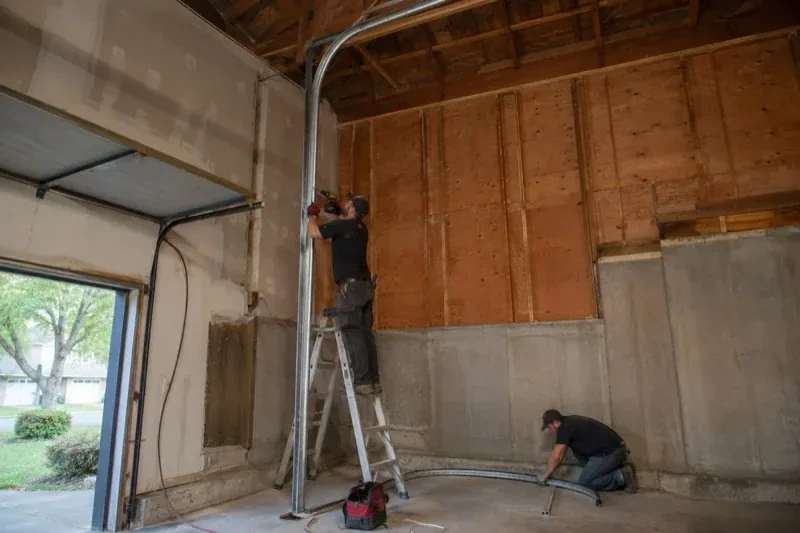
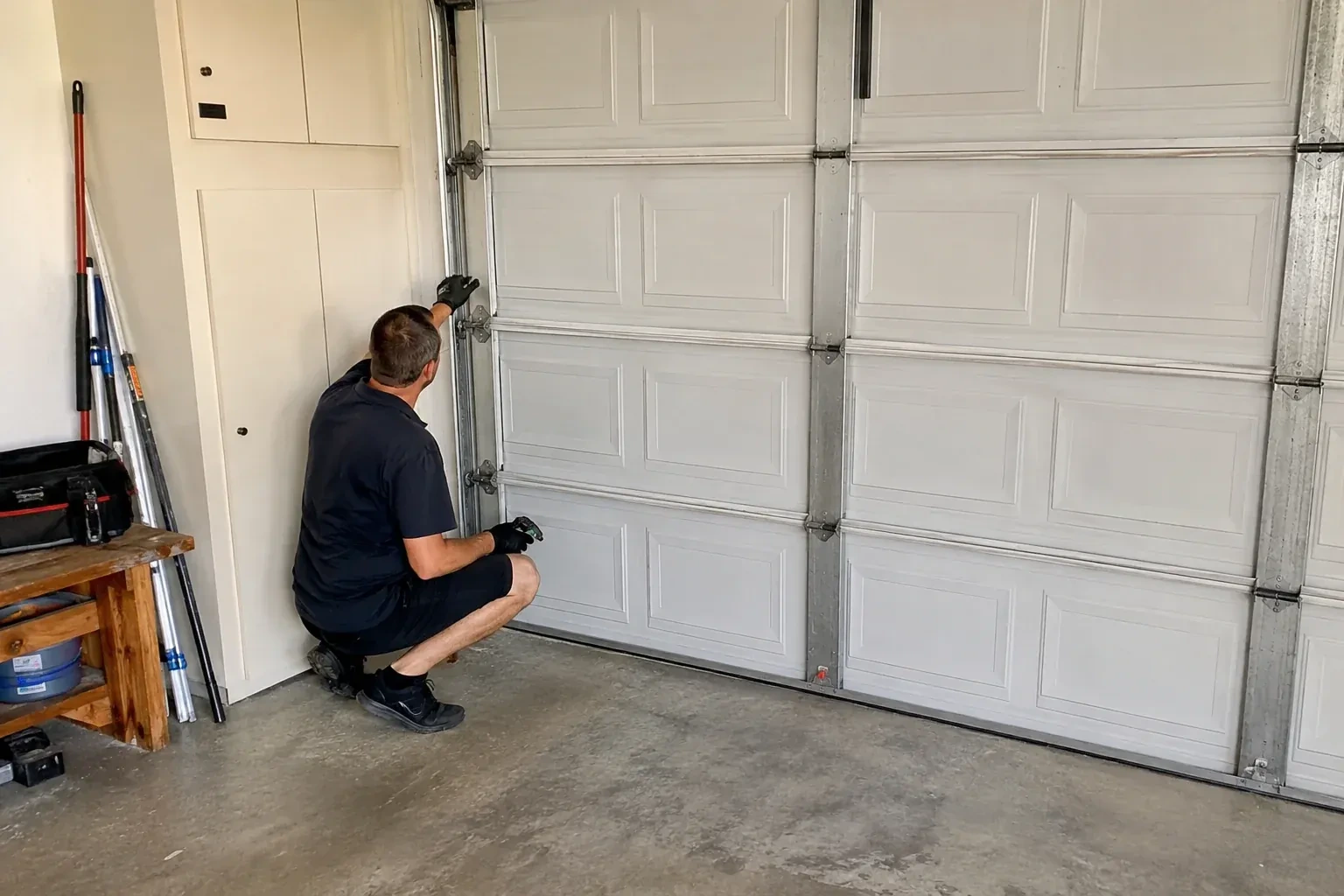
A residential garage door can weigh as much as two grown adults, and the springs above it are wound to carry exactly that load. Our technicians in Ryckmans Corners work with winding bars, clamps and stands, secure the door before touching tension, and run it through full cycles before they call the job finished. The same crew covers North Glanford.
A residential garage door can weigh as much as two grown adults, and the springs above it are wound to carry exactly that load. Our technicians in Ryckmans Corners work with winding bars, clamps and stands, secure the door before touching tension, and run it through full cycles before they call the job finished. The same crew covers North Glanford.
Residential and commercial doors, serviced properly.
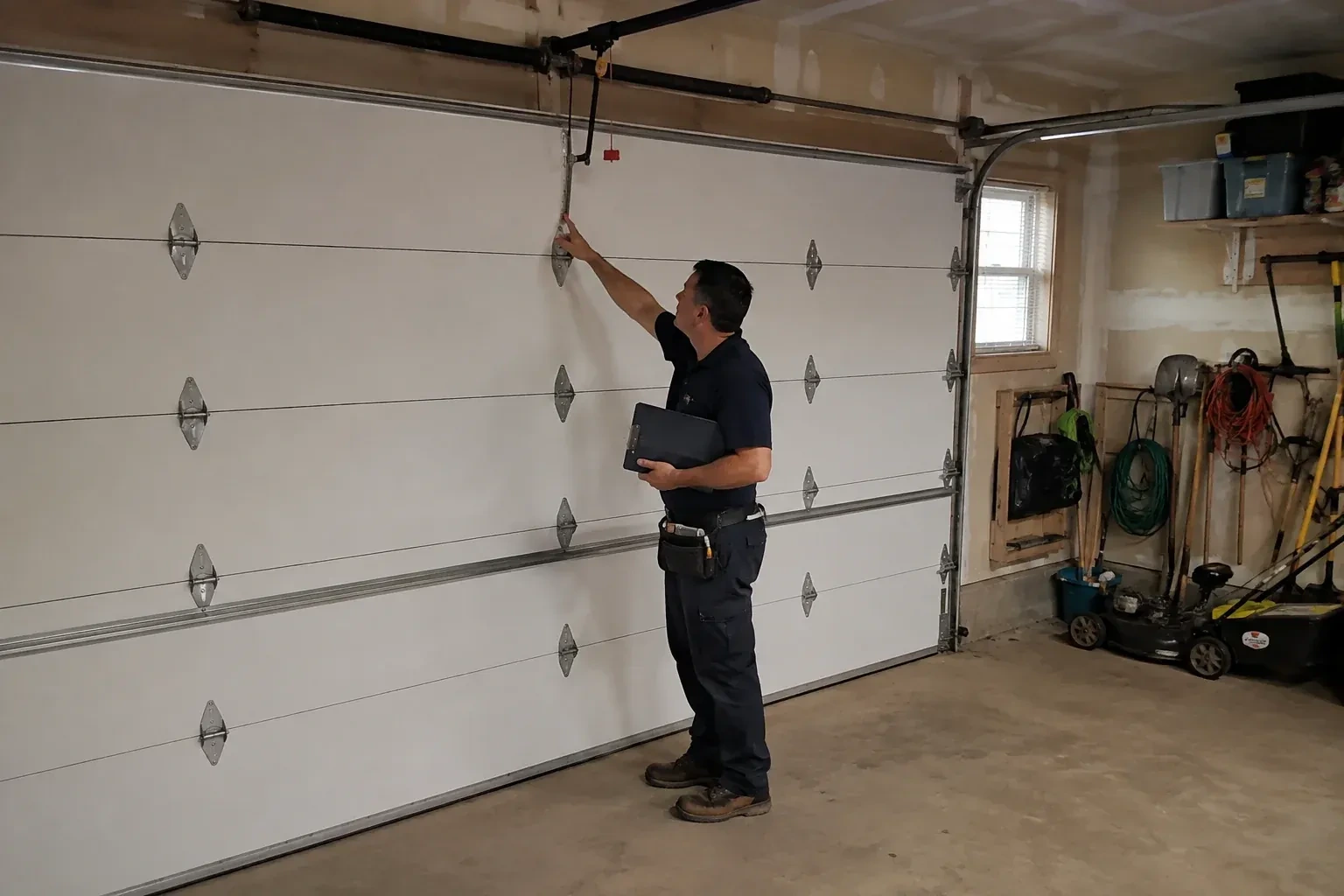
For homeowners in Ryckmans Corners who like to understand the work, we explain the mechanics: how a torsion spring stores the weight of the door, why cables fray at the bottom bracket, what the photo-eyes are looking for. For those who just want it fixed, we fix it and keep the explanation short.
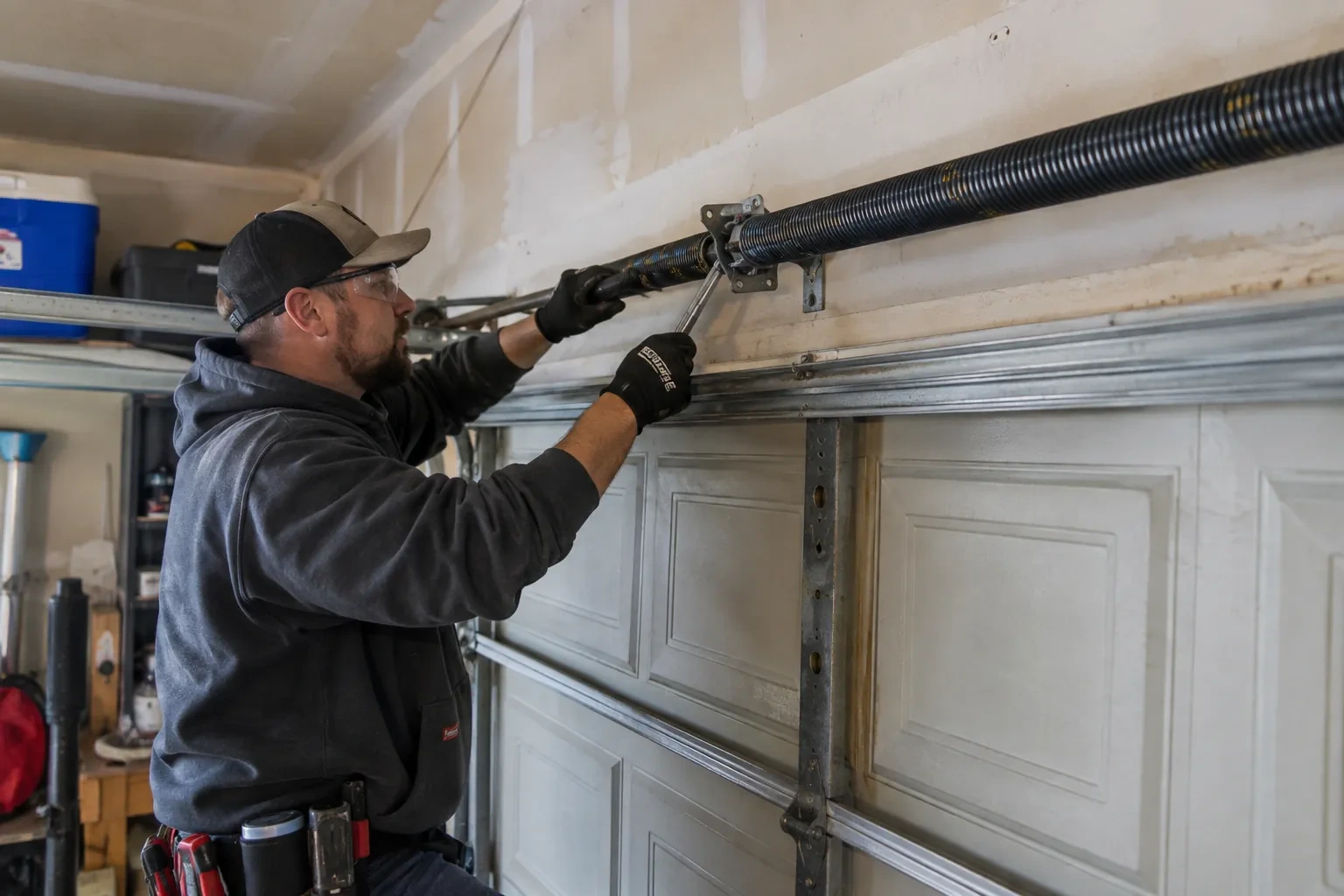
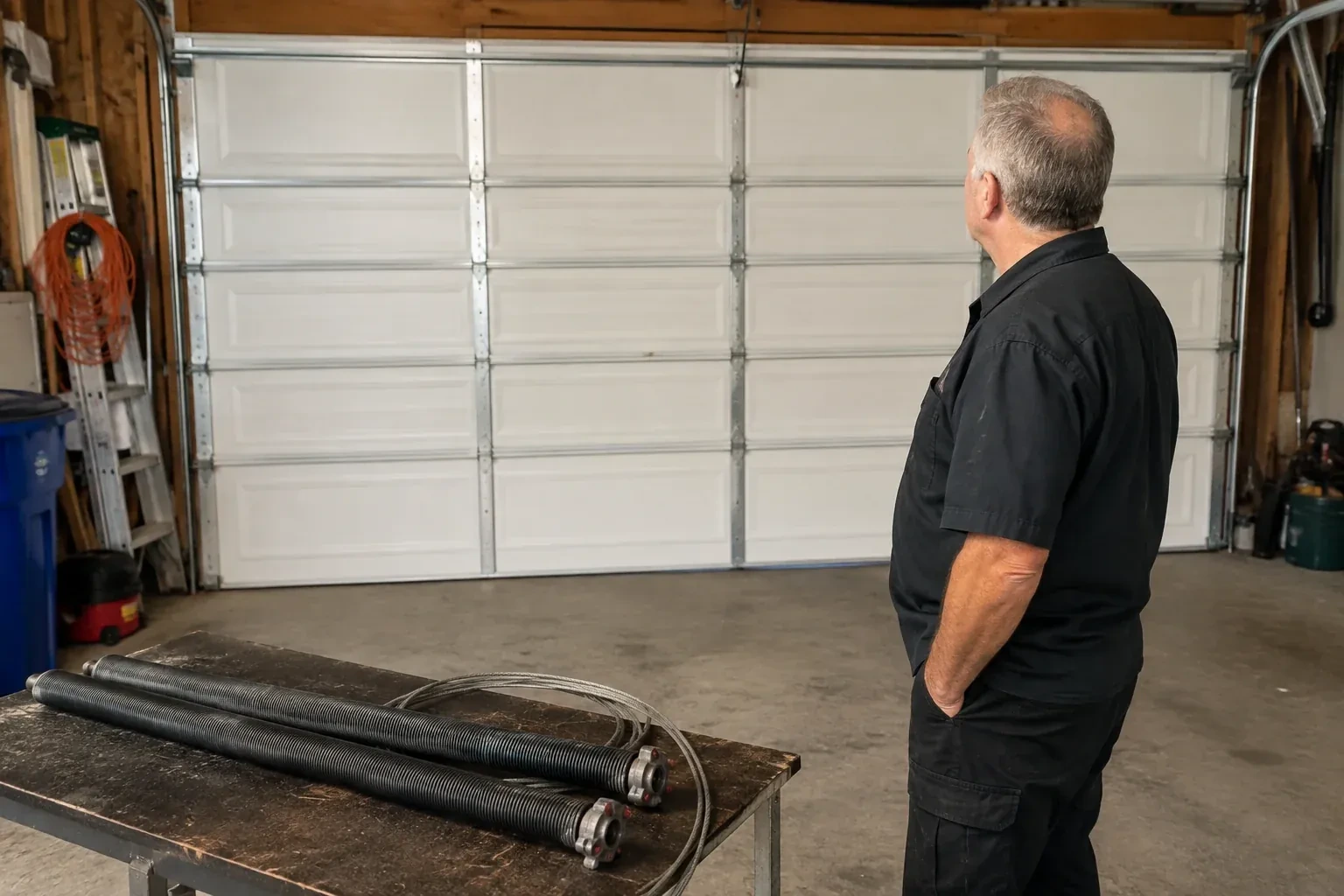
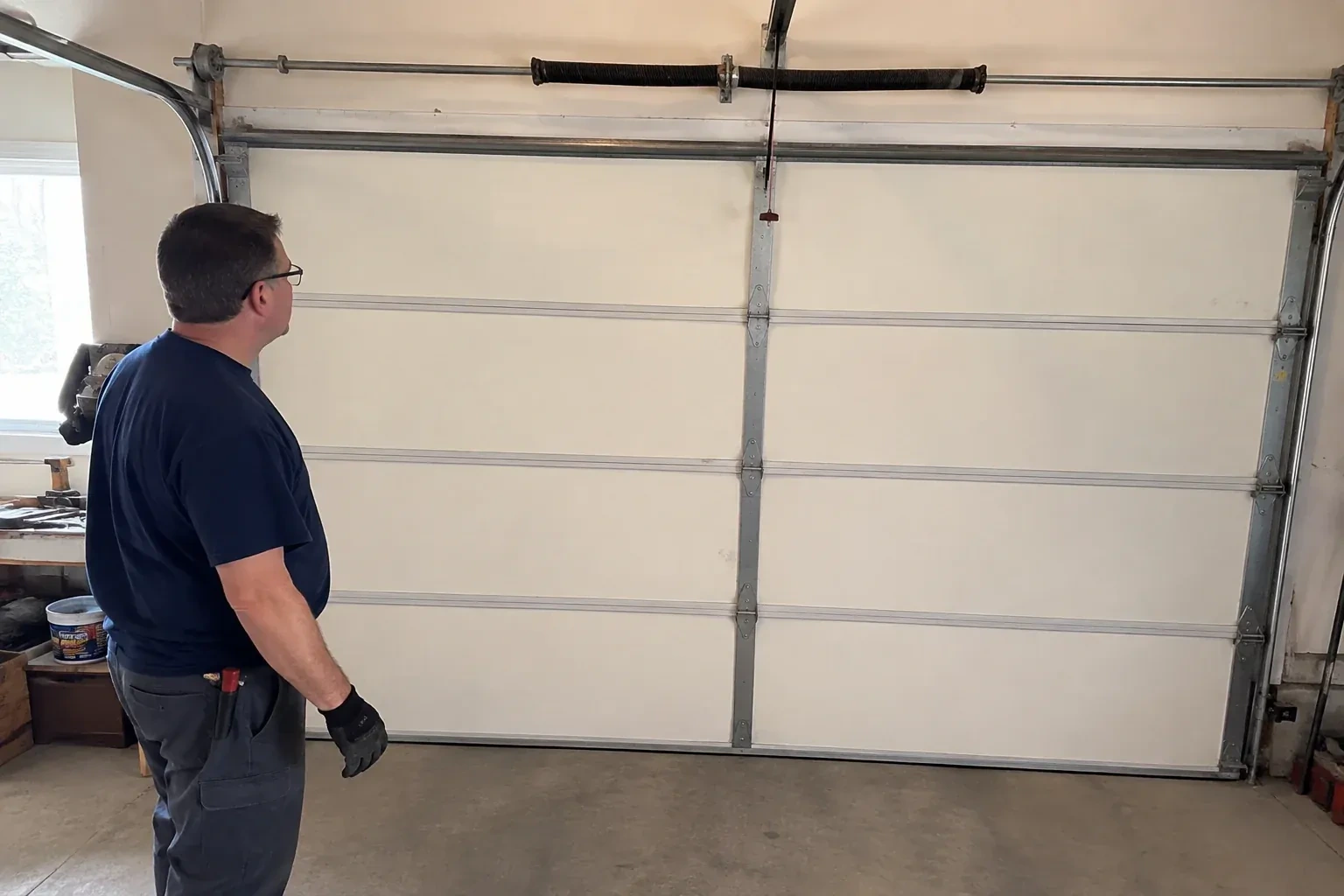
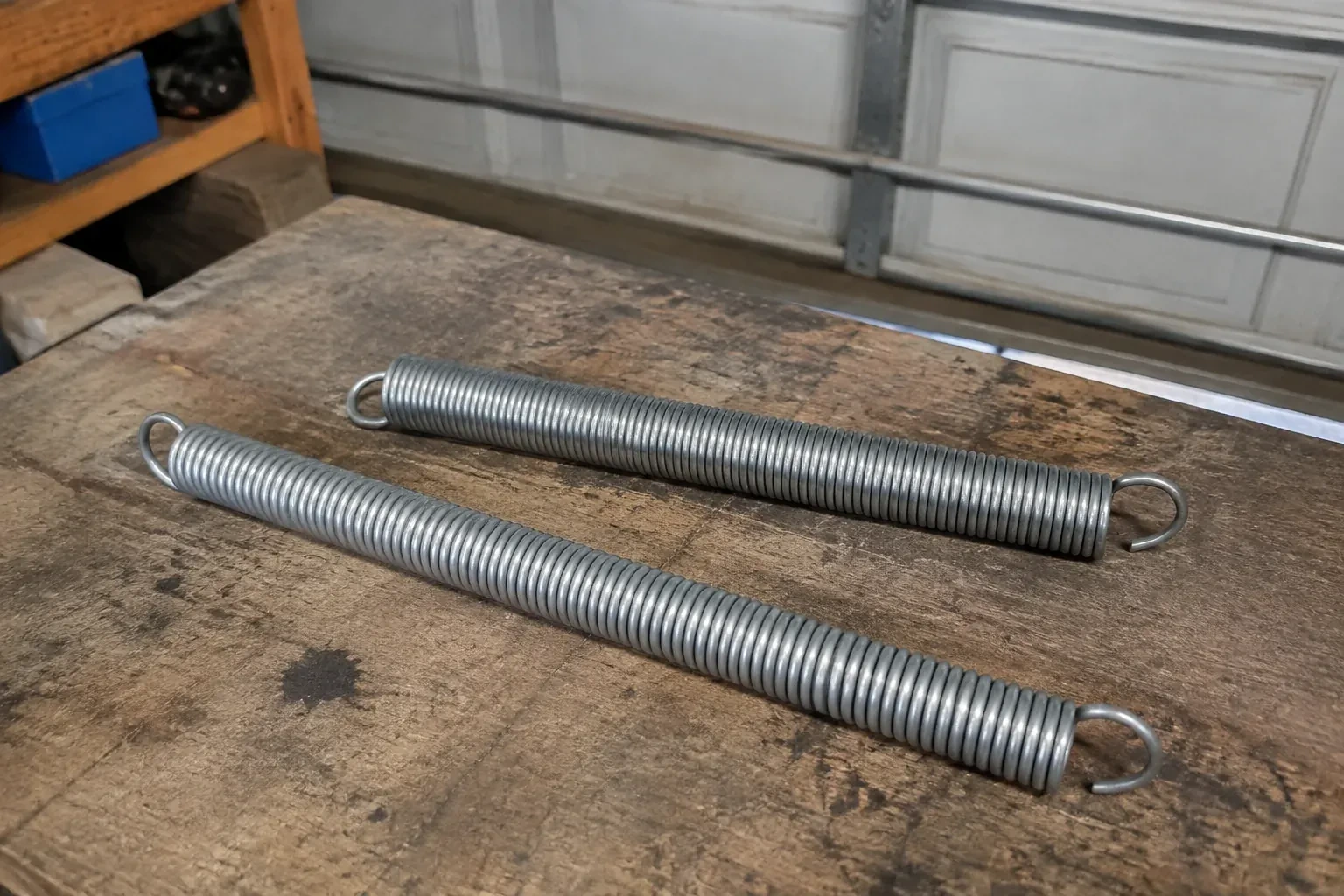
Households in Ryckmans Corners know the sound of a spring letting go: a bang from the garage, then a door that will not lift. Our technicians handle torsion and extension springs with winding bars, clamps and the patience the job deserves, always matching the spring to the door's weight. The door is balanced afterwards so the opener is lifting a door, not fighting one.
29years in business
24/7open every day
The diagnosis first. No work begins until you have heard what we found and agreed on the plan. That is how we avoid surprises on both sides.
A clean finish. Grease wiped from the tracks, hardware tightened, tools packed, the space swept. Tidy work is part of doing the job well.
Options explained side by side. A modest repair, a lasting one, a full replacement: you see how they compare so the choice is yours to make.
Have a technician assess your door in Ryckmans Corners.
For properties in Ryckmans Corners we service the door, the hardware that lifts it and the opener that drives it, and we install new doors and openers when the old ones are done. Residential and commercial work are both covered, each with its own parts, tools and approach.
About 61% of homes in Hamilton were built in 1980 or earlier, according to the 2021 Census.
Older homes
Where most houses were built a generation or more ago, a good share of garage doors are still the originals: wood or early steel sections on extension springs. Those doors respond well to fresh pulleys, safety cables and a careful balance, and the technician carries the parts for them.
Single-detached houses make up about 56% of homes in Hamilton (2021 Census).
Where housing is varied, security needs vary too. A detached home wants its garage door closing fully and its interior door respected; a townhouse or condo wants old fobs and remotes cleared and the shared entrance working. We address whichever applies at each door.
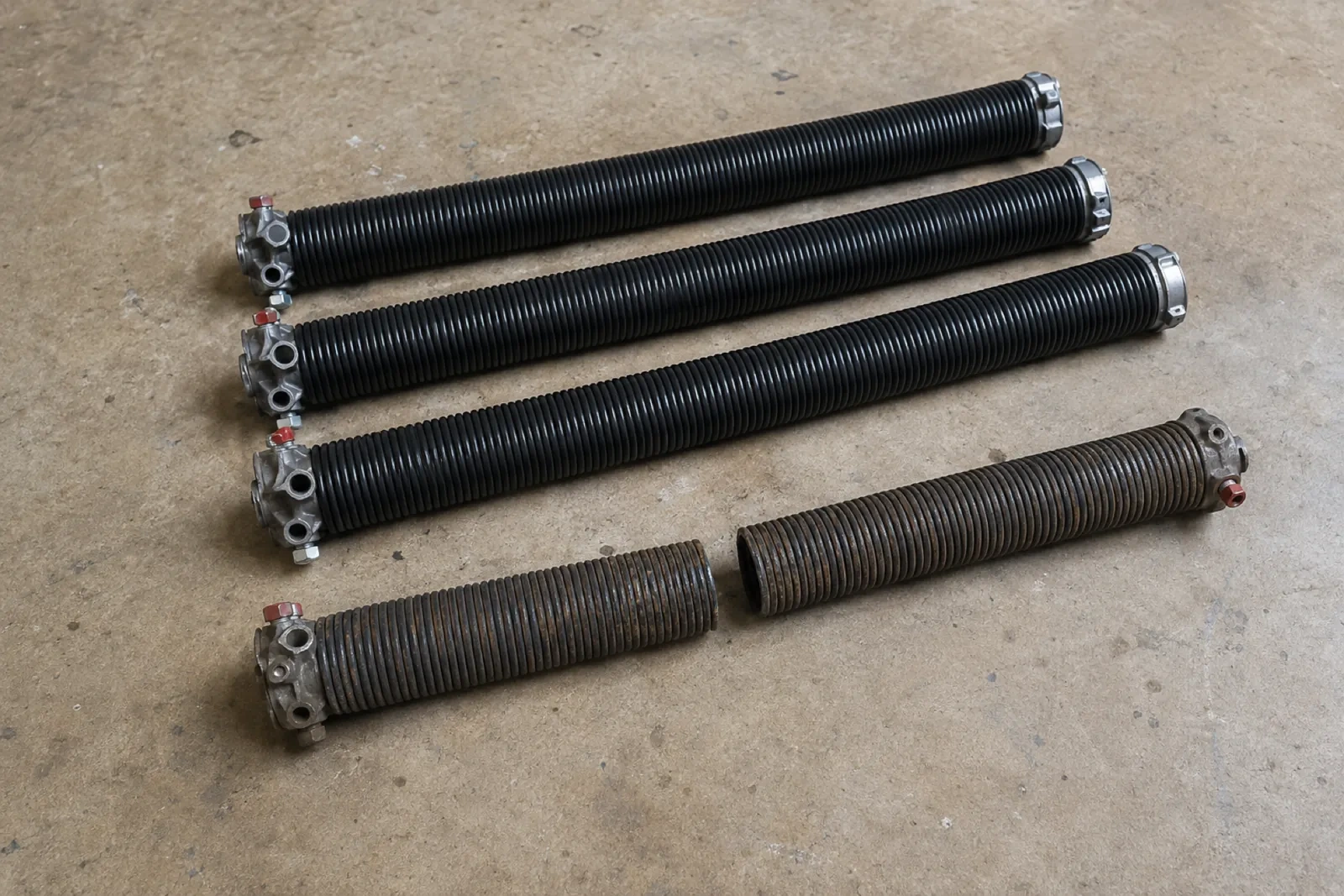
Replacing springs is precise work: measure the old spring, calculate the new one, wind to the correct turns, then confirm balance across the full travel. This group covers that and the cables that go with it.
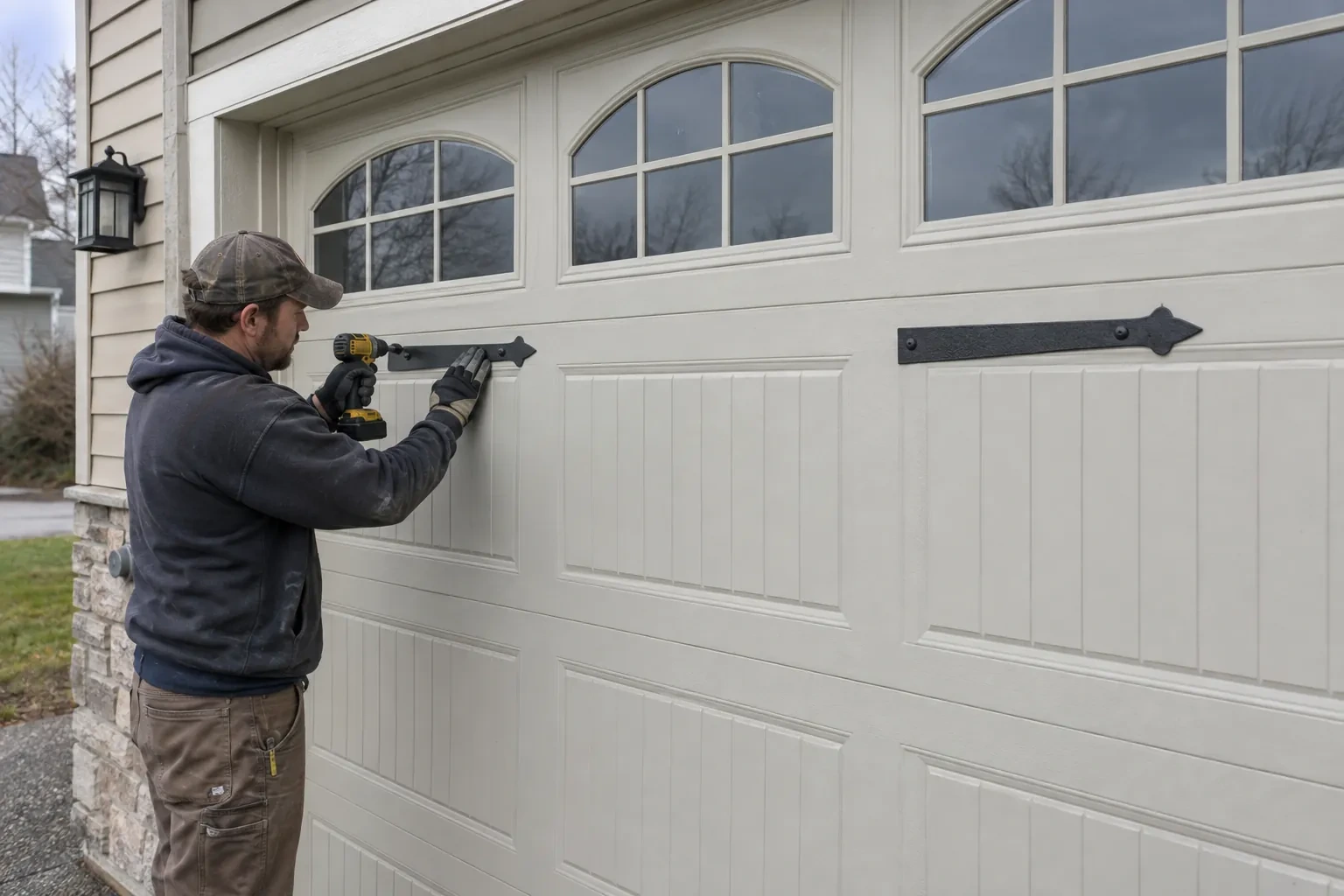
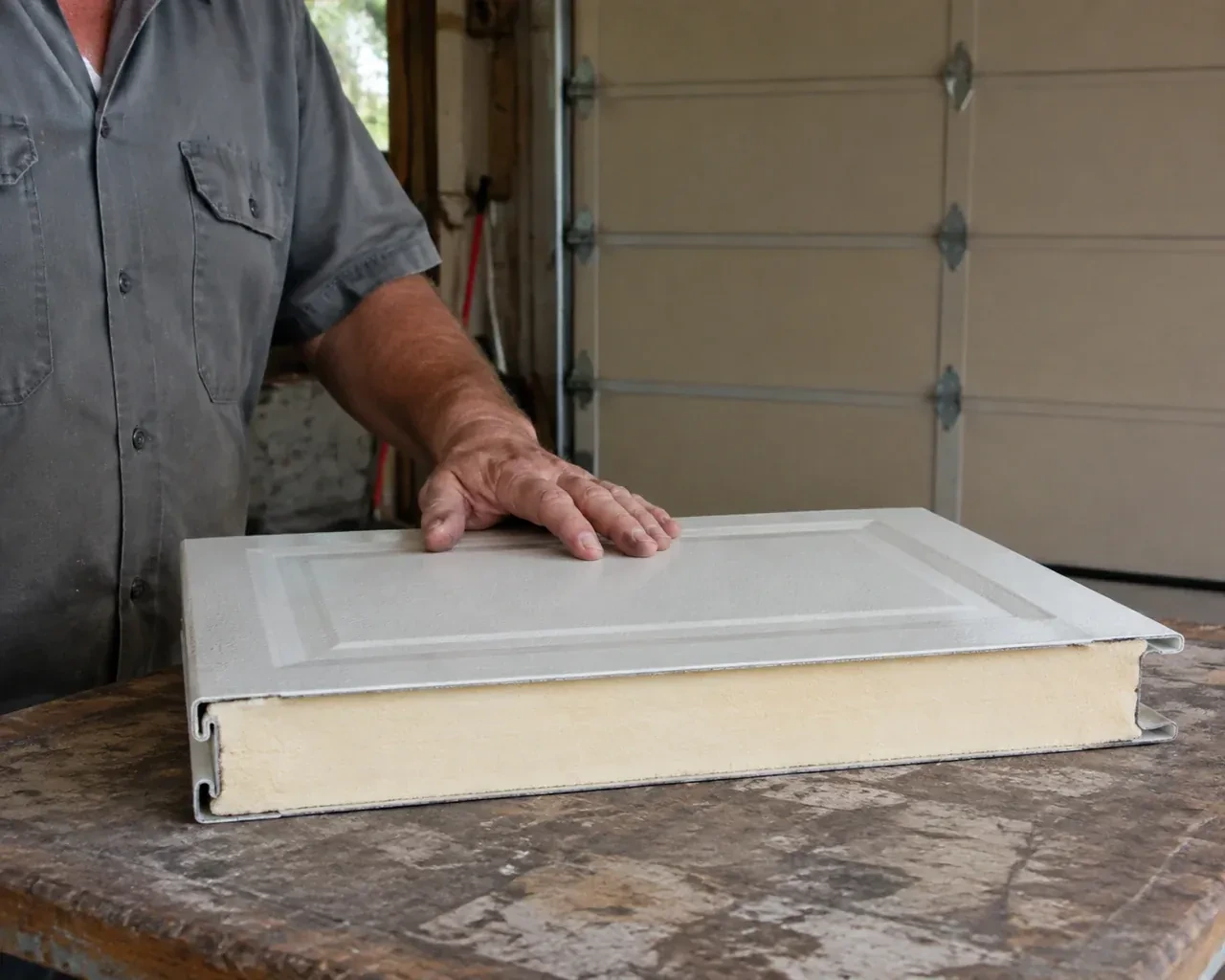
Choosing colour and panel style is easier with real samples and a photo of your house. We bring both to the conversation, and we can show how a design looks against your brick, siding or stone before you decide.
The rail shakes when the door runs. The steel straps holding it to the ceiling have worked loose, the chain rattles the length of the garage, and a bolt has already dropped onto the hood of the car.
Press the remote and the motor runs its full cycle, lights on, the usual whir, but the door does not move a centimetre. Up at the trolley, the belt is hanging loose where a small plastic clip used to hold it.
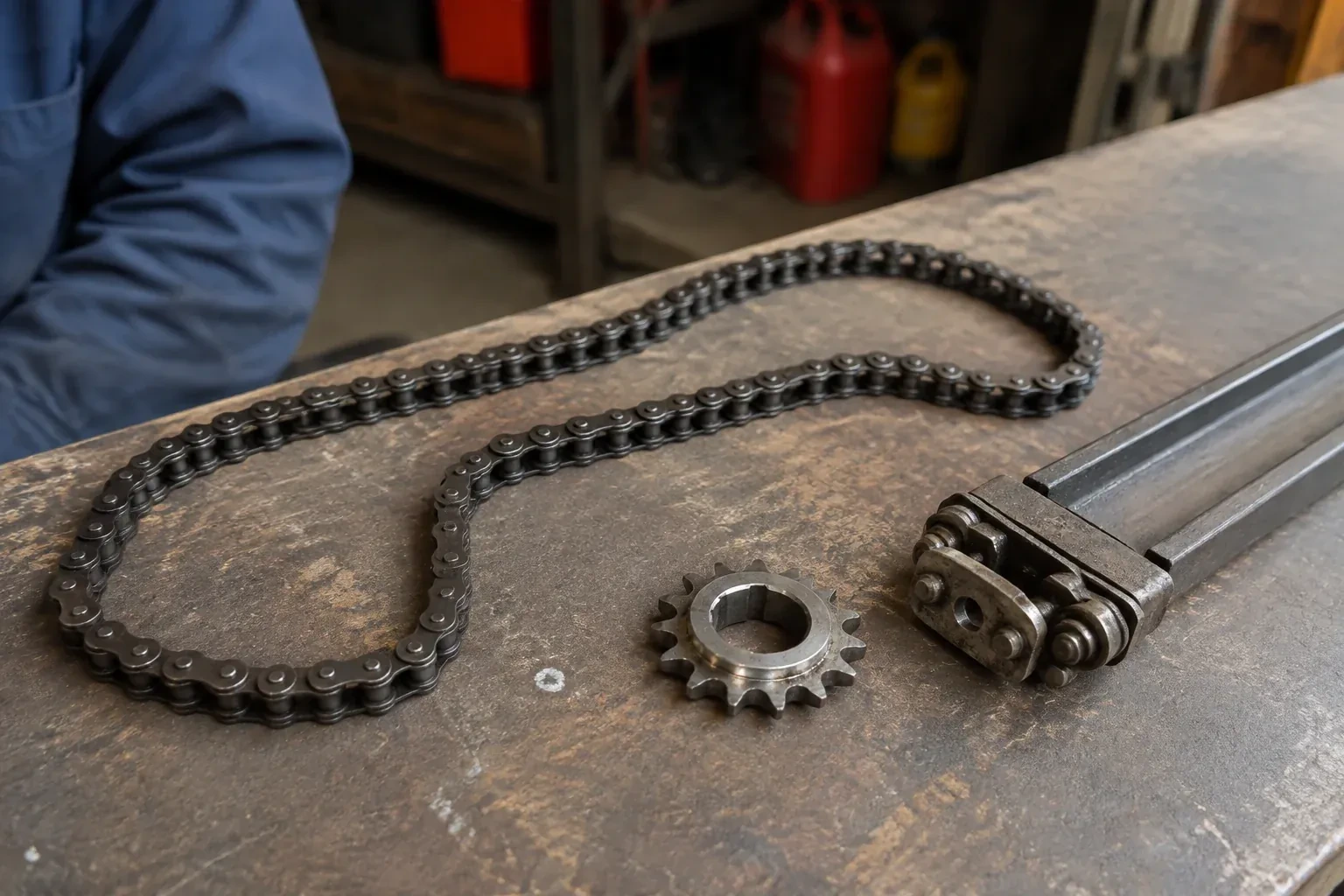
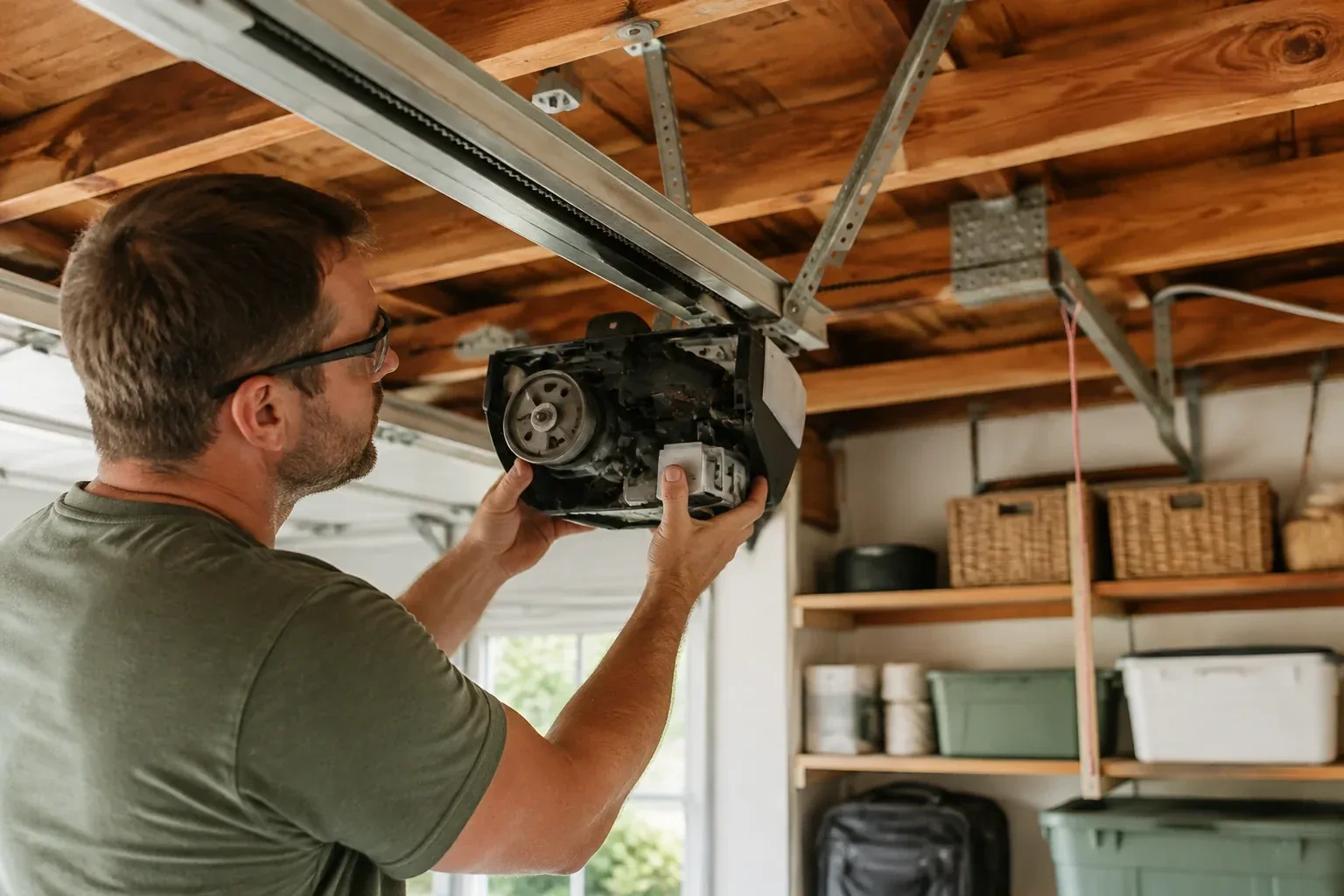
Press the button and the motor hums, but the door stays exactly where it is. Under the housing there is a dusting of white plastic shavings, the sign of a stripped drive gear, and this is the second time it has happened.
The door will only go down while a finger stays on the wall button; let go and it stops or reverses. From the remote it opens fine but never closes, so someone has to stand in the garage every time.
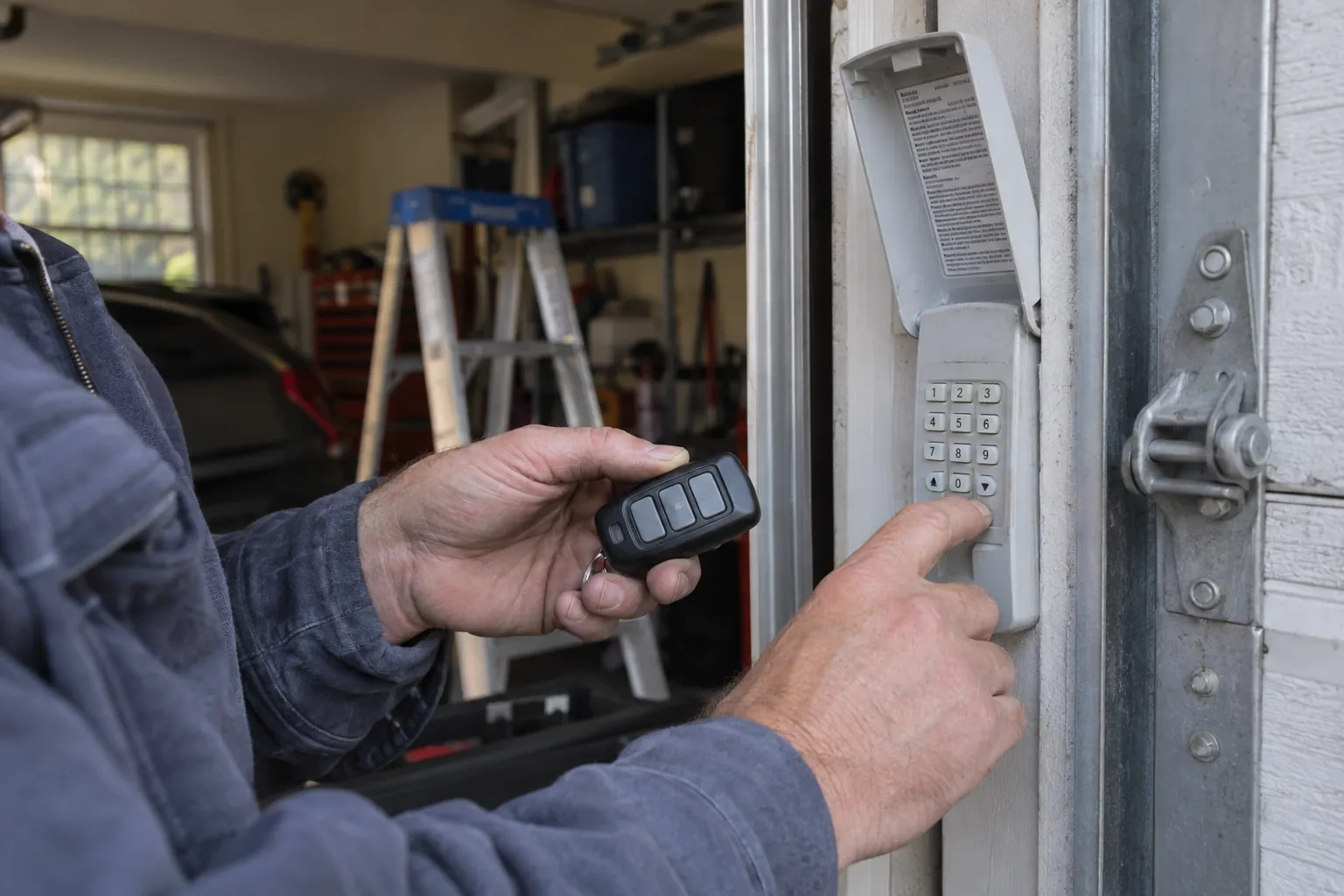
Someone in the family tried to add a remote, held the button on the ceiling unit a little too long, and now every remote in the house is dead at once. The wall control still moves the door.
A smart hub arrived in the mail with a coin-cell sensor and two wires. The instructions ask what colour your learn button is and how old the opener is.
A previous owner knotted the release cord around the rail and stacked storage shelves right beneath it. You only discovered this in the dark, with the power off, a flashlight in your teeth and a car that needed to be somewhere.
WhyA spring that breaks with the car inside puts the whole morning on hold, and this service is designed to get that door working again in a single visit.
You pulled the red cord to move the door by hand during the power cut, lifted it to about waist height and let go.
WhyA high-lift project can often retain sound door sections while changing the hardware that guides and balances them.
An entrance. Not an afterthought.
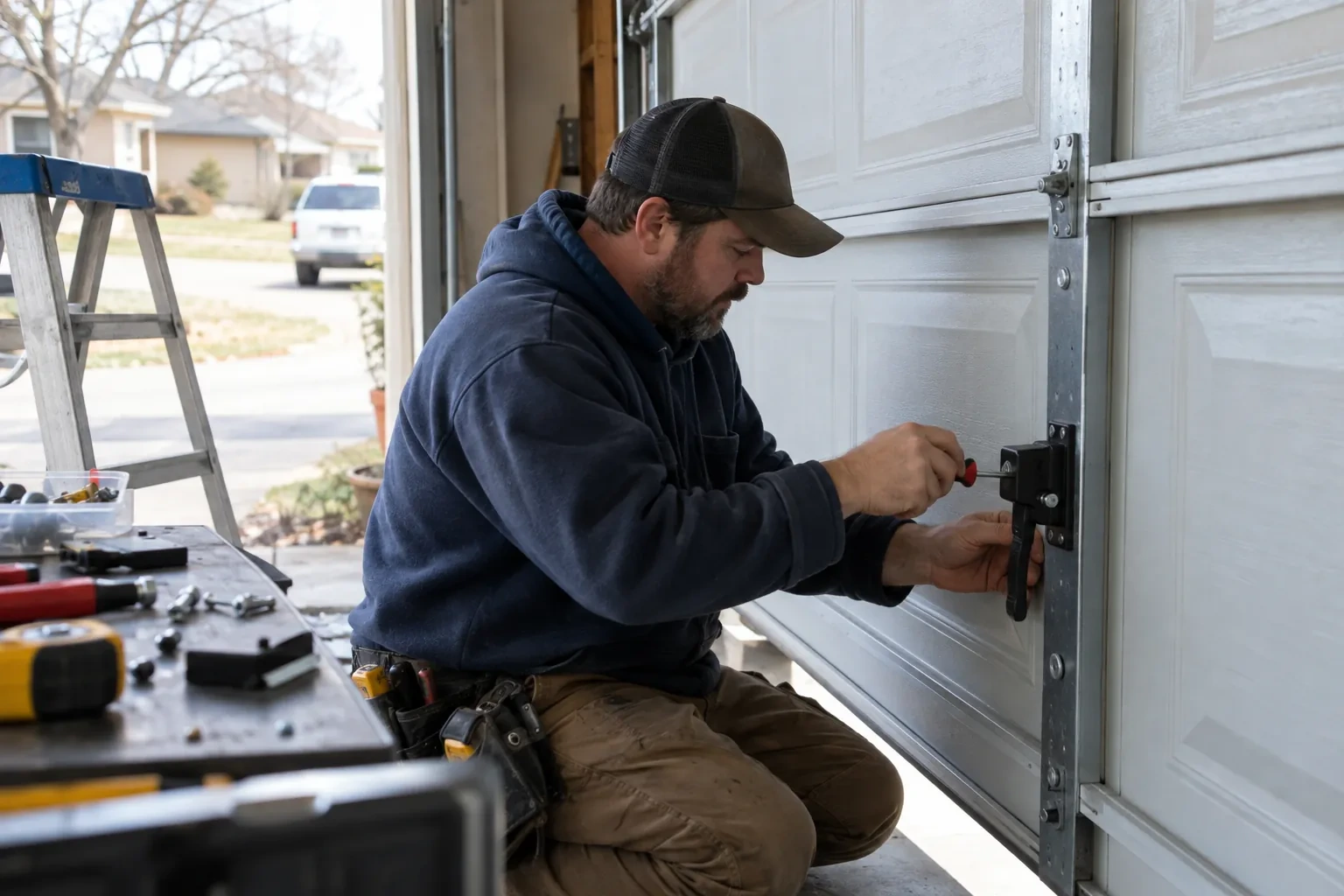
1/10Garage Door Manual Lock Repair
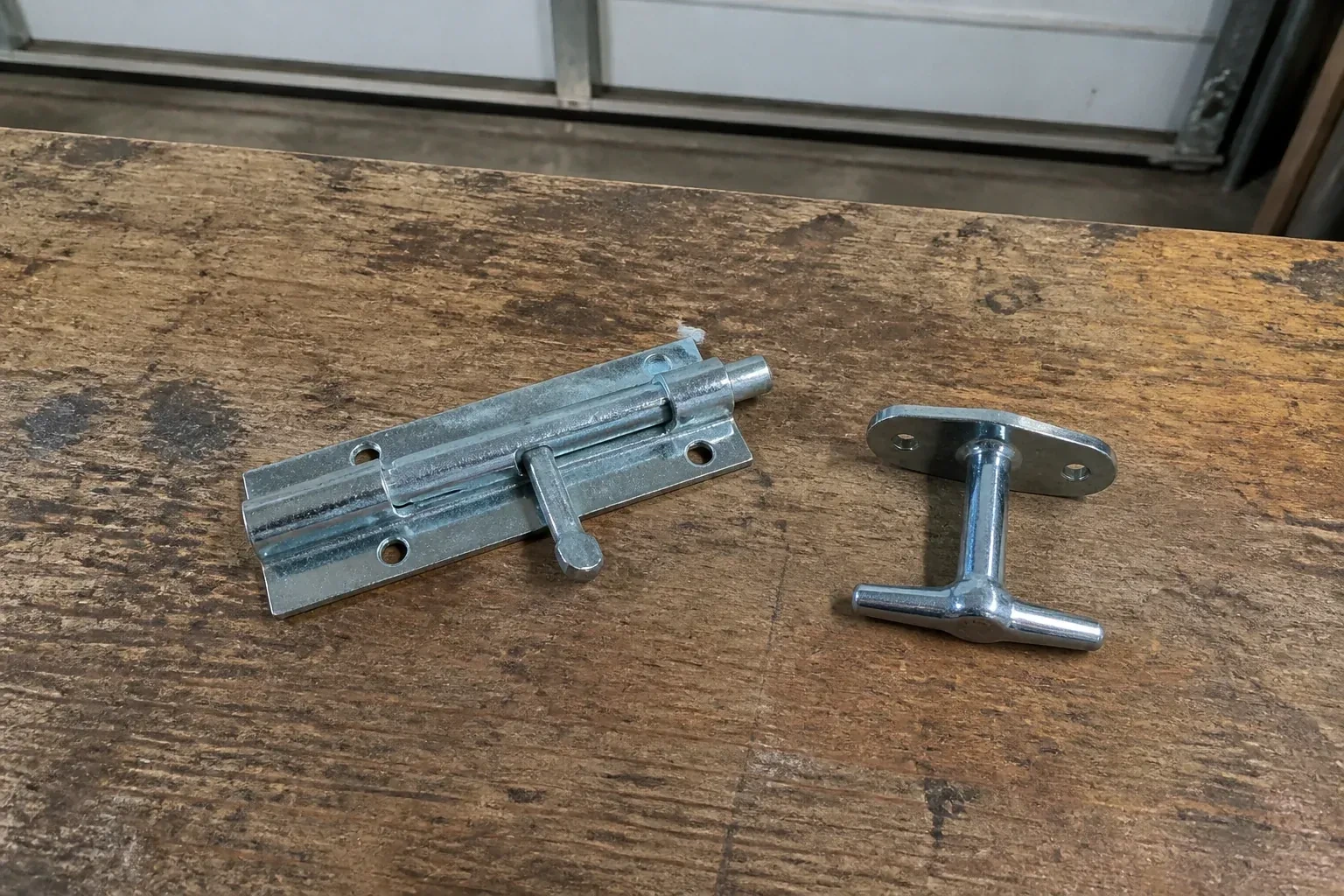
You have just moved in. The garage door carries a proper keyed handle on the outside, but no key came with the house, and the inside slide is painted over. You would like to be able to use it.
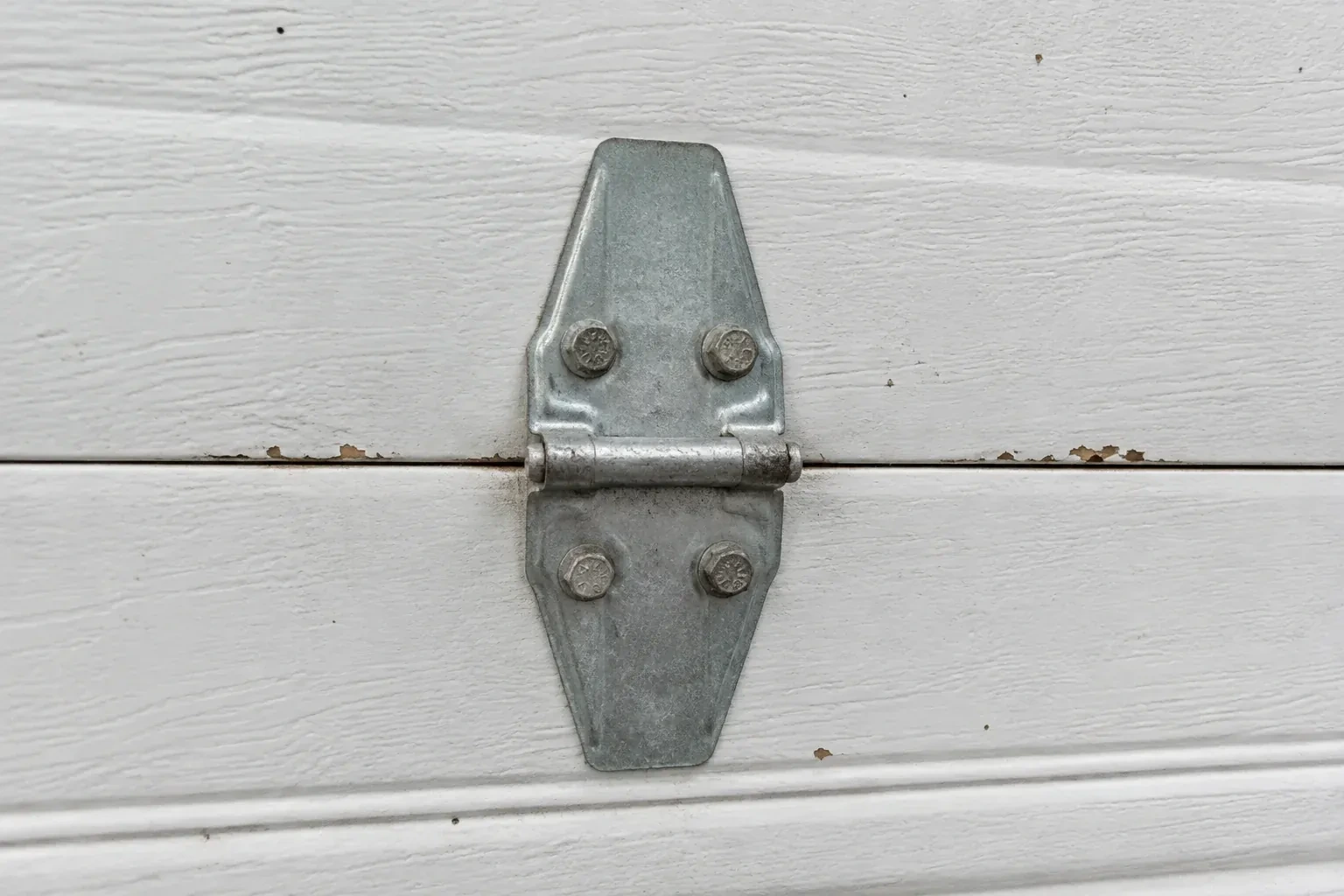
Pressing a hand against one of the middle hinges makes it rock on the panel. The screws turn and turn without ever tightening, and there is a rattle from that spot every time the door settles onto the floor.
The garage floor has settled at one corner, and the door now scrapes the concrete on that side while daylight shows at the other. The track on the low side sits crooked against a jamb that has split.
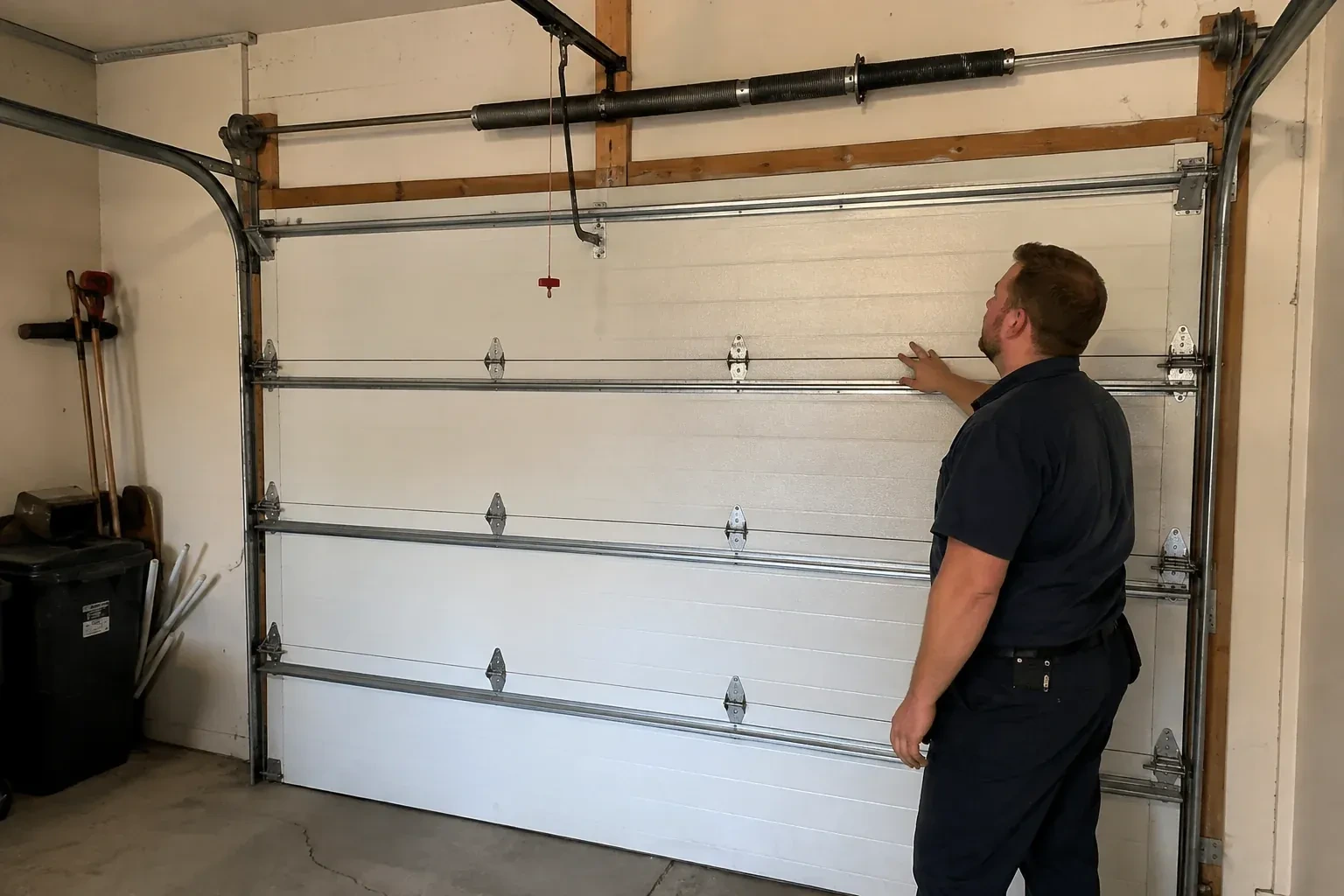
After pulling the red release cord, you tried lifting the door yourself and it would barely leave the floor. A door that used to glide up with one hand now takes real effort, which points to the counterbalance rather than the opener.
You pulled the red cord to move the door by hand during the power cut, lifted it to about waist height and let go. Instead of staying put, it kept climbing on its own and thumped into the fully open stop.
Halfway up, the door lurches. Something in the drive skips a beat, the chain jumps, and the door finishes its travel with a jolt. It happens more on cold mornings and always at the same point on the rail.
The door used to glide up with a soft hum. Now there is a sharp clack every second or so, and if you stand underneath you can see the belt sagging below the rail and slapping it on the way up.
Someone pulled the cord last spring to get a car out during an outage, and the door has never properly rejoined the opener. Press the button and the trolley glides along the rail by itself while the door stays exactly where it is.
This garage will be heated and used beyond parking, so the opening needs more than a basic closure. Insulated sections, perimeter seals and careful contact at the finished floor matter from the first installation.
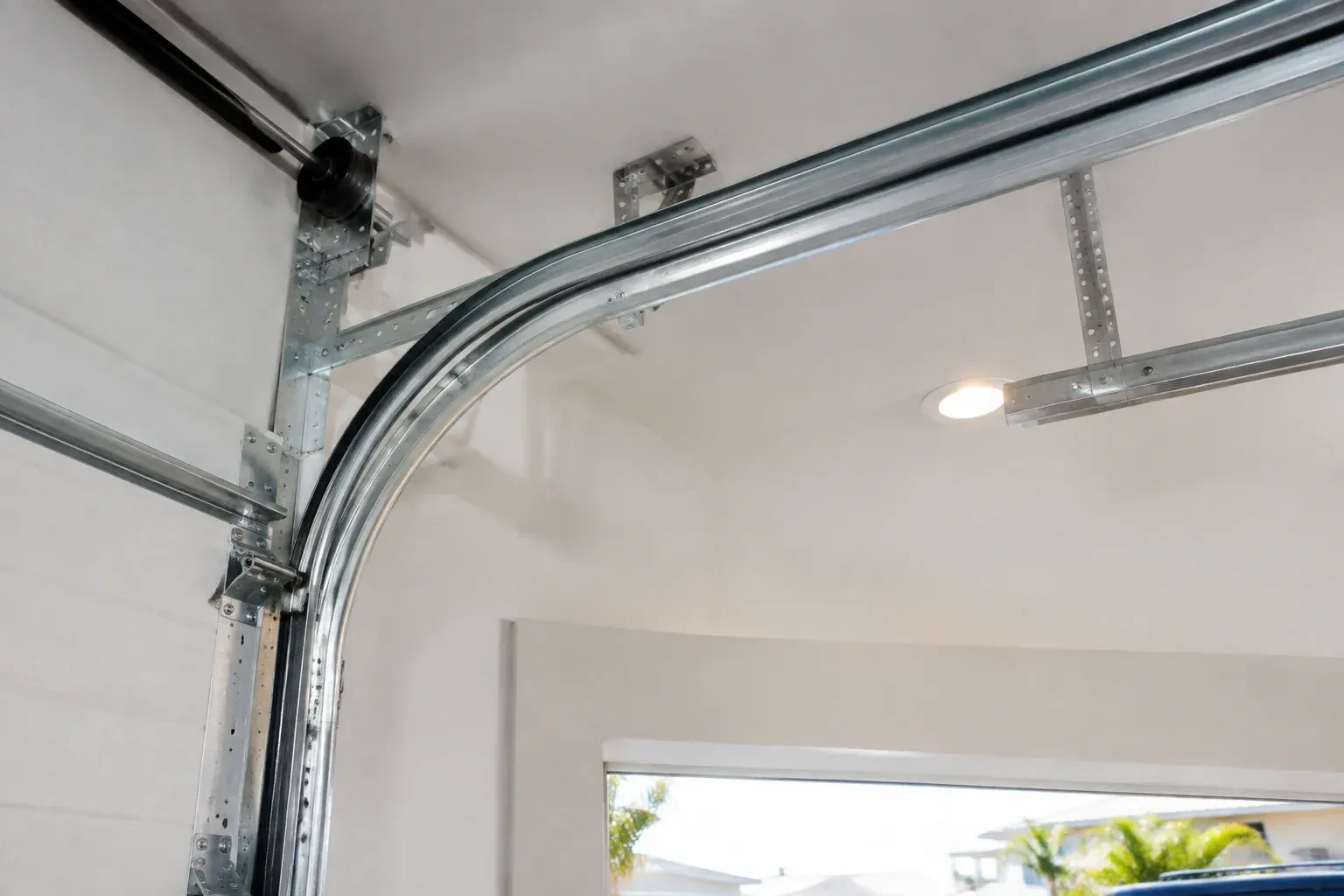
Storage racks were planned near the ceiling, but the existing tracks and centre-mounted opener divide the only practical zone. The wall above the door appears tall enough to move the turning point upward.
An adjustment to a slide bolt or a guide is a short job, while a full T-handle replacement with new bars, a rekey and a door alignment fills a longer visit. Most calls sit somewhere between, and the technician gives you a realistic sense of the time once the door has been looked at, rather than guessing from the phone.
Can I tighten loose hinge screws myself?
Yes, hinge screws are a homeowner task. Disconnect the opener, leave the door closed, and snug each hinge screw with a socket wrench without forcing it, since overtightening strips the hole. Leave the bottom brackets alone; they anchor the cables and are under spring tension. If a screw spins freely or a hinge is cracked, stop there and have it looked at, because a stripped hole needs a fresh anchor rather than more turns.
How do I keep road salt from rusting the track?
Salt does its work in the bottom foot of each vertical track, where slush drips off the car and sits. Push slush clear of the door's inside edge rather than letting it pool, and on a mild day wipe or rinse the brackets and the lower channel. A little silicone spray on the bracket fasteners in autumn helps them shed water. Keeping the threshold free of ice also stops the door being pulled against a stuck bottom section.
What other parts are often replaced with the spring?
The shaft is free during a spring change, which makes it the natural time to renew the centre bearing and end bearings if they grind or wobble. Lift cables that show fraying or rust at the bottom brackets are replaced so the new spring pulls on sound steel, and cracked or worn drums are swapped. On older doors, a corroded centre bracket or loose lag bolts may also be addressed. Each item is shown and explained before it is added.
How should I prepare the garage for the visit?
Move the car out if you can and clear the floor near the door and beneath the spring shaft, since the technician will be on a ladder there with winding bars. Take down anything hanging from the tracks or stored on top of the horizontal rails. Leave the door where it is, make sure the wall button and the opener are reachable, and have any spring or opener paperwork handy.
Why does the door open only partway and stop?
Three causes account for most cases. The up travel limit has drifted short and needs turning out. The door has become heavy or stiff somewhere in its travel, so the operator senses resistance and stops, which points to the springs, rollers or track. Or the chain has slipped out of phase with the motor, in which case the limit screws have no effect and the chain must be re-set on the sprocket with the trolley at the closed position.
How long does a belt-drive repair take?
A tension adjustment with the safety tests is a short visit. Replacing the belt, trolley or idler pulley, then phasing the motor, relearning limits and running the reversal tests, is usually an hour or two. A gear-and-sprocket kit at the motor head takes longer because the head unit is opened. If the balance test turns up spring work, that is agreed as a separate job with its own time.
Does every type of opener have a release?
Yes, in different forms. Chain and belt units have the familiar red handle on a cord from the trolley. Screw-drive units release at the carriage on the rail. Wall-mounted openers beside the door use a handle on a cable that is pulled down until it clicks, since there is no rail overhead. The parts differ, so the technician identifies the model before choosing a cord, lever, trolley or cable, and shows you the sequence for your own unit.
What electrical preparation does a garage door operator need?
Preparation commonly includes a receptacle near the planned operator, a suitable mounting location and routes for the wall control and photoelectric sensor wiring. Exact electrical requirements follow the chosen equipment and project electrical design. Coordinating locations before drywall helps keep wires clear of tracks, springs and moving sections. The electrical trade and door installer should also agree who completes connections and when power becomes available for commissioning.
Will the conversion make the garage door louder?
A properly aligned system should travel smoothly, although its sound may differ because rollers follow a longer vertical route and the operator arrangement may change. Track spacing, roller condition, hinge movement, spring setup and secure supports all influence noise. Final cycling establishes a normal sound baseline, while care follows the lubrication guidance for the installed door components.
Request a visit
For homeowners in Ryckmans Corners who like to understand the work, we explain the mechanics: how a torsion spring stores the weight of the door, why cables fray at the bottom bracket, what the photo-eyes are looking for. For those who just want it fixed, we fix it and keep the explanation short.