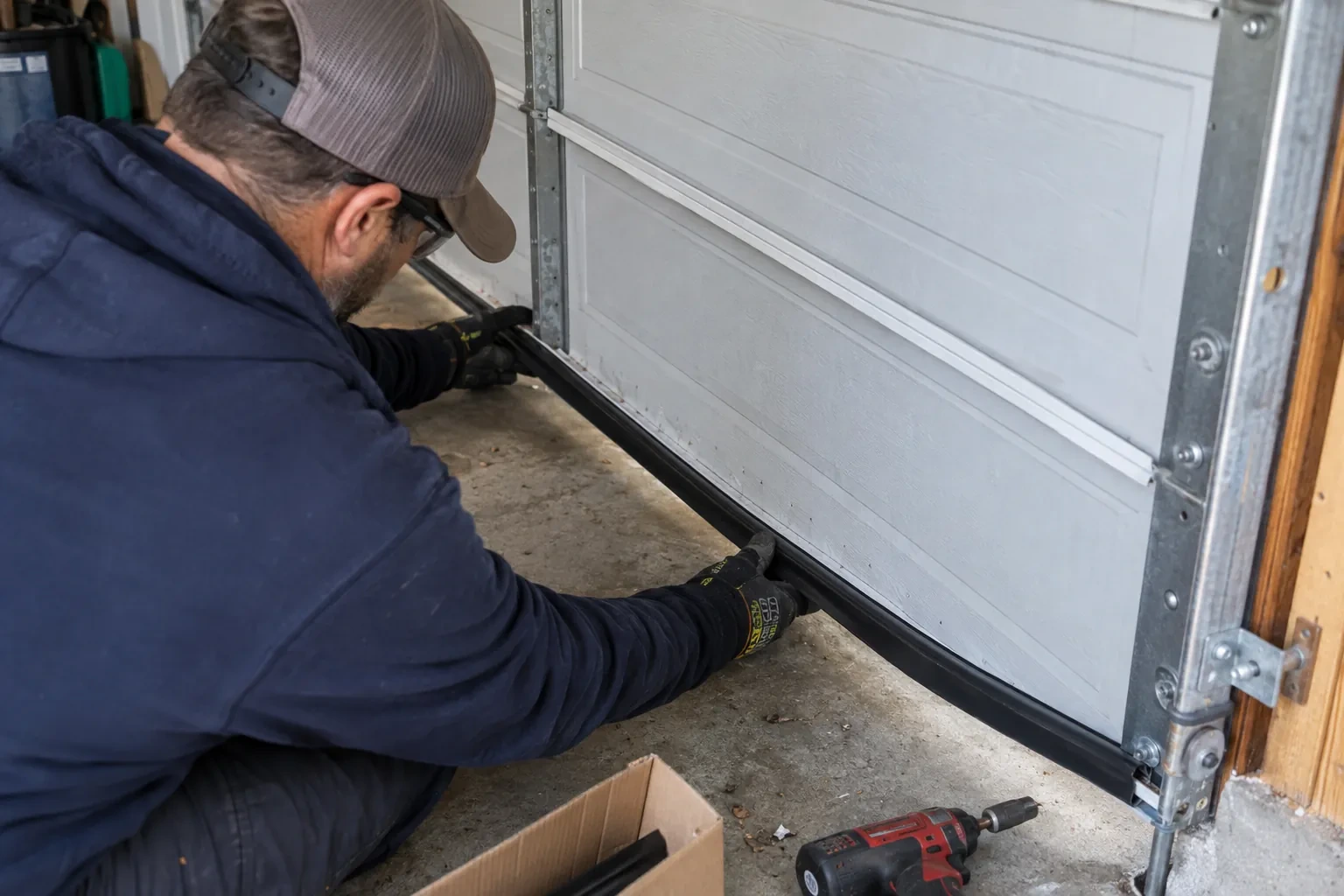
Openers
Openers & Access
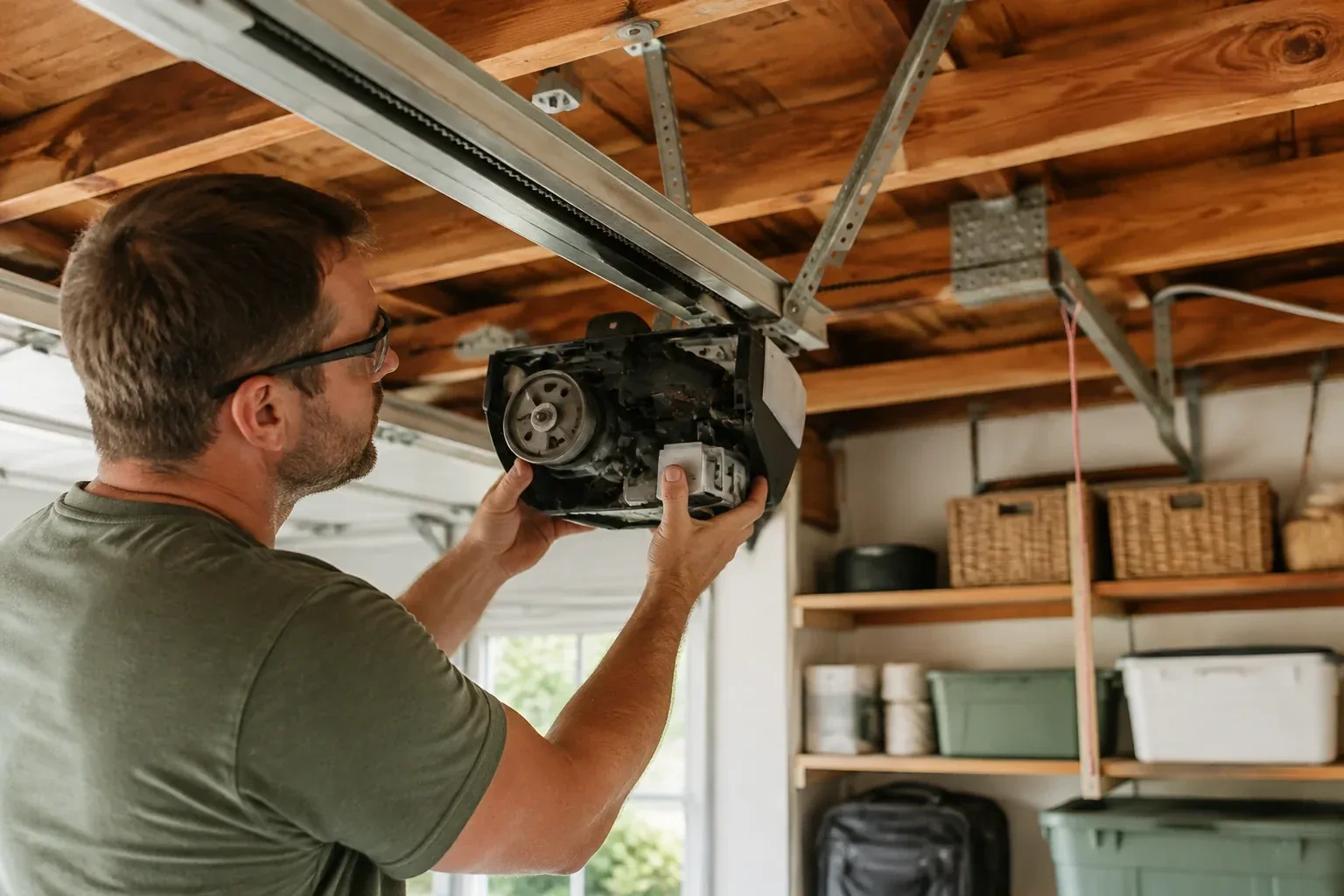
The drive gear inside many openers is a plastic part that eventually strips its teeth, leaving the motor humming while the door goes nowhere. Replacing the gear is often enough, and we can tell you quickly whether it is.
Which one do I need?
- For a few days there was a grinding sound whenever the door started moving.Garage Door Opener Diagnosis and Repair
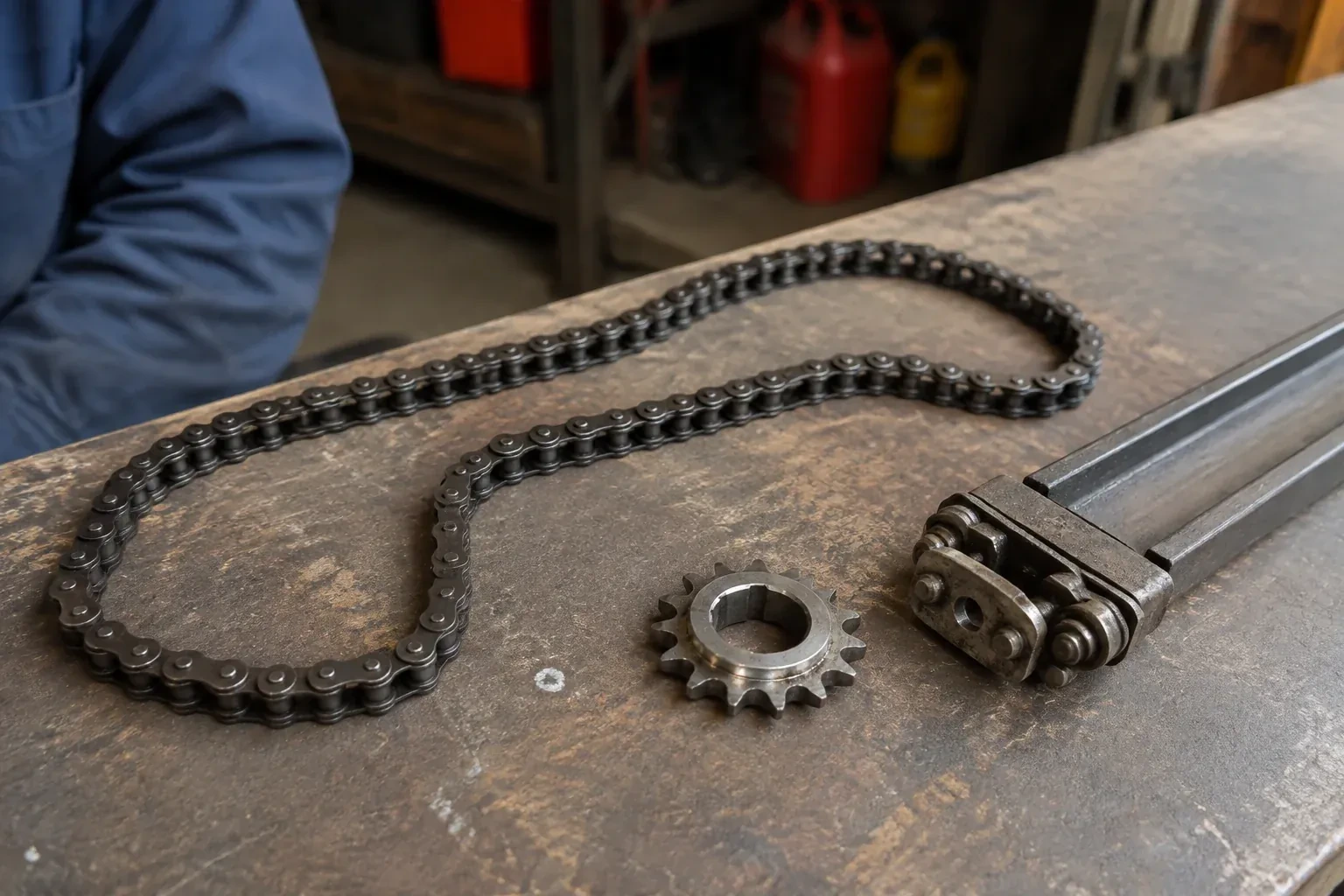
- The rail shakes when the door runs.Chain-Drive Opener Repair
- Press the remote and the motor runs its full cycle, lights on, the usual whir, but the door does not move a centimetre.Belt-Drive Opener Repair
- Press the button and the motor hums, but the door stays exactly where it is.Garage Door Opener Replacement
- The door will only go down while a finger stays on the wall button; let go and it stops or reverses.Photo-Eye Sensor Alignment or Replacement
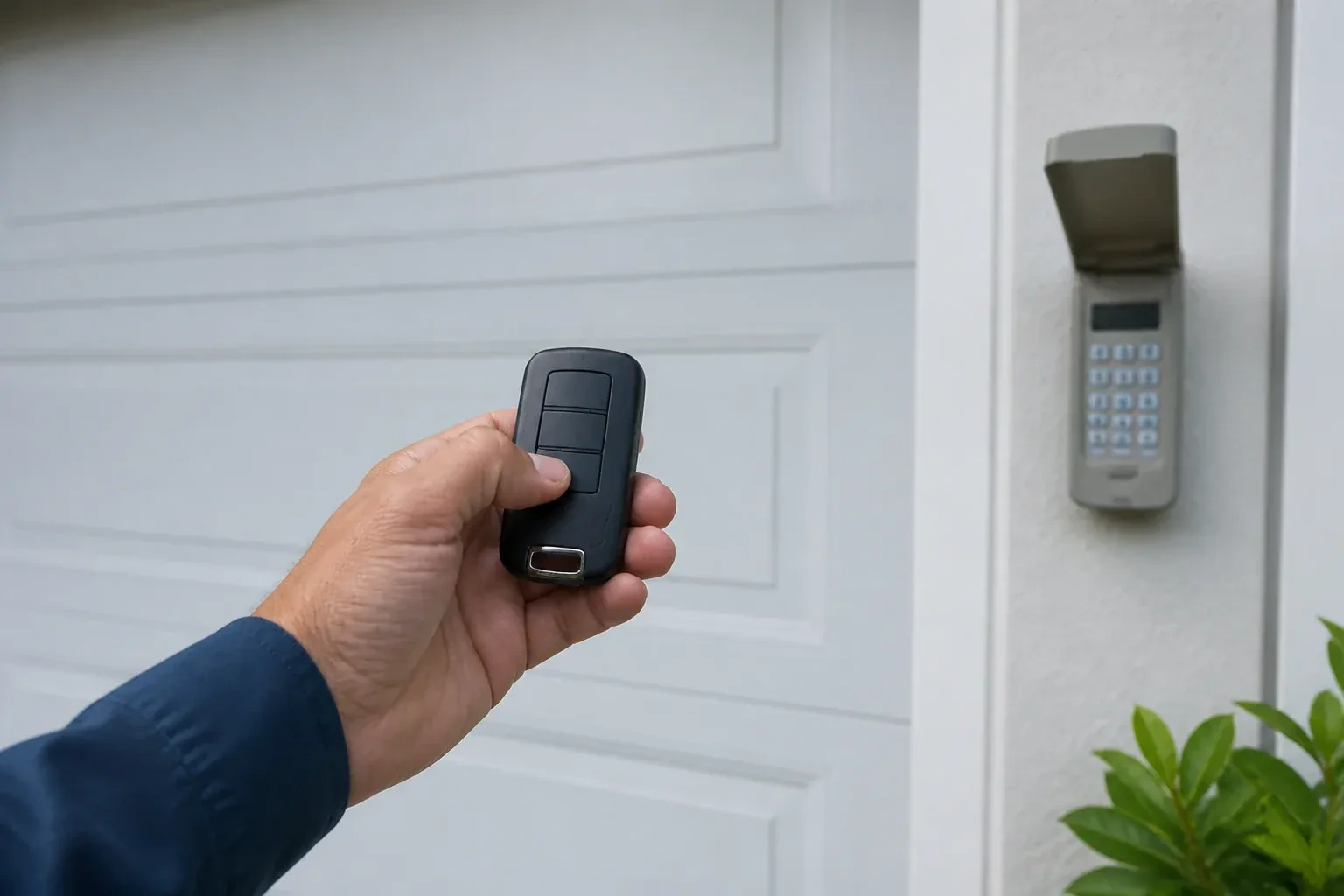
- Someone in the family tried to add a remote, held the button on the ceiling unit a little too long, and now every remote in the house is dead at once.Garage Door Remote and Keypad Programming
Openers & Access
Operators, safety sensors, controls, and access systems.
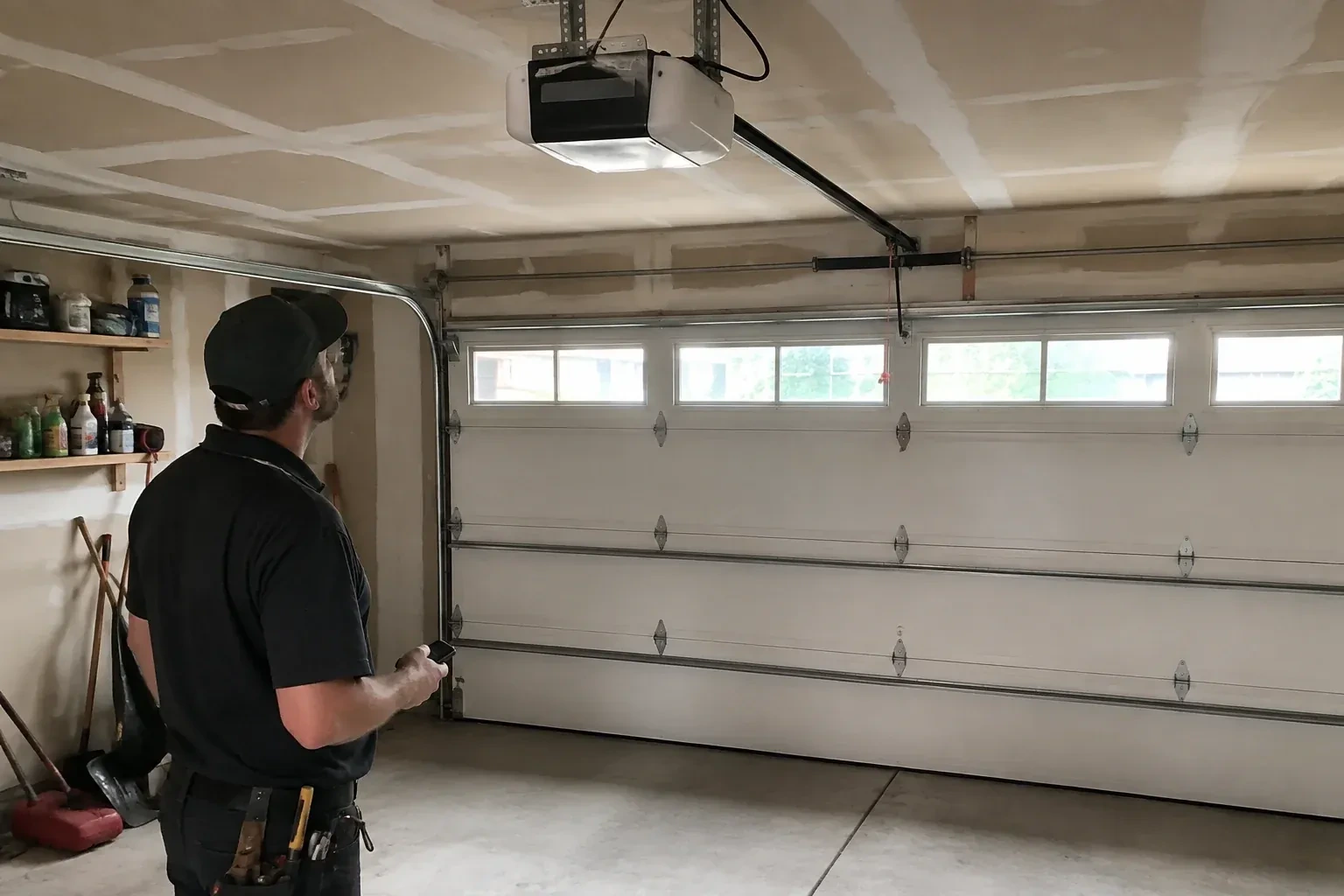
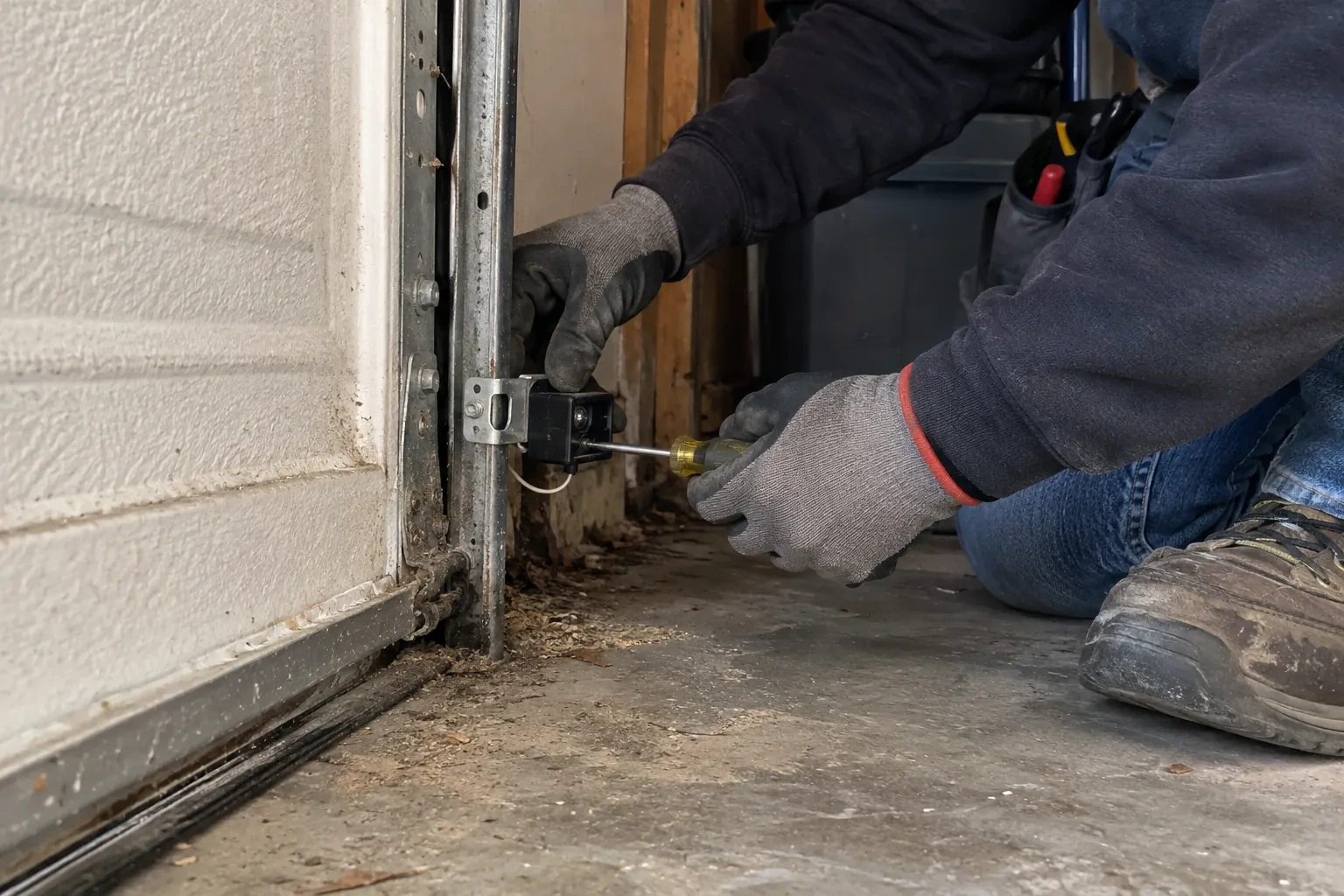
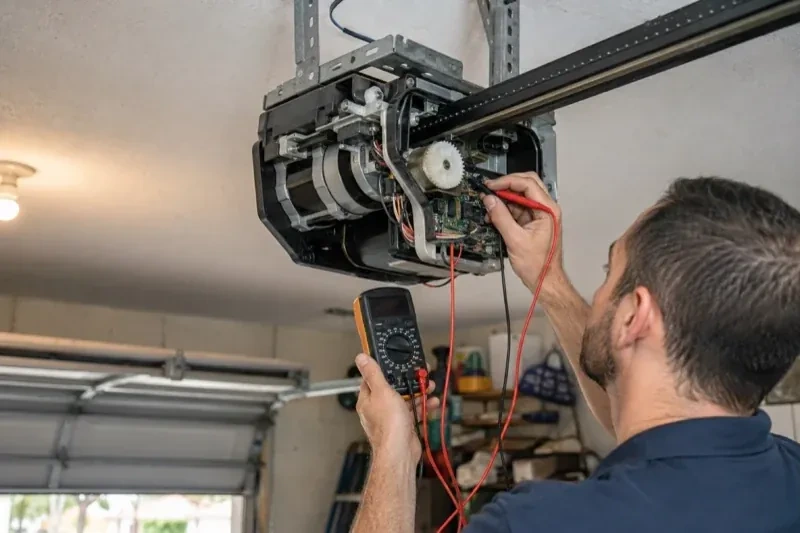
Garage Door Opener Diagnosis and Repair
Limits, force and the two safety tests
Finally the settings are checked against what the door actually does. Travel limits decide where the door stops at the top and how firmly it meets the floor; a limit set slightly long makes the door hit the slab, sense an obstruction and pop back open. Force settings decide how much resistance the opener tolerates before reversing, and these drift, or get turned up to hide a stiff door.
Both are read, the door is run through full cycles, and the contact reversal test with a 2x4 and the beam-interruption test are performed. Any setting that only passes because force is cranked high is treated as a symptom.