Springs · Hamilton
Garage Door Cable Replacement
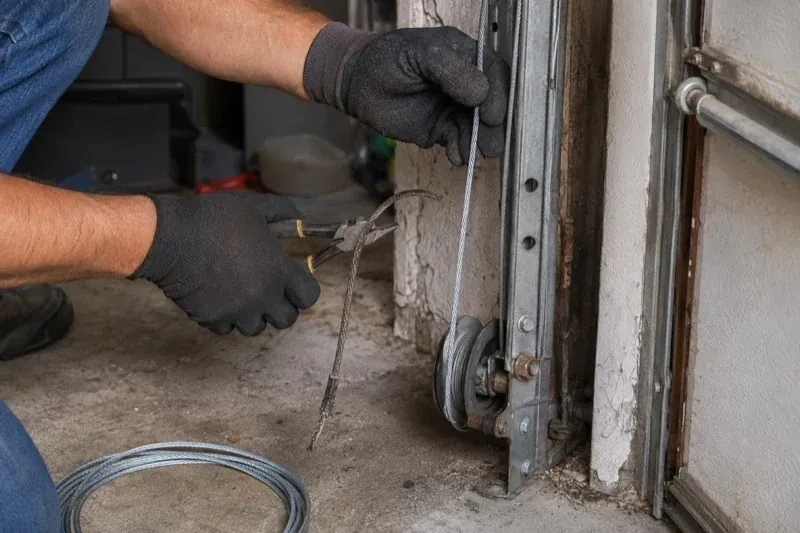
Your older door has springs along the tracks, and one cable has slipped off its pulley and dangles slack.
In plain words
Winter is hard on the bottom of a garage door. Slush and road salt run off the car and pool exactly where the cables loop onto the bottom brackets, and wire rope that is wet and salted for four months a year rusts from the inside out. Snow packed under the door can also stop it short, letting the cables go slack and slip their drums. Cable replacement puts fresh galvanized cable on both sides, cleans or renews corroded brackets and resets the balance, and the technician can show you how a clear threshold and a light coat of lubricant carry the new set through many more winters.
How the visit goesThe cable has wrapped itself around the shaft above the door instead of sitting on its drum. When the opener runs, the door lurches, one side rises before the other, and the top panel twists.
Garage Door Cable Replacement
How the visit goes
Springs and balance behind the cable
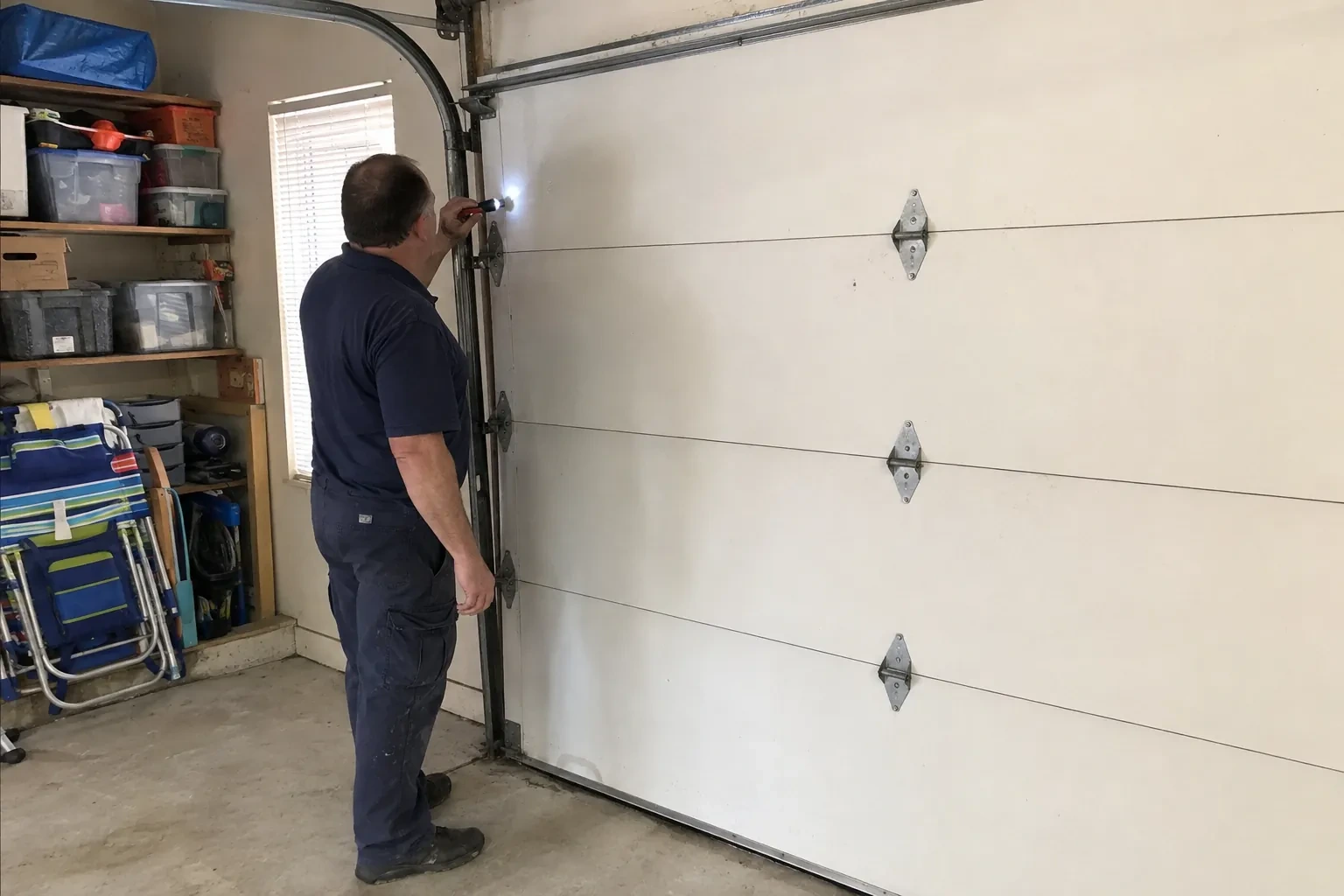
Cables only carry what the springs give them, so the springs are checked next. On a torsion system the technician looks for a gap in the coil that means a break, measures the wire and length to confirm the spring suits the door weight, and notes whether both springs on a double door match. On an extension door each spring is checked for stretch, a broken end or a missing containment cable through the middle. A weak or mismatched spring leaves one cable slack and the door heavy on one side, and if that is the story behind the cable, the spring work is explained and quoted alongside rather than left to surface later.
Extension-spring doors: pulleys, clips and containment
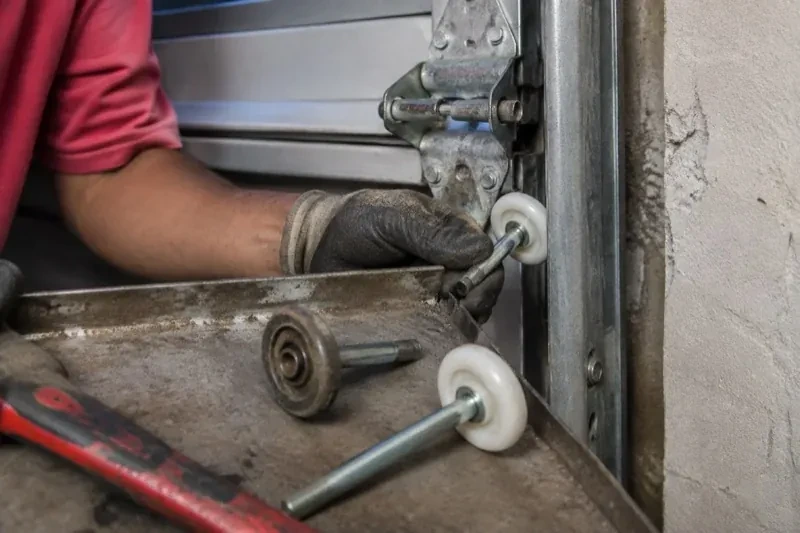
On a door with springs along the tracks, the new cable is threaded from the bottom bracket up over the pulley at the front of the horizontal track, back to the pulley on the end of the spring, and forward to the adjusting clip on the track hanger. The technician replaces a pulley whose wheel is grooved or whose bearing has seized, since that is often what wore the cable, and checks the S-hooks and sheave forks. Each side is set to the same clip position so the door hangs level. A containment cable is confirmed through the centre of each spring and added if the door was never fitted with one.
Checking the balance yourself, safely
You can confirm the door is still balanced any time without touching a spring or cable. With the door closed, pull the opener's release cord so the trolley disconnects, then lift the door by its handle or a safe gripping point to about waist height and let go gently. A balanced door should not lift or fall far on its own; a little slow drift is normal, and what calls for a technician is rapid movement, a heavy feel, binding in the track, or a result outside the manufacturer's balance instructions, not drift alone. Reconnect the opener as the manual describes, usually by running it once. Doing this each season catches wear early and keeps the opener working lightly.
Garage Door Cable Replacement
In the van
Galvanized aircraft-type lift cables
Torsion springs and winding cones
Winding bars
Drum set screws
Silicone garage-door lubricant
Garage Door Cable Replacement
What affects the quote
Springs found weak or broken
If the inspection shows a spring that is broken, stretched or wound short, replacing it is explained and priced separately from the cable work, and the two are done in one visit if you agree.
Corrosion and seized fasteners
Set screws and bracket bolts that have rusted solid take time to free or cut, and badly corroded hardware is replaced rather than reused, which shows in the parts list.
Opener adjustment afterwards
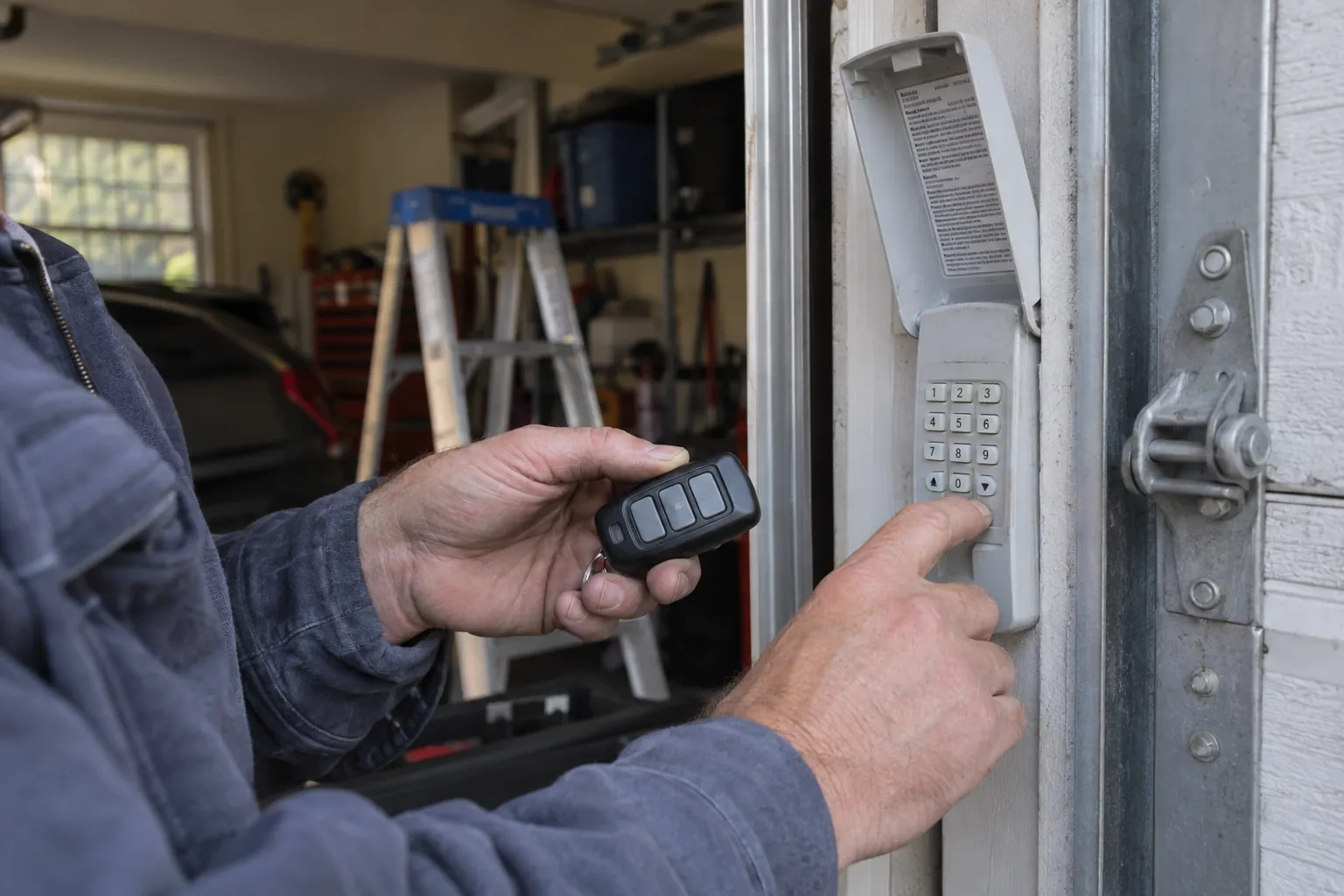
A newly balanced door often needs the opener's travel limits and force settings reset and its reversing tested. That short adjustment is named in the quote when it is needed.
What to have ready
- Can you see a cable hanging loose, frayed, or wound around the shaft?
- When were the springs last replaced, if you know?
- Does the opener still run, and does it strain or reverse?
Garage Door Cable Replacement: questions
QuestionsWhat are garage door cables made of?
They are galvanized aircraft-type wire rope: many fine steel wires twisted into strands, and the strands laid around a core, which gives a cable that bends around a small drum thousands of times without fatiguing. One end carries a swaged stop or a loop for the drum, the other a loop that fits over the bottom bracket pin. Diameter and length are chosen for the door's weight and height.
Should both cables be replaced when only one has failed?
Yes, as a rule. The two cables were fitted together, have flexed around their drums the same number of times and have sat in the same slush, so the survivor is close to the end of its life. A new cable beside a stretched one also makes it harder to set the door level. Two matched cables give an even lift and one visit instead of two.
Why is the door sitting crooked in the opening?
Each corner of the door is held by its own cable. When one cable stretches, slips its drum or breaks, that corner loses its lift and drops while the other stays up, so the door tips and usually wedges against the track. Setting both cables to the same length and tension is part of every cable replacement, and it is what brings the door back level.
Related services
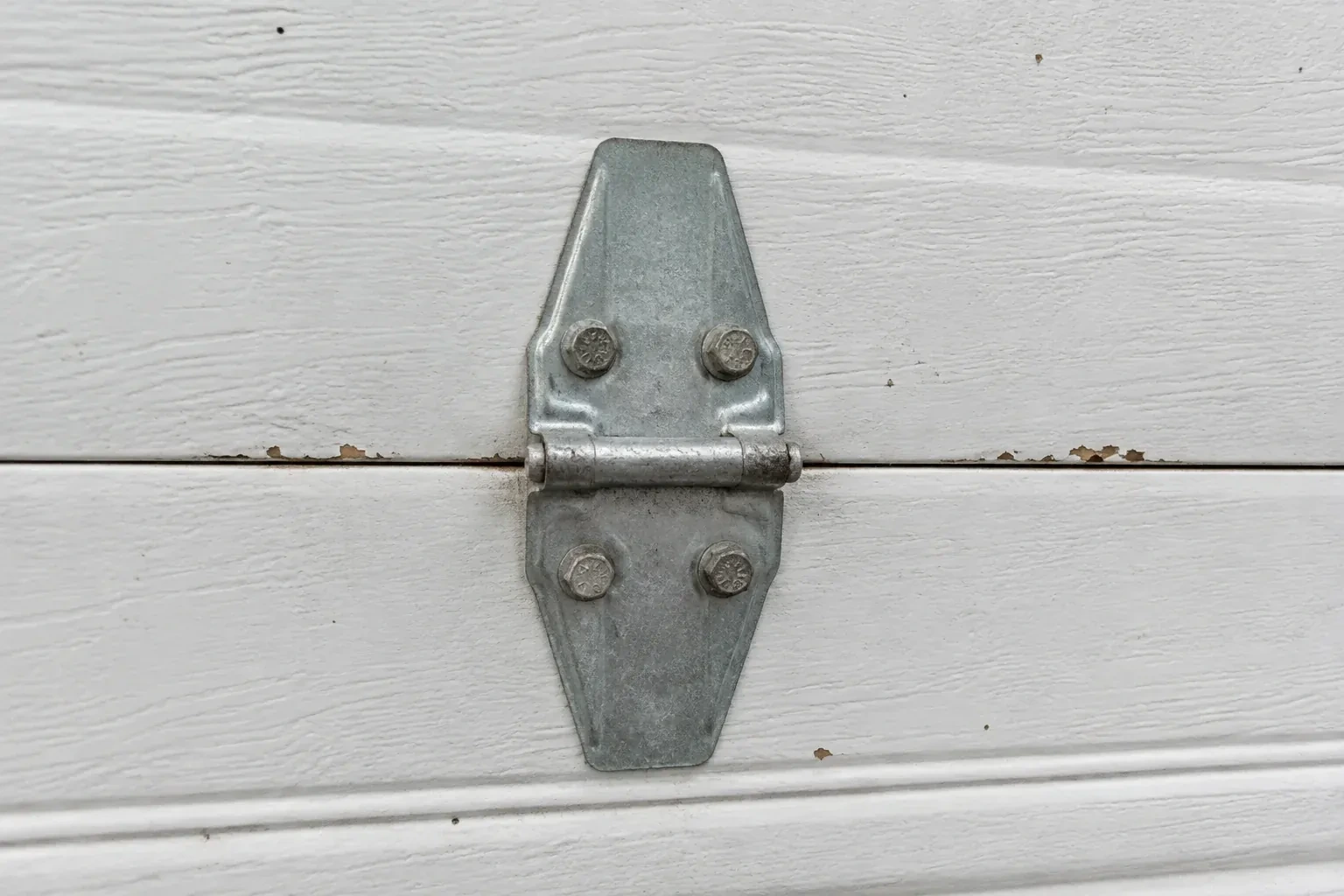
- Garage Door Hinge ReplacementPressing a hand against one of the middle hinges makes it rock on the panel.
- Garage Door Track Repair or ReplacementThe horizontal rail toward the back of the garage sags noticeably.
- Torsion Spring ReplacementAfter pulling the red release cord, you tried lifting the door yourself and it would barely leave the floor.