Springs · Albion Falls
Garage Door Cable Replacement in Albion Falls
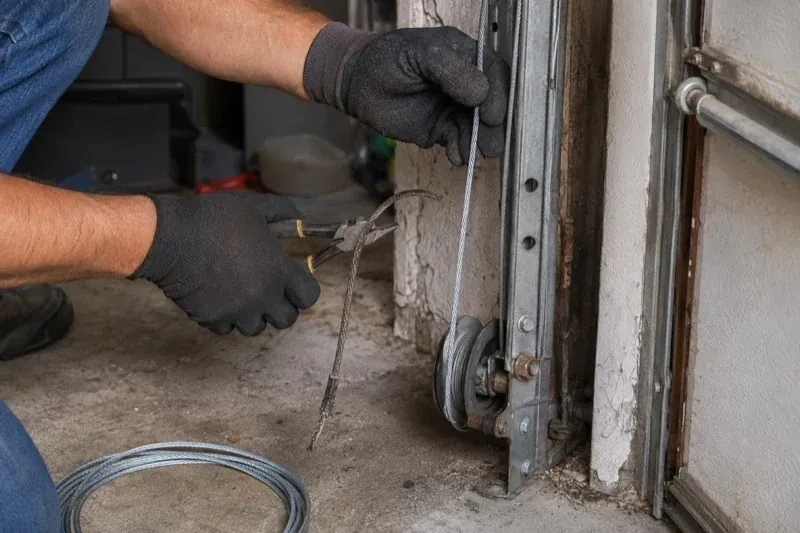
Your older door has springs along the tracks, and one cable has slipped off its pulley and dangles slack.
In plain words
Garage door cables carry the weight of the door as tension held by the springs, which is why the work follows a careful, well-rehearsed sequence rather than simply hooking a cable back on. On a torsion system the technician clamps the door, disconnects the opener and unloads the springs with winding bars before any cable, drum or bracket is touched; on an extension system the door is instead raised fully and clamped so its pulley-mounted springs relax. Once the system is unloaded, replacing the cables is straightforward: the correct length is set, and the counterbalance is tensioned and locked off by the method that system calls for.
How the visit goesThe car bumper kissed the door on the way in. The bottom panel has a dent, the bracket in that corner sits crooked, and the cable on that side has jumped and gone slack, so the door reverses every time it tries to close.
Garage Door Cable Replacement
How the visit goes
Making the door safe to work on
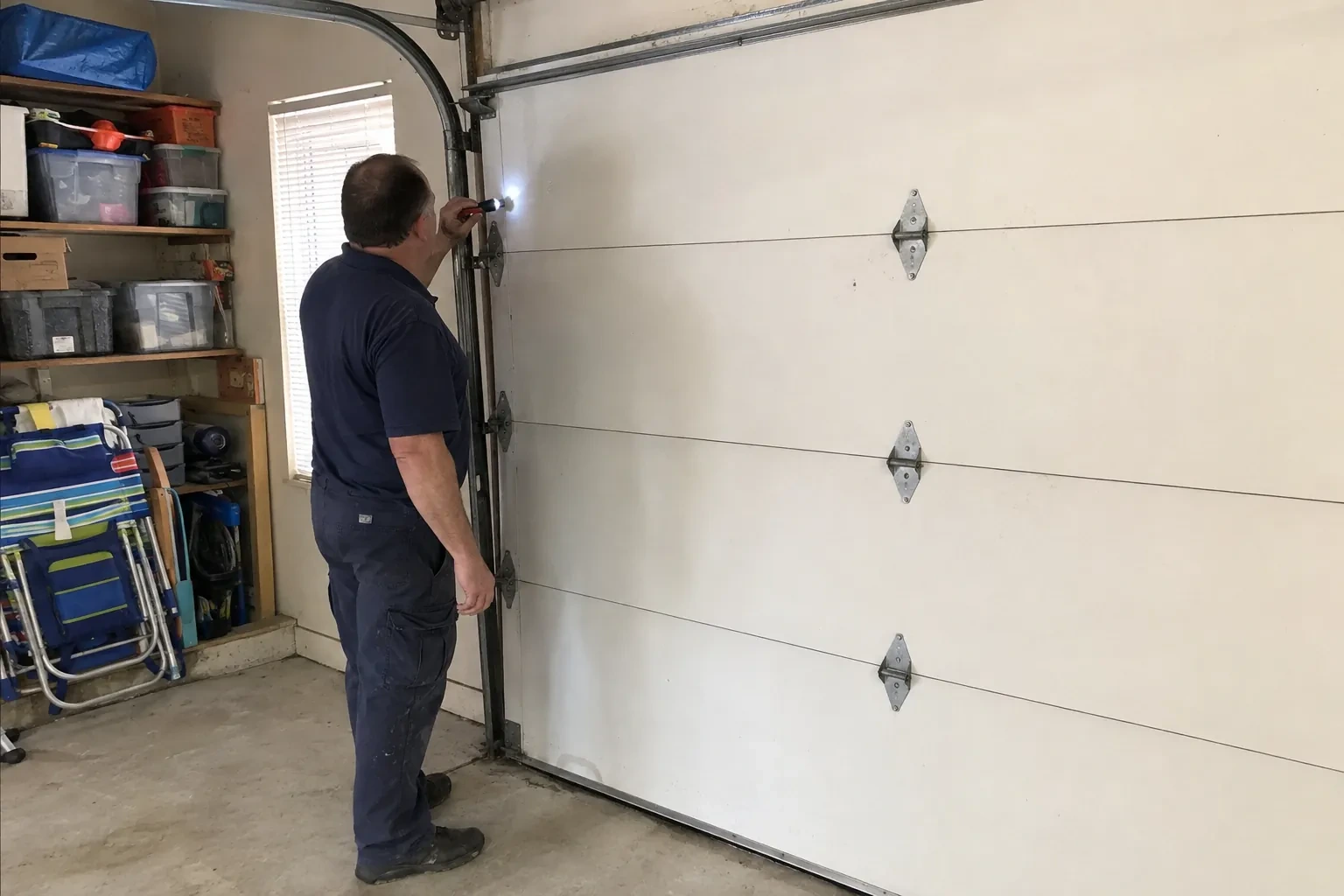
Nothing is touched until the door cannot move. The technician pulls the opener's release cord so the motor is out of the picture, clears the opening, and clamps the track just above a roller or props the door if it is jammed partway. If one cable has let go, the door is probably tipped and binding in the track, with its weight resting unevenly on the remaining cable and spring, so the first job is to take that weight on clamps or a support. Only then does the assessment of drums, springs and brackets begin. This step is calm and deliberate, and it is what allows every later step to be done with both hands.
Winding the springs back on
The torsion springs are wound back up with the winding bars, a quarter turn at a time, to the number of turns the door height calls for, which is roughly one full turn for each foot of door plus a small allowance the technician judges from the balance test. The cone set screws are tightened to the shaft, the bars are removed, and the clamps come off. The cables are watched as the door is raised to make sure each wraps onto its drum in a single neat layer with no overlap and pays out cleanly on the way down. A quarter turn added or removed fine-tunes the balance.
Keeping salt and slush off the bottom hardware
The new cables will last longest if the bottom brackets stay reasonably dry. Through winter, push slush away from the door's inside edge rather than letting it pool against the bottom section, and wipe the road salt off the brackets and the lowest stretch of cable when a mild day comes. A light spray of silicone lubricant on the cable loops and bracket pins in late autumn sheds meltwater. Park so the car does not drip directly onto the corners of the door. None of this is a chore, and it addresses the one spot where cables in this climate almost always fail first.
Garage Door Cable Replacement
In the van
Galvanized aircraft-type lift cables
Torsion springs and winding cones
Winding bars
Drum set screws
Silicone garage-door lubricant
Garage Door Cable Replacement
What affects the quote
Impact damage to track or sections
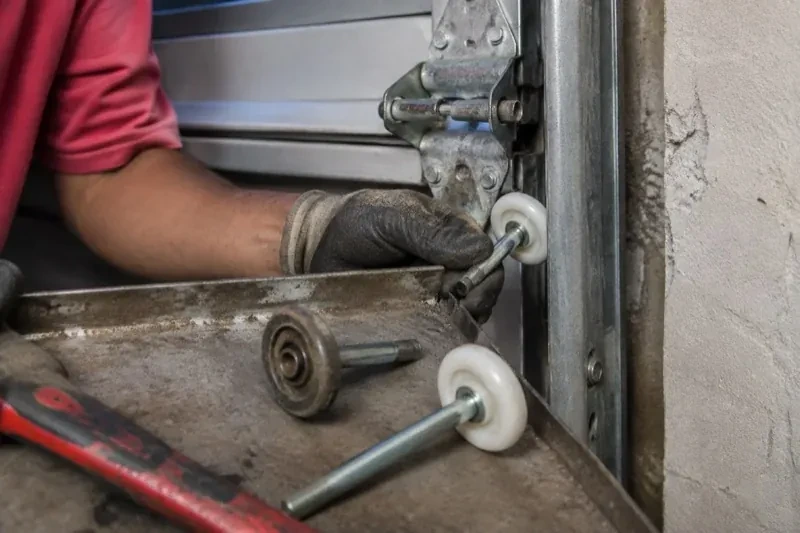
A bumper strike often bends the track, a hinge or the bottom section as well as displacing the cable. Straightening or replacing those parts is quoted as separate work.
Corrosion and seized fasteners
Set screws and bracket bolts that have rusted solid take time to free or cut, and badly corroded hardware is replaced rather than reused, which shows in the parts list.
How the door is sitting
A door resting closed is simpler than one wedged crooked in the opening or off its track, which has to be supported and straightened before the cables can be handled.
What to have ready
- When were the springs last replaced, if you know?
- Is there one spring above the opening, or springs stretched along the tracks?
- Is the door closed, fully open, or stuck partway?
Garage Door Cable Replacement: questions
QuestionsWhat are garage door cables made of?
They are galvanized aircraft-type wire rope: many fine steel wires twisted into strands, and the strands laid around a core, which gives a cable that bends around a small drum thousands of times without fatiguing. One end carries a swaged stop or a loop for the drum, the other a loop that fits over the bottom bracket pin. Diameter and length are chosen for the door's weight and height.
Should both cables be replaced when only one has failed?
Yes, as a rule. The two cables were fitted together, have flexed around their drums the same number of times and have sat in the same slush, so the survivor is close to the end of its life. A new cable beside a stretched one also makes it harder to set the door level. Two matched cables give an even lift and one visit instead of two.
Why is the door sitting crooked in the opening?
Each corner of the door is held by its own cable. When one cable stretches, slips its drum or breaks, that corner loses its lift and drops while the other stays up, so the door tips and usually wedges against the track. Setting both cables to the same length and tension is part of every cable replacement, and it is what brings the door back level.
Related services
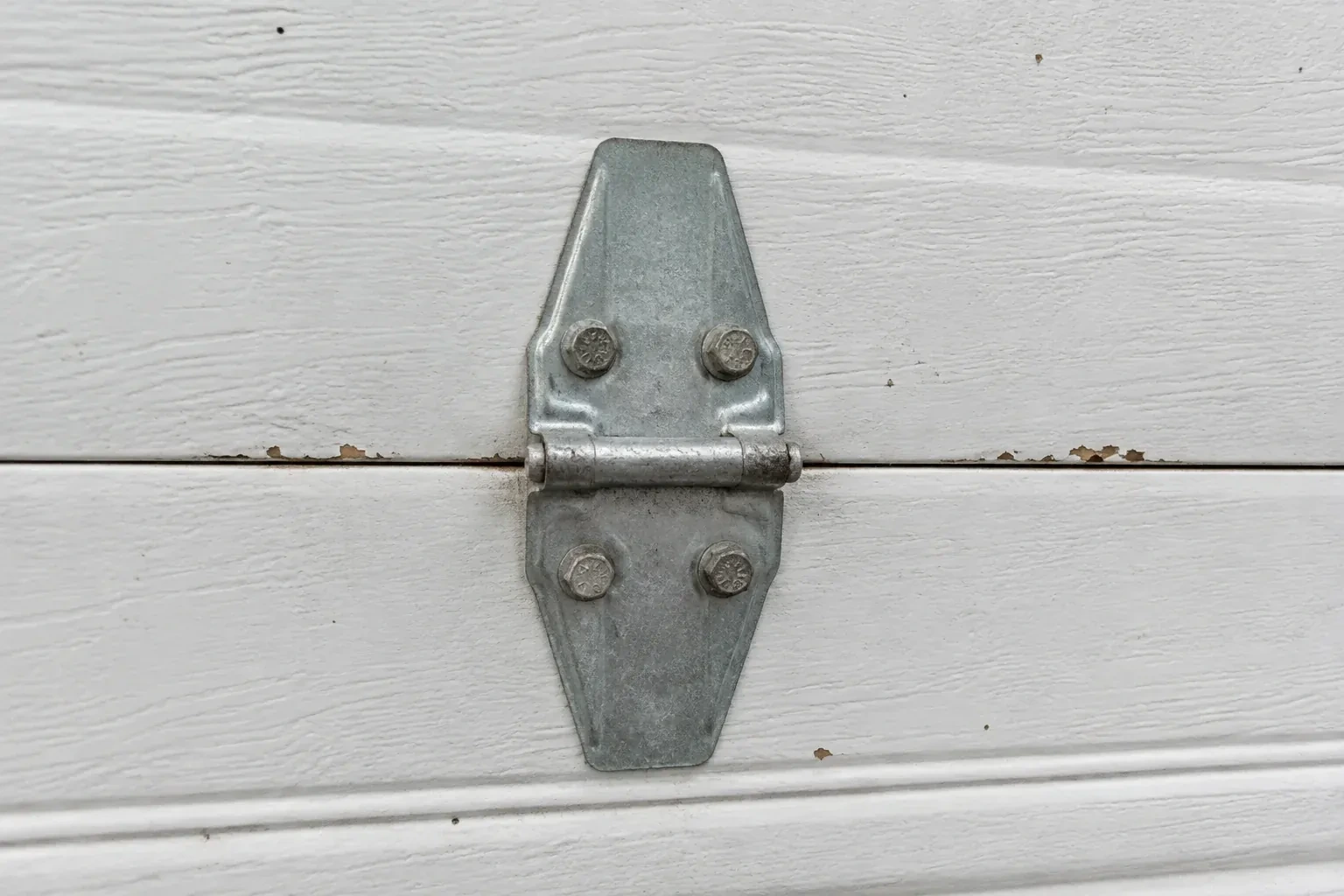
- Garage Door Hinge ReplacementPressing a hand against one of the middle hinges makes it rock on the panel.
- Garage Door Track Repair or ReplacementThe horizontal rail toward the back of the garage sags noticeably.
- Torsion Spring ReplacementAfter pulling the red release cord, you tried lifting the door yourself and it would barely leave the floor.