Openers · Albion Falls
Chain-Drive Opener Repair in Albion Falls
The rail shakes when the door runs.
In plain words
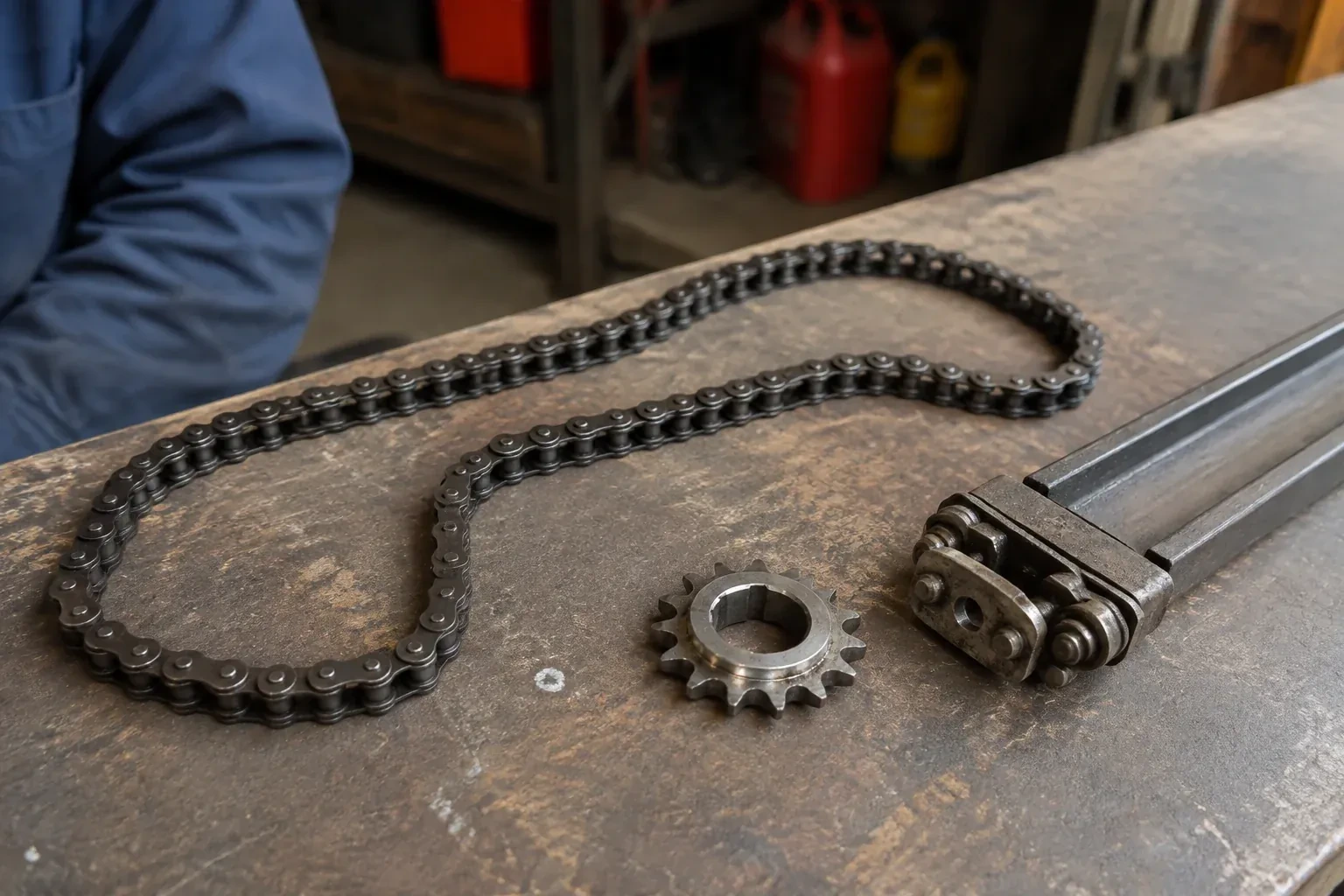
The most common chain-drive failure happens out of sight. Inside the motor head a plastic drive gear meshes with a steel worm on the motor shaft, and after years of lifting a door that has grown heavier its teeth wear away. The motor keeps running, but the sprocket above it turns weakly or not at all, and pale shavings collect under the cover. The repair fits a new gear and sprocket assembly made for that model, greases it properly, and then asks why the gear wore out. Usually the answer is a door that needs spring attention, and settling that is what protects the new gear.
How the visit goesThe chain hangs in a loop under the rail and slaps against it on every cycle. It used to sit snug. Now the whole house hears the door leave, and the sound has a metallic clatter it never had before.
Chain-Drive Opener Repair
How the visit goes
Under the head cover
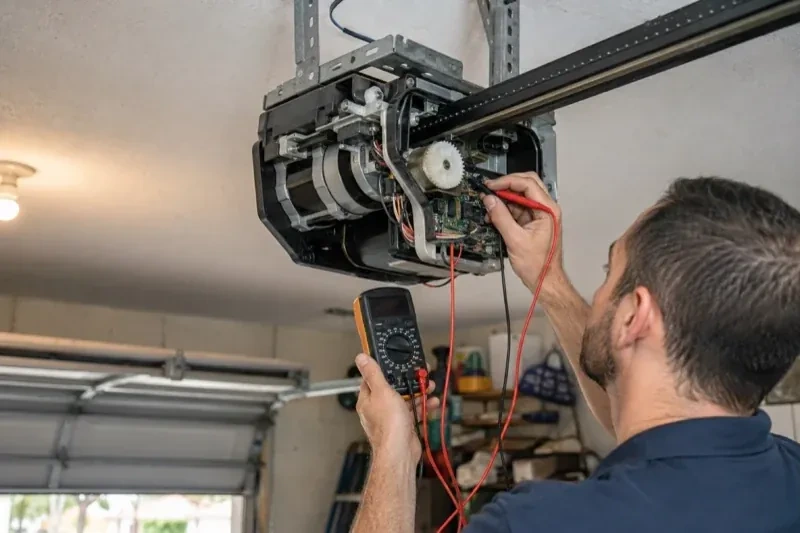
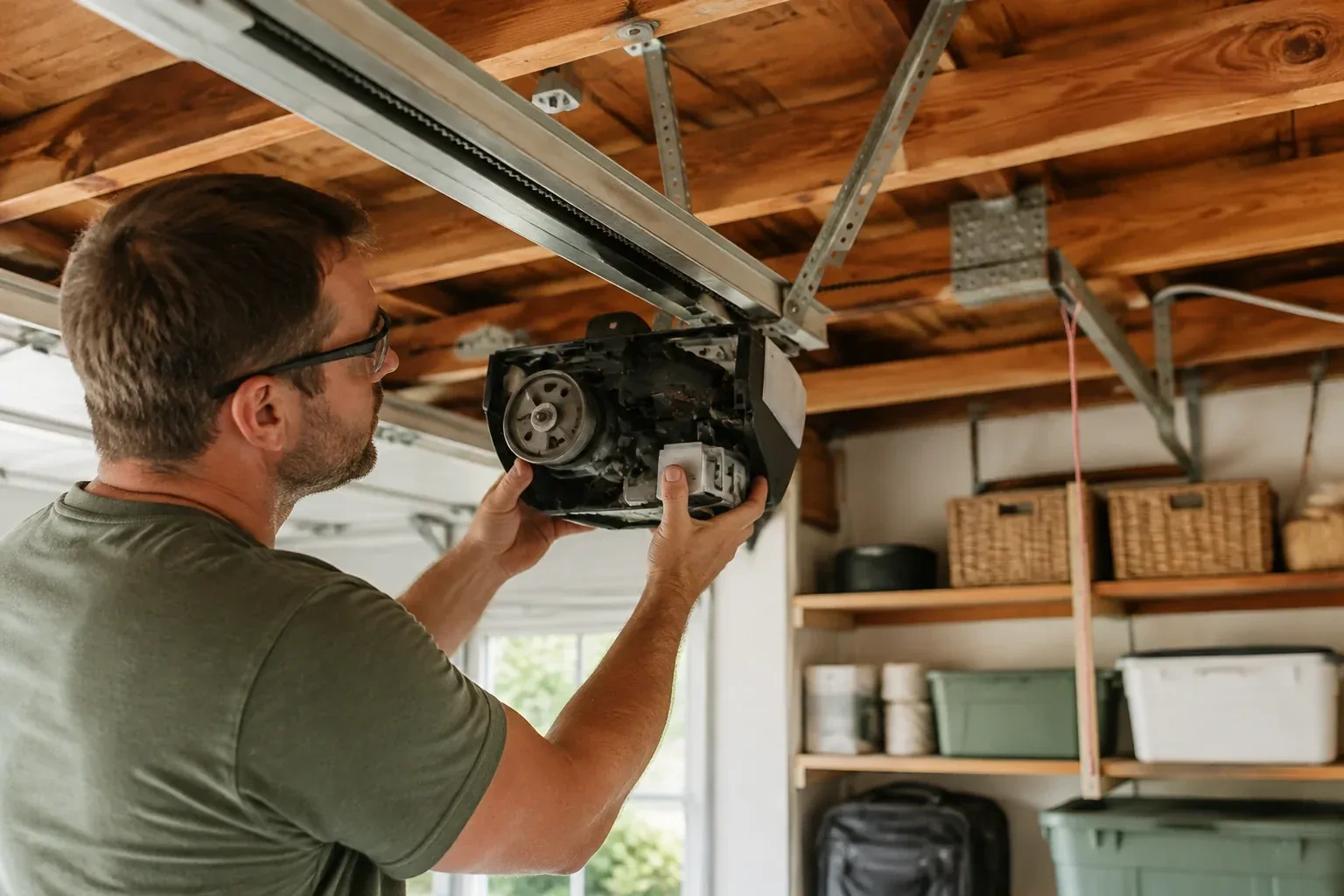
With the power off, the cover comes off the motor head so the drive can be seen. The technician looks for pale shavings around the drive gear, which mean the teeth are wearing away, and for a sprocket shaft that rocks when pushed, which points to worn bushings. The worm gear on the motor shaft is checked for scoring, the grease is judged for age and cold-thickening, and the capacitor is inspected for swelling. On newer heads the RPM sensor and its magnet are checked, since a faulty one makes the operator lose track of how far the door has moved. This look decides whether the job is a gear kit, a chain or an adjustment.
Fitting a new chain
A stretched or rust-bound chain is replaced as a unit. The technician disconnects the door, slackens the tensioner and opens the master link, then draws the old chain off the sprocket, through the trolley and around the idler at the door end. The new chain, sized to the rail length, is threaded the same way, joined at the master link with the clip facing away from the direction of travel, and settled onto the sprocket teeth by hand. Any cable section on a combined chain-and-cable drive is checked for fraying and renewed if needed. The chain is then tensioned to the rail's specification and the trolley run by hand along its full length.
Two tests once a month
The protection built into the operator only counts if it still works, and two short checks each month keep you sure of it. Lay a scrap of 2x4 flat on the floor under the middle of the door and close it from the wall button; the door should climb back to open the moment it touches the wood. Then, with the door closing again, pass a broom handle through the beam of the low sensors; the door should reverse just the same. If either test is failed, stop using the operator and book an adjustment. It is a setting, and a small one, but it is the one that matters most.
Chain-Drive Opener Repair
In the van
RPM sensor
Idler sprocket or pulley
Rail hangers and header bracket
Cold-rated garage door lubricant
Chain tensioner nuts and shaft
Chain-Drive Opener Repair
What affects the quote
Electrical parts inside the head
A swollen capacitor, a failed RPM sensor or a damaged board found during the inspection are quoted separately from the mechanical drive, since each is a distinct component for that model.
Trolley and release parts
A worn inner or outer trolley, a cracked latch or a bent release lever are replaced as separate pieces, and whether any of them is needed shows only once the trolley has been run along the rail by hand.
Two operators in one visit
A double garage with two chain drives, or a house and a detached workshop, share the travel and setup and are quoted as one visit with two repairs.
What to have ready
- Does the door stop short, reverse at the floor, or open only partway?
- Is the trolley stuck at the very end of the rail, near the motor or near the door?
- What make and model is on the opener's label, and roughly how old is it?
Chain-Drive Opener Repair: questions
QuestionsIs a chain drive supposed to be this noisy?
A chain drive has a steady mechanical sound that a belt drive lacks, and that much is normal. What is not normal is change: a slap along the rail from a loose chain, a clack at one spot from a worn sprocket tooth, grinding from the head as a gear wears, or a rattle from hangers or a header bracket that have loosened. Each of those has a fix, and a repaired chain drive should sound the way it did when it was new.
Why does the door open only partway and stop?
Three causes account for most cases. The up travel limit has drifted short and needs turning out. The door has become heavy or stiff somewhere in its travel, so the operator senses resistance and stops, which points to the springs, rollers or track. Or the chain has slipped out of phase with the motor, in which case the limit screws have no effect and the chain must be re-set on the sprocket with the trolley at the closed position.
Why does the door jerk or jump at the same spot every time?
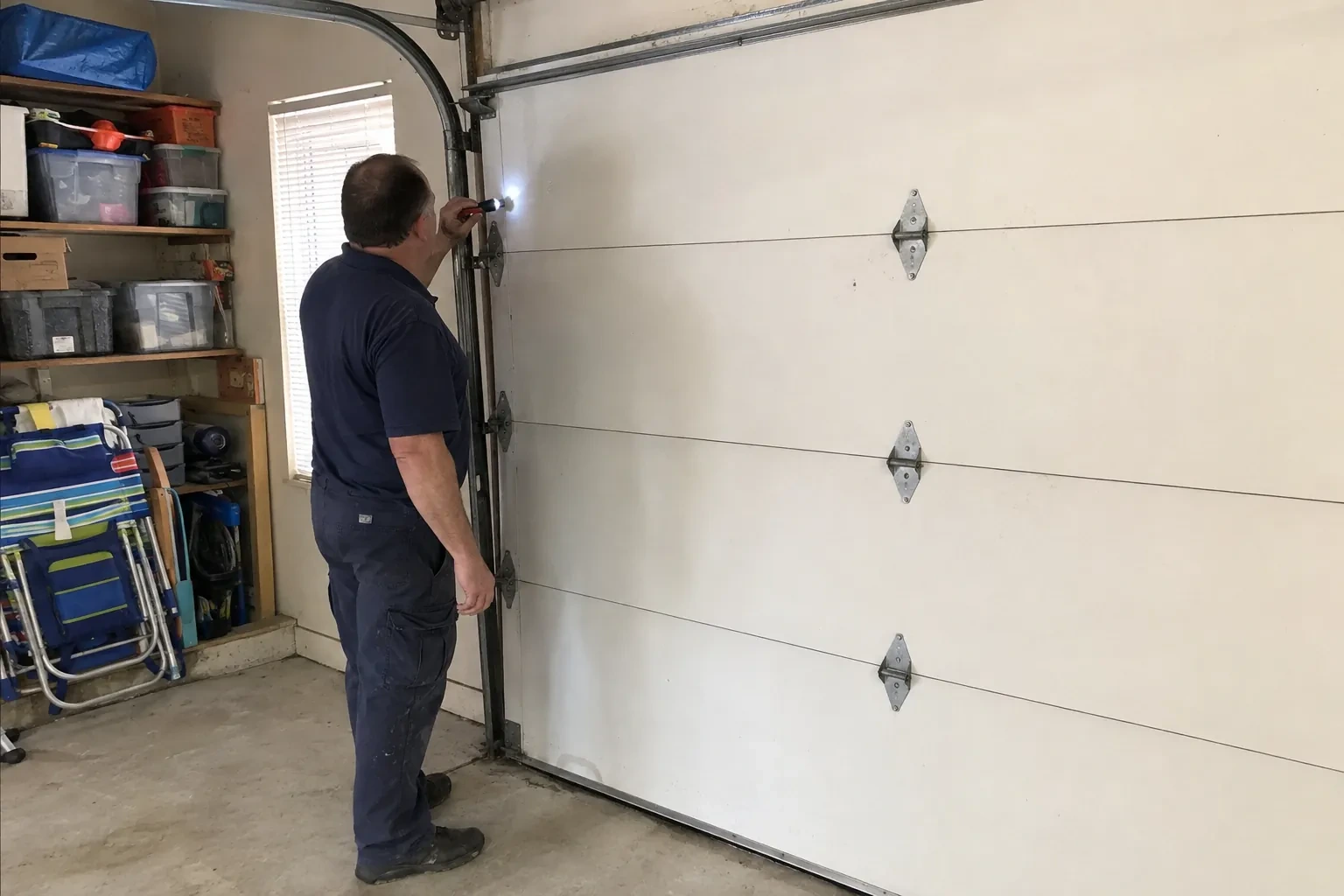
A repeatable jolt at one point on the rail is usually a chain problem meeting a sprocket problem: a stiff link or a spread master link passing over worn sprocket teeth, so the chain rides up and drops a tooth. It can also be a burr or a splice plate on the rail where the trolley catches, or a roller on the door hanging up in the track at that height. The technician runs the door by hand first to tell the two apart.
Related services
- Belt-Drive Opener RepairPress the remote and the motor runs its full cycle, lights on, the usual whir, but the door does not move a centimetre.
- Garage Door Opener ReplacementPress the button and the motor hums, but the door stays exactly where it is.
- Photo-Eye Sensor Alignment or ReplacementThe door will only go down while a finger stays on the wall button; let go and it stops or reverses.