Openers · Inch Park
Chain-Drive Opener Repair in Inch Park
The rail shakes when the door runs.
In plain words
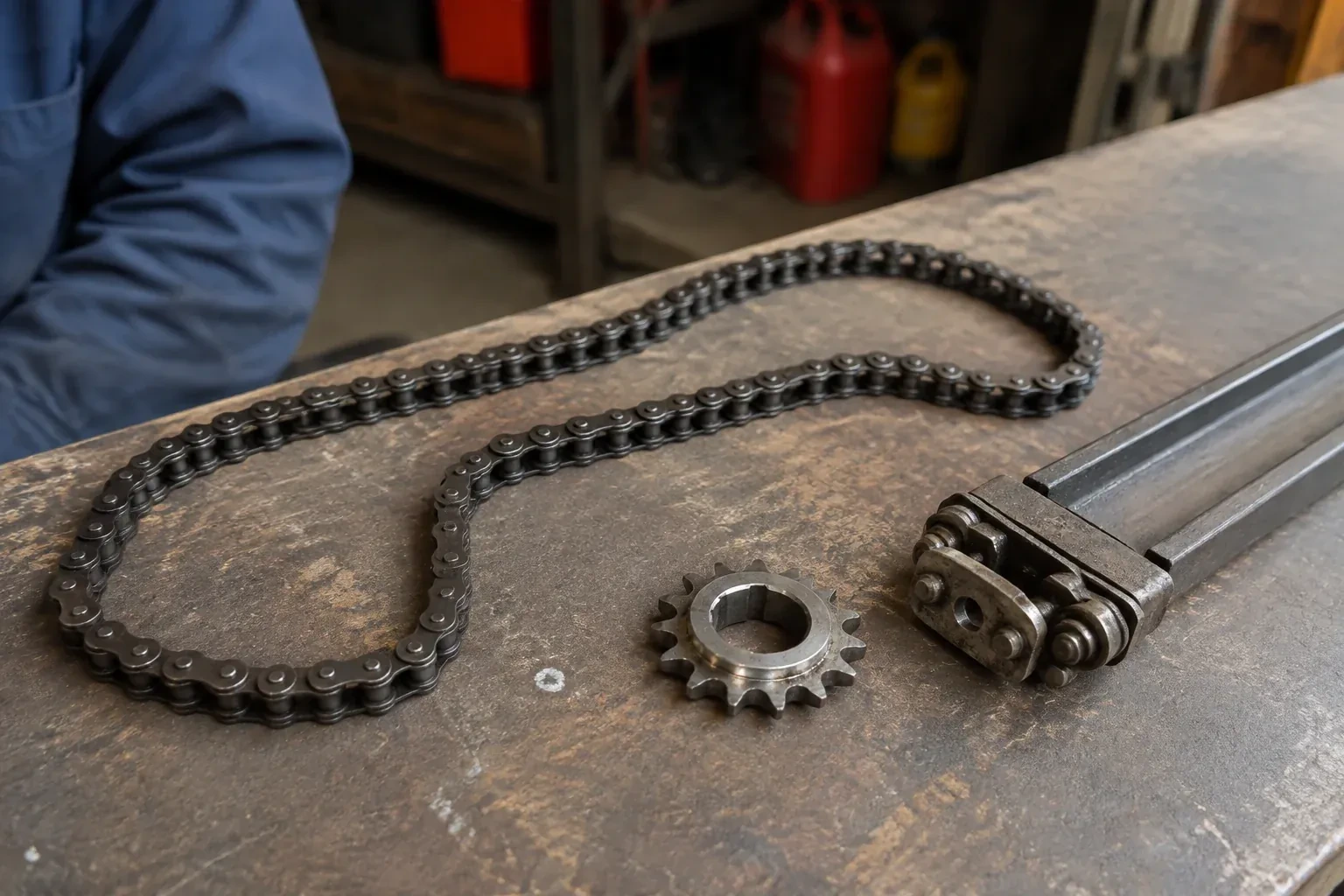
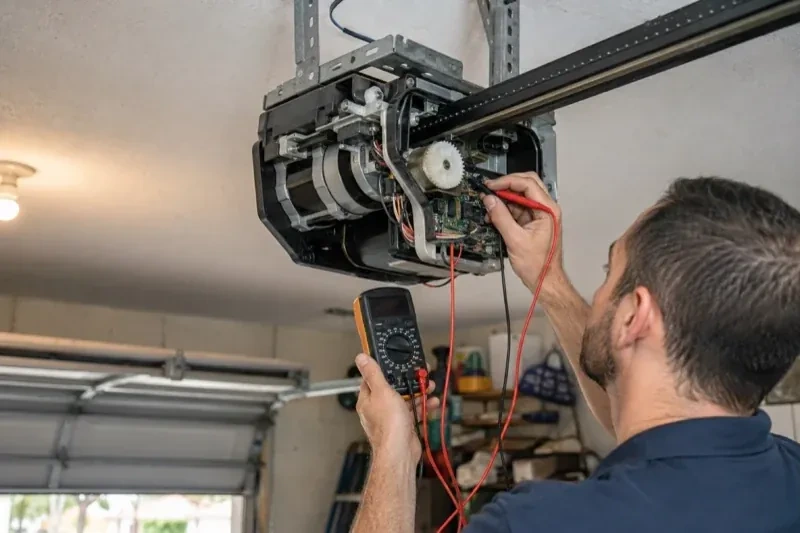
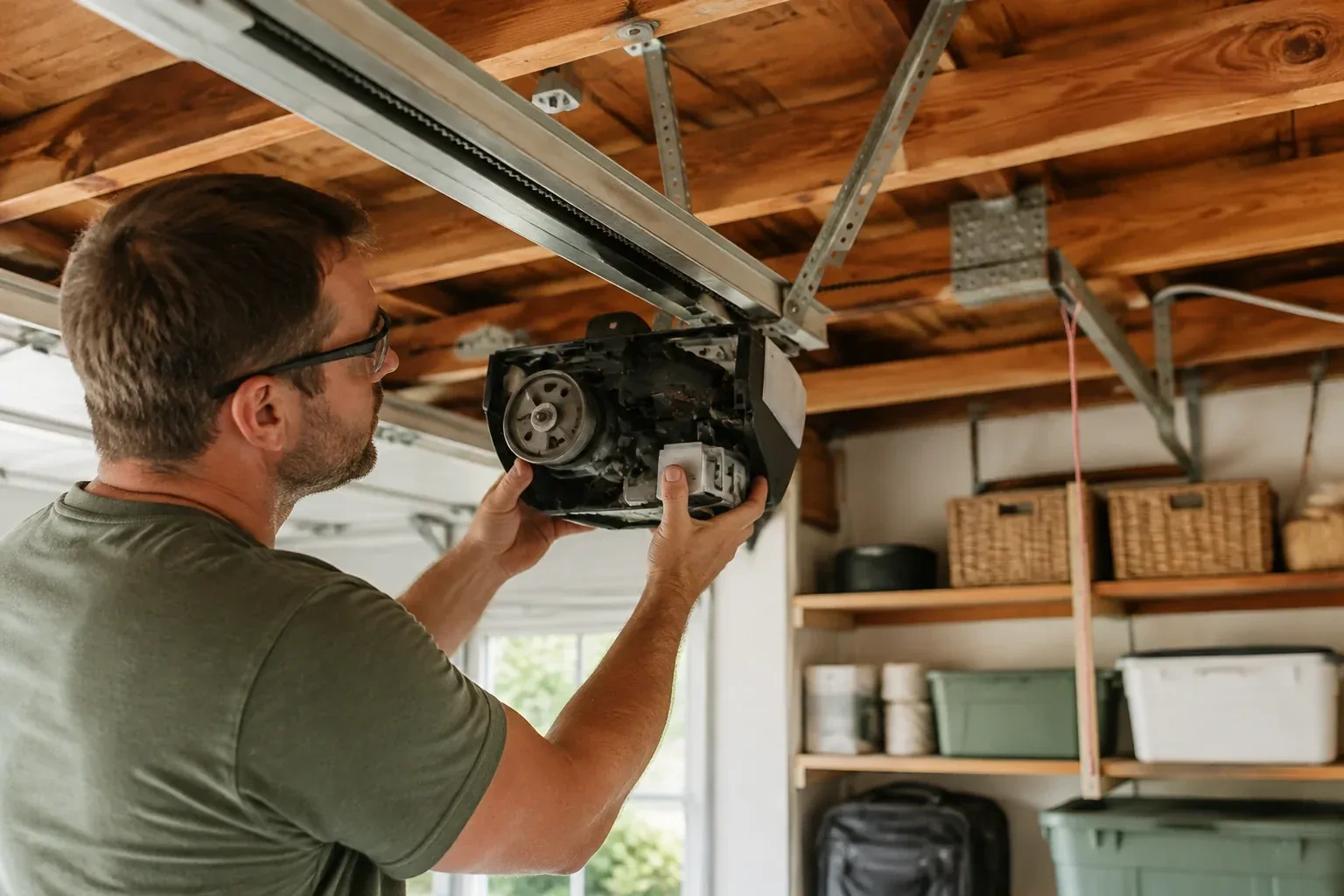
The most common chain-drive failure happens out of sight. Inside the motor head a plastic drive gear meshes with a steel worm on the motor shaft, and after years of lifting a door that has grown heavier its teeth wear away. The motor keeps running, but the sprocket above it turns weakly or not at all, and pale shavings collect under the cover. The repair fits a new gear and sprocket assembly made for that model, greases it properly, and then asks why the gear wore out. Usually the answer is a door that needs spring attention, and settling that is what protects the new gear.
How the visit goesThe chain hangs in a loop under the rail and slaps against it on every cycle. It used to sit snug. Now the whole house hears the door leave, and the sound has a metallic clatter it never had before.
Chain-Drive Opener Repair
How the visit goes
Trolley, release lever and the stop bolt
The trolley is looked at in two ways: where it sits and how it is wearing. With the door closed, the trolley should rest near the door end of the rail without touching the stop tab; with the door open, short of the stop bolt near the head. A trolley jammed against either stop explains a humming motor. The release lever is checked for a bent arm or a worn latch that lets the trolley slide past the door arm without picking it up. The technician also confirms the trolley and the motor agree about the door's position, since a chain that was run off the sprocket puts them out of phase and no amount of limit adjustment corrects that.
Bringing the chain back into phase
If the drive has been run without the chain on the sprocket, the motor and the trolley disagree about the door's position and the door travels partway no matter how the limits are set. The technician slackens the chain and lifts it off the sprocket, then runs the operator and watches the sprocket: when it turns and stops on its own in the closed direction, the motor is at its closed position. The trolley is moved to the closed end of the rail, the chain is refitted over the sprocket, and tension is set. On some heads the internal limit assembly is aligned instead. The limits are then adjusted so the door reaches the floor and its full open height.
The release handle and the lock on the door
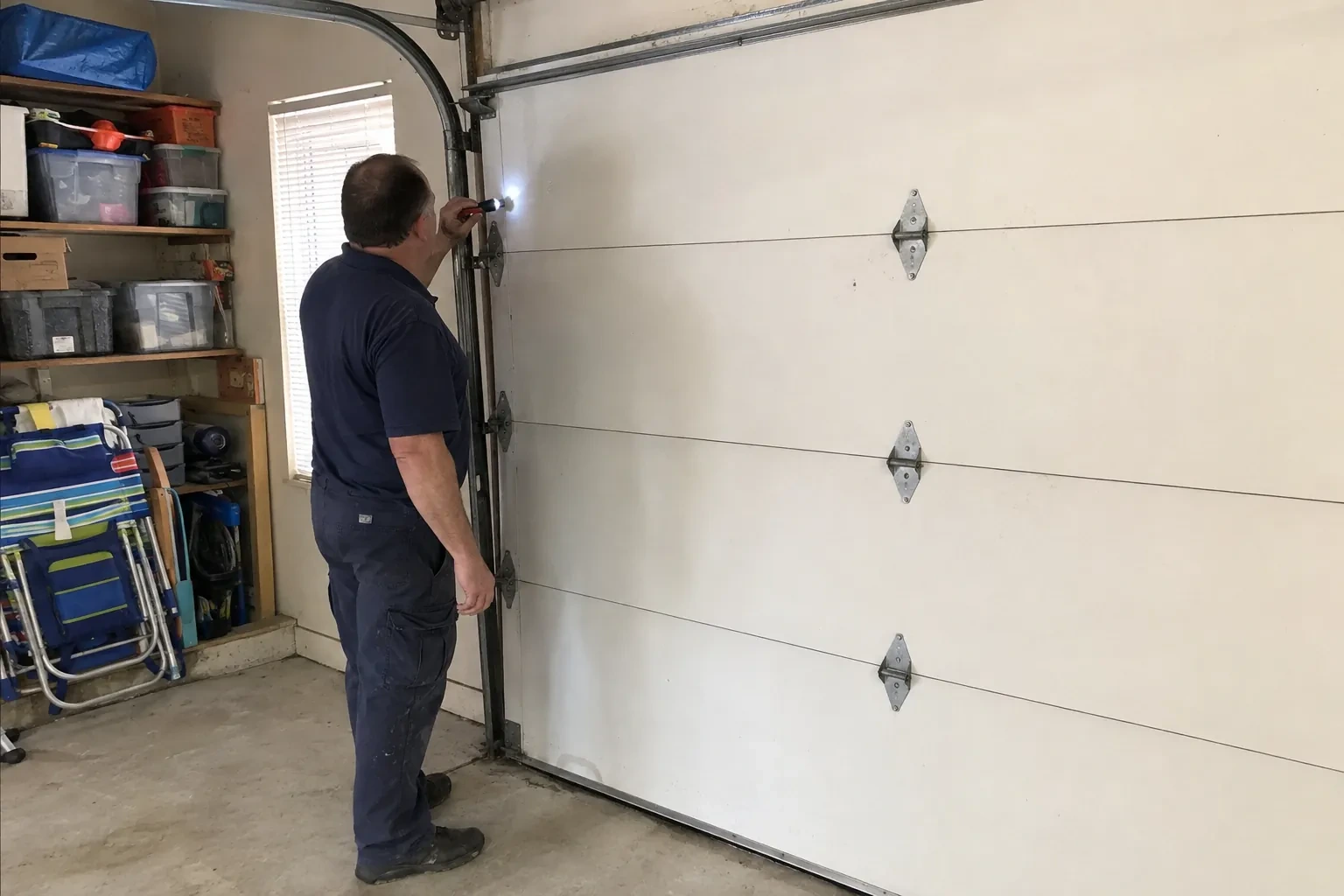
You leave knowing two things about the door. The red handle disconnects the door from the trolley so you can lift it by hand during a power cut or if the drive ever stalls; pull it with the door closed, never while it is open and free to fall. To reconnect, most heads need only be run once and the trolley picks the arm back up. The manual slide lock on the door itself, if it still has one, stays disabled while an operator is connected, because a motor pulling against a locked door is one of the surest ways to strip a drive gear or bend the top section.
Chain-Drive Opener Repair
In the van
RPM sensor
Idler sprocket or pulley
Rail hangers and header bracket
Cold-rated garage door lubricant
Chain tensioner nuts and shaft
Chain-Drive Opener Repair
What affects the quote
Door hardware quieted at the same time
Nylon rollers, new hinges or a vibration isolator chosen to quiet the door and the ceiling alongside the drive repair are optional items listed on their own.
Rail hardware and hangers
Loose hangers, a header bracket that has pulled from the framing, or splice plates that need renewing add fasteners, angle iron and time on the ladder to a job that might otherwise be an adjustment.
Trolley and release parts
A worn inner or outer trolley, a cracked latch or a bent release lever are replaced as separate pieces, and whether any of them is needed shows only once the trolley has been run along the rail by hand.
What to have ready
- Can you send a photo of the motor head, the rail and the chain?
- Is the chain hanging loose under the rail, or is it rusty or stiff?
- Is the garage attached and heated, or detached and unheated?
Chain-Drive Opener Repair: questions
QuestionsIs a chain drive supposed to be this noisy?
A chain drive has a steady mechanical sound that a belt drive lacks, and that much is normal. What is not normal is change: a slap along the rail from a loose chain, a clack at one spot from a worn sprocket tooth, grinding from the head as a gear wears, or a rattle from hangers or a header bracket that have loosened. Each of those has a fix, and a repaired chain drive should sound the way it did when it was new.
Why does the door open only partway and stop?
Three causes account for most cases. The up travel limit has drifted short and needs turning out. The door has become heavy or stiff somewhere in its travel, so the operator senses resistance and stops, which points to the springs, rollers or track. Or the chain has slipped out of phase with the motor, in which case the limit screws have no effect and the chain must be re-set on the sprocket with the trolley at the closed position.
Why does the door jerk or jump at the same spot every time?
A repeatable jolt at one point on the rail is usually a chain problem meeting a sprocket problem: a stiff link or a spread master link passing over worn sprocket teeth, so the chain rides up and drops a tooth. It can also be a burr or a splice plate on the rail where the trolley catches, or a roller on the door hanging up in the track at that height. The technician runs the door by hand first to tell the two apart.
Related services
- Belt-Drive Opener RepairPress the remote and the motor runs its full cycle, lights on, the usual whir, but the door does not move a centimetre.
- Garage Door Opener ReplacementPress the button and the motor hums, but the door stays exactly where it is.
- Photo-Eye Sensor Alignment or ReplacementThe door will only go down while a finger stays on the wall button; let go and it stops or reverses.