Openers · Hamilton
Chain-Drive Opener Repair in Hamilton
The rail shakes when the door runs.
In plain words
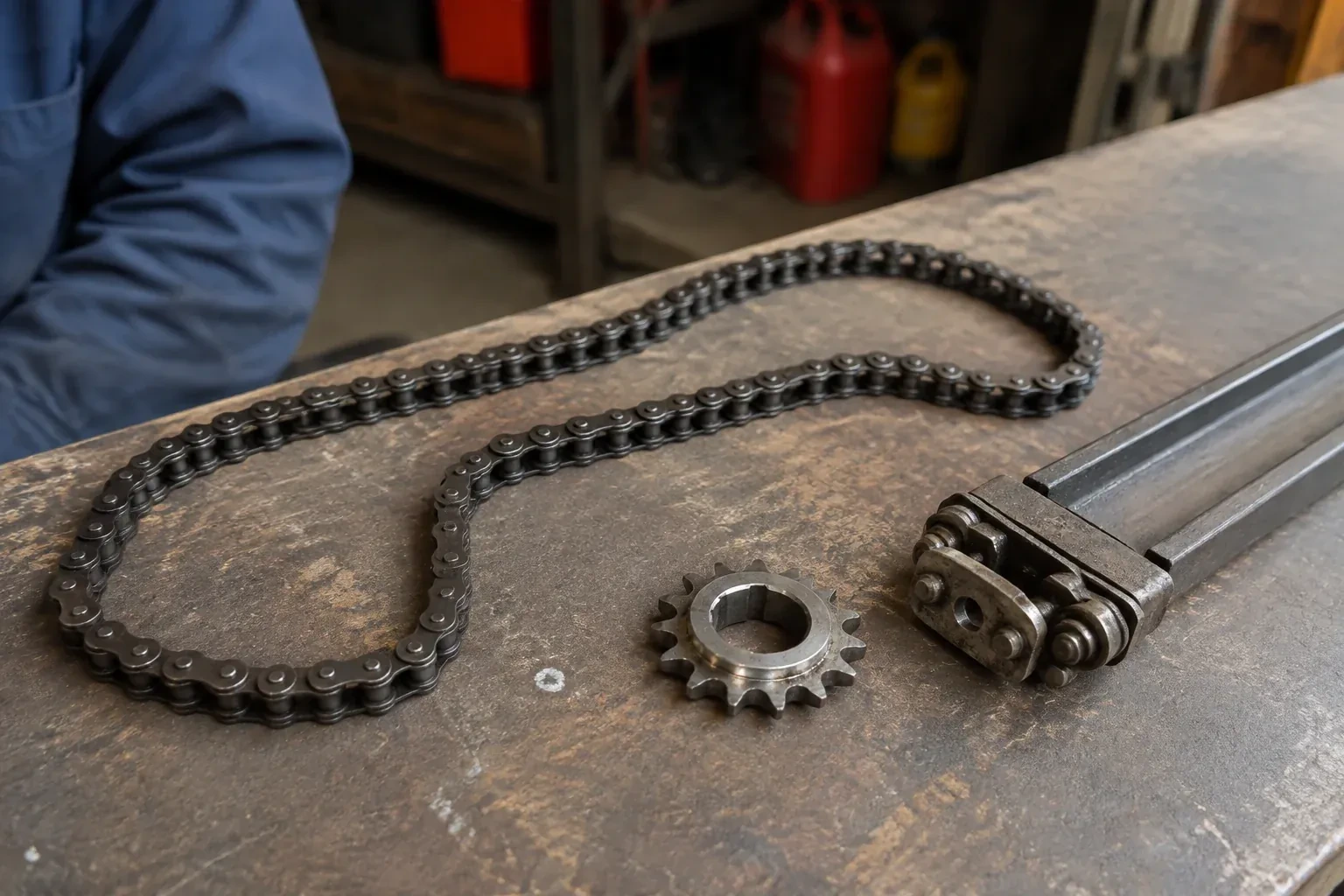
Cold is hard on a chain drive, and a detached or unheated garage shows it first. Grease on the rail and inside the gearbox thickens, a chain with surface rust stiffens link by link, and the operator strains against a door whose bottom seal may also be frozen to the slab. The result is a door that groans, stalls or reverses on the coldest mornings and works by afternoon. The repair frees or replaces a rusted chain, cleans and regreases the rail and gears, and sets force so the operator moves the door in the cold without being pushed past its safety limit.
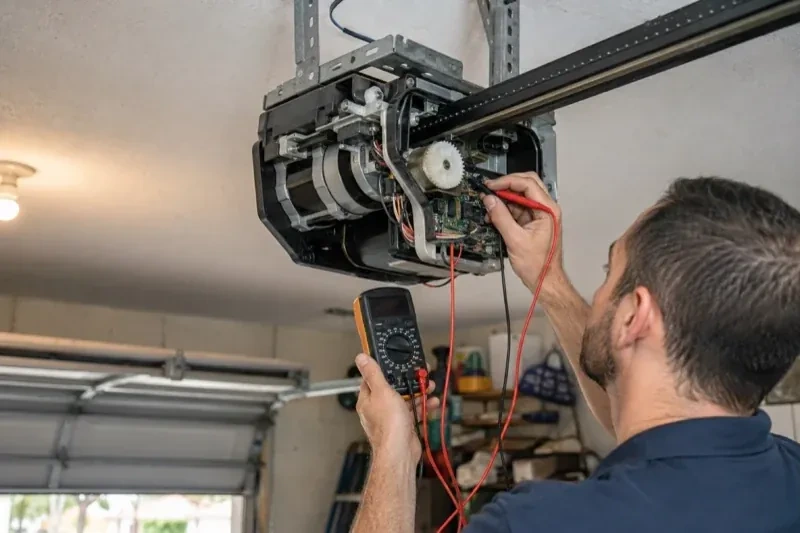
How the visit goesPress the button and the opener hums for a second, then quits. The trolley is jammed hard against a bolt at the very end of the rail near the motor and will not budge in either direction.
Chain-Drive Opener Repair
How the visit goes
Sprocket at the head, idler at the door
The chain runs over two wheels: the drive sprocket on top of the motor head and an idler sprocket or pulley at the far end of the rail near the door. Both are inspected. Sprocket teeth that have worn into hooks let the chain ride up and skip under load, usually at the same spot every cycle, and a sprocket that has loosened on its shaft turns a fraction behind the motor. The idler is checked for a seized bearing or a groove worn off centre, which drags the chain to one side of the rail. Matching wear on chain and sprocket usually means both are renewed together so a new chain is not run over old teeth.
Truing and securing the rail
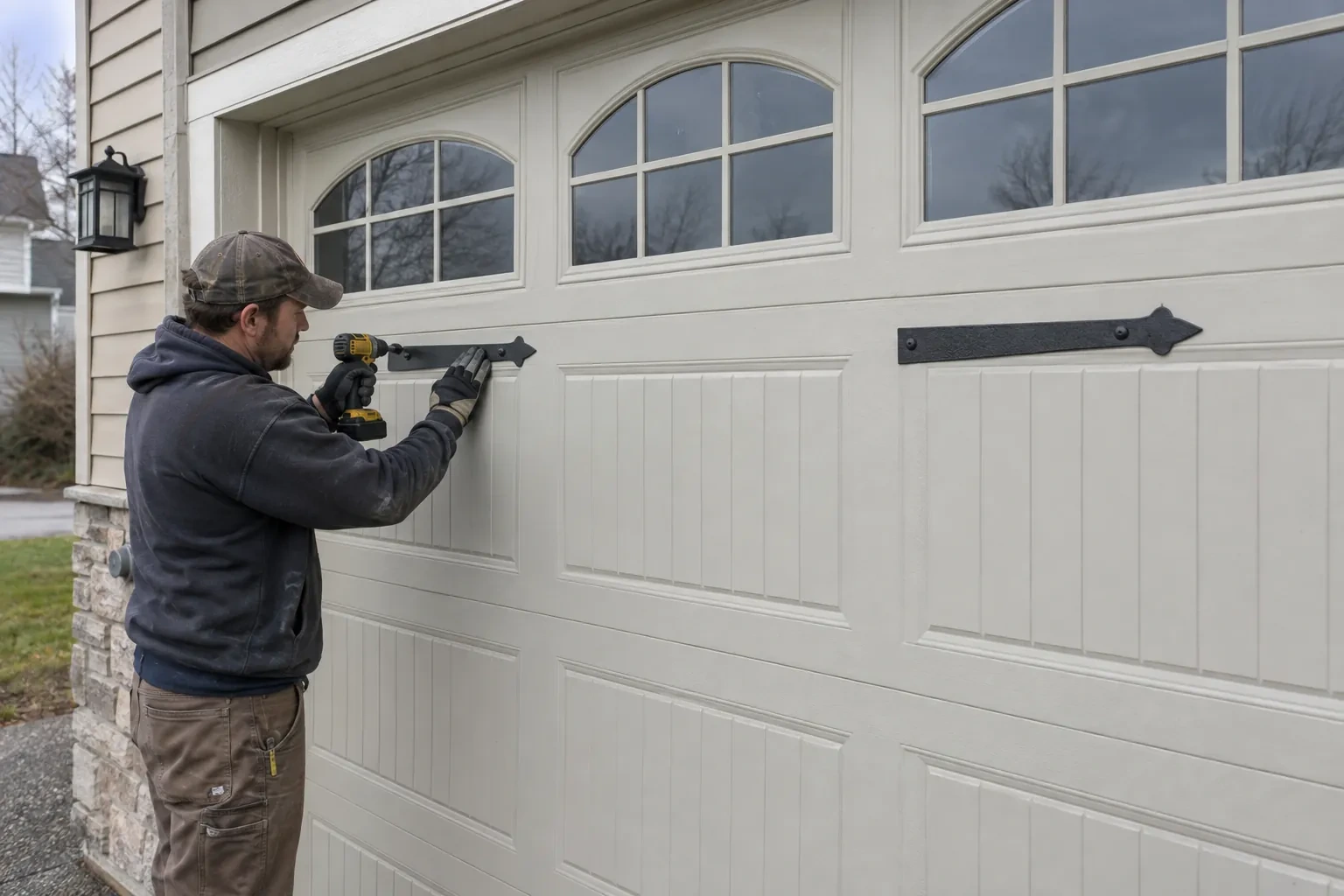
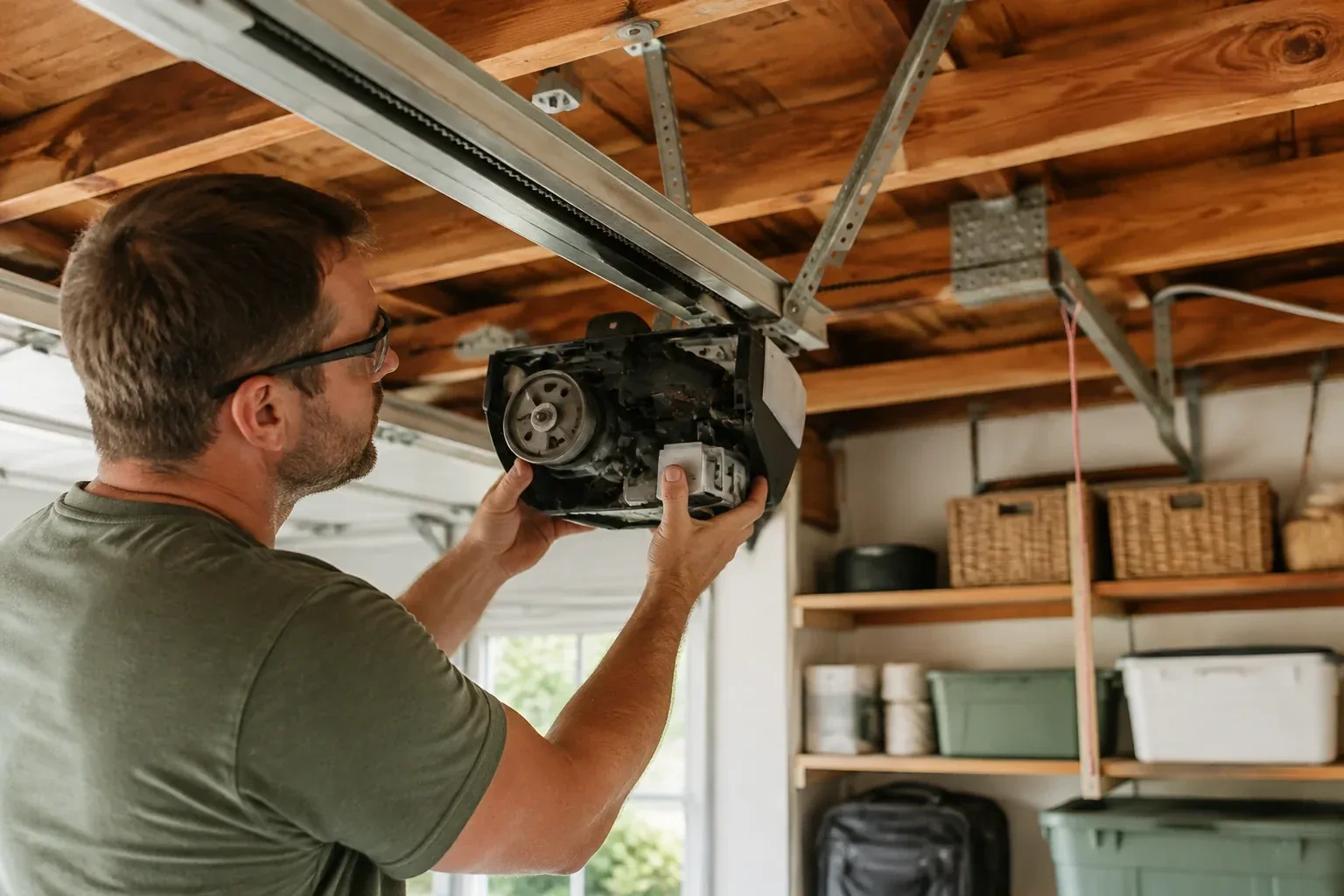
A rattling or flexing rail is corrected before any adjustment is trusted. Loose lag screws in the header bracket are tightened or moved to fresh solid wood, and a bracket that has split the framing is re-mounted. The angle-iron hangers at the head are tightened and braced diagonally so the head cannot swing, and the rail is checked with a level along its length and set with a slight fall away from the header so the trolley runs freely. Splice plates at rail joints are snugged and any burr where the trolley has caught is dressed smooth. The rail is then wiped of old grease and given a thin coat of white lithium grease where the trolley runs.
How the chain ages from here
A new or freshly tensioned chain settles over its first weeks of use, so a small change in sag is expected and was allowed for. Over years, though, a chain lengthens a little at a time. Glance at it now and then with the door open: if it has dropped visibly below where it sat after the repair, or has started to tap the rail, it is due for tensioning. Do the same after any winter when the garage has been especially cold. Surface rust on a chain in an unheated garage is worth mentioning at the next service before it stiffens the links.
Chain-Drive Opener Repair
In the van
RPM sensor
Idler sprocket or pulley
Rail hangers and header bracket
Cold-rated garage door lubricant
Chain tensioner nuts and shaft
Chain-Drive Opener Repair
What affects the quote
What is known before the visit
A model number and photographs of the head, rail and chain let the technician arrive with the right gear kit or chain, which keeps the job to one visit rather than two.
Rail hardware and hangers
Loose hangers, a header bracket that has pulled from the framing, or splice plates that need renewing add fasteners, angle iron and time on the ladder to a job that might otherwise be an adjustment.
Rail shape and door height
A T-rail and a square rail take different chains and tension figures, and an 8 ft door runs a longer rail and chain than a 7 ft door, so the length of chain on the quote follows the rail.
What to have ready
- Is the chain hanging loose under the rail, or is it rusty or stiff?
- Does the motor run when you press the button, and does the door move at all?
- Is the garage attached and heated, or detached and unheated?
Chain-Drive Opener Repair: questions
QuestionsIs a chain drive supposed to be this noisy?
A chain drive has a steady mechanical sound that a belt drive lacks, and that much is normal. What is not normal is change: a slap along the rail from a loose chain, a clack at one spot from a worn sprocket tooth, grinding from the head as a gear wears, or a rattle from hangers or a header bracket that have loosened. Each of those has a fix, and a repaired chain drive should sound the way it did when it was new.
Why does the door open only partway and stop?
Three causes account for most cases. The up travel limit has drifted short and needs turning out. The door has become heavy or stiff somewhere in its travel, so the operator senses resistance and stops, which points to the springs, rollers or track. Or the chain has slipped out of phase with the motor, in which case the limit screws have no effect and the chain must be re-set on the sprocket with the trolley at the closed position.
Why does the door jerk or jump at the same spot every time?
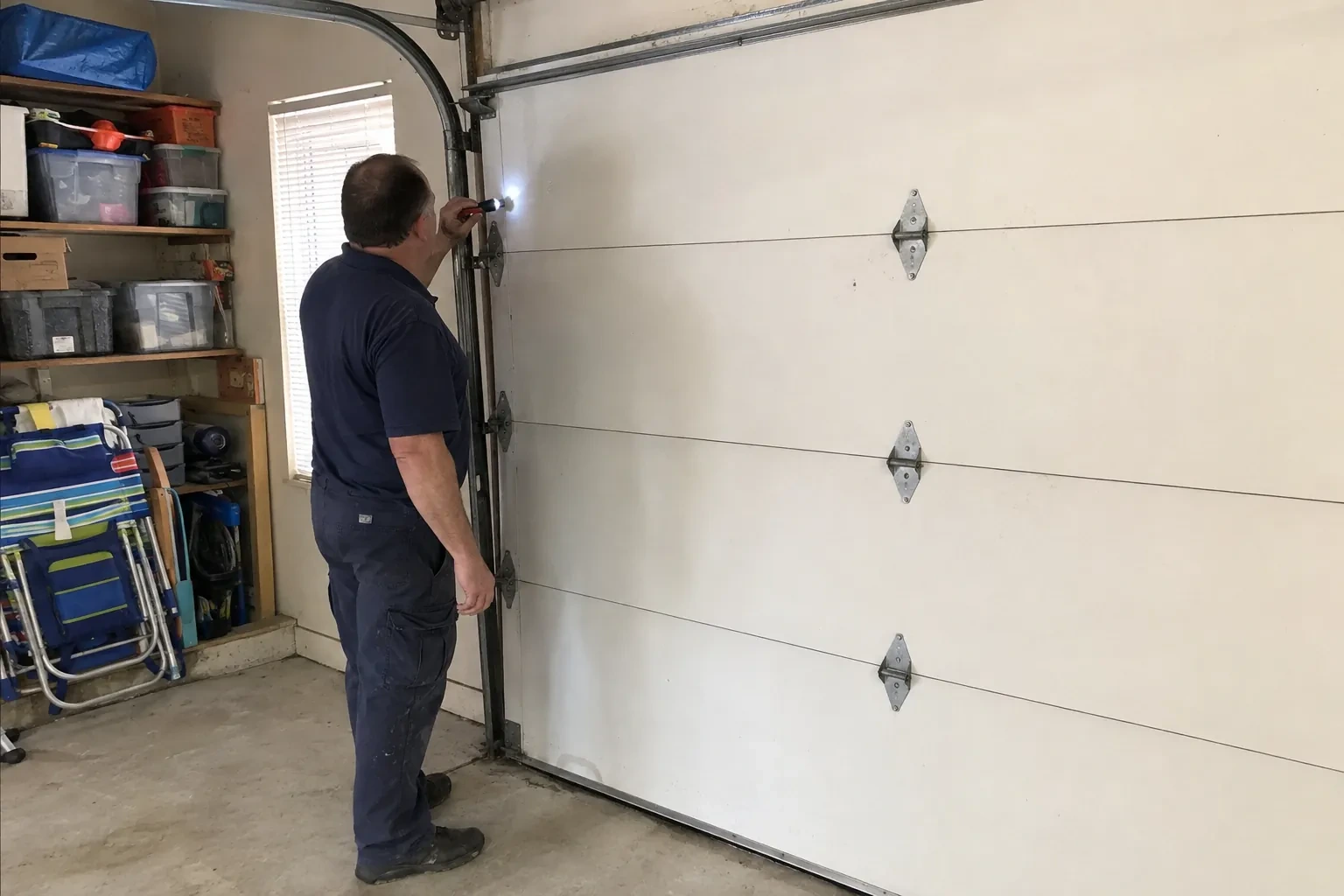
A repeatable jolt at one point on the rail is usually a chain problem meeting a sprocket problem: a stiff link or a spread master link passing over worn sprocket teeth, so the chain rides up and drops a tooth. It can also be a burr or a splice plate on the rail where the trolley catches, or a roller on the door hanging up in the track at that height. The technician runs the door by hand first to tell the two apart.
Related services
- Belt-Drive Opener RepairPress the remote and the motor runs its full cycle, lights on, the usual whir, but the door does not move a centimetre.
- Garage Door Opener ReplacementPress the button and the motor hums, but the door stays exactly where it is.
- Photo-Eye Sensor Alignment or ReplacementThe door will only go down while a finger stays on the wall button; let go and it stops or reverses.