Repairs · Hamilton
Garage Door Tune-Up in Hamilton
Halfway up, the door shudders.
In plain words
Most of a tune-up's noise reduction comes from lubrication, and its value comes from putting the lubricant where it belongs. Hinge pins, steel roller bearings, spring coils, the bearing plates at the torsion shaft ends and the lock all get a silicone- or lithium-based garage door lubricant. The tracks do not; a coated track collects grit and makes rollers slide rather than roll. Nylon tires stay dry too, though an exposed nylon-roller bearing gets a touch where its maker calls for it. Rubber seals get a silicone spray and never a petroleum product. Done this way, the door runs quieter and the parts last longer.
How the visit goesYou moved in a few months ago and have no idea when the garage door was last looked at. The previous owners left the remotes on the counter and no paperwork, and the door works, but it works loudly and unevenly.
Garage Door Tune-Up
How the visit goes
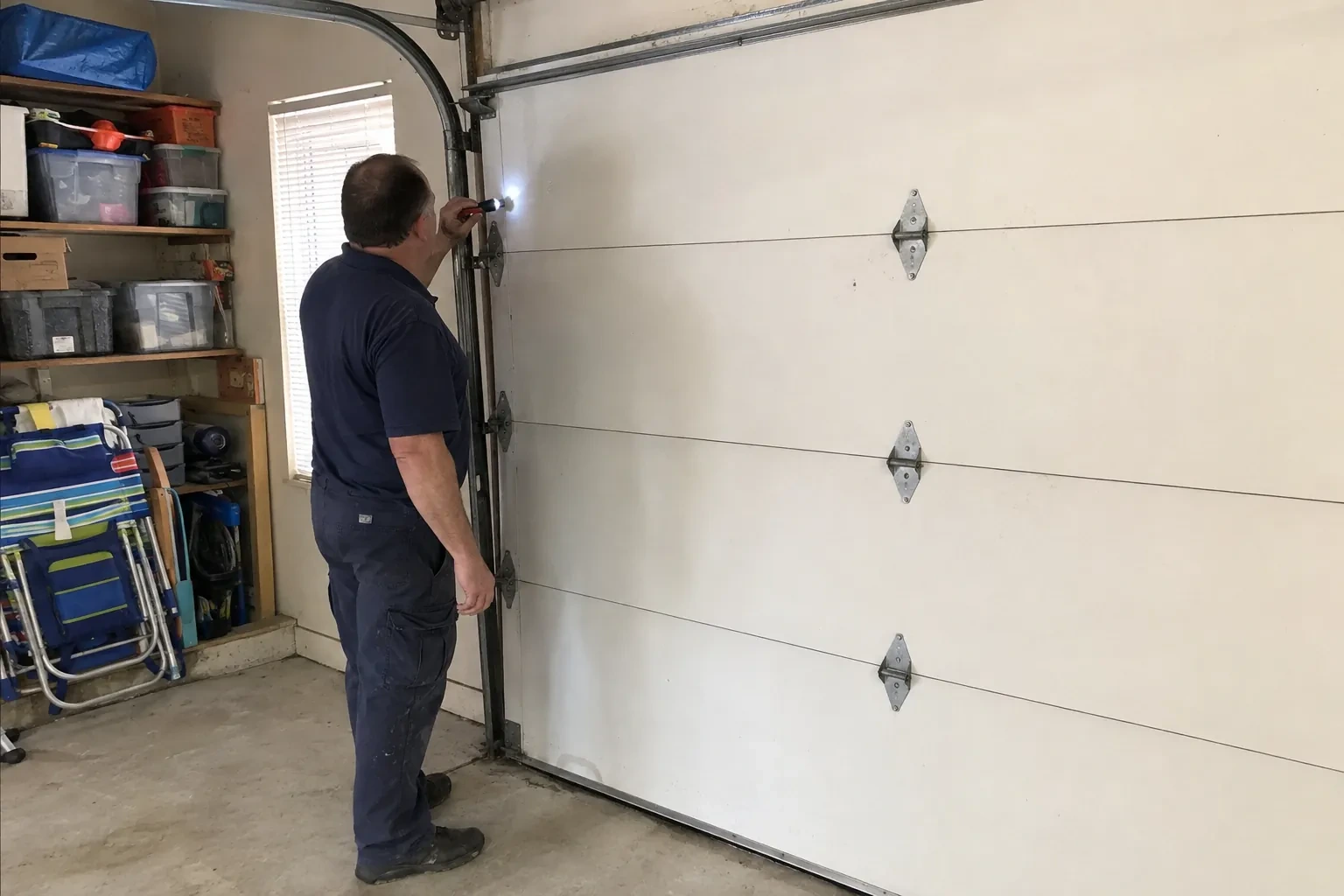
Hardware, bracket by bracket
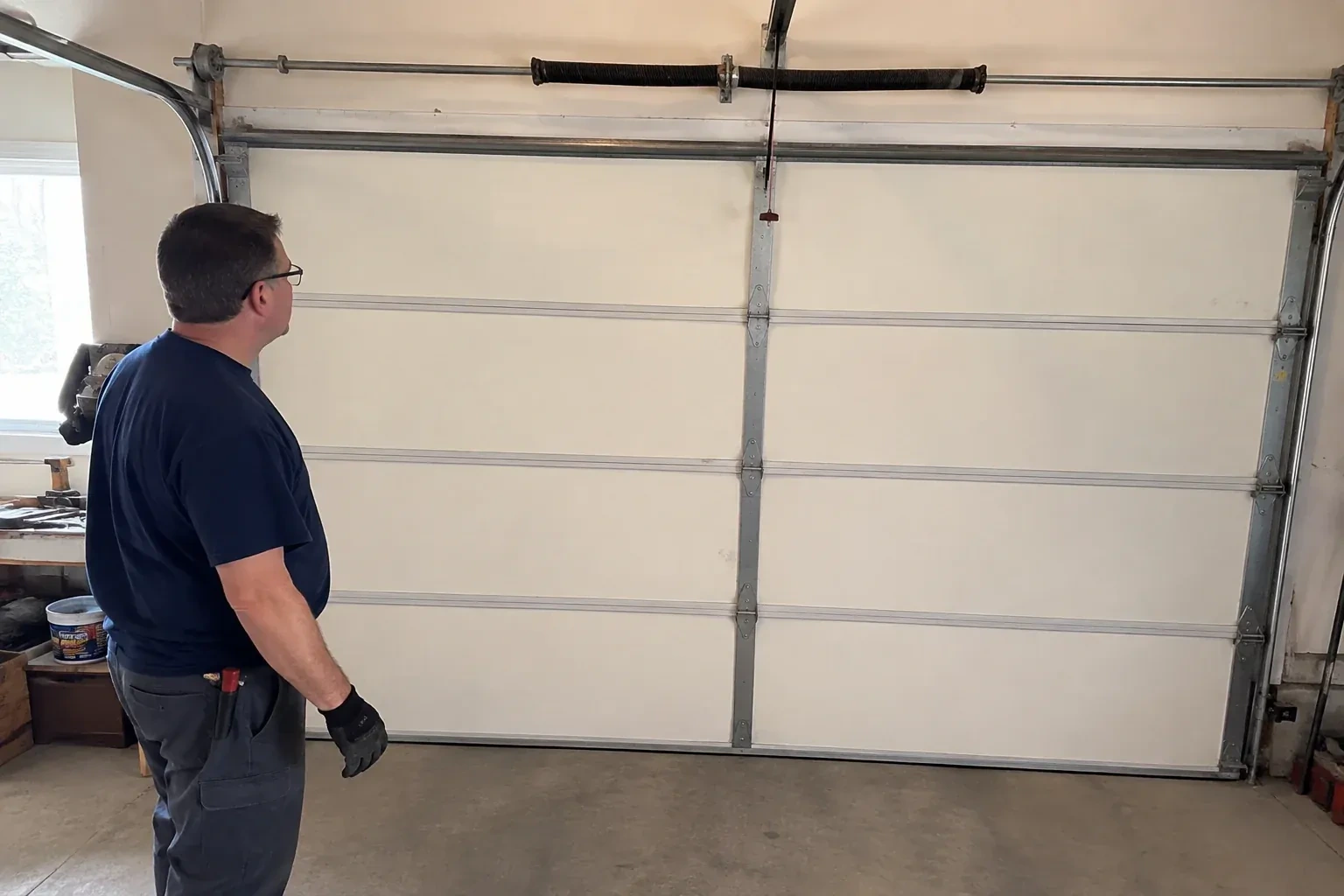
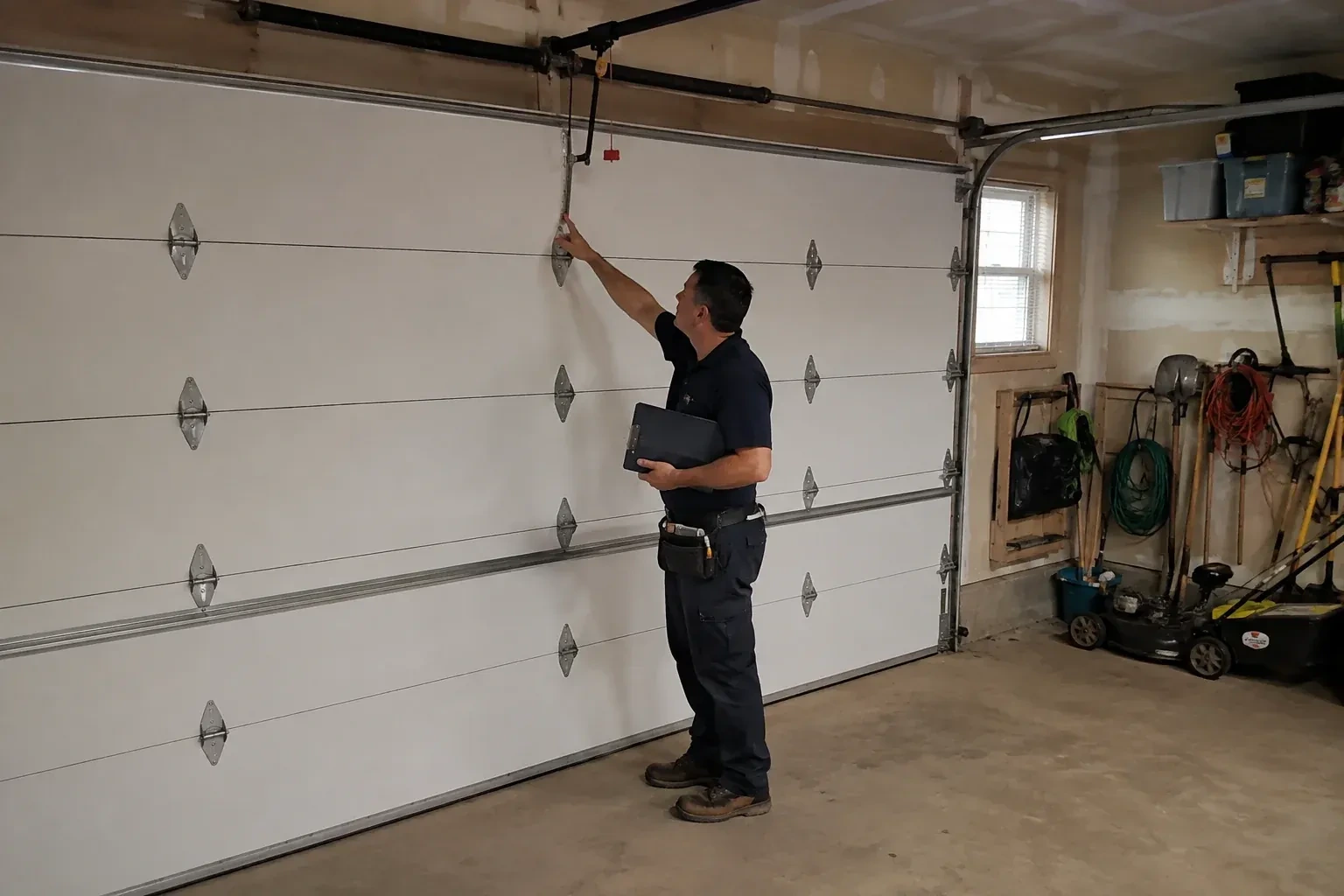
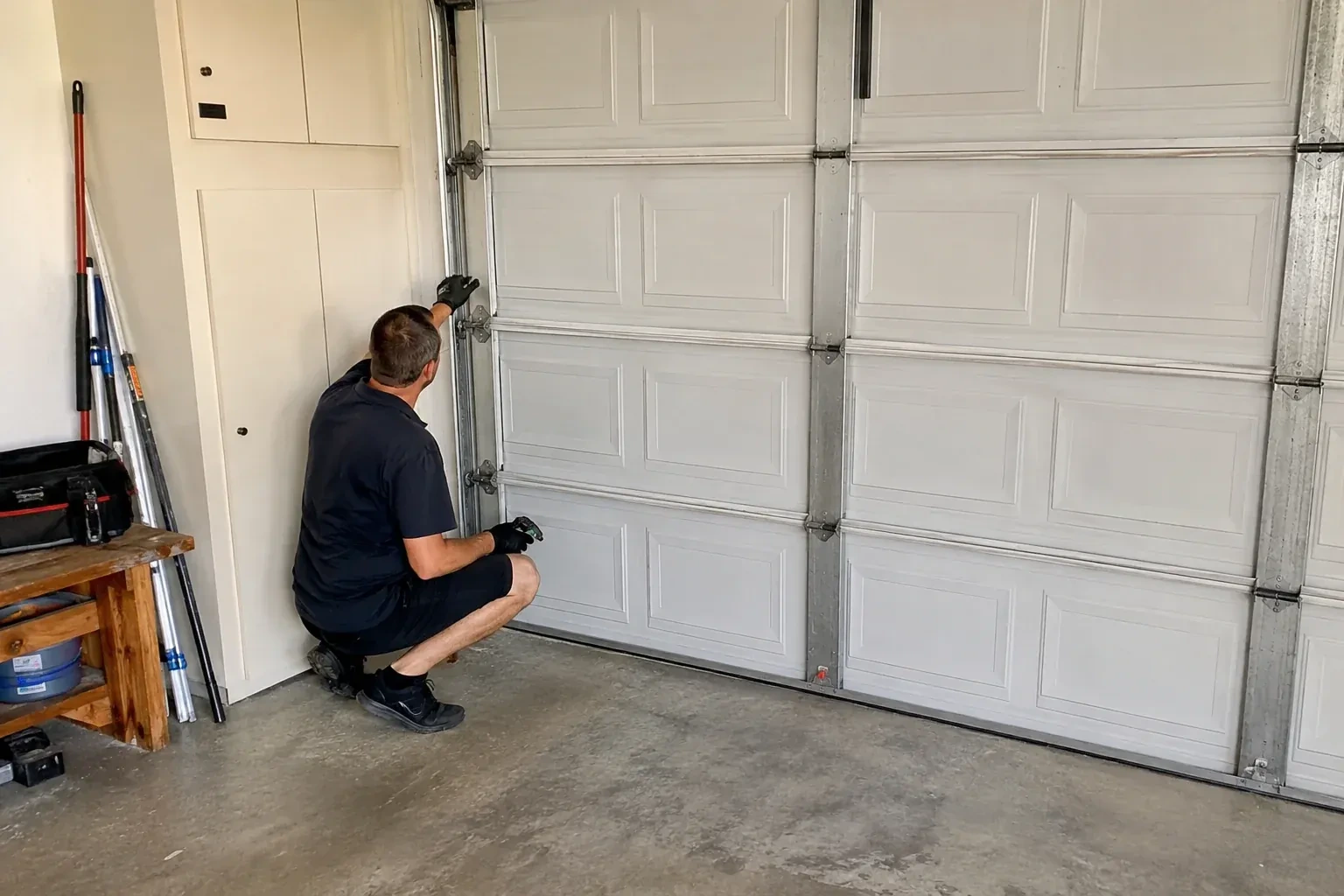
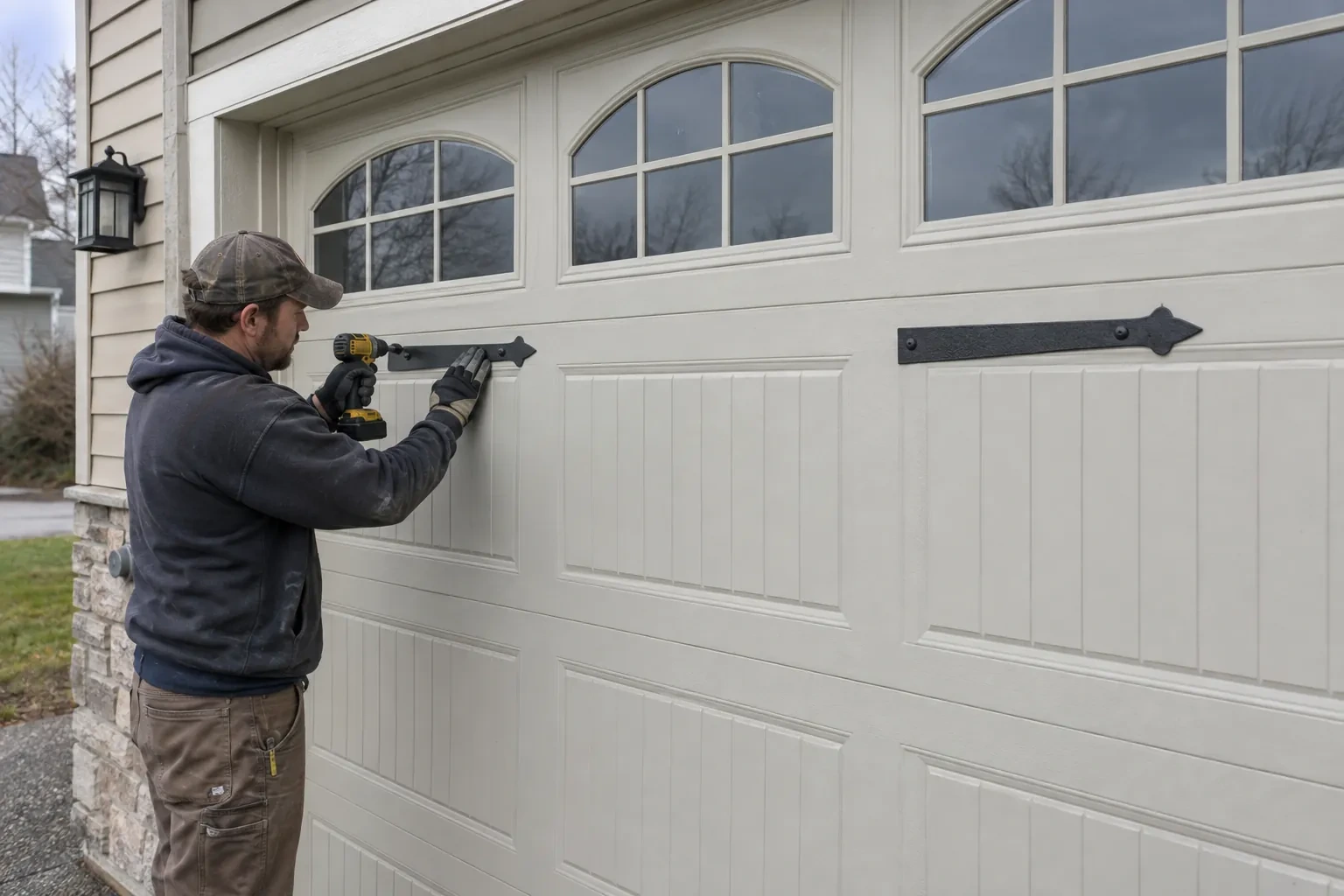
With the door closed and still, the inspection moves along the panels from the bottom up. Bottom brackets and cable attachments are looked at for rust, cracks and cable fraying but not touched, because they hold spring tension. Hinges are checked for cracked knuckles and elongated screw holes. Rollers are spun and wiggled to feel for flat spots, loose stems and worn bearings. Track brackets and lag bolts are tested for movement. At the top, the springs, drums, bearing plates and centre bracket are examined, and the opener's header bracket and the door arm's connection to the top section are confirmed solid. Every loose or worn item is noted before anything is tightened.
Setting travel and force on the opener
The opener has two settings that drift over time: how far the door travels, and how much force it applies before deciding something is in the way. The technician runs the door and adjusts the down travel so the door seals firmly on the floor without bowing the top section or crushing the seal, and the up travel so it stops fully open without the trolley hitting the stop. Force is set as low as will reliably close the door, because a low force setting is what lets the door reverse gently on contact. On a sectional door the arm is kept from passing straight up and down at the closed position, which protects the top section and the rail.
A written record and a priority list
The visit ends with a plain document rather than a verbal summary. It lists what was tightened, lubricated and adjusted; how the balance and both reversal tests came out; the make and model of the door and opener; and the condition of the main parts, sorted into three groups: healthy, worth watching, and ready for its own repair with a quote attached. This record is what makes the next tune-up a comparison rather than a fresh start. It also gives you exact words when a new sound turns up, so you can say which hinge or which roller instead of describing a noise, and it is a useful page in the home file when the house is sold.
Garage Door Tune-Up
In the van
Replacement steel or nylon rollers
Silicone or lithium garage door lubricant
2x4 test block and tape measure
Silicone spray for seals
Replacement hinges
Garage Door Tune-Up
What affects the quote
Upgrades you choose on the day
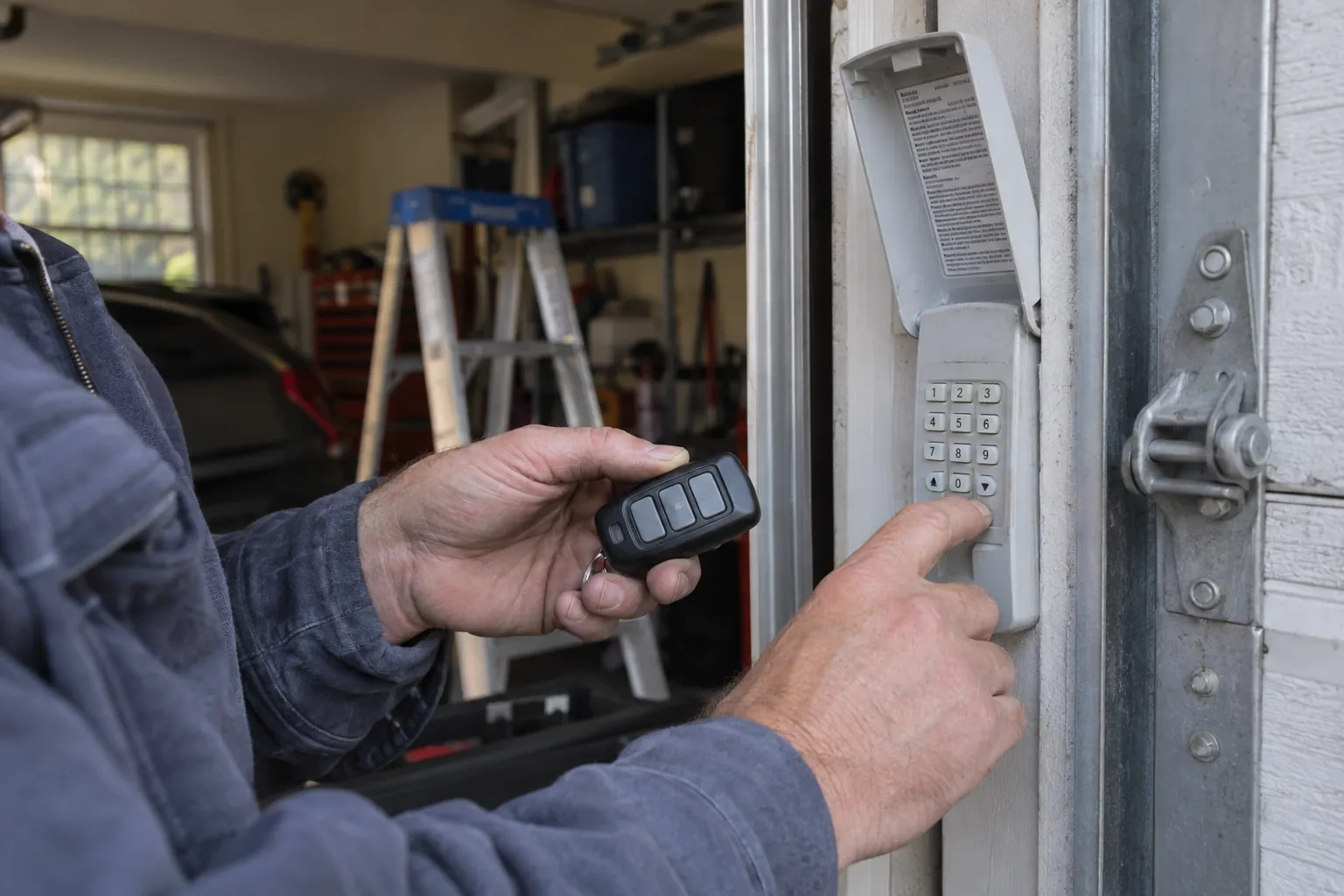
Quieter nylon rollers, a new bottom seal profile, a keypad or a battery backup for the opener are options some customers add while the technician is there, each priced as a separate line.
Season and weather
A winter visit can include freeing a seal frozen to the slab and working with thickened lubricant before the tune-up proper can begin, which adds time to the visit.
Age of the door and opener
Older hardware may need fasteners in sizes no longer standard, and an opener without photo-eyes prompts a conversation about entrapment protection that is quoted separately from the tune-up.
What to have ready
- When was the door last serviced, and do you have any paperwork?
- What brand is the opener, and is it a chain, belt, screw or wall-mounted unit?
- Where in the door's travel does the problem happen?
Garage Door Tune-Up: questions
QuestionsCan you replace my rollers with quieter ones during the tune-up?
Often, yes, if you decide you want them and stock is on the truck. Nylon rollers with sealed bearings run noticeably quieter than plain steel rollers and need no lubricant. Rollers on the middle sections can be changed with the door clamped in the track; the bottom rollers sit in the bottom brackets, which hold spring tension, and are changed as part of a separate job. The technician can tell you how many are worn and what the change would involve.
What should I do if the bottom seal freezes to the floor?
Do not keep pressing the button; the opener can tear the seal or pull the top section out of shape. Free the seal by clearing the ice along the threshold, with warm water poured on the concrete rather than the door, or by working a plastic scraper along the seal. Then treat the seal with a silicone spray. Keeping snow and meltwater cleared from the threshold and keeping the seal flexible with silicone prevents most repeats.
The sensor light is blinking. What does that mean?
On most openers a steady light on each photo-eye means the pair are aligned and seeing each other, and a blinking light means the beam is interrupted or the sensors are out of line. Common causes are a bracket nudged by a bin or a tire, dust or salt film on a lens, low sun at a certain hour, or a chafed wire. During a tune-up the lenses are cleaned, the brackets straightened, the pair realigned and the wiring checked back to the opener.