Repairs · Binbrook
Garage Door Tune-Up in Binbrook
Halfway up, the door shudders.
In plain words
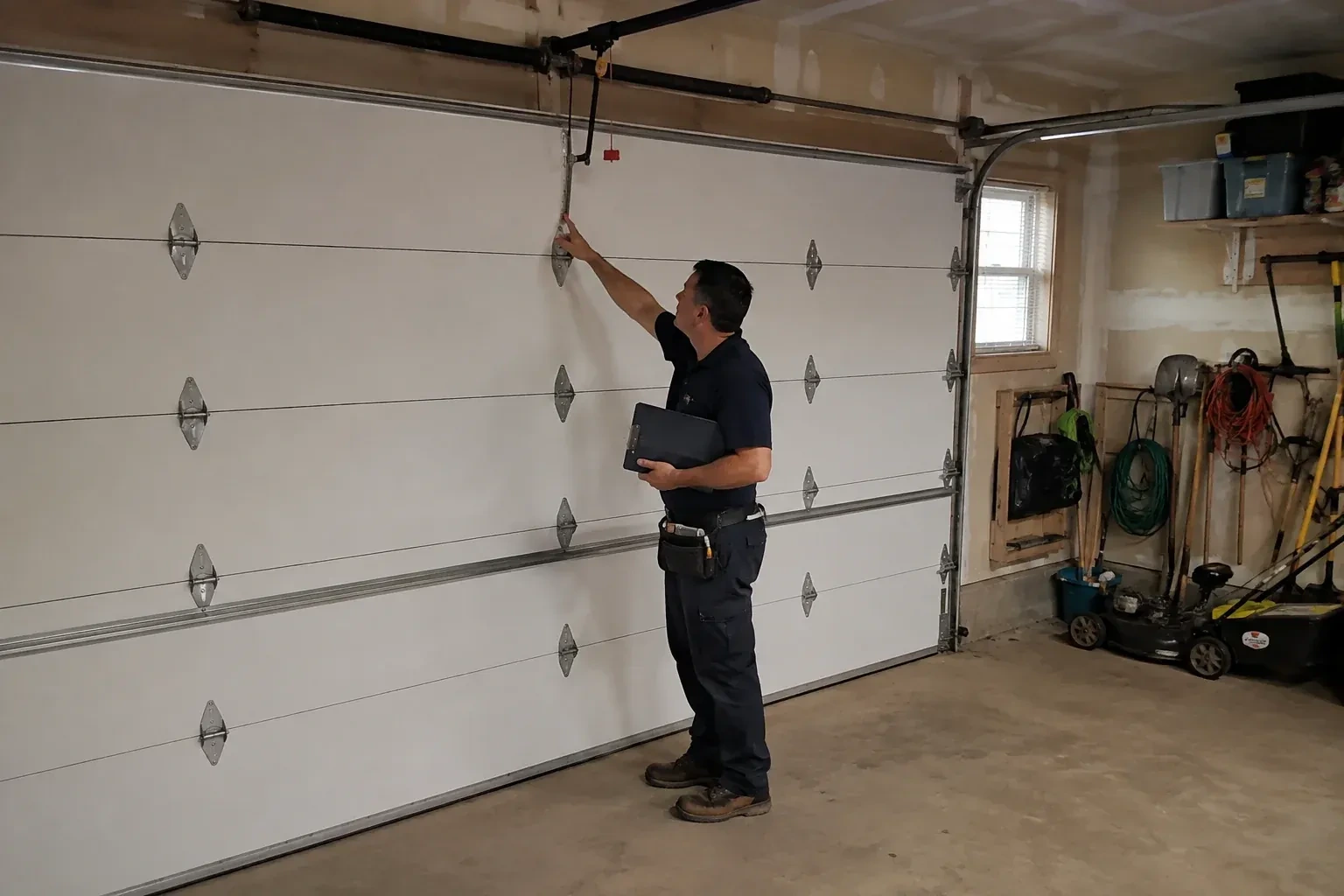
A tune-up is also a safety check of the opener. Openers made since the early 1990s carry two ways of protecting anything in the door's path: photo-eyes near the floor that reverse the door when the beam is broken, and a contact reversal that sends the door back up if it meets resistance. The technician cleans and aligns the sensors, then tests both: an object waved through the beam while the door closes, and a 2x4 laid flat under the centre of the door. A door that reverses cleanly on both is doing what its maker intended, and you learn how to repeat the test yourself each month.
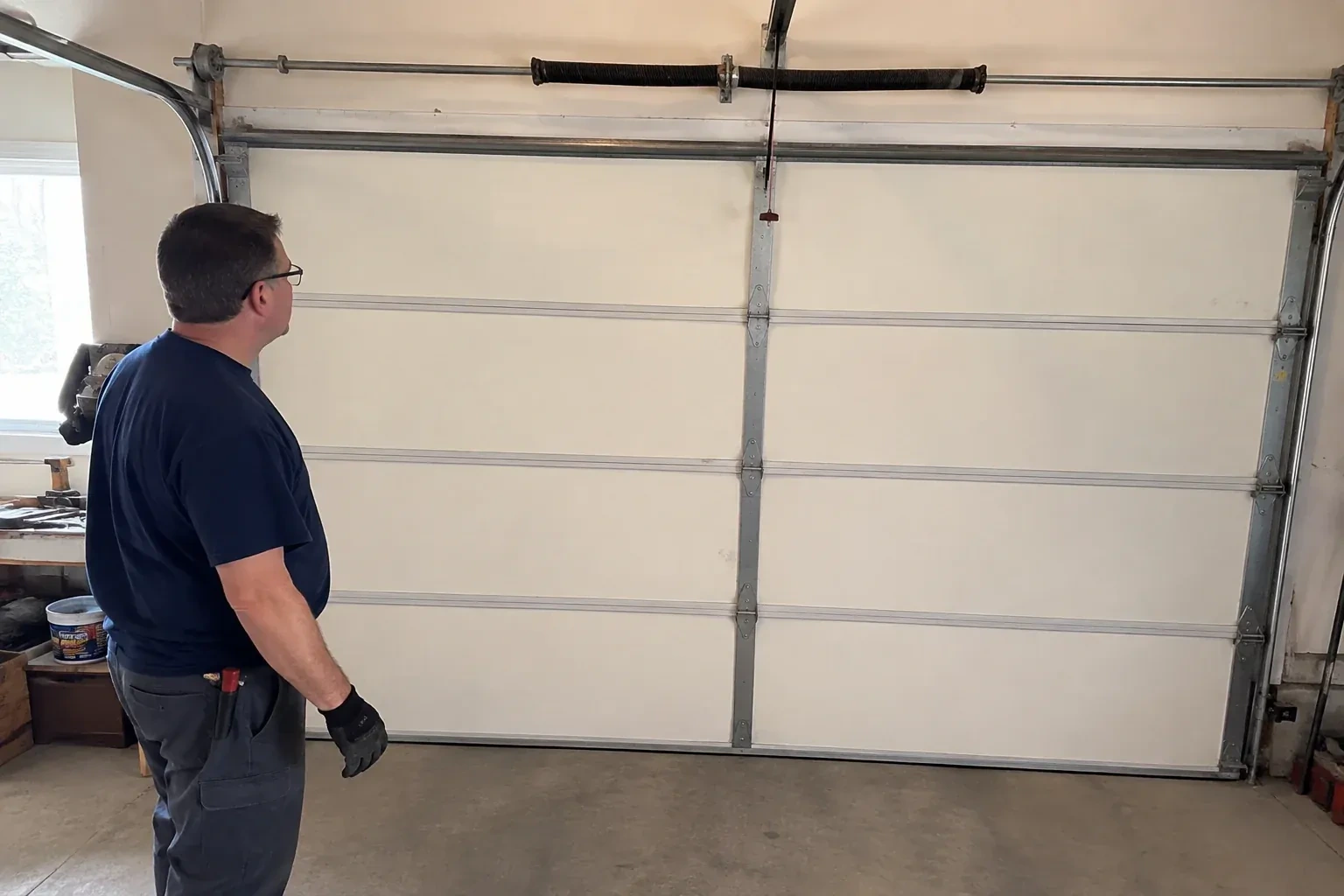
How the visit goesYou pulled the red cord to lift the door by hand during a power cut and it felt like lifting a car. The opener has been doing all the work and grumbling about it, and you are not sure how long that can go on.
Garage Door Tune-Up
How the visit goes
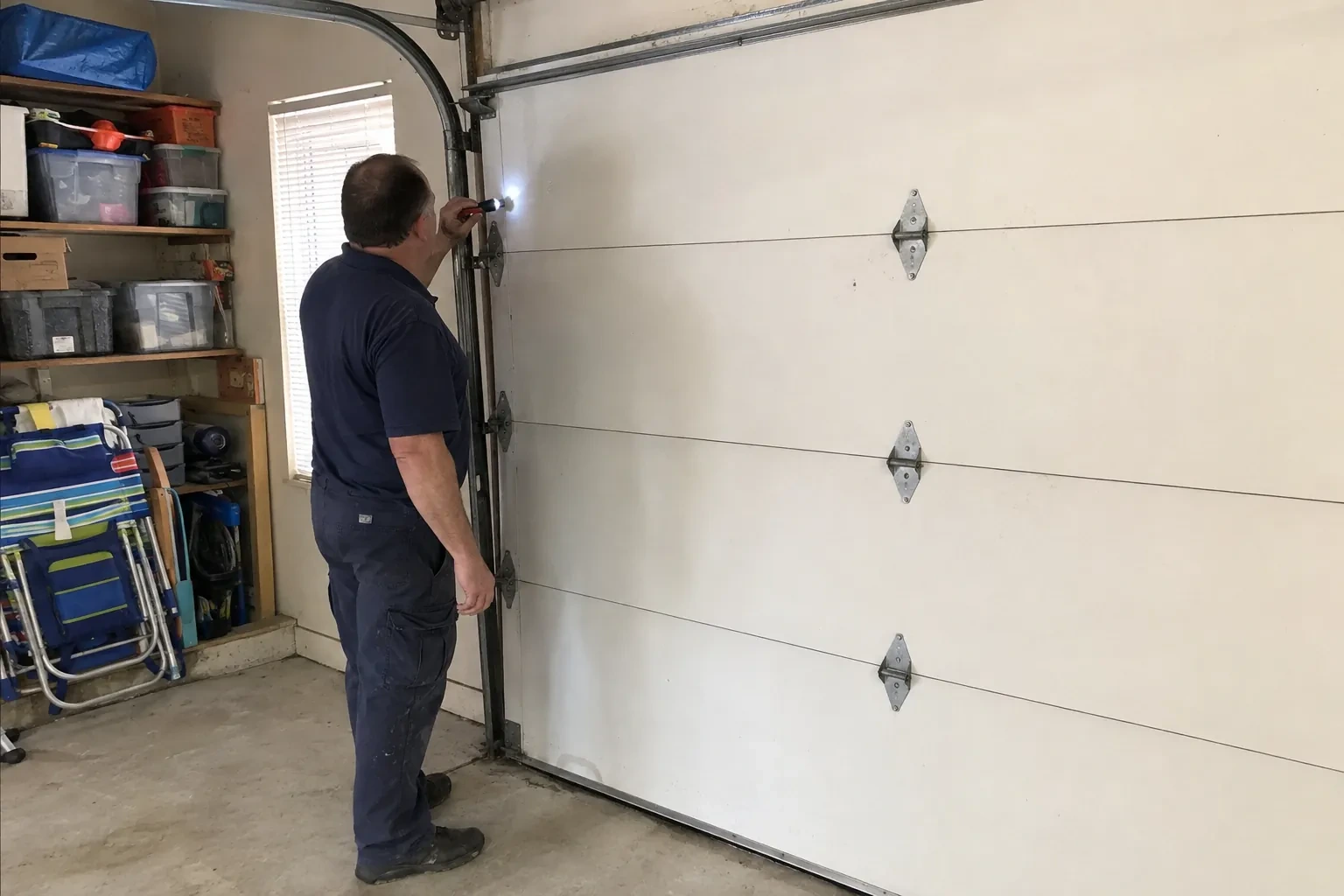
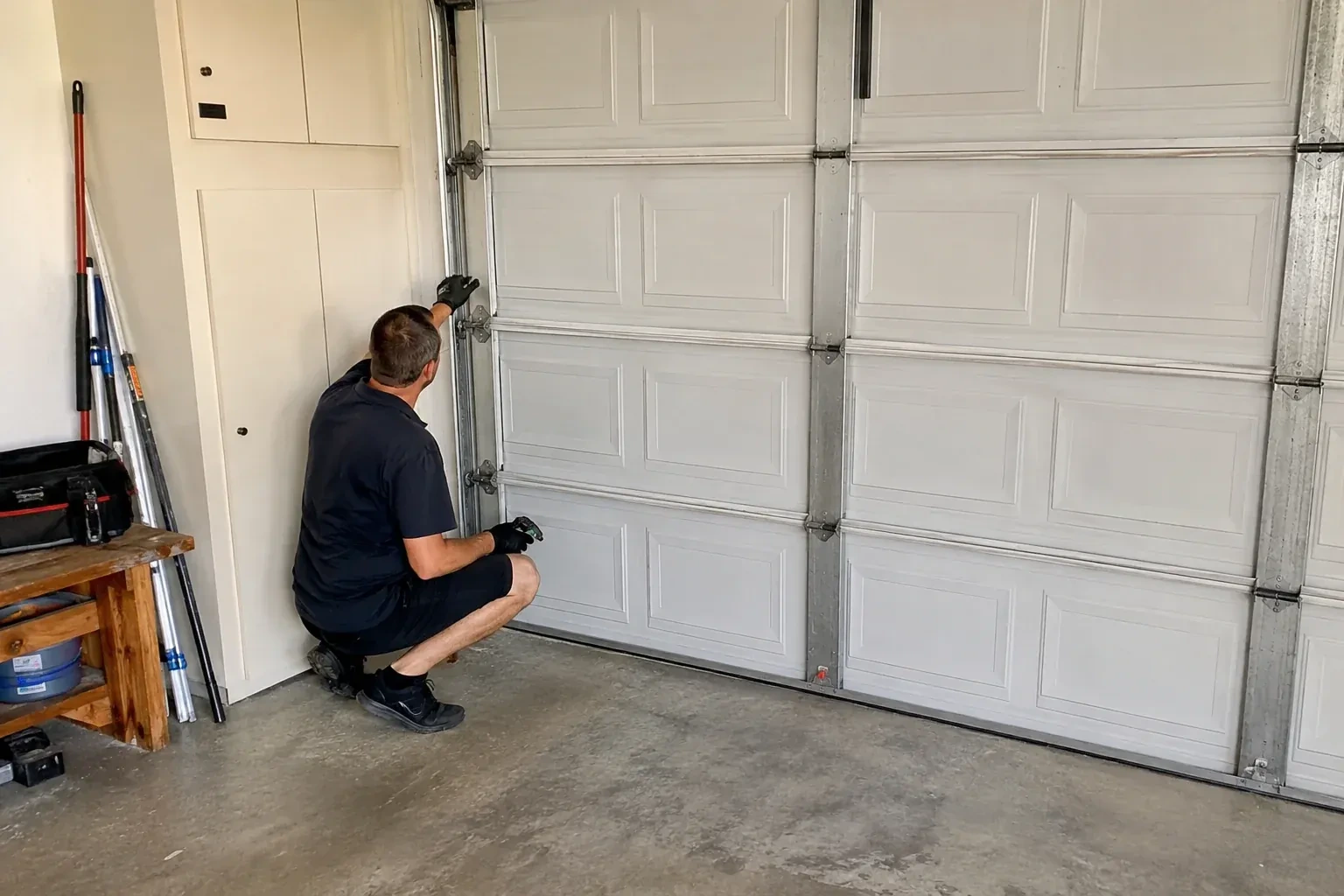
Rollers in their track
Rollers and track are read together. The technician looks at the wear pattern on the rollers, checks whether steel rollers have gone out of round and whether nylon ones are chipped, and confirms that each roller sits fully in the track with its stem seated in the hinge. The vertical tracks are checked for plumb and for the small gap that should exist between the roller and the track wall, since a track that has been pulled tight against the door makes the rollers drag. The curved and horizontal sections are inspected for dents, loose hangers and the grit that accumulates at the bend. A clean, straight track with rolling rollers is what a smooth door is made of.
Tightening what the door shook loose
A garage door moves hundreds of kilograms of steel through a curve twice a day, and the vibration works on every screw. The technician goes back along the list made during inspection and tightens hinge screws, track bolts, bracket lags and the fasteners at the opener header and rail. Stripped screws are replaced with the next size, and missing ones are filled. Track brackets are snugged with the roller-to-track gap preserved so nothing binds. The bottom brackets and anything anchored to the springs are deliberately left alone, since they hold the door's weight under tension; if one of those is loose it becomes a separate job with the tension safely released first.
A door you hear less and trust more
The most noticeable change is the sound. With the hinge pins and roller bearings lubricated and the loose hardware tightened, the squeal and the rattle that woke the household are gone or reduced to a low hum of rollers in a clean track. The door starts without the shudder and lands on the floor with a soft contact instead of a slam. Because the technician ran the same cycle before and after the work, you can hear the difference for yourself before they leave, and the sounds that remain, if any, are explained: what they are, which part they come from and whether that part is worth replacing now or watching for a season.
Garage Door Tune-Up
In the van
Replacement steel or nylon rollers
Silicone or lithium garage door lubricant
2x4 test block and tape measure
Silicone spray for seals
Replacement hinges
Garage Door Tune-Up
What affects the quote
Number of doors
Two or three doors on the same property are usually serviced in one visit, and the second and third door are quoted at a different rate from the first because the travel is shared.
Type of opener
Chain, belt, screw and wall-mounted jackshaft openers each have their own tension checks and lubrication points, and older units take longer to set for travel and force than newer ones.
Height and access
A tall door with the opener and springs high on the header, or a garage packed with storage along the tracks, adds ladder work and time compared with a clear standard-height bay.
What to have ready
- Do both sensor lights near the floor glow steady, or does one blink?
- Are the springs mounted above the door or along the sides beside the tracks?
- What brand is the opener, and is it a chain, belt, screw or wall-mounted unit?
Garage Door Tune-Up: questions
QuestionsCan you replace my rollers with quieter ones during the tune-up?
Often, yes, if you decide you want them and stock is on the truck. Nylon rollers with sealed bearings run noticeably quieter than plain steel rollers and need no lubricant. Rollers on the middle sections can be changed with the door clamped in the track; the bottom rollers sit in the bottom brackets, which hold spring tension, and are changed as part of a separate job. The technician can tell you how many are worn and what the change would involve.
What should I do if the bottom seal freezes to the floor?
Do not keep pressing the button; the opener can tear the seal or pull the top section out of shape. Free the seal by clearing the ice along the threshold, with warm water poured on the concrete rather than the door, or by working a plastic scraper along the seal. Then treat the seal with a silicone spray. Keeping snow and meltwater cleared from the threshold and keeping the seal flexible with silicone prevents most repeats.
The sensor light is blinking. What does that mean?
On most openers a steady light on each photo-eye means the pair are aligned and seeing each other, and a blinking light means the beam is interrupted or the sensors are out of line. Common causes are a bracket nudged by a bin or a tire, dust or salt film on a lens, low sun at a certain hour, or a chafed wire. During a tune-up the lenses are cleaned, the brackets straightened, the pair realigned and the wiring checked back to the opener.