Repairs · Hamilton
Off-Track Garage Door Reset
One side of the door hangs a hand's width lower than the other.
In plain words
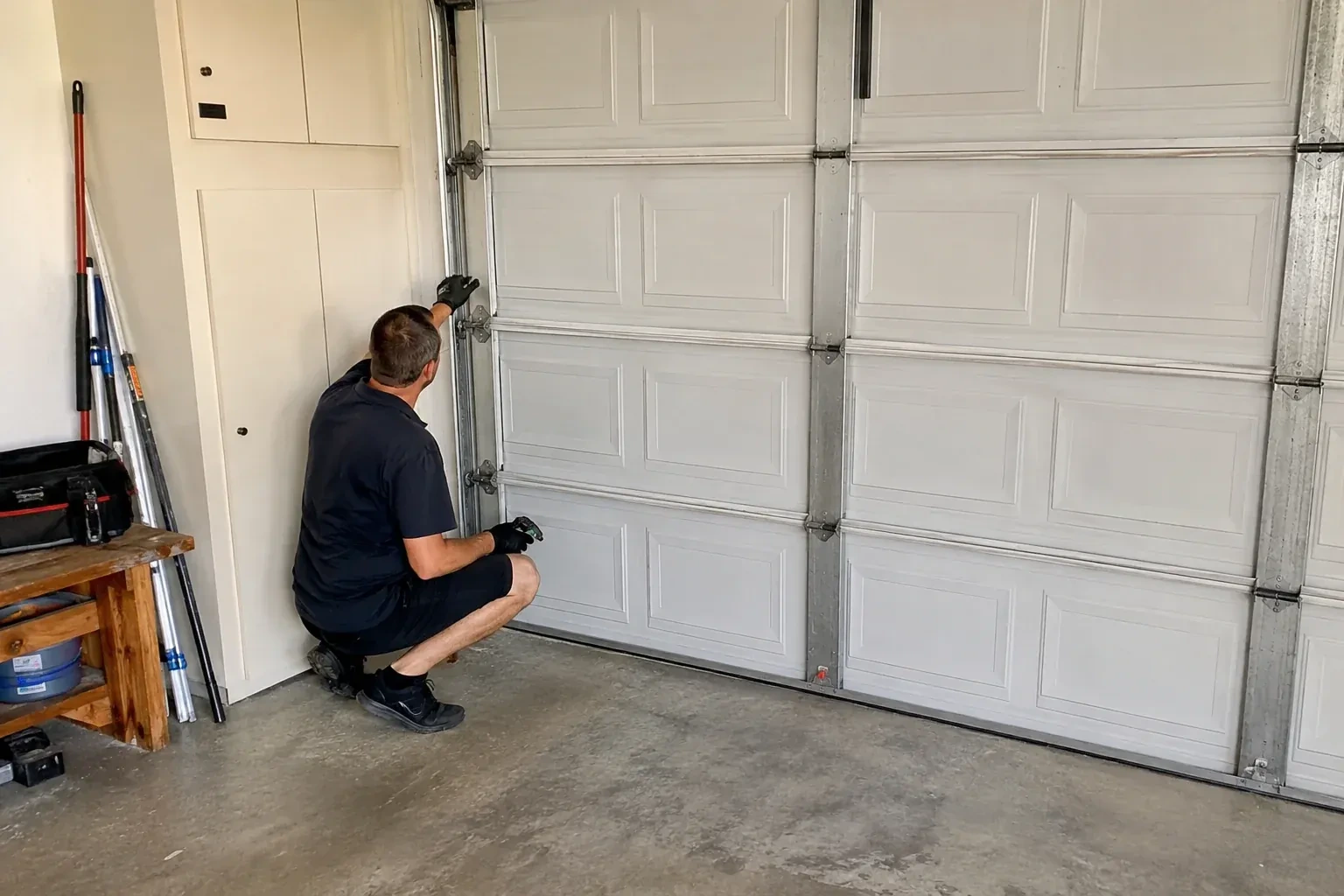
Off-track doors are really two problems in one, and the reset addresses both. The first is the visible one: a roller outside its rail and a door out of square. The second is the cause, which is often a slack or broken lifting cable, a worn roller, a bent hinge or a track bracket that has let go of the wall. Putting the roller back without fixing the cause invites a repeat within weeks. So the visit pairs the re-seating work with a whole-system check of cables, drums, springs, hinges, brackets and track geometry, and replaces the piece that started the trouble.
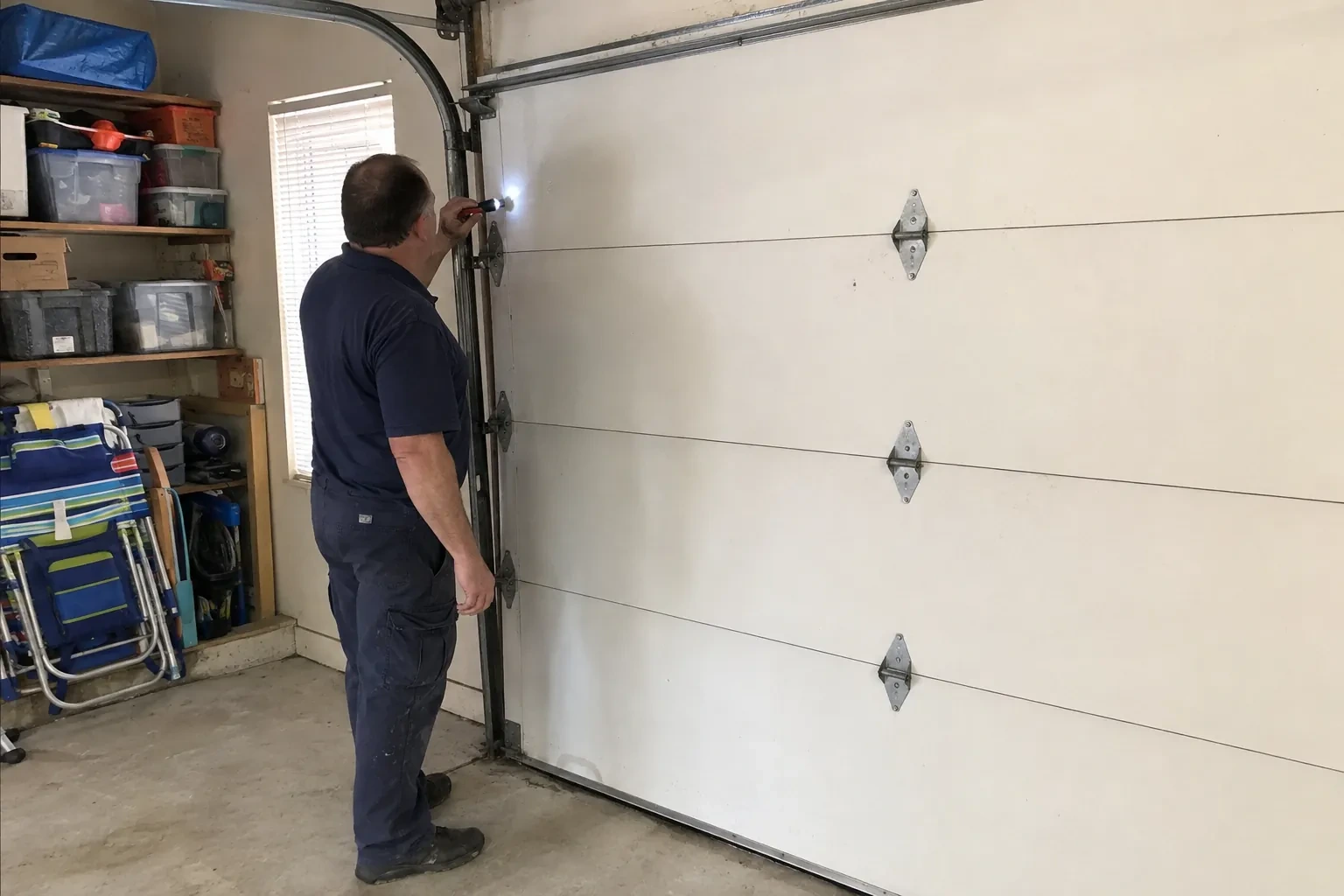
How the visit goesThere was a loud bang from the garage, then silence. The door is jammed a third of the way open, wedged at an angle in the tracks, and the opener light is blinking while the trolley slides uselessly along the rail.
Off-Track Garage Door Reset
How the visit goes
The opener's role in what happened
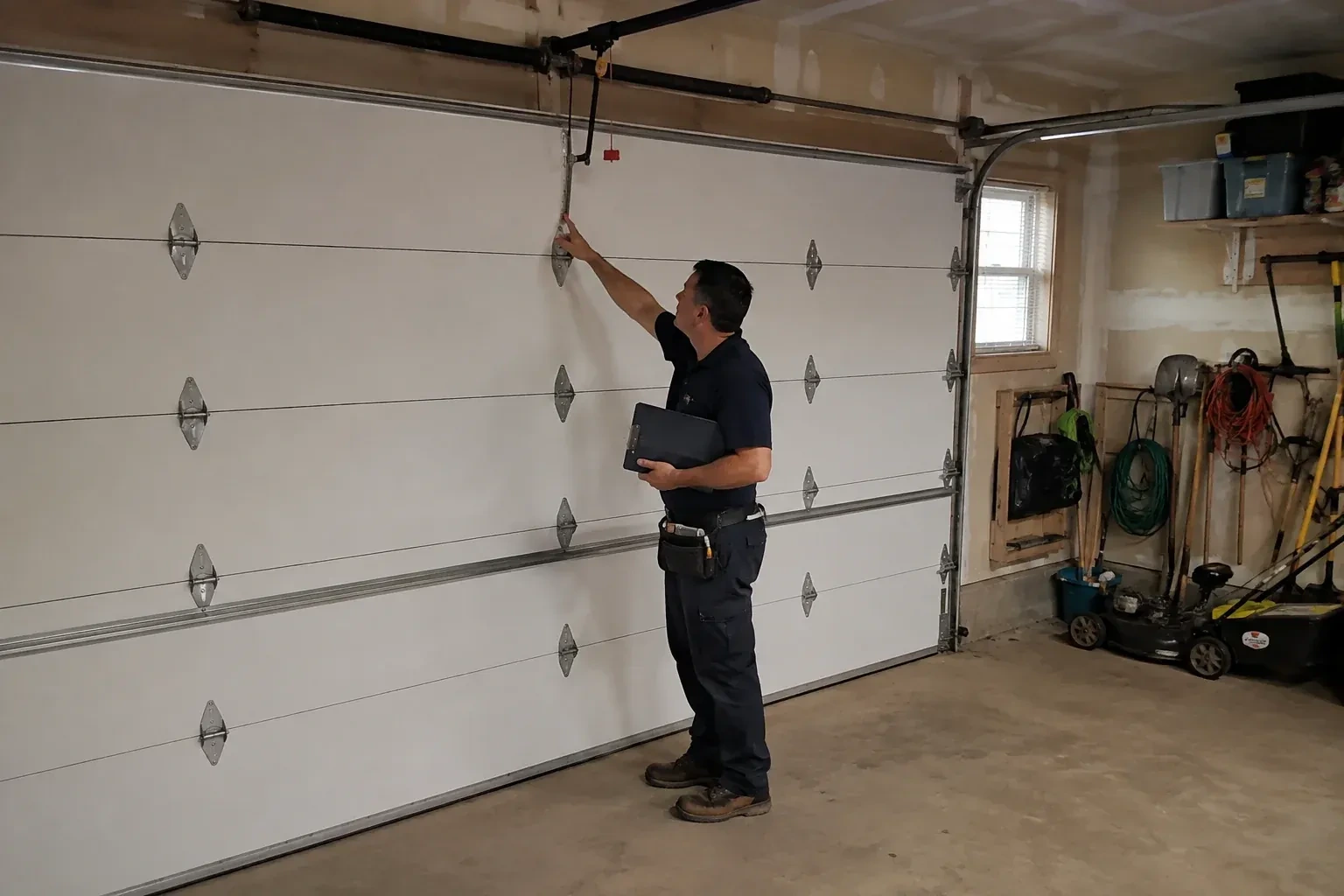
An automatic opener is often the last actor in an off-track event even when it is not the cause. The technician looks at the trolley and rail, the arm connecting it to the top section and any operator reinforcement on the door. Force settings that let the motor push against a stuck door, travel limits set past the floor, a manual slide lock left engaged and photo eyes knocked out of line all get noted. The opener is left disconnected for now; this part of the check is about understanding how much strain it put on the door and what will need resetting once the door runs true again.
Extension-spring doors have their own sequence
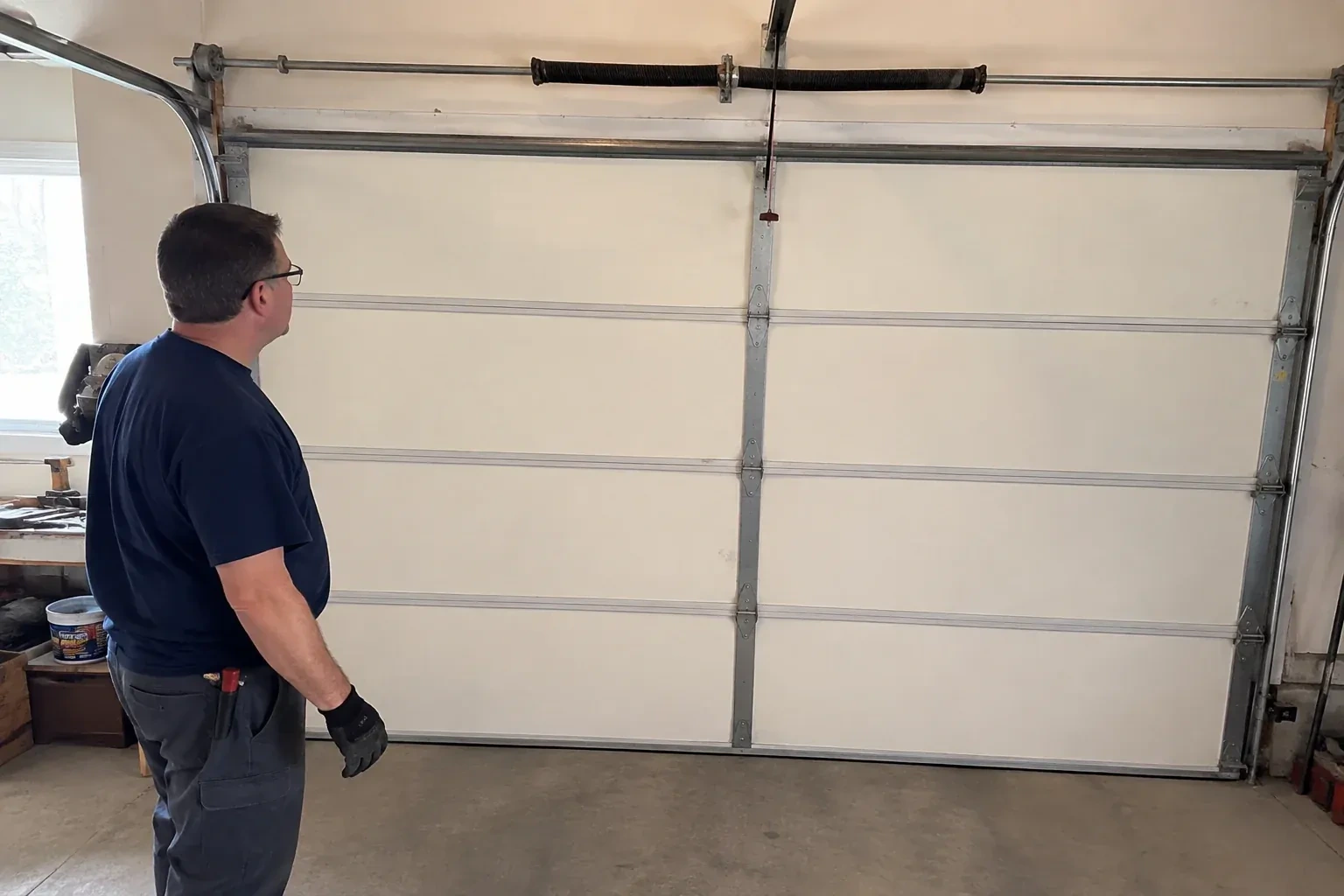
Doors with springs stretched along the horizontal tracks are handled differently from torsion doors. The door is raised fully and clamped so the springs relax, then the cables are traced over their pulleys and the sheave forks and cable clips inspected. A containment cable is fitted through each spring if none is present. Rollers are re-seated with the door open, and the cable lengths are adjusted at the three-hole clips so that both sides lift together. Only then is the door lowered by hand, slowly, watching every roller stay in its rail, and the balance checked at the halfway point before the opener is involved.
Keeping the opener honest
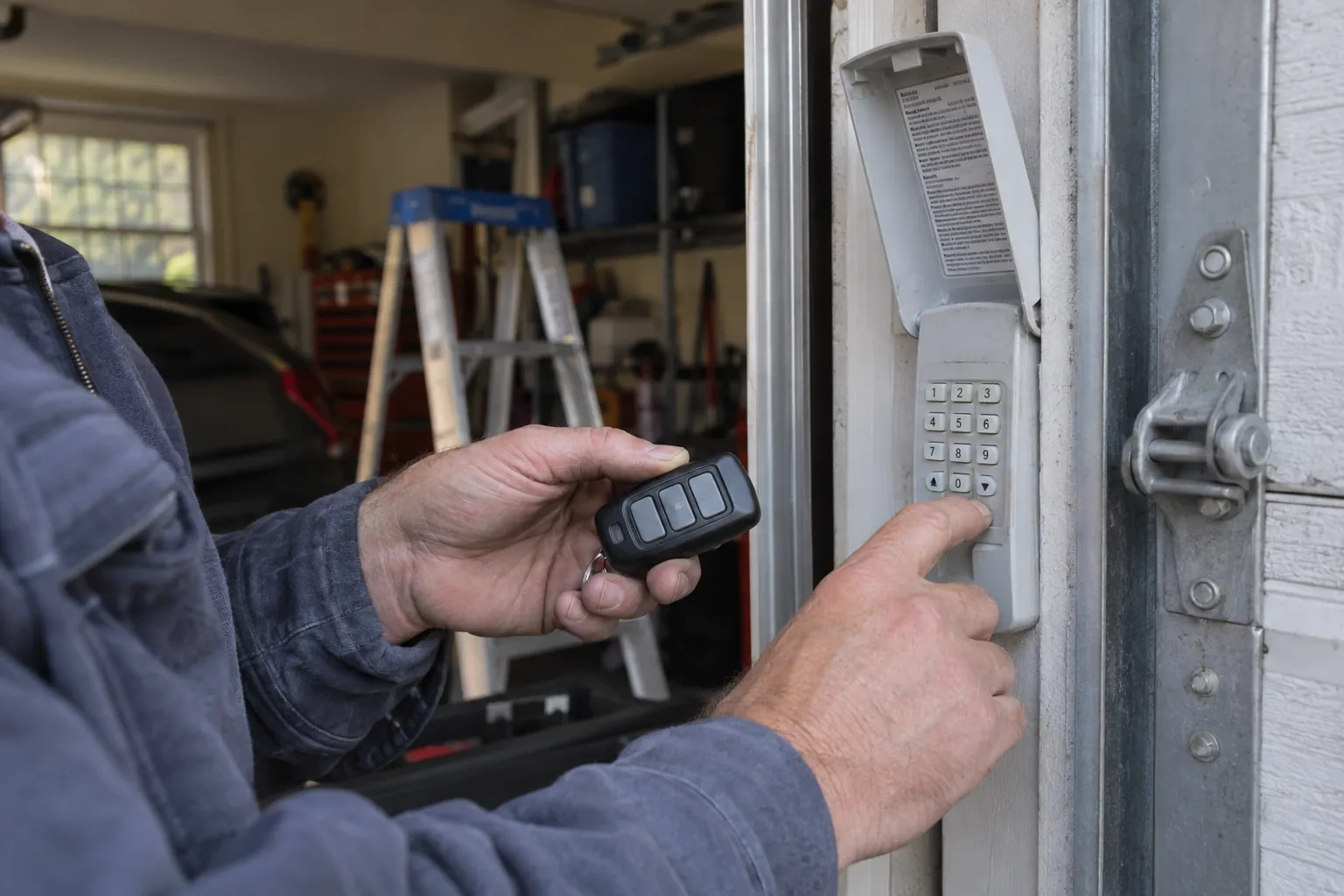
The opener leaves the visit re-taught to the trued door, and a monthly test keeps it that way. Lay a piece of wood about 1.5 inches thick flat on the floor in the door's path and close the door from the wall button: it must touch the block and reverse. Then start the door closing again and pass an object through the photo-eye beam near the floor: it must stop and go back up. If either test fails, unhook the door from the opener and operate it by hand until it has been looked at. A door that reverses properly is one that stops before it can rack itself against an obstruction.
Off-Track Garage Door Reset
In the van
Long lag screws or through-bolts
Replacement rollers, steel or nylon
Garage-door silicone lubricant
Locking pliers and track clamps
Lifting cables, matched pair
Off-Track Garage Door Reset
What affects the quote
Travel to the property
Every visit includes the drive. A door across town and one at the end of a rural road involve different travel time, and the quote states the call-out portion separately from the work.
Access and a trapped vehicle
A car inside, a tight garage with shelving beside the tracks or a low ceiling around the horizontal rails all slow the work of supporting and moving the door, and the estimate allows for the working space available.
Section damage from an impact
A creased or pushed-in panel may still run after the reset or may need replacing. The quote separates the reset from any section work so you can decide on the panel independently.
What to have ready
- Does the track look bent, or have screws pulled out of the wall?
- Is the door fully open, part way up, or closed and sitting crooked?
- Can you see a cable hanging loose or lying on the floor?
Off-Track Garage Door Reset: questions
QuestionsCan a door frozen to the floor really cause this?
Yes, and in winter it is one of the most common causes. Meltwater under the bottom seal refreezes overnight and bonds the door to the slab. The opener pulls, the door stays put, the cables go slack and unwind off their drums, and when the ice lets go the door lurches up unevenly. Freeing the seal by hand before using the opener on icy mornings prevents almost all of these calls.
Our shop's overhead door was hit by a delivery vehicle. Is this the same service?
Yes, with the extra weight and size of a commercial door taken into account. The door is secured, the impact damage to sections, track and brackets is assessed, and the reset is paired with whatever track or hardware replacement the strike requires. Because the opening usually needs to be secured before the premises can close for the night, tell the technician when you call so the right track profile and rollers arrive with them.
Why do rollers wear out, and how would I know?
Rollers turn thousands of times a year while carrying part of the door's weight, and their small ball bearings wear, fill with grit or fall out. Nylon tires can crack and steel wheels can wear flat spots or grind down to the stem. A worn roller squeals, wobbles in the rail or lets the door shudder at the curve. Replacing them as a set restores a quiet door and removes a common cause of a roller dropping out.