Repairs · Rosedale
Off-Track Garage Door Reset in Rosedale
One side of the door hangs a hand's width lower than the other.
In plain words
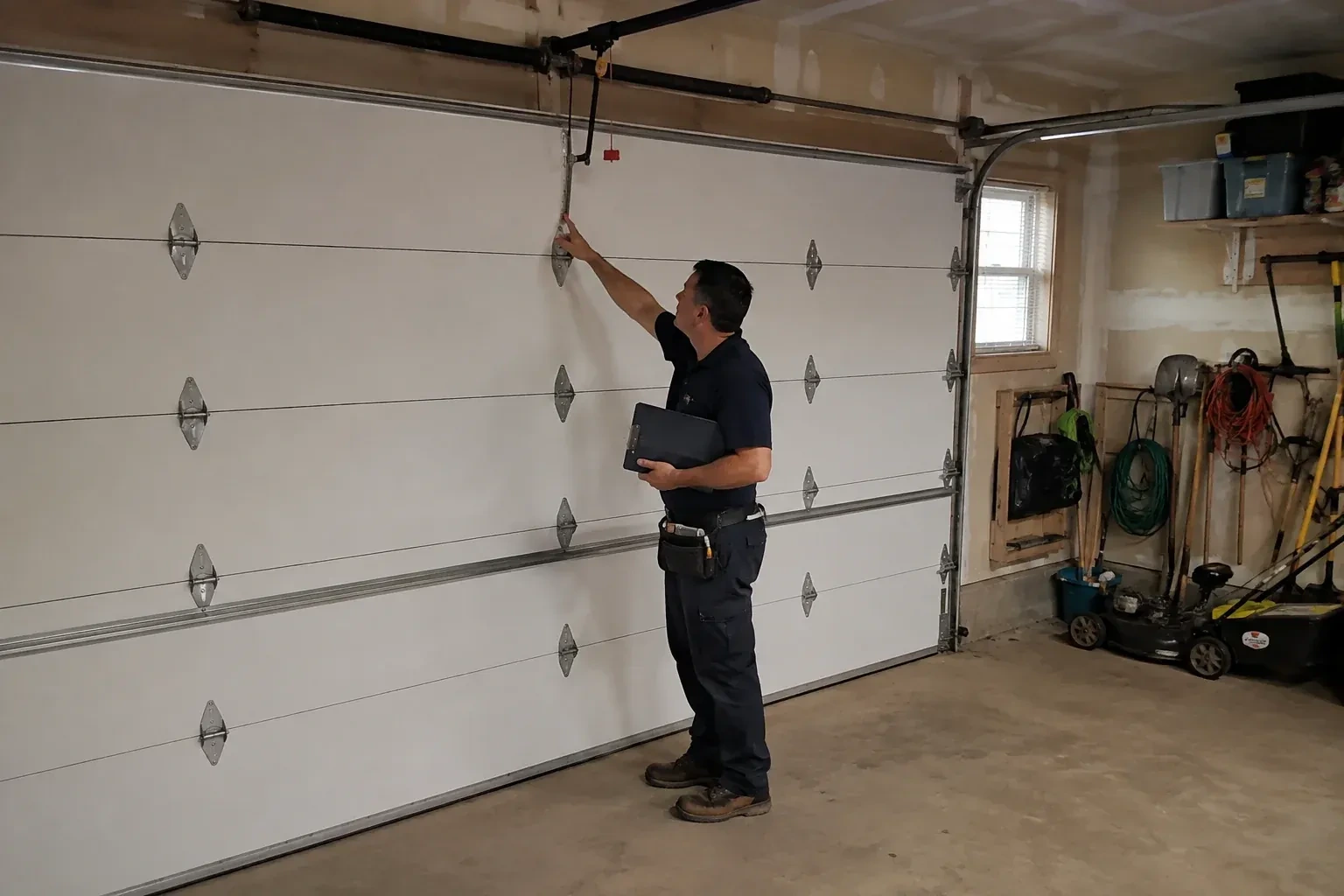
An off-track reset is the visit that puts a crooked, jammed or hanging garage door back onto its rails. Sectional doors ride on rollers inside a pair of curved steel tracks, and when a roller escapes, the door racks sideways and jams. The technician first makes the door safe by disconnecting the opener and clamping the sections so nothing can slide, then works out what let the roller go. The rollers are guided back into the track, any cable that jumped its drum is re-seated, the track is trued against the wall, and the door is run by hand and then by opener to confirm it travels straight.
How the visit goesThe rollers on the door have been squealing for months. Today one of them simply fell out of the track at the curve, its wheel worn down to the stem, and the top section sagged sideways as the door opened.
Off-Track Garage Door Reset
How the visit goes
What happened in the minutes before
A short conversation fills in the picture. Did a vehicle touch the door? Was there a bang, a squeal or a grinding noise? Had the door been frozen to the floor that morning, or had something been left under it? Was one side already hanging lower for a while? Had the rollers been noisy for months? Each answer points at a different cause: impact, cable failure, ice, obstruction or long wear. Photographs the homeowner took from a safe distance are useful too, because they show the door before anything moved. This history is the difference between resetting the symptom and fixing the reason.
Replacing what the event bent
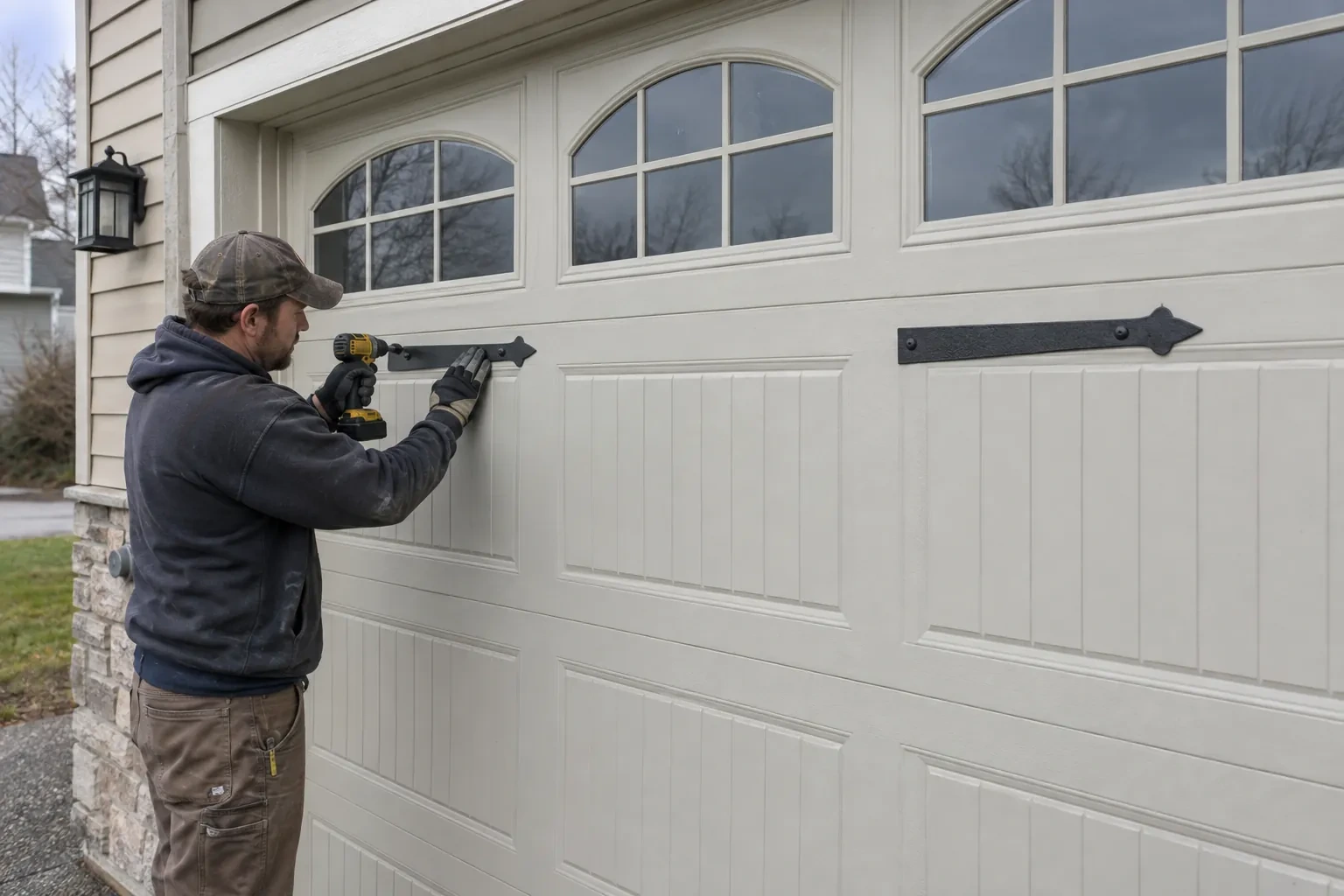
Hardware that has been distorted is swapped rather than straightened. Worn or broken rollers are replaced as a set, steel or nylon to match the door, with stems the right length for the hinge and track. A bent graduated edge hinge is replaced with one of the same number so the section still folds correctly, and a twisted bottom bracket is changed with the cables slack and the door clamped. A crushed length of track is cut out and a new piece fitted in the same profile. Fasteners go into fresh holes where the old ones have stripped. The aim is a door whose parts are all working as designed, not persuaded into place.
A monthly look at the rollers and cables
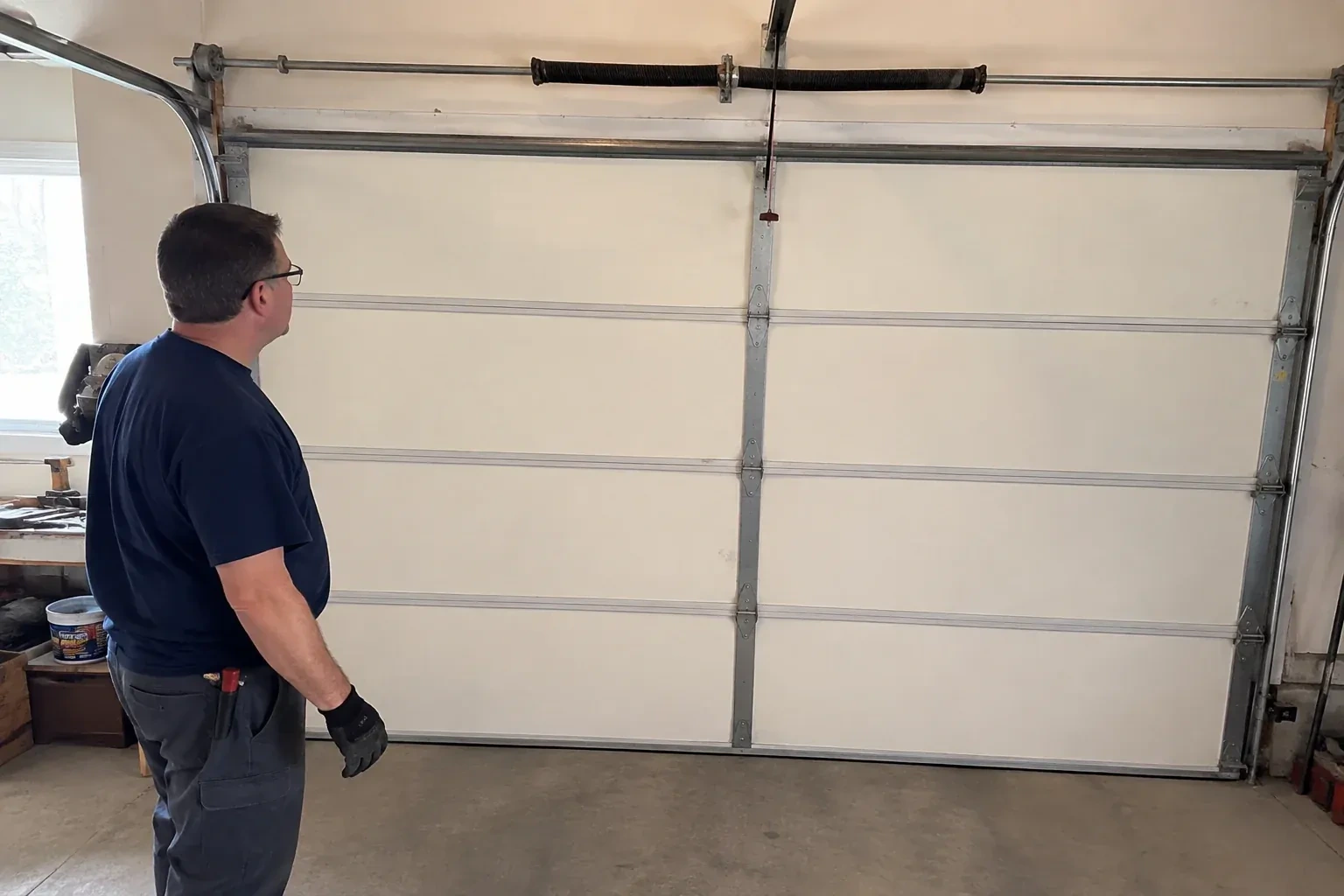
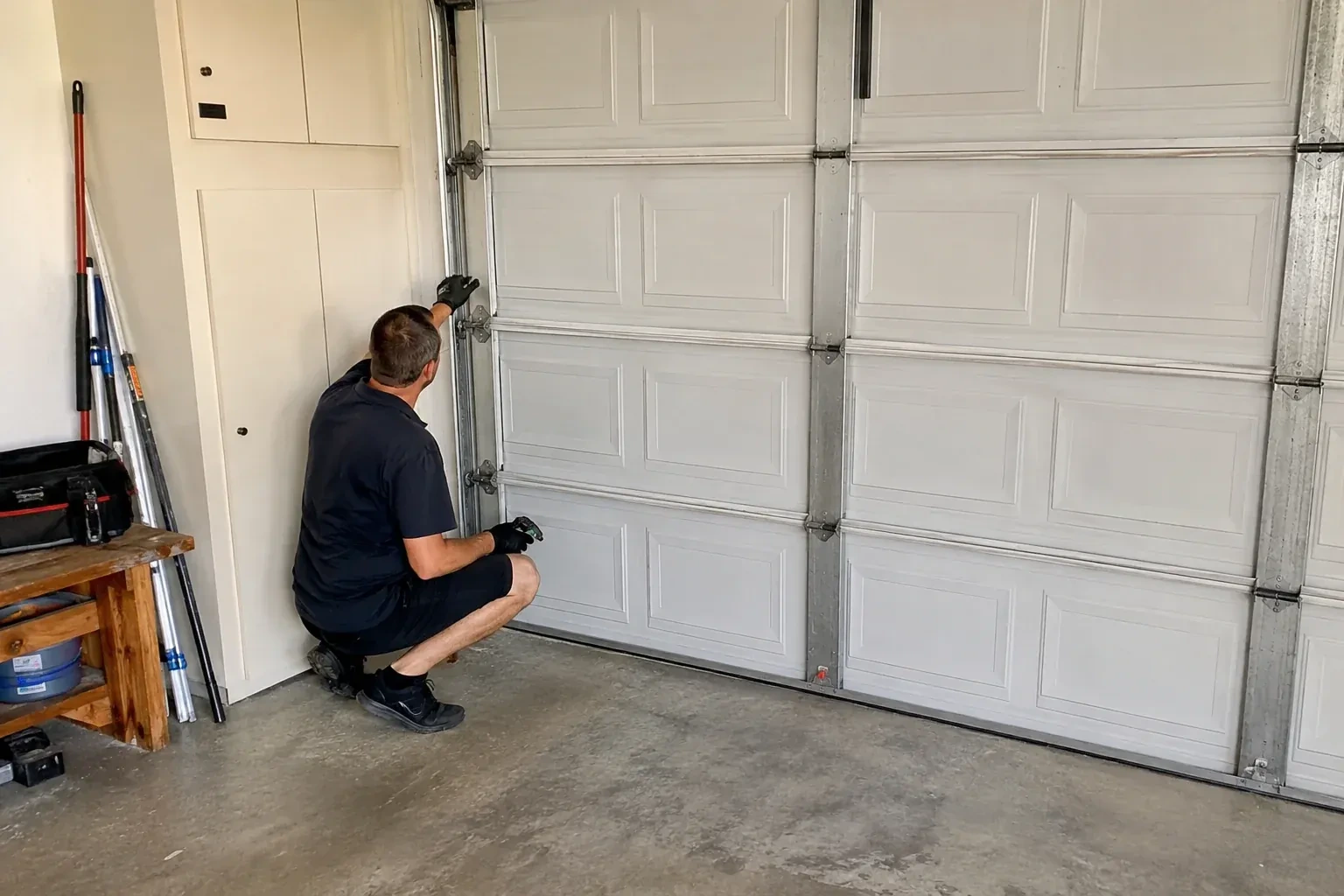
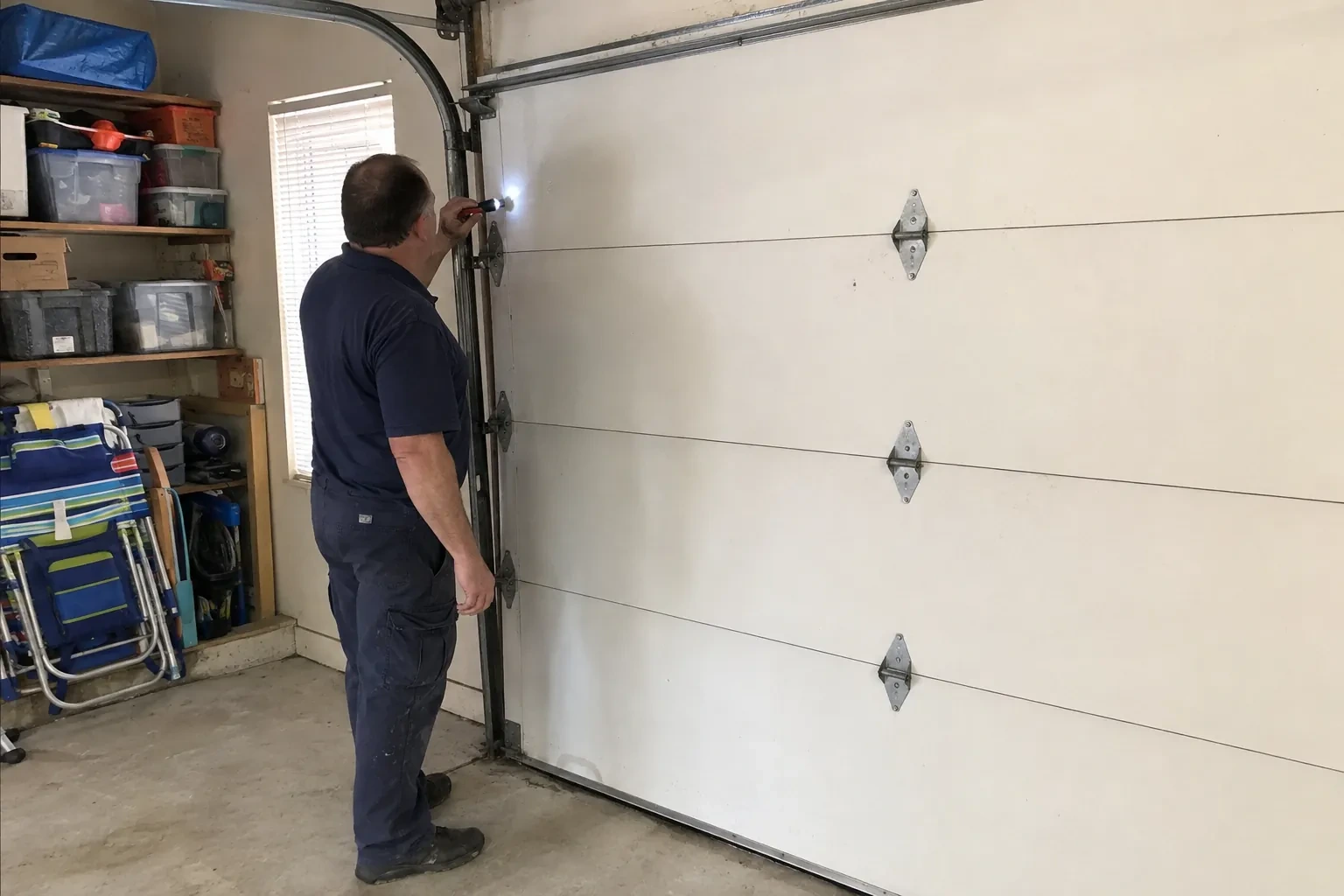
Once a month, with the door closed, stand inside and look along both tracks with a flashlight. Rollers should turn as the door moves and sit fully inside the rail; a wheel that wobbles, squeals or shows a worn flat is asking to be replaced before it drops out. Both cables should run taut from the bottom brackets to the drums with no fraying near the bottom, where salt and water collect. Hinges and jamb brackets should have no loose or missing screws. This two-minute walk catches almost every off-track event while it is still a small hardware job.
Off-Track Garage Door Reset
In the van
Long lag screws or through-bolts
Replacement rollers, steel or nylon
Garage-door silicone lubricant
Locking pliers and track clamps
Lifting cables, matched pair
Off-Track Garage Door Reset
What affects the quote
Size and weight of the door
A double door, an insulated door or a wood door carries more weight on every roller and cable, takes longer to support and reset, and uses heavier hardware. The quote reflects the door in front of the technician.
How far the door has left its track
One roller out at the bottom of a closed door is a different job from a door racked across the opening with rollers out on both sides. The quote follows the amount of resetting involved.
Where the door was stuck
A door jammed part way up with the load shared unevenly between springs and cables takes more care to secure and lower than a door that is closed and merely crooked, and that time is part of the estimate.
What to have ready
- Was the door frozen to the floor or was something under it when the opener ran?
- Can you see a cable hanging loose or lying on the floor?
- Did a vehicle or anything else bump the door before this happened?
Off-Track Garage Door Reset: questions
QuestionsCan a door frozen to the floor really cause this?
Yes, and in winter it is one of the most common causes. Meltwater under the bottom seal refreezes overnight and bonds the door to the slab. The opener pulls, the door stays put, the cables go slack and unwind off their drums, and when the ice lets go the door lurches up unevenly. Freeing the seal by hand before using the opener on icy mornings prevents almost all of these calls.
Our shop's overhead door was hit by a delivery vehicle. Is this the same service?
Yes, with the extra weight and size of a commercial door taken into account. The door is secured, the impact damage to sections, track and brackets is assessed, and the reset is paired with whatever track or hardware replacement the strike requires. Because the opening usually needs to be secured before the premises can close for the night, tell the technician when you call so the right track profile and rollers arrive with them.
Why do rollers wear out, and how would I know?
Rollers turn thousands of times a year while carrying part of the door's weight, and their small ball bearings wear, fill with grit or fall out. Nylon tires can crack and steel wheels can wear flat spots or grind down to the stem. A worn roller squeals, wobbles in the rail or lets the door shudder at the curve. Replacing them as a set restores a quiet door and removes a common cause of a roller dropping out.