Repairs · Rosedale
Garage Door Perimeter Weatherstrip in Rosedale
Every time the door closes there is a rubbing squeal along one side, and the flexible fin has folded under itself and torn.
In plain words
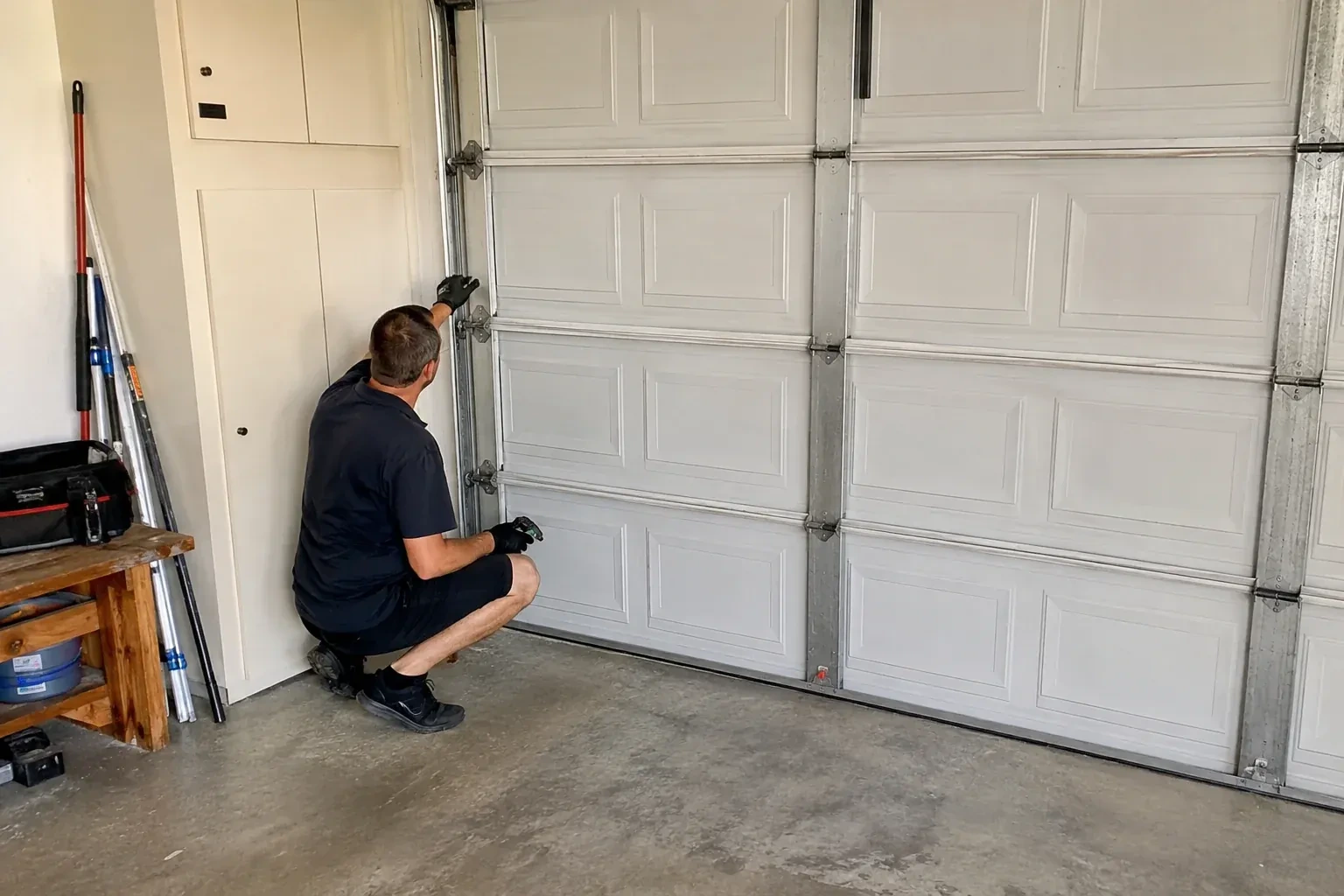
The skill in this job is in the position of the fin. It should touch the door with a small, even deflection, so that it seals when the door is closed and springs clear as the door lifts. Set too far off, it leaves a standing gap; pushed too hard, it drags, folds under and tears within a season. The header piece goes on first, fastened from the centre outward so it stays straight, and the sides are fitted tight beneath it so the fins overlap at the corners. Fasteners are spaced evenly in sound wood, and any joint where water could get behind the stop is caulked.
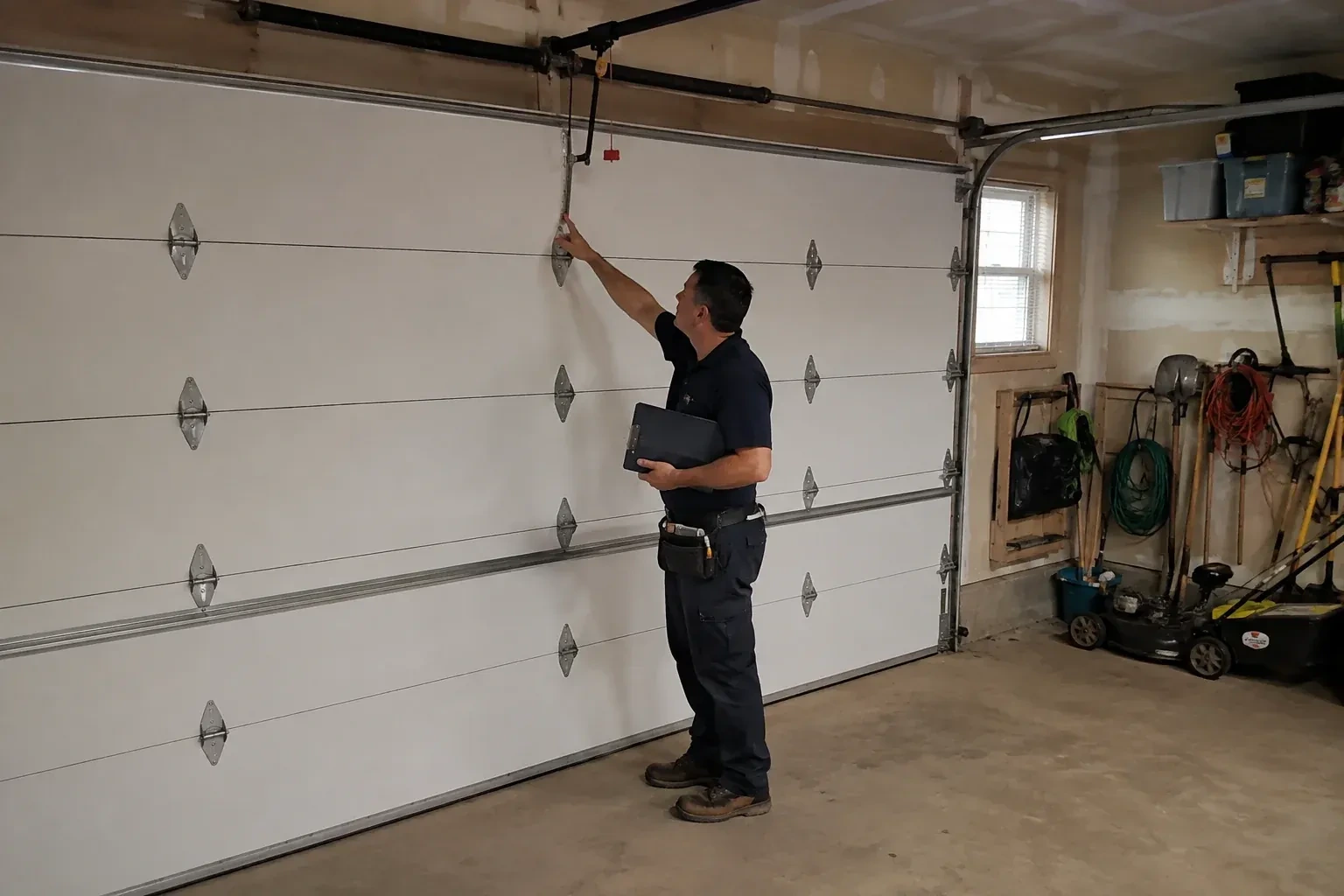
How the visit goesA length of weatherstrip along the right jamb has pulled away, nails and all, and it slaps against the trim every time the wind picks up. The wood behind it is dark and soft where it meets the floor.
Garage Door Perimeter Weatherstrip
How the visit goes
The corners and the meeting with the bottom seal
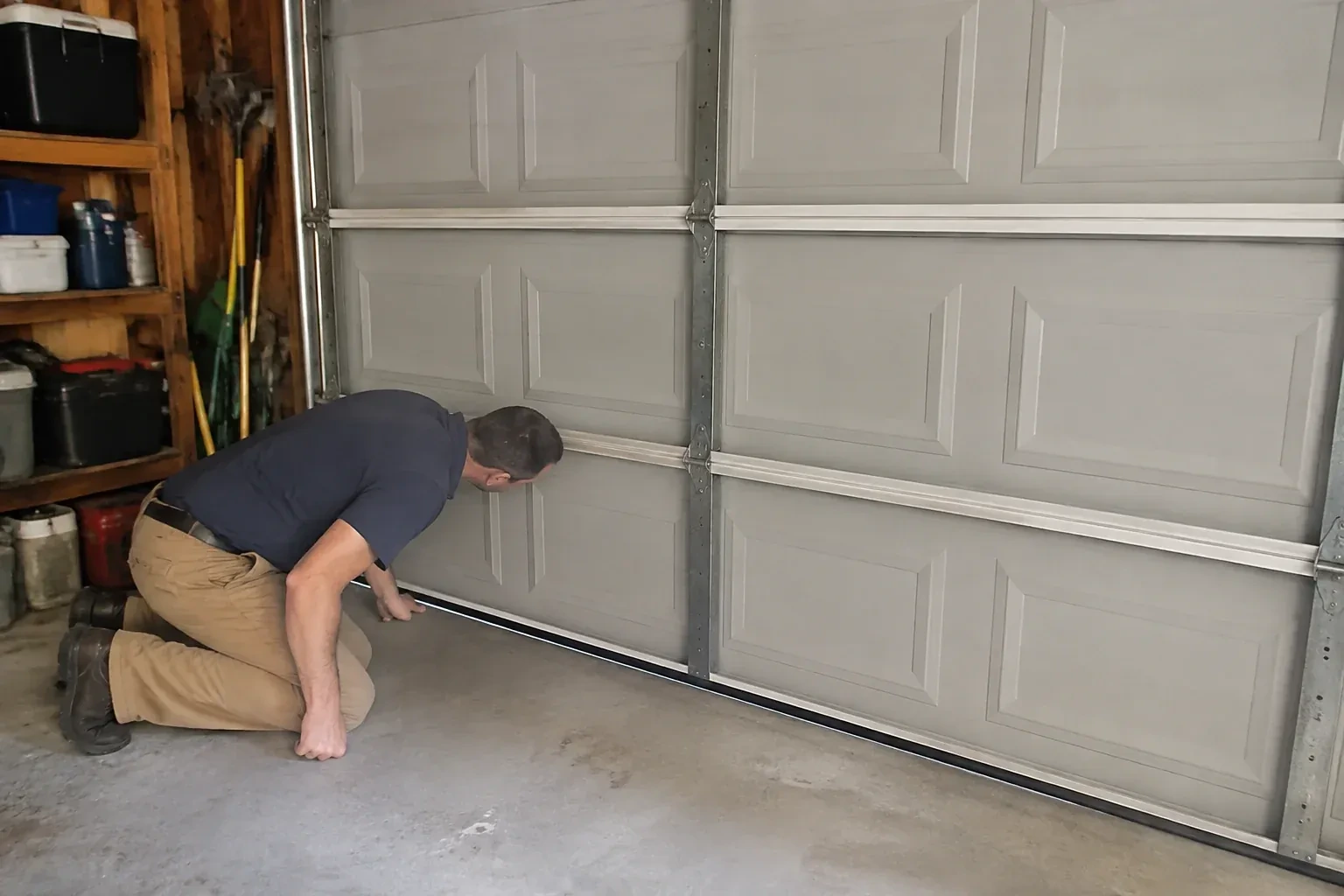
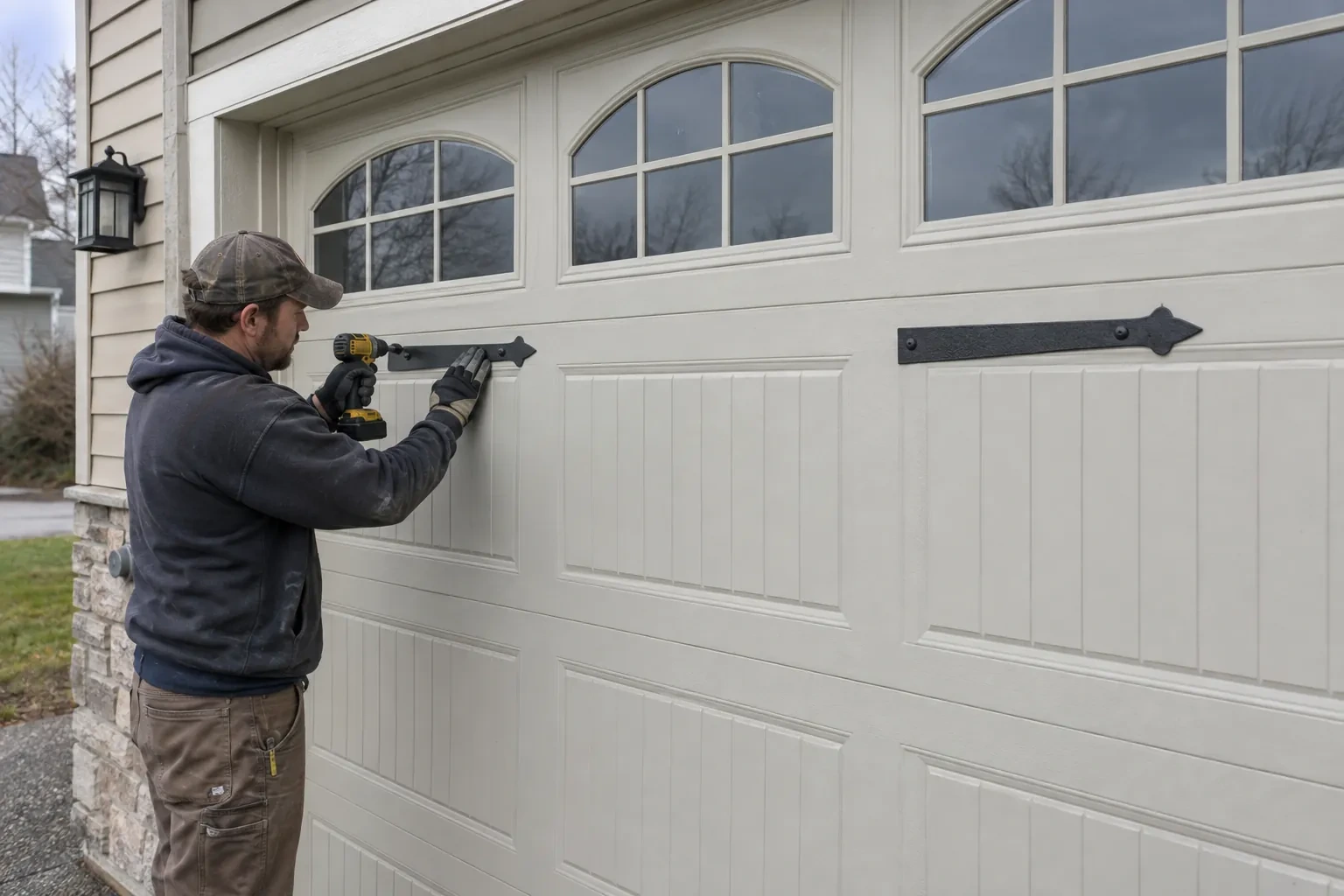
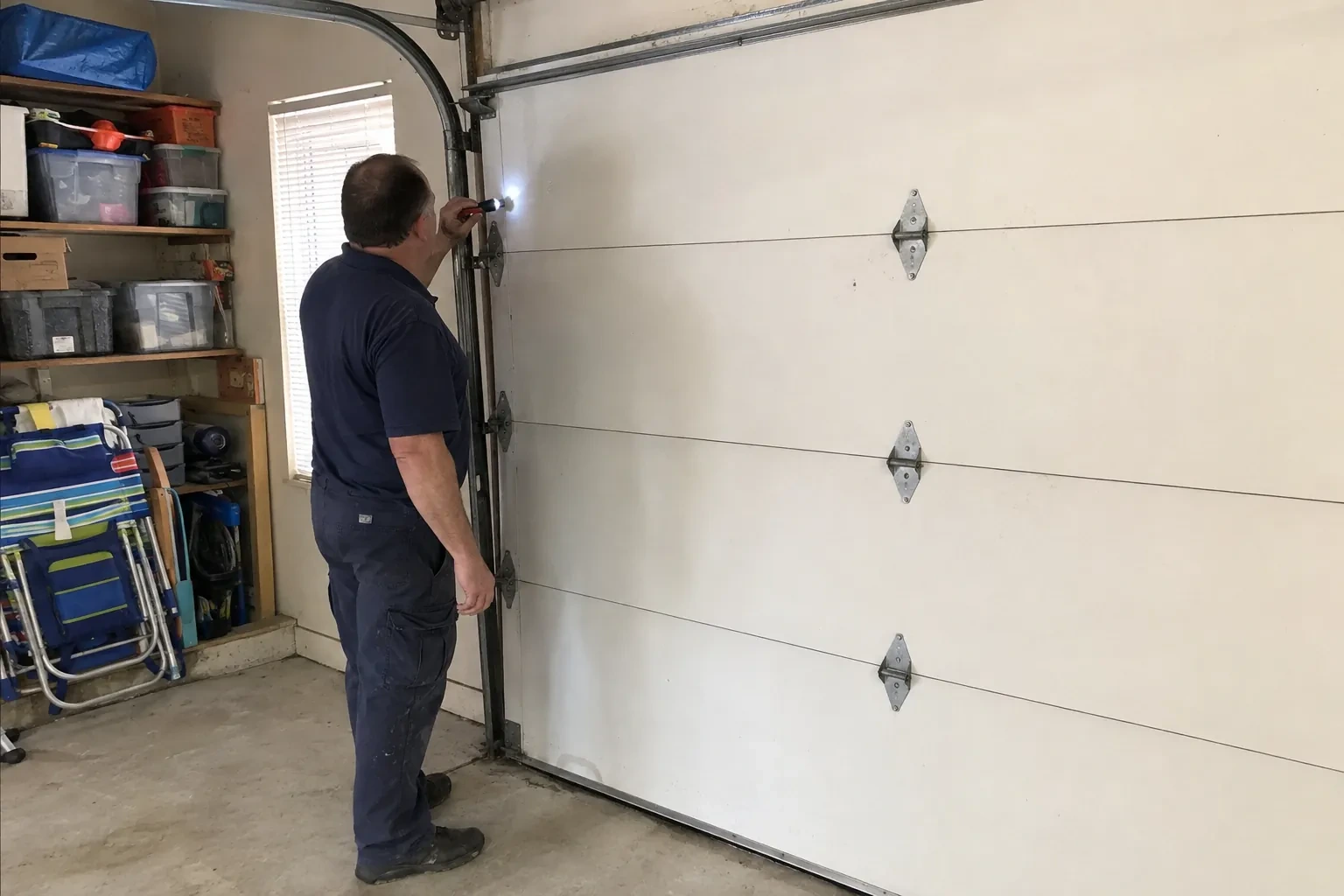
Gaps like to live where pieces meet. The technician looks at both top corners, where the header seal and the side seals should overlap so there is no square hole, and at both bottom corners, where the side seal should run right down to meet the bottom seal on the door. Mouse droppings, leaves and a small drift of snow in one corner are common finds and point to exactly which joint has opened. The bottom seal itself is noted; it is a separate part of the door, but if it is flattened or torn the household is told so both can be renewed in one visit if they wish.
Taking off the old strip cleanly
The old fin or stop comes off with a flat bar worked behind it a little at a time, so the trim and any brickmould stay intact. Nails are drawn with end-cutting pliers rather than hammered through, staples are lifted, and any old adhesive is scraped back to bare surface. Where the whole wood stop is being replaced with a one-piece vinyl stop, the stop is freed along its length and lifted out, and the paint ridge it leaves is knocked down so the new moulding sits flat. The bare jamb is brushed clean and any loose paint at the edges is removed before anything new goes on.
Keep paint off the fin
When the trim is next painted, the flexible fin stays bare. Paint fills the flexible material and stiffens it, and a stiff fin cracks well before its time once the cold takes hold. If the rigid part of the stop is wood, it can be painted, but with the brush kept off the fin or the fin masked. One-piece vinyl stop needs no paint at all and simply washes clean. This single habit is the difference between a seal that stays soft for many years and one that fails early, and it is the most common cause of early failure the technician sees.
Garage Door Perimeter Weatherstrip
In the van
Flexible vinyl fin seal
Galvanized or stainless trim nails
Flat bar, hammer and nail set
Vinyl stop moulding with integral seal
Aluminum retainer and rubber insert
Garage Door Perimeter Weatherstrip
What affects the quote
Adding a brush or foam seal to the sides as well as the stop
Some households want only the top and side stop replaced, while others add a brush or foam seal along the same run for a tighter fit against wind-driven snow. That extra material and the time to fit it are agreed before the old stop comes off.
Number of doors
Two or three doors on the same property share the set-up time and are quoted together, usually at less per opening than a single door on its own.
Partial replacement
Replacing one damaged length rather than all three is a smaller job, provided the remaining pieces are still soft and the profile can be matched.
What to have ready
- Is the seal cracked, torn, loose, or missing in places?
- Is the wood around the opening soft or rotten near the floor?
- Is the existing seal a flexible strip on a wood stop, or a one-piece vinyl moulding?
Garage Door Perimeter Weatherstrip: questions
QuestionsWhy is there daylight on one side but not the other?
It can be either. Worn rollers, a track bracket that has shifted or a top section that bows can move the door face toward one jamb and away from the other, and a seal that is damaged, shrunk, the wrong size or set slightly off the door face shows the same way. The technician checks both the door's alignment and the seal itself, corrects what is out of true, then fits the new seal to a door that closes evenly.
The wood around my door is rotten near the floor. Can the seal still go on?
Yes, and the rot is handled first. The soft wood at the base of the jamb is cut back to sound material and a new piece of lumber or PVC trim is spliced in, fixed and primed, so the fasteners for the new stop bite into something solid. This is one of the most common additions to a perimeter seal job here, because slush and salt sit against the jamb base all winter.
How long does the visit take?
A straightforward fin replacement on a single door is often a matter of an hour or two once the technician is set up; a double door with a one-piece stop takes longer, and any jamb repair adds to it. Most of the time goes into checking the door, preparing the surface and setting the contact carefully, since those are what make the seal last. You are given a sense of the timing when the work is confirmed.