Repairs · Binbrook
Garage Door Perimeter Weatherstrip in Binbrook
Every time the door closes there is a rubbing squeal along one side, and the flexible fin has folded under itself and torn.
In plain words
When the work is finished you have a door that closes against a soft, continuous line of contact on both sides and across the top. From inside with the lights off there is no daylight at the edges; from outside, the new stop matches the trim colour. The door moves through its full travel without the fin catching or squealing. You are told what profile, colour and lengths were fitted, so a match is simple later, and shown the few habits that keep the seal supple: no paint on the fin, a silicone wipe before freezing rain, and slush kept off the bottom of the jambs.
How the visit goesDry leaves keep appearing in the same corner inside the garage, and this fall there were mouse droppings along the wall beside the door. When you look, the corner where the top and side strips meet is wide open.
Garage Door Perimeter Weatherstrip
How the visit goes
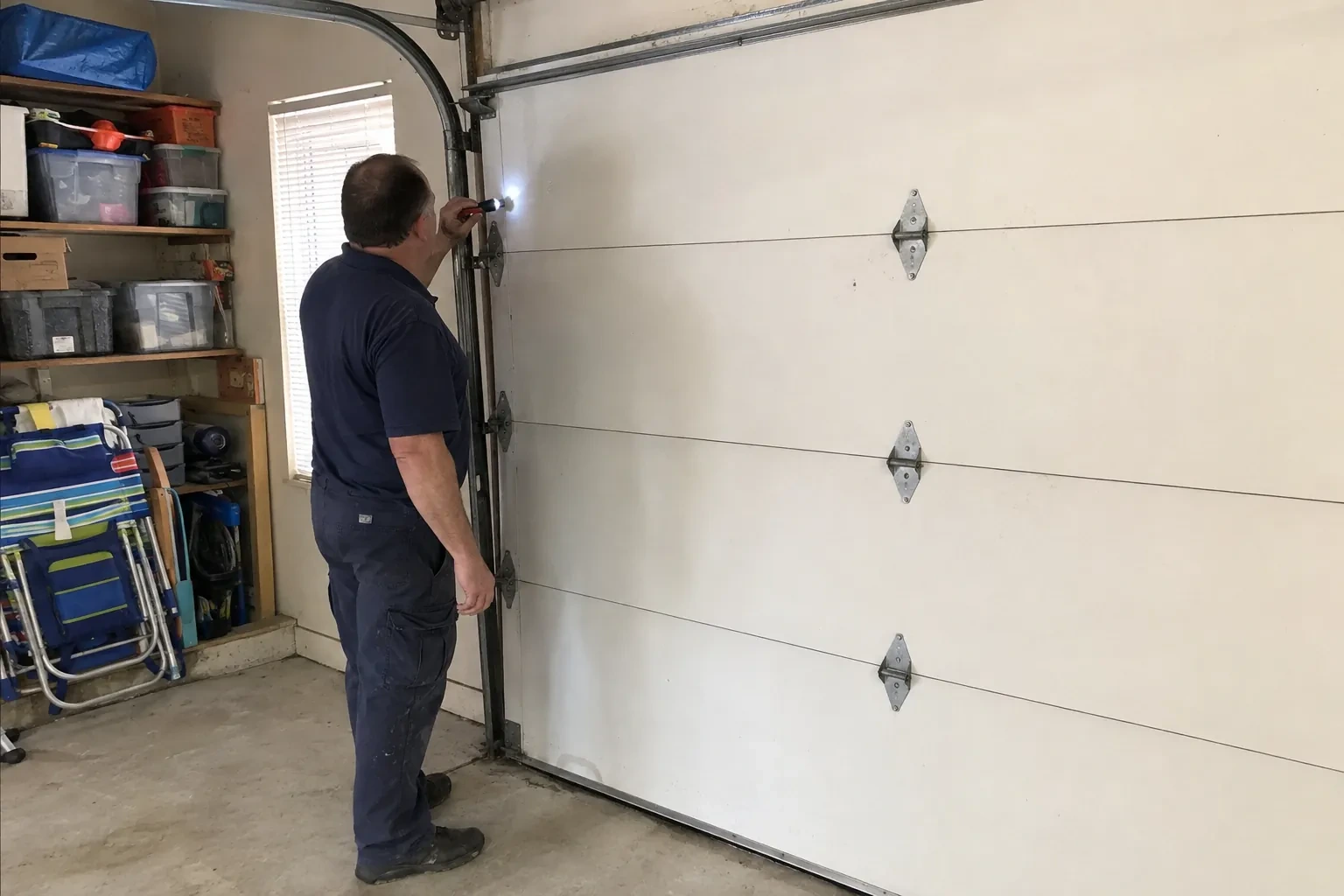
Measuring for the new pieces
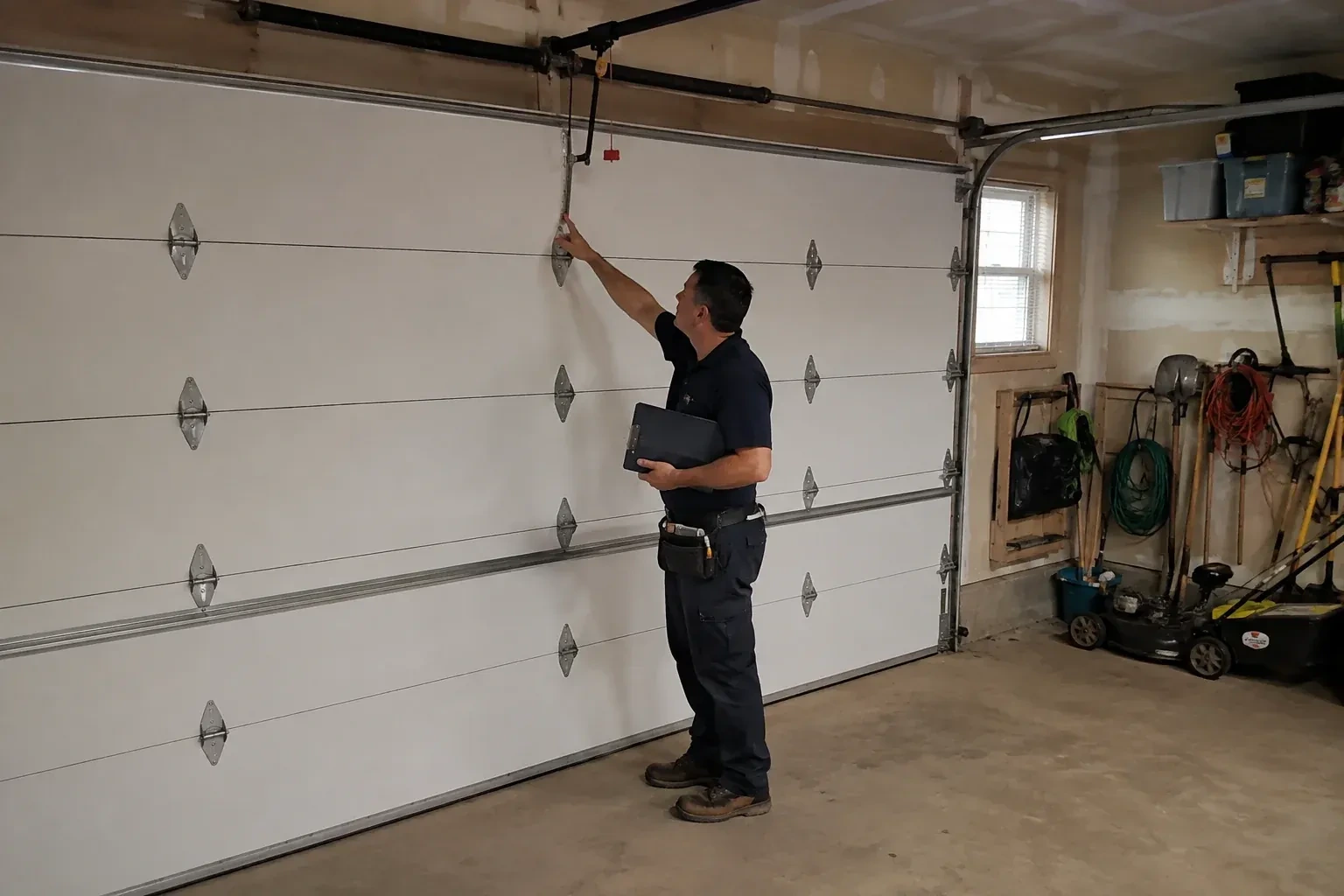
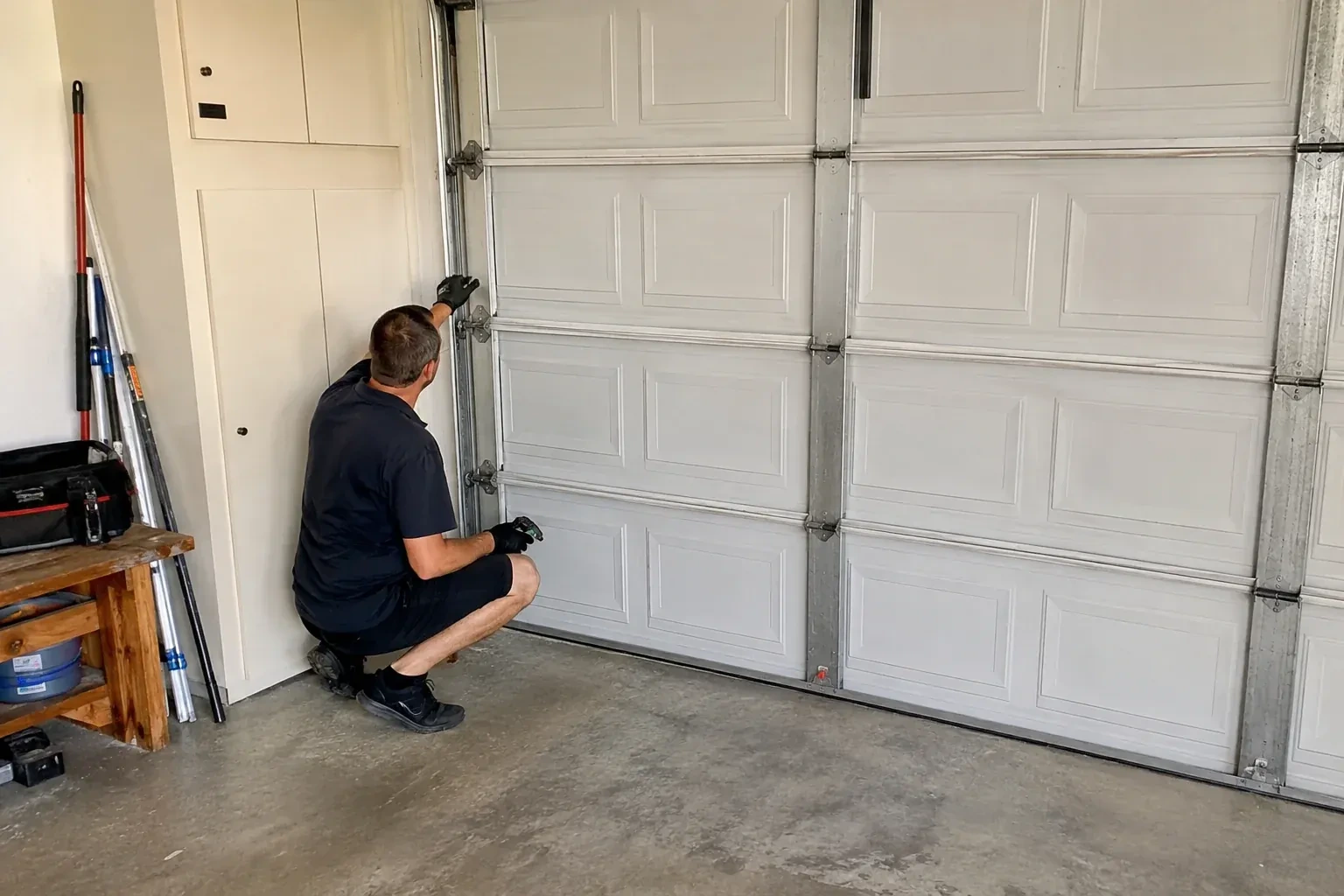
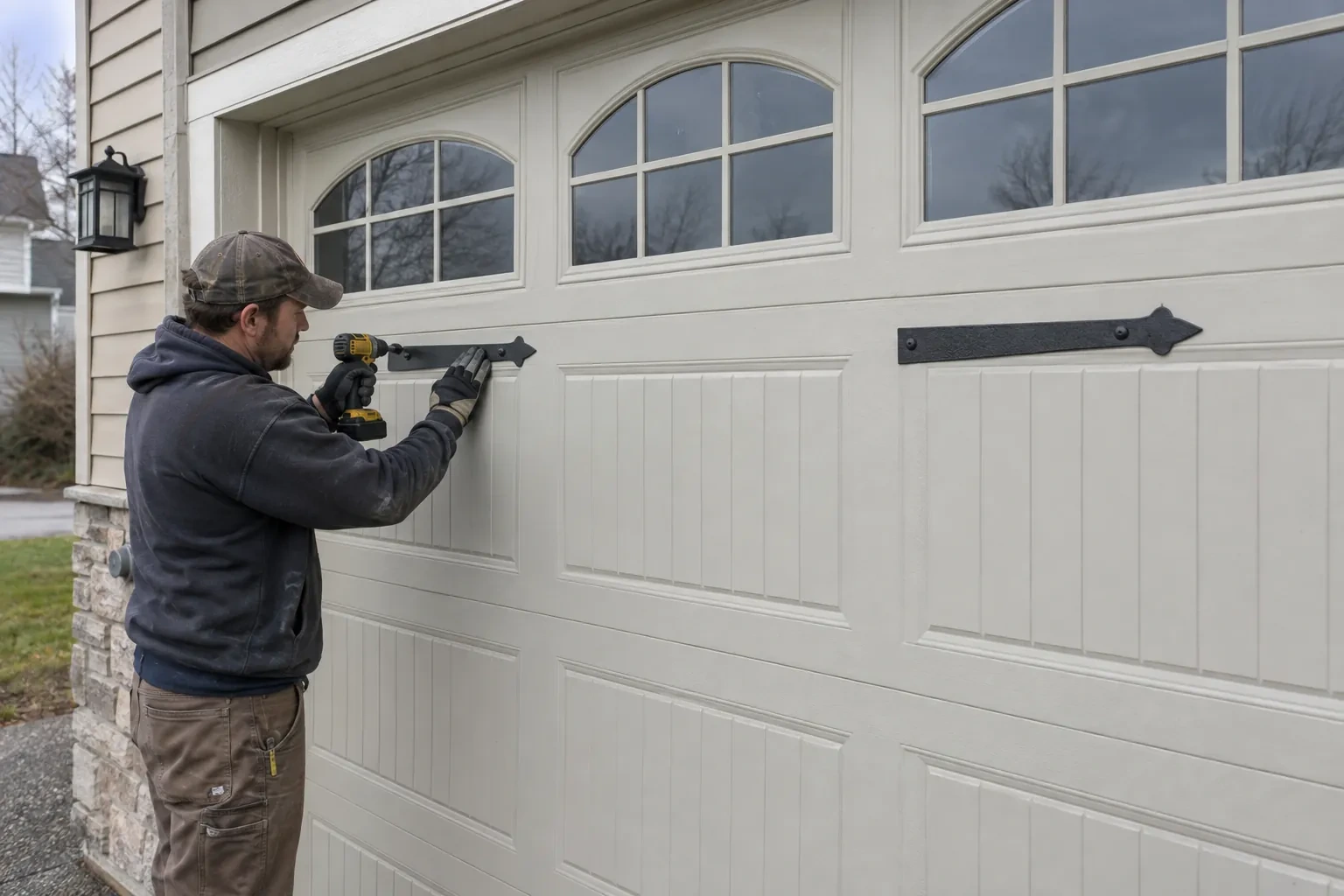
With the door closed, the header is measured across the full width of the opening and each side from header to floor, because openings are rarely the same on both sides. The profile is chosen to match the gap: a wider fin for a door that sits a little back from the stop, a narrower one where the gap is slight, and a one-piece stop where the wood is going. Colour is matched to the trim from a range of standard finishes. The technician also notes whether the existing stop projects far enough to cover the door edge, since a stop set too shallow leaves the fin working alone.
Making the jamb sound
Where probing found soft wood, it is dealt with before the seal. Rot at the base of the jamb is cut back to solid material and a matching piece of lumber or PVC trim is spliced in, fixed and primed. Minor soft spots are hardened with an epoxy consolidant and filled. Fasteners that will hold the new stop are then going into wood that grips them, which is what keeps the strip tight through years of the door pressing on it. Where the jamb is clad, the technician finds the solid framing behind the cladding and fastens through to it rather than into the thin skin.
Before the freezing rain
In late autumn, wipe the fin with a silicone spray or a silicone-based lubricant on a cloth. It leaves a film that cuts the odds of meltwater bonding the fin to the cold door face during an ice storm, though a hard freeze can still catch it. Oil-based products are avoided because they swell and soften vinyl over time. The same wipe once or twice through the winter keeps the fin supple. If the door does freeze to the seal, a little warm water along the edge from inside, or simply waiting for the sun, frees it without pulling; dry the thawed spot afterwards so it does not simply refreeze.
Garage Door Perimeter Weatherstrip
In the van
Flexible vinyl fin seal
Galvanized or stainless trim nails
Flat bar, hammer and nail set
Vinyl stop moulding with integral seal
Aluminum retainer and rubber insert
Garage Door Perimeter Weatherstrip
What affects the quote
Colour and profile
Standard colours and fin widths are carried on the truck. A less common colour, an extra-wide fin or a commercial retainer with insert may be a special order, with the difference noted.
Trim, brickmould and caulking
Re-caulking the joint between stop and trim, or dressing capping that channels water down the jamb, is small work done while the surface is bare and is listed on its own line.
Alignment work on the door
Where the door sits out of square and a track bracket or the door itself needs small correction before the seal can meet it evenly, that adjustment is named separately.
What to have ready
- Where do you see daylight, drafts or snow: sides, top, or corners?
- Is the wood around the opening soft or rotten near the floor?
- Is your garage attached to the house, and is it heated?
Garage Door Perimeter Weatherstrip: questions
QuestionsWhy is there daylight on one side but not the other?
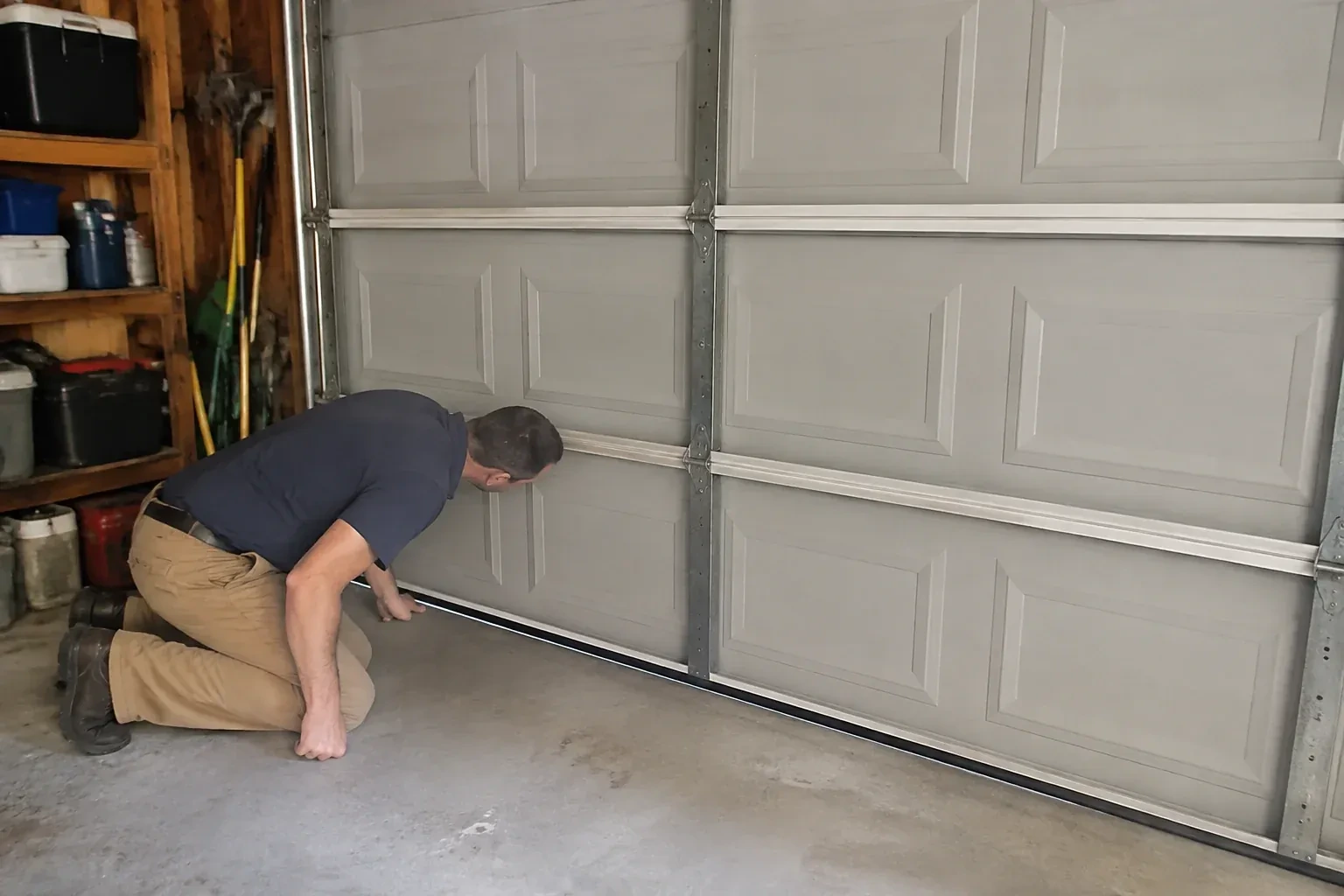
It can be either. Worn rollers, a track bracket that has shifted or a top section that bows can move the door face toward one jamb and away from the other, and a seal that is damaged, shrunk, the wrong size or set slightly off the door face shows the same way. The technician checks both the door's alignment and the seal itself, corrects what is out of true, then fits the new seal to a door that closes evenly.
The wood around my door is rotten near the floor. Can the seal still go on?
Yes, and the rot is handled first. The soft wood at the base of the jamb is cut back to sound material and a new piece of lumber or PVC trim is spliced in, fixed and primed, so the fasteners for the new stop bite into something solid. This is one of the most common additions to a perimeter seal job here, because slush and salt sit against the jamb base all winter.
How long does the visit take?
A straightforward fin replacement on a single door is often a matter of an hour or two once the technician is set up; a double door with a one-piece stop takes longer, and any jamb repair adds to it. Most of the time goes into checking the door, preparing the surface and setting the contact carefully, since those are what make the seal last. You are given a sense of the timing when the work is confirmed.