Repairs · Hamilton
Garage Door Safety Inspection
During the power outage you pulled the red cord and tried to lift the door by hand.
In plain words
An inspection separates looking from fixing on purpose. Springs, cables, drums and bottom brackets hold the door's weight as stored tension, so the technician examines them closely, measures what can be measured and photographs what matters, without loosening or winding anything. Once the findings are written down, any adjustment or repair becomes its own planned job, done with the door secured and the stored spring tension controlled by whichever method that system calls for. This order protects the hardware as much as the people around it, and it means the report describes the door as it actually is rather than as it was left after a hurried tweak.
How the visit goesYou moved in three months ago. The door works, but nobody can say how old the springs are, when anyone last looked at it, or whether the little sensors by the floor have ever been tested.
Garage Door Safety Inspection
How the visit goes
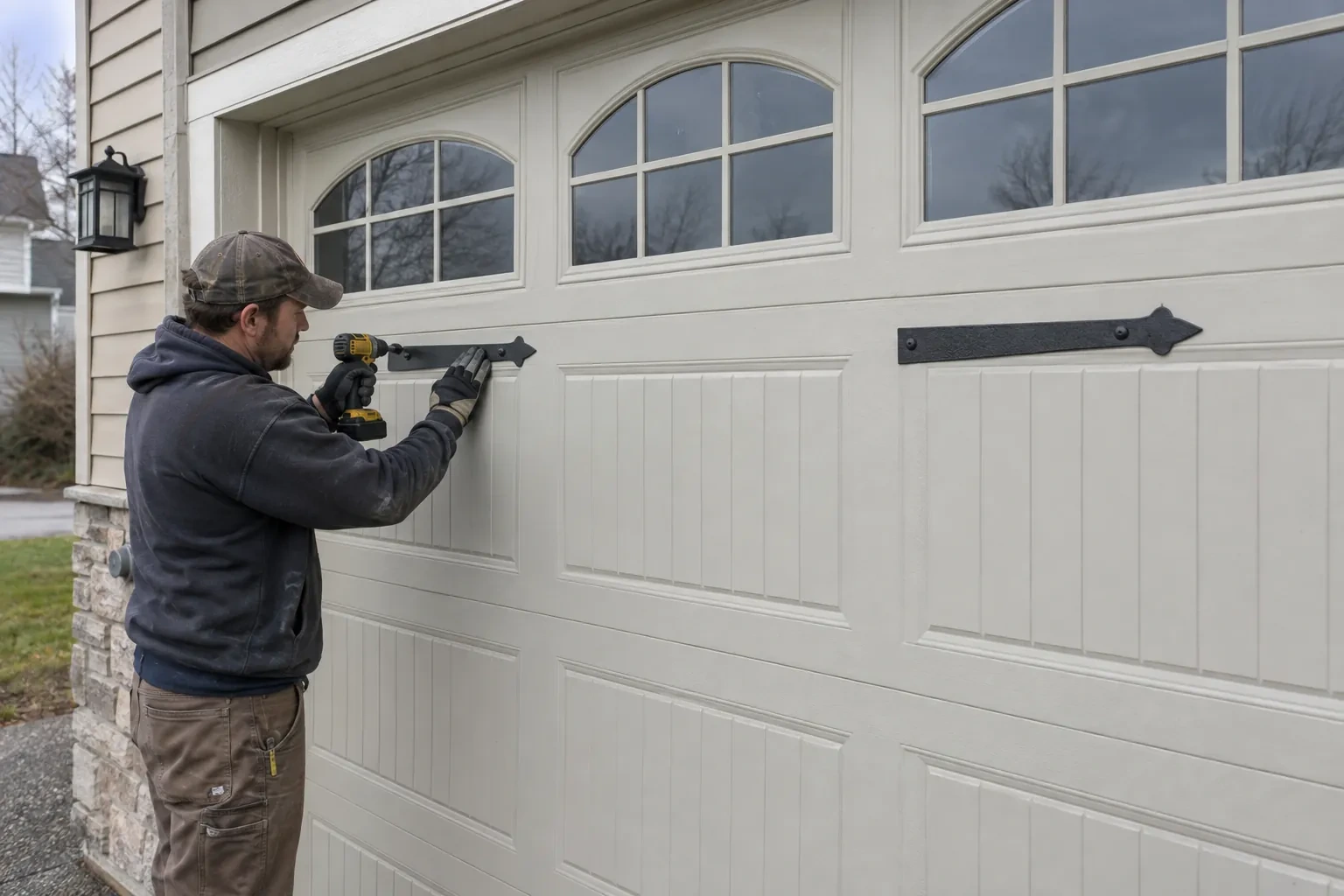
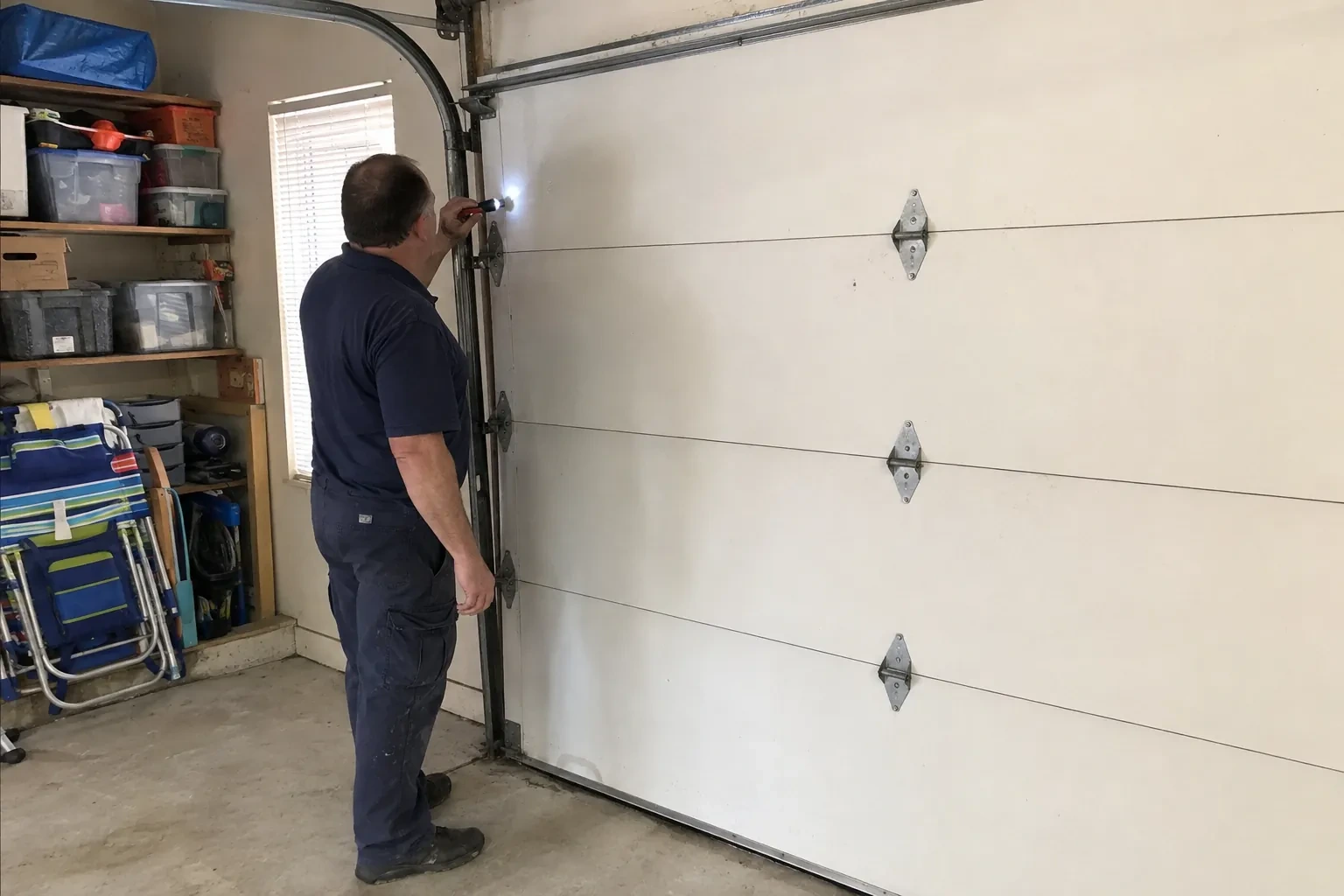
Springs, cables and drums, looked at and left alone
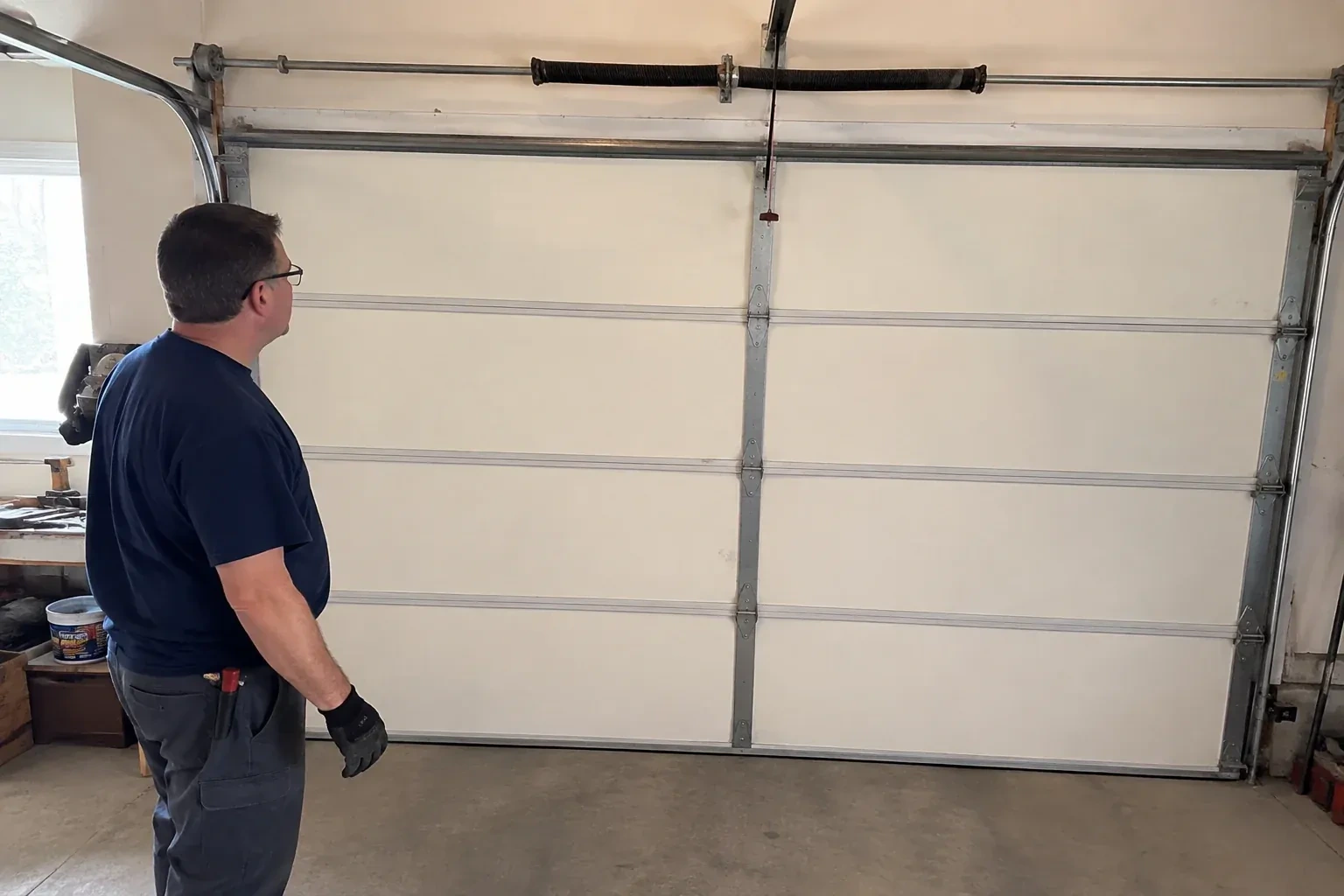
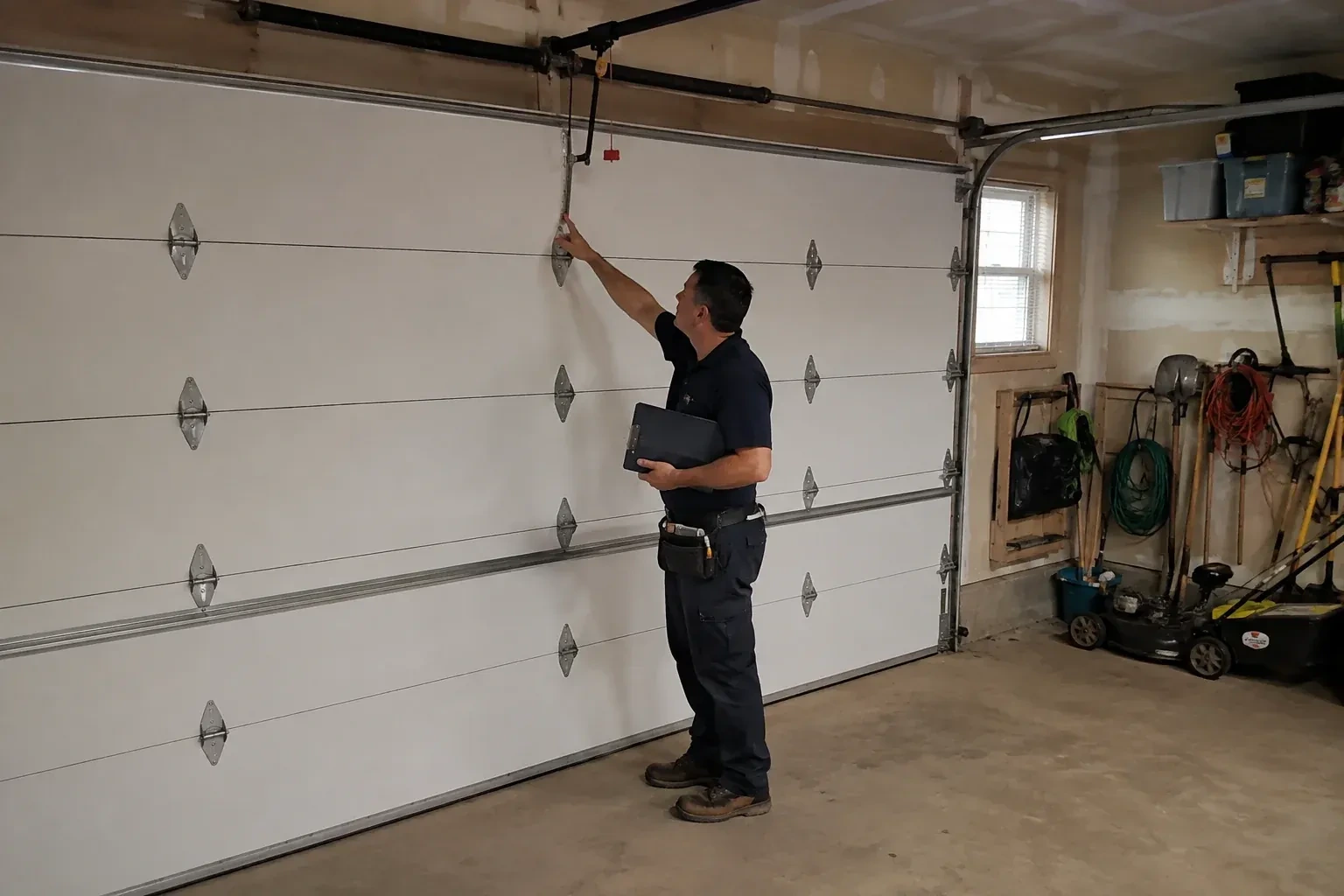
The counterbalance gets a careful look and nothing more during the inspection. On a torsion door the technician checks the spring coil for a gap, rust or a stretched section, confirms the cone set screws and centre bearing look sound, and follows each cable from the drum to the bottom bracket looking for broken wires, a rust bloom near the loop or a slack side. The drum wrap is checked for a single neat layer. On an extension door the springs, pulleys and containment cables are examined the same way. Any adjustment to these parts is a separate, planned job matched to that system, torsion tension controlled with winding bars rather than simply released; the inspection records their condition.
The balance test, by hand
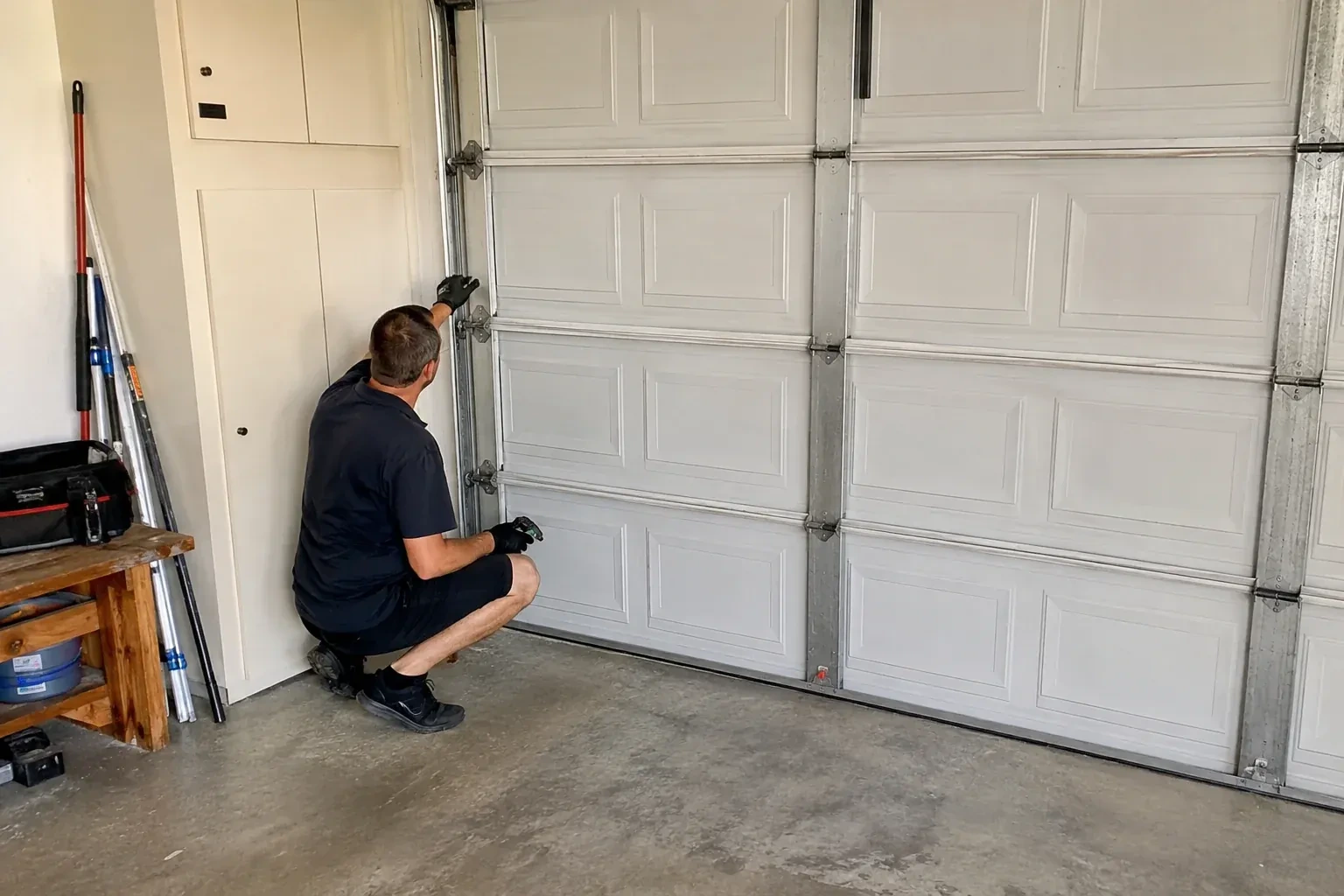
With the door fully closed, the technician pulls the release cord to disconnect the opener, then lifts the door by its handle or a safe grip on the bottom section. It should rise with light, even effort, stay put when let go around waist height, and lower to the floor without slamming. A door that drifts up is over-sprung; one that sinks or feels heavy is under-sprung or bound somewhere in its travel. Binding at a particular height points at a roller, a hinge or a track rather than the springs. The result is recorded as a finding; any change to spring tension is quoted as separate work, done under controlled torque with proper winding bars and the door secured.
A dated record you can keep with the manuals
You leave the visit with a written report tied to a date, the door and opener model numbers, and the technician's name. It lists what was in good order, what was maintained on the spot, what is worth planning and, if anything, what must be corrected before the door is used. Measurements and photographs sit alongside the findings so a future repair can be quoted from the record and a future inspection can show what changed. Keep it with the door's manuals or in the home file. It is the kind of document that answers a buyer's question, an insurer's question or your own question in a year's time in one page.
Garage Door Safety Inspection
In the van
Lens cloth and cleaner
Socket set and nut drivers
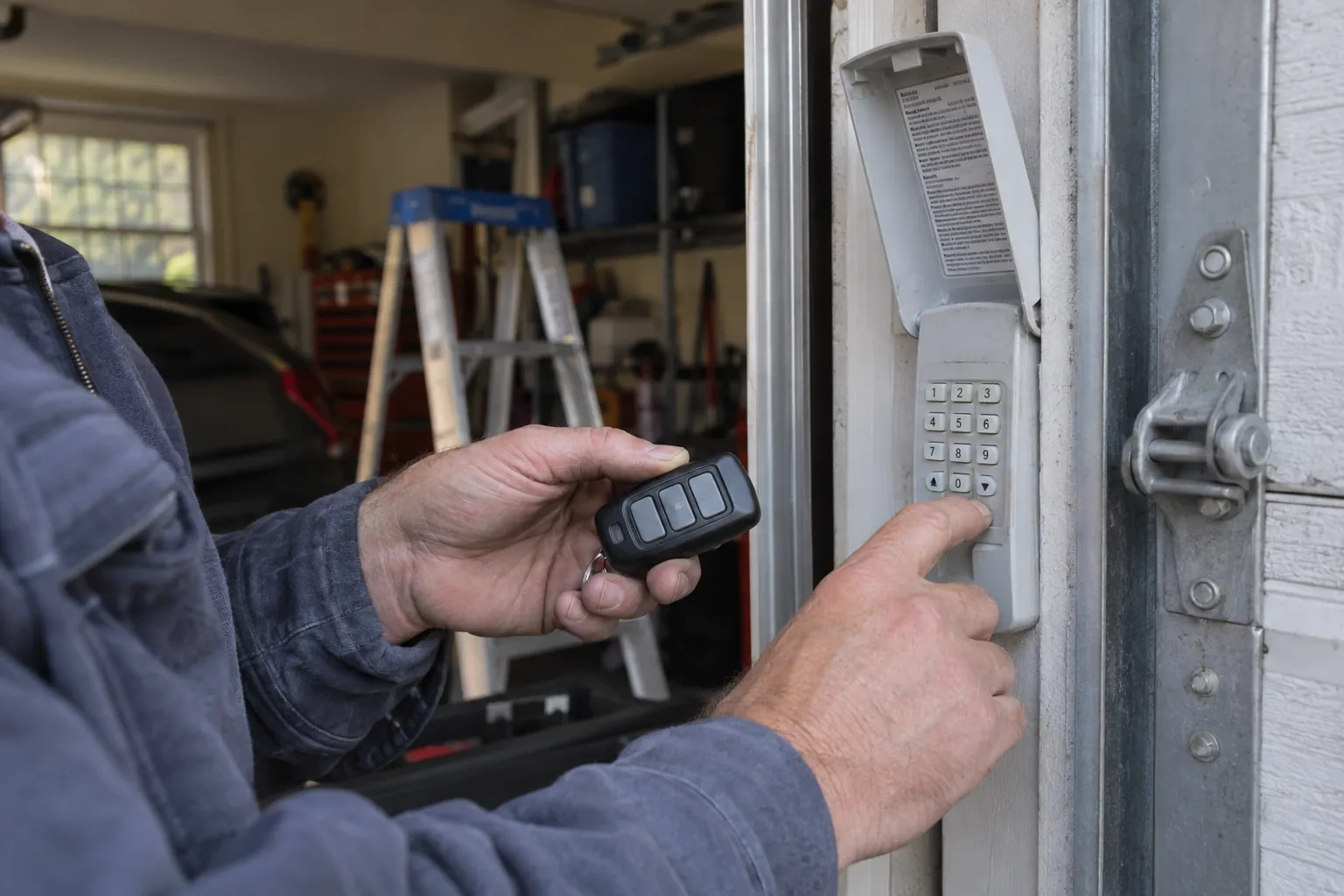
Remote and keypad batteries
Inspection checklist and report form
Weatherstrip samples for matching
Garage Door Safety Inspection
What affects the quote
Single or double door
A double door is wider and heavier and commonly adds centre hinges and reinforcement a single door does not carry, with a heavier counterbalance to test, so it takes longer to walk and to write up; section count itself follows the door's height rather than its width.
Manuals and unusual models
A door or opener with no label, a discontinued model or a custom lift setup means the test procedure has to be established rather than looked up, which adds time.
Torsion or extension counterbalance
Extension-spring doors add pulleys, cable clips and containment cables to the list, while torsion doors call for spring measurements at the shaft; the parts examined shape the time.
What to have ready
- How many doors need inspecting, and are they all at the same address?
- Have you tried lifting the door by hand, and how did it feel?
- Is anything stored near the tracks, under the spring shaft or in front of the door?
Garage Door Safety Inspection: questions
QuestionsDo you look at the door between the garage and the house?
If the garage is attached, yes, briefly. That door should be tight-fitting, weatherstripped and fitted with a self-closer, because it is the barrier that keeps vehicle exhaust out of the living space. A technician who finds it propped open, missing its closer or failing to latch notes it in the report as a maintenance item, alongside the overhead door findings.
Why does my door reverse on the way down for no reason?
Most often it is the photo eyes. A sensor knocked slightly out of line, a lens with a film of road grime, a loose wire, or low afternoon sun shining straight into one eye will each break the beam as far as the opener is concerned. The next candidates are a down-force setting that has drifted, a binding roller or a door that has gone out of balance. The inspection checks each in turn.
How long does the visit usually take?
Plan for roughly an hour for a single door in ordinary condition, and longer for a double door, a second door on the property, or a door with a history that needs following up. Maintenance done on the spot adds a few minutes. A post-impact assessment, where the technician traces the force through the hardware, takes longer than a routine check. You are told at the door if the scope is growing.