Repairs · Normanhurst
Garage Door Safety Inspection in Normanhurst
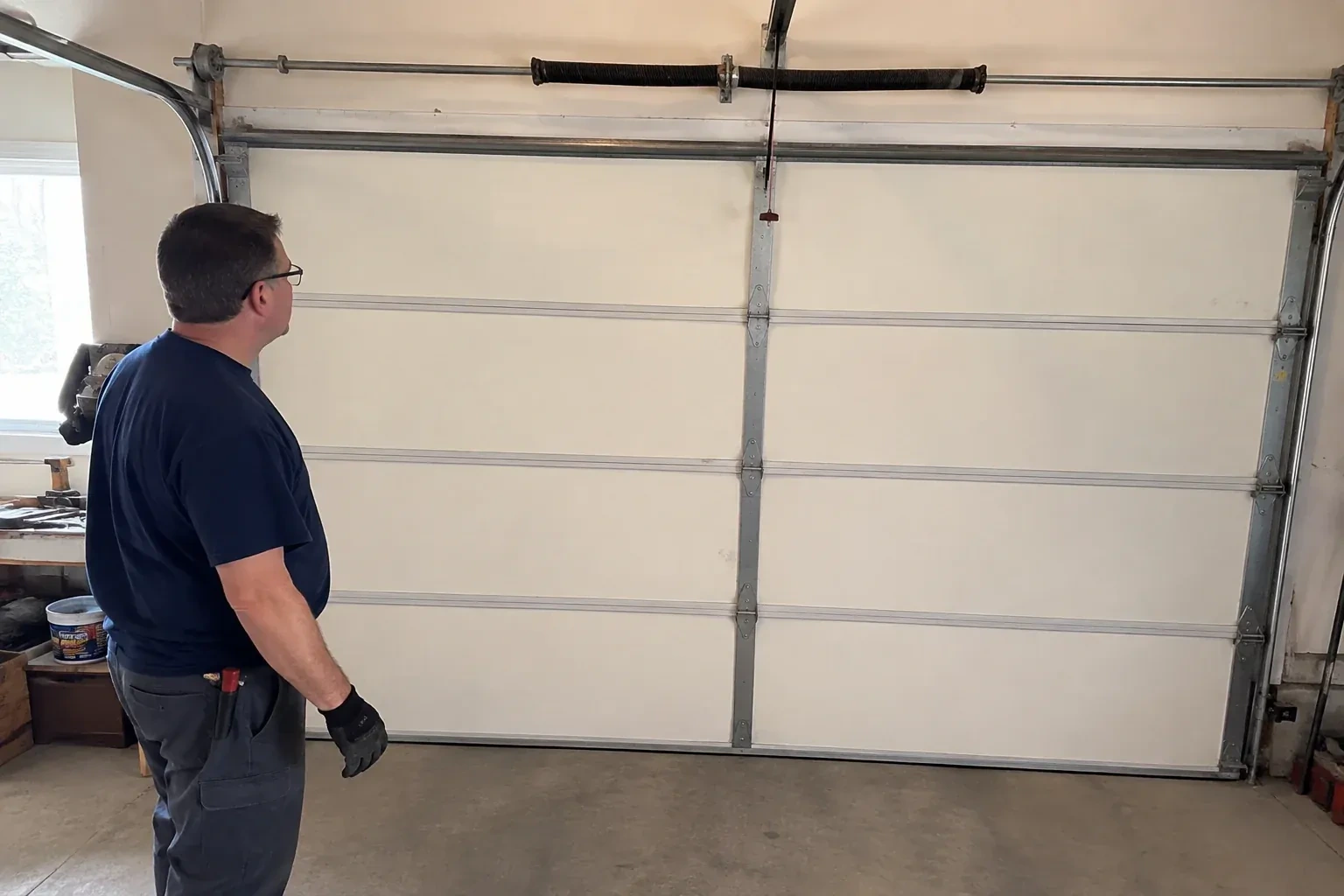
During the power outage you pulled the red cord and tried to lift the door by hand.
In plain words
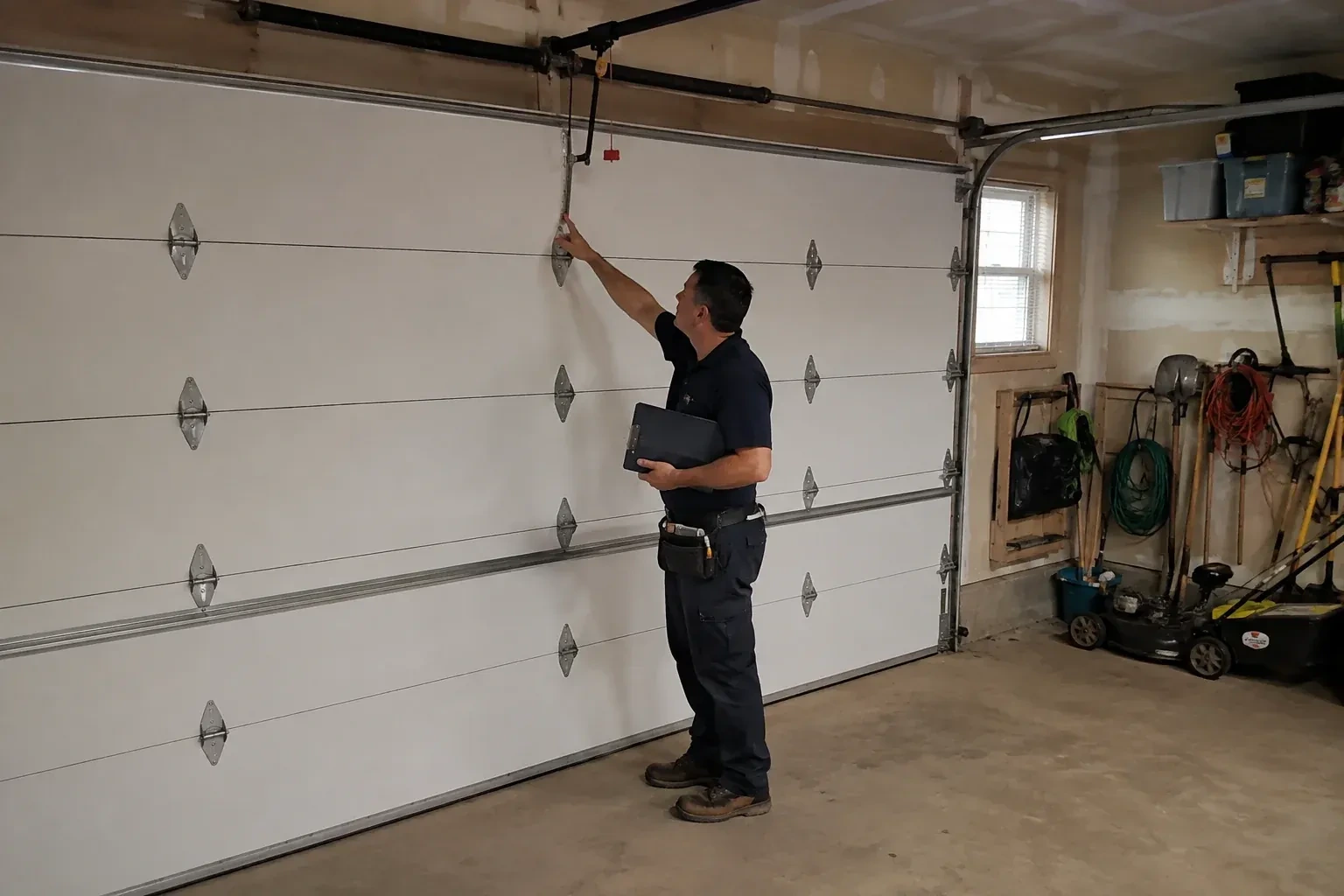
A garage door safety inspection is a systematic look at everything that moves the door and everything meant to stop it. The technician identifies the door and opener from their labels, then examines the sections, hinges, rollers, tracks, springs, cables, drums, brackets and seals, watches a full cycle, tests the door's balance by hand, and runs the reversal and photo-eye tests the opener manual calls for. Nothing tensioned is adjusted during the inspection. What you receive is a dated record of the door's condition, with anything that needs attention sorted by how soon it matters.
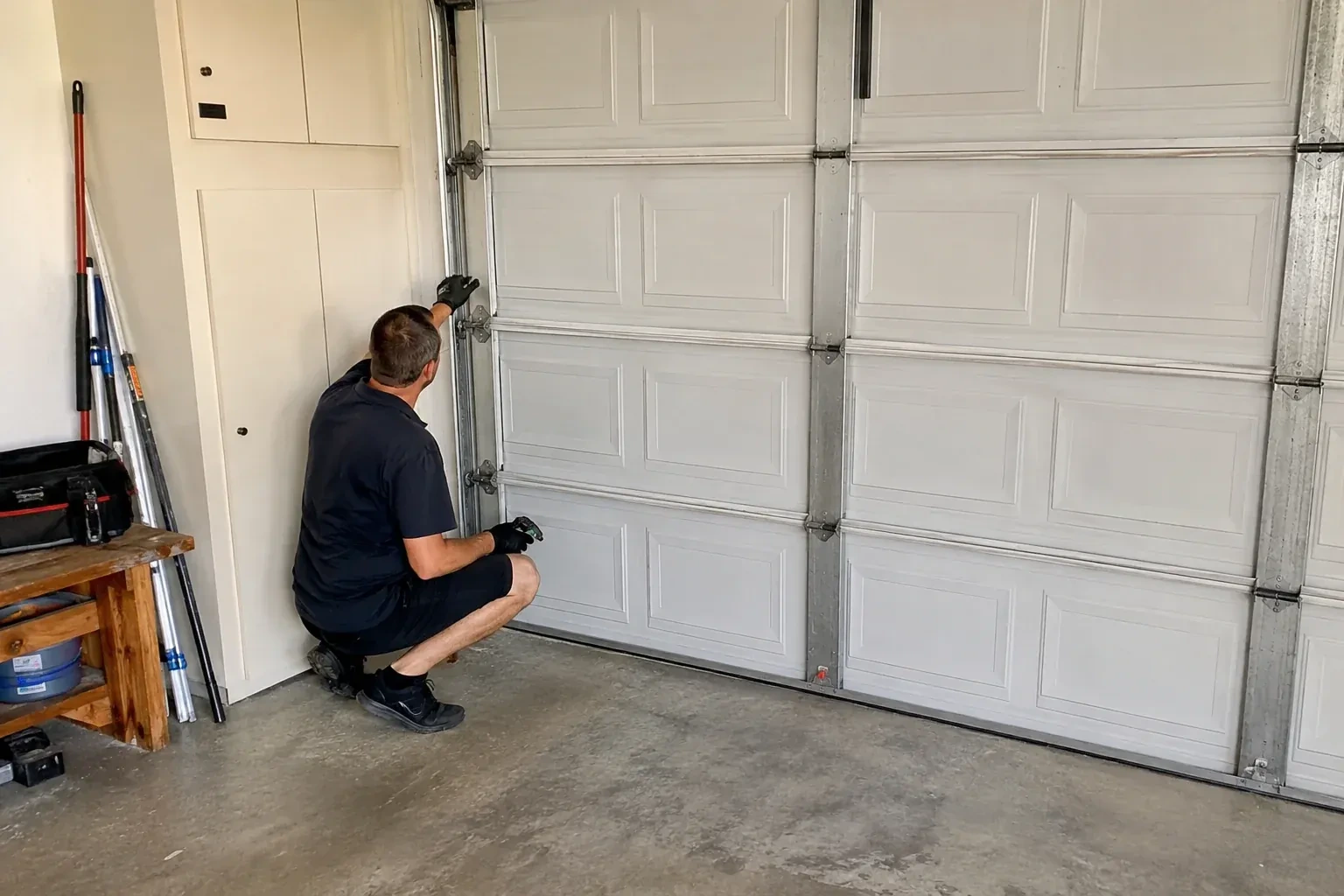
How the visit goesA tenant mentioned the door is louder than it used to be. From the driveway it looks fine, but on closer inspection the hinges near the floor are streaked orange and one roller wobbles as it turns.
Garage Door Safety Inspection
How the visit goes
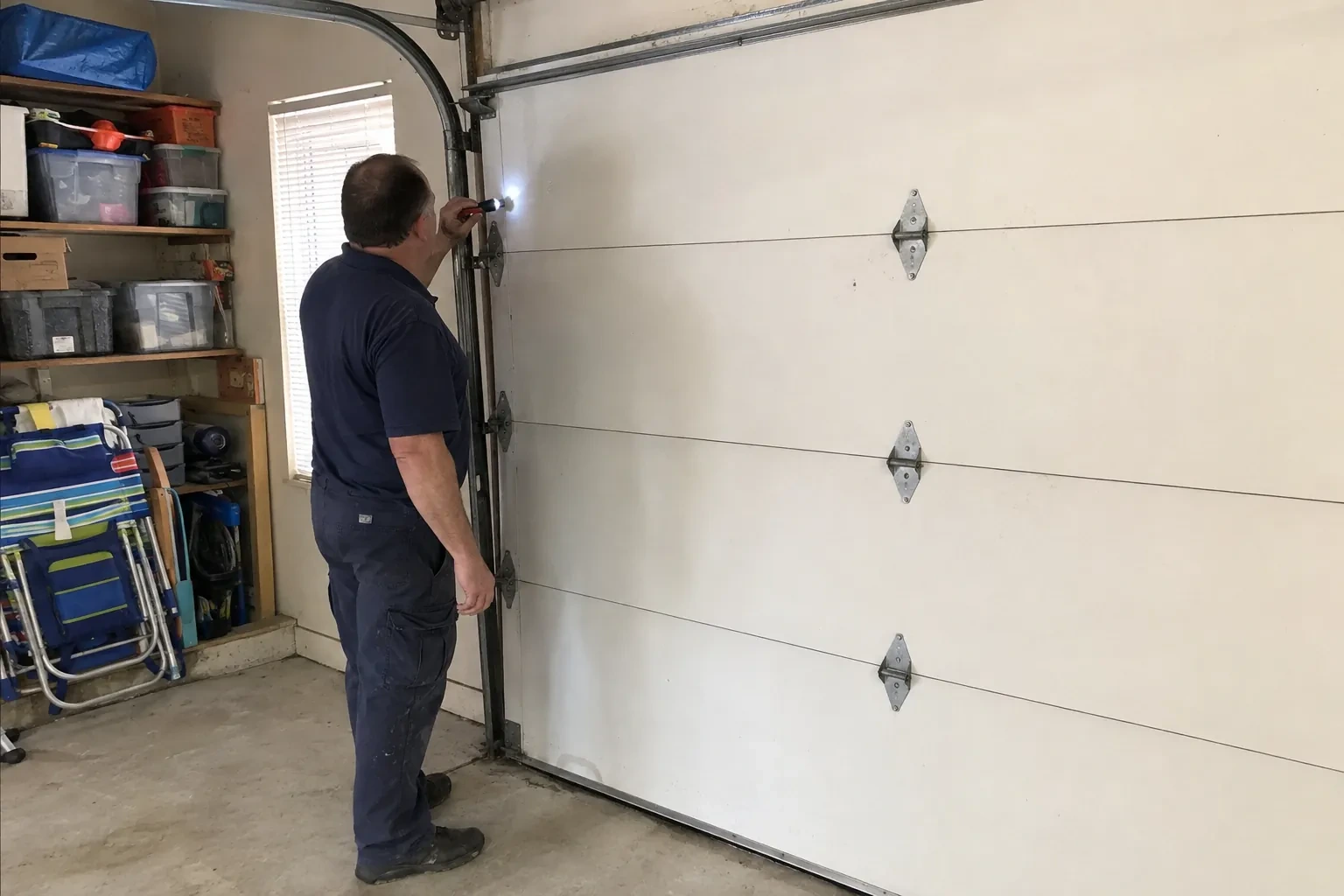
Watching one full cycle under power
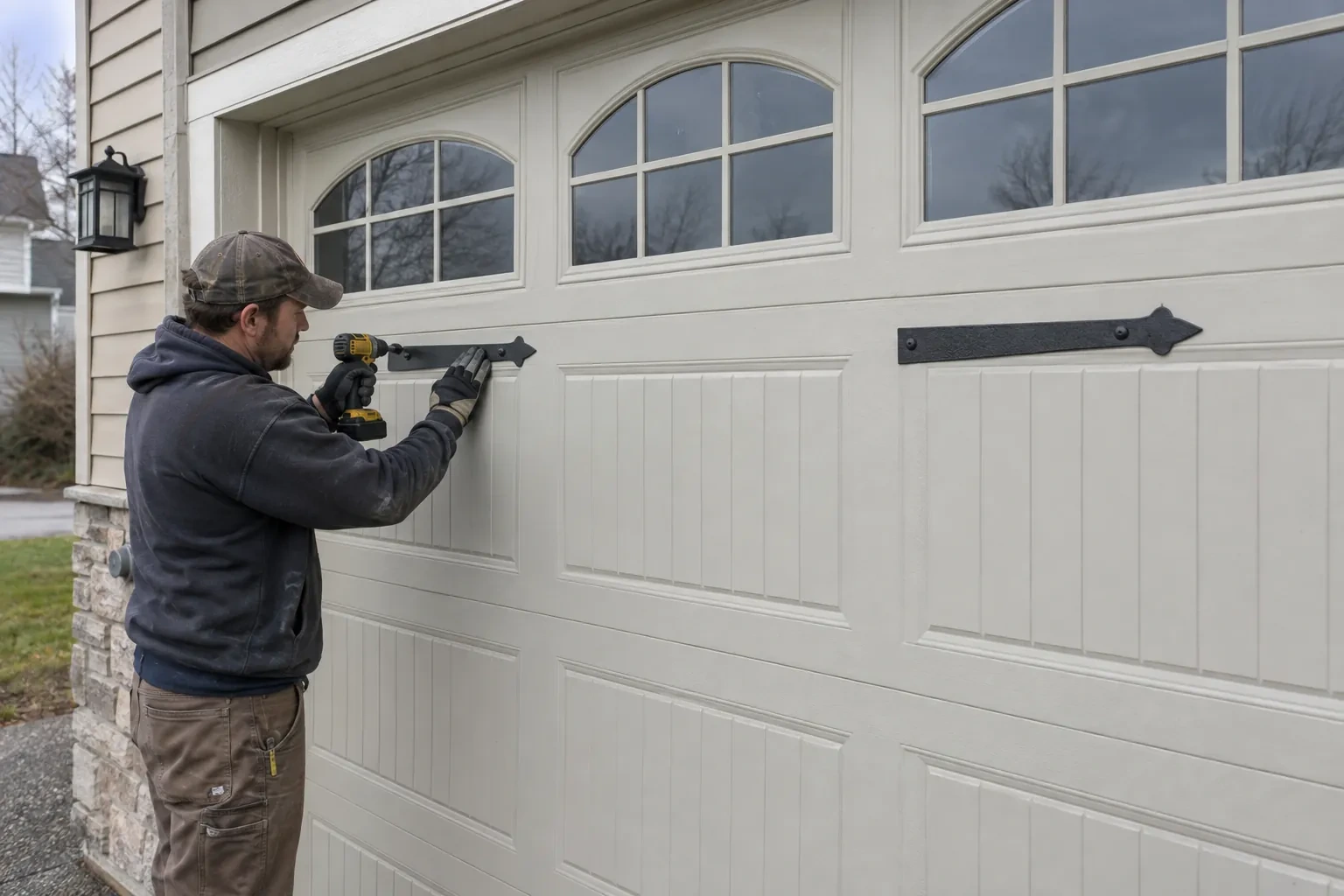
Before anything is measured, the technician stands back and runs the door through a full open and close, listening as much as watching. A healthy door sounds even from bottom to top; a knock at the turn into the horizontal track, a squeal at a particular hinge, a grinding drum or a motor that changes pitch under load each point somewhere specific. The eyes follow both bottom corners to see whether they leave the floor together, the top section as it passes the curve, and the final inch of closing, where the door should settle onto its seal without a thud. This one cycle often tells the technician where to spend the rest of the visit.
Measuring and photographing what matters
A report that says only fine or worn is not much use next year, so the technician records numbers. Spring wire size, inside diameter and length on a torsion door, and stretch on an extension door; cable diameter and the condition of each bottom loop; the gap at the bottom seal along its length; the height of the photo eyes; the door's overall dimensions and the opener's model. Each finding, from a rusted bracket to a cracked roller, is photographed with the light on it. These measurements let the next inspection show what has changed and let a future repair be quoted from the record instead of a second visit.
A baseline for the next inspection
The most useful thing about a first inspection is the second one. With the model numbers, spring dimensions, cable condition, seal gaps and photo-eye heights on record, the next technician can measure the same points and tell you what has moved rather than starting from nothing. For most households an annual visit fits, with a look in early spring after the salt season a natural choice. A door that carries a lot of traffic, an older door, or one in a rental where nobody watches it closely may suit a check each season. Whatever the interval, the report you are holding is the reference the next one will be read against.
Garage Door Safety Inspection
In the van
Lens cloth and cleaner
Socket set and nut drivers
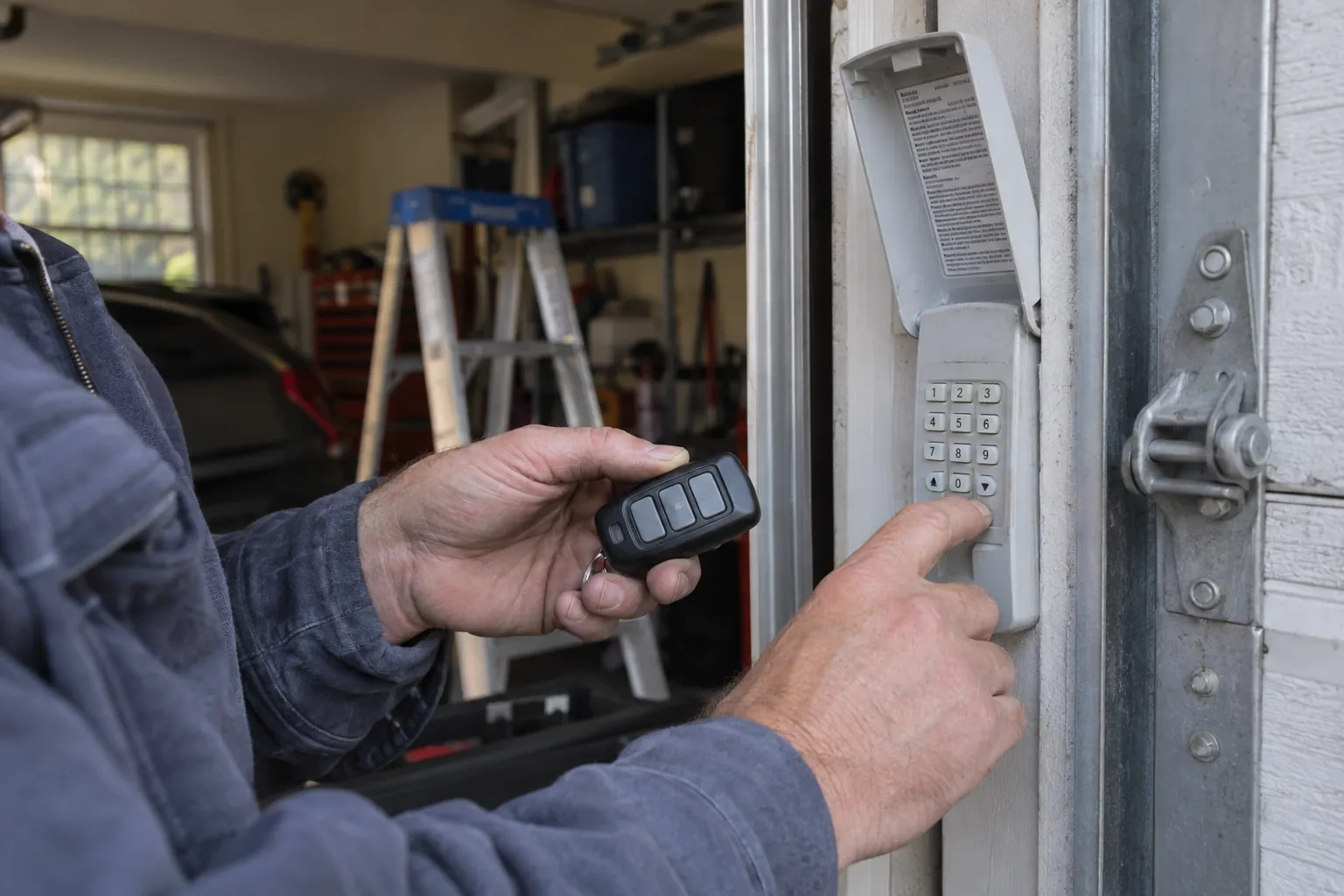
Remote and keypad batteries
Inspection checklist and report form
Weatherstrip samples for matching
Garage Door Safety Inspection
What affects the quote
Manuals and unusual models
A door or opener with no label, a discontinued model or a custom lift setup means the test procedure has to be established rather than looked up, which adds time.
High-lift, oversized or custom doors
Doors taller or wider than a standard residential opening, or with high-lift tracks and drums, have more to measure and take longer to observe through a cycle.
Single or double door
A double door is wider and heavier and commonly adds centre hinges and reinforcement a single door does not carry, with a heavier counterbalance to test, so it takes longer to walk and to write up; section count itself follows the door's height rather than its width.
What to have ready
- Is the door a single or a double, and roughly how tall is it?
- Is there a spring on a shaft above the opening, or springs stretched along the tracks?
- Do you have the door and opener manuals?
Garage Door Safety Inspection: questions
QuestionsDo you look at the door between the garage and the house?
If the garage is attached, yes, briefly. That door should be tight-fitting, weatherstripped and fitted with a self-closer, because it is the barrier that keeps vehicle exhaust out of the living space. A technician who finds it propped open, missing its closer or failing to latch notes it in the report as a maintenance item, alongside the overhead door findings.
Why does my door reverse on the way down for no reason?
Most often it is the photo eyes. A sensor knocked slightly out of line, a lens with a film of road grime, a loose wire, or low afternoon sun shining straight into one eye will each break the beam as far as the opener is concerned. The next candidates are a down-force setting that has drifted, a binding roller or a door that has gone out of balance. The inspection checks each in turn.
How long does the visit usually take?
Plan for roughly an hour for a single door in ordinary condition, and longer for a double door, a second door on the property, or a door with a history that needs following up. Maintenance done on the spot adds a few minutes. A post-impact assessment, where the technician traces the force through the hardware, takes longer than a routine check. You are told at the door if the scope is growing.