Repairs · Hamilton
Garage Door Bottom Seal Replacement
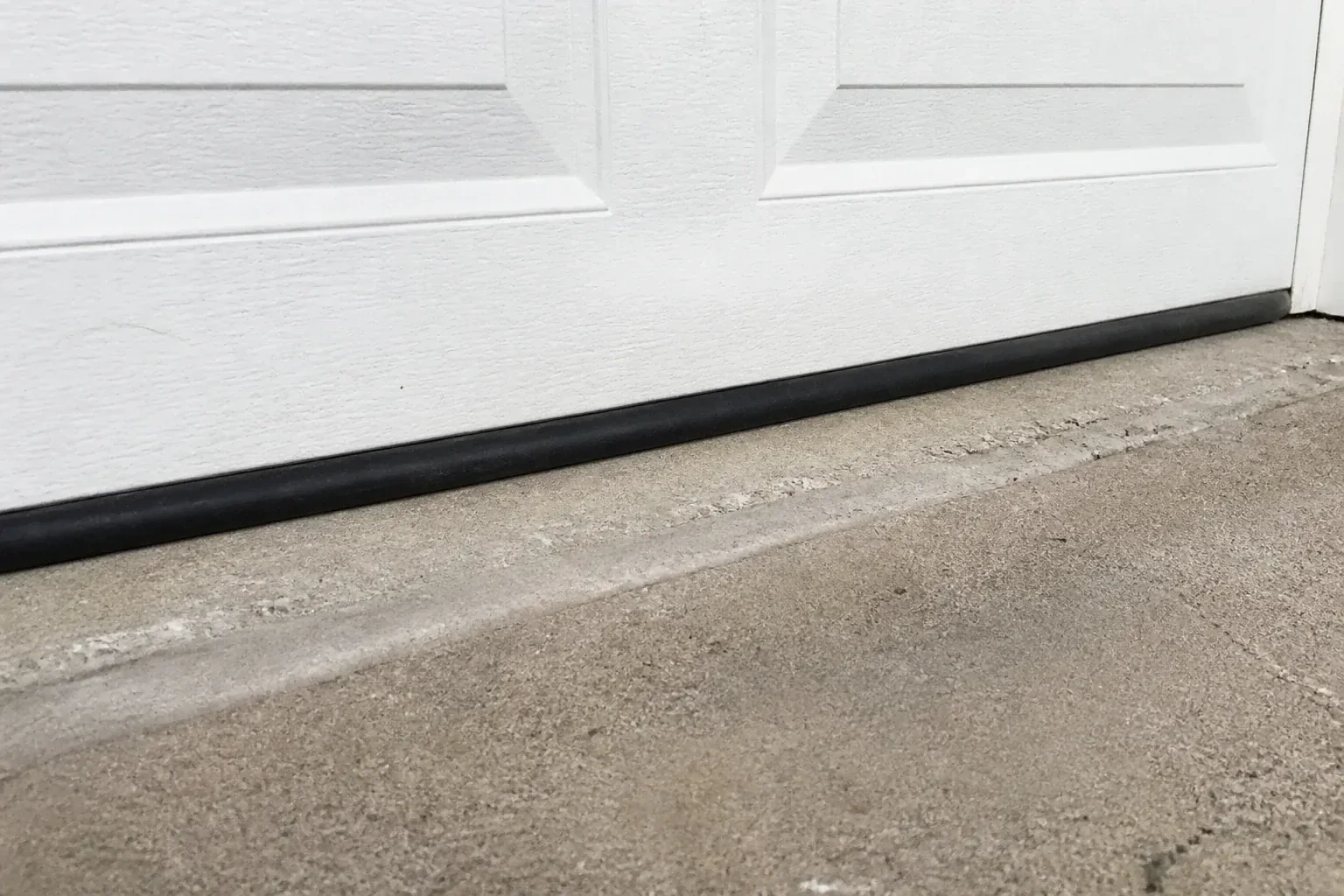
The strip under the door has gone as hard as a hose left out for ten summers.
In plain words
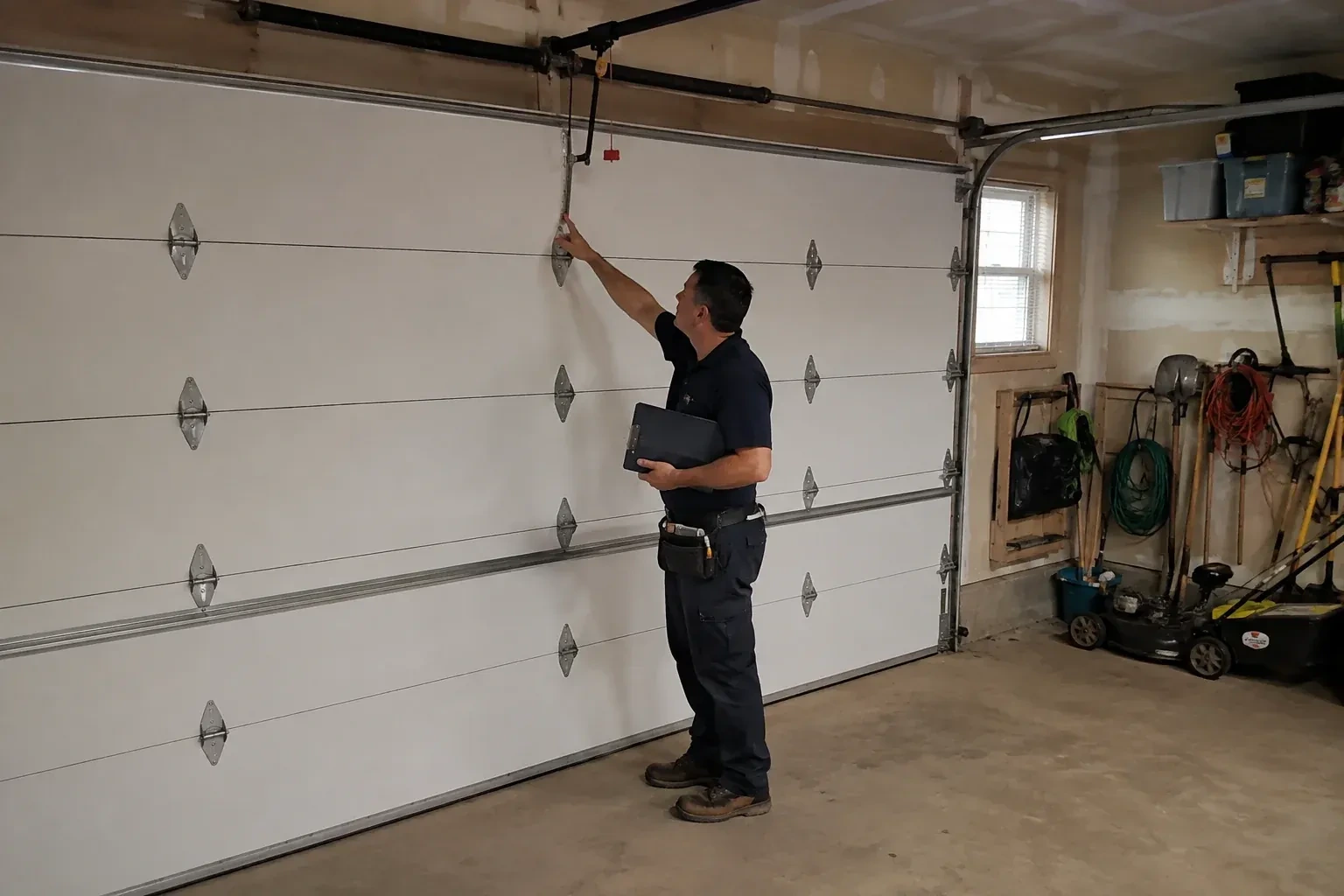
The bottom seal is one part of a weather line that runs all the way round the door. Vinyl-finned stop moulding seals the jambs and header, the section joints have their own tongue-and-groove or shiplap seals, and a threshold seal glued to the floor can meet the bottom strip where a slab slopes the wrong way. Bottom seal replacement addresses the piece that takes the most punishment, and while the technician is there the rest of the perimeter is looked over. Where the side or top strips are torn or shrunk, doing them in the same visit gives a garage sealed on all four edges rather than three.
How the visit goesWith the door closed and the lights off, a bright line of daylight runs along the floor from one side to the other. Leaves and grit have blown in under it and gathered in a neat drift against the back wall.
Garage Door Bottom Seal Replacement
How the visit goes
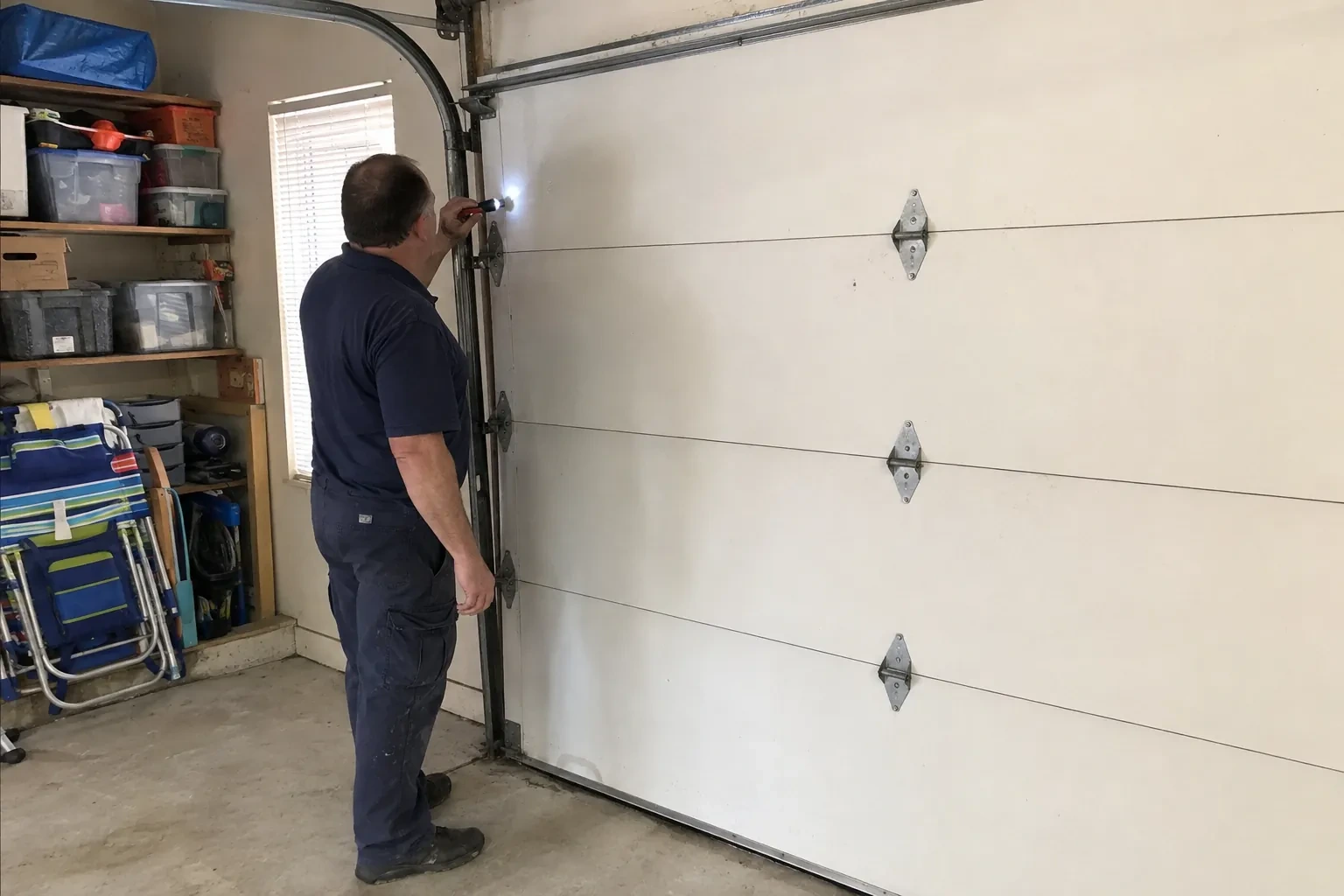
Retainer condition and fasteners
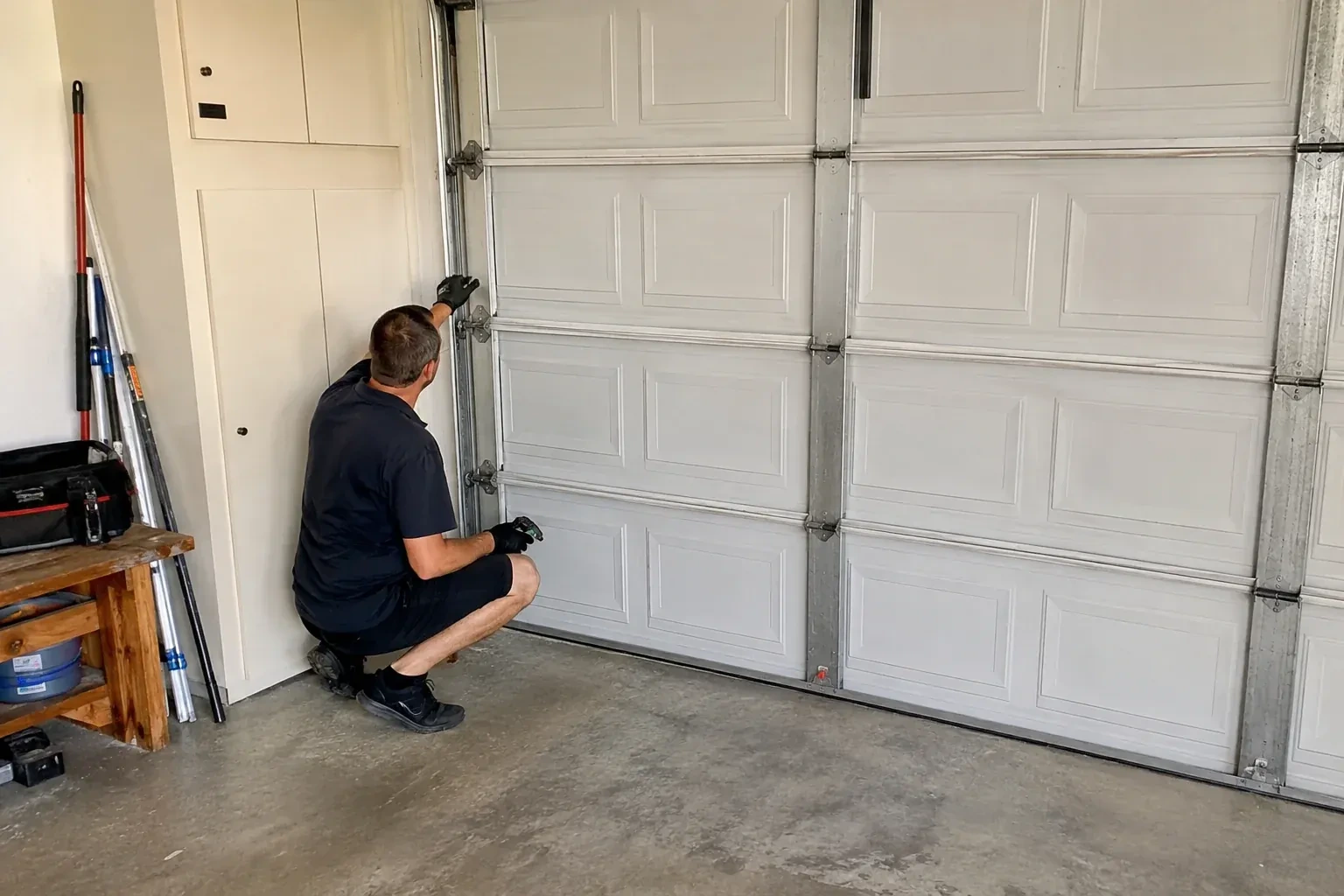
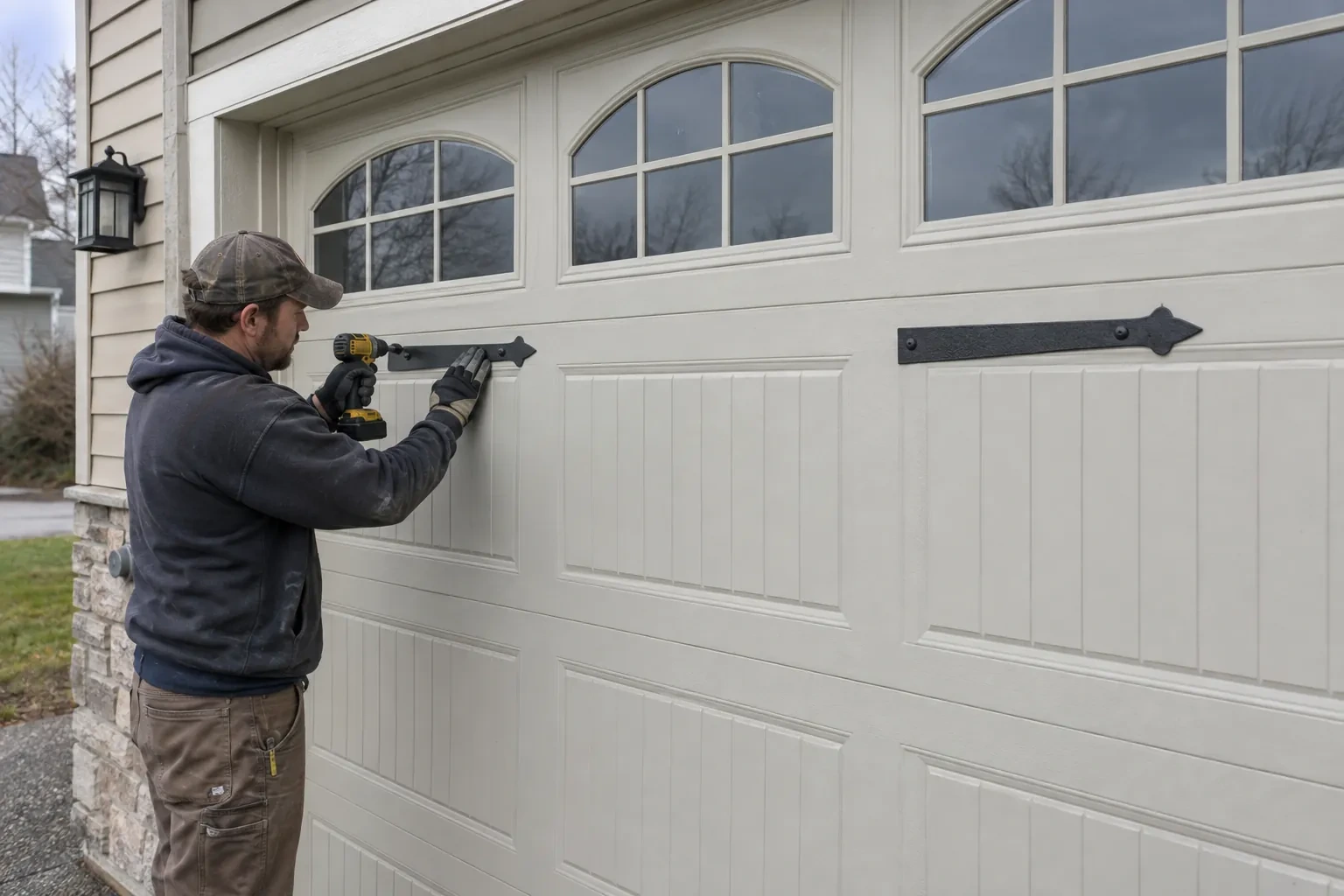
The aluminum or plastic retainer that grips the seal is inspected along its full length. The technician looks for kinks where something struck it, channels that have been spread open, corrosion where salt has sat, and screws that have rusted or pulled loose from the rail. A retainer that is straight and tight is reused; one that is damaged is measured for a matching replacement so both channels line up with the new seal. On doors where the retainer is part of a plastic bottom cap, a cracked cap is noted and a screw-on aluminum retainer is offered as the practical repair.
Cutting the new seal to length
The replacement is cut from a roll to the door width plus a small allowance at each end, using heavy shears or a knife, and the profile is checked against the retainer before any feeding begins. The technician confirms the T or bead edges match the channels and that the bulb height will fill the gap measured earlier without being squashed flat. Where the floor dips at one end, a slightly taller profile is chosen rather than relying on the opener to press harder. Cutting a little long means the ends can be trimmed to the door and finished cleanly once the seal is in.
A clear threshold through winter
The seal closes onto whatever is on the floor, so the threshold deserves a moment when you clear the driveway. Push packed snow and the ridge of ice that forms where the door meets the slab away from the opening before running the door, and sweep salt piles and grit clear of the line so they are not ground into the strip. Park a little further in, if the garage allows, so drips from the car fall on the floor rather than at the seal. These are the same habits that protect the bottom brackets and cables in the corners.
Garage Door Bottom Seal Replacement
In the van
Track clamps
Seal end caps
Self-drilling retainer screws
Threshold seal and adhesive
T-style bottom seal
Garage Door Bottom Seal Replacement
What affects the quote
Perimeter seals done together
Jamb and header weatherstripping renewed in the same visit is quoted per length of stop moulding, and doing it alongside the bottom seal saves a second call-out.
Threshold seal added
Where a floor threshold is recommended, its length, its type, whether rubber or aluminum-backed, the adhesive and the floor preparation before it is laid appear as a line of their own.
Rodent-resistant seal
A profile with embedded stainless mesh for a garage that has had repeated chewing costs more per length than plain vinyl and is offered where the history calls for it.
What to have ready
- Can you send a photo of the end of the bottom section showing the retainer?
- Are the side and top weather strips also worn or torn?
- Is the door a single or a double, and roughly how wide?
Garage Door Bottom Seal Replacement: questions
QuestionsShould the side and top weatherstripping be replaced at the same time?
It is worth having them looked at while the technician is there. The vinyl fin on the stop moulding around the jambs and header shrinks, tears and hardens on the same schedule as the bottom seal, and a draft that survives a new bottom seal usually comes from the sides. Doing the perimeter in the same visit saves a return trip and leaves the door sealed on all four edges.
Can the seal be replaced in the middle of winter?
Yes, and winter is when most people notice they need one. Vinyl is stiffer in the cold, so the technician keeps the new roll warm until it is fed and takes a little longer working it across the channels. A seal frozen to the floor is freed by hand first. The door is then closed onto the new strip and the opener reset exactly as in summer, and the garage is sealed for the rest of the season.
How do I look after the new seal?
Wipe it clean of salt and grit a few times a year, and give it a light coat of silicone spray each autumn so meltwater has nothing to bond to. Keep petroleum products and solvents away from it, since they soften vinyl. Clear ice and packed snow from the threshold before running the door in winter. Once a season, look under the closed door for daylight. That is the whole routine.