Repairs · Hampton Heights
Garage Door Bottom Seal Replacement in Hampton Heights
The strip under the door has gone as hard as a hose left out for ten summers.
In plain words
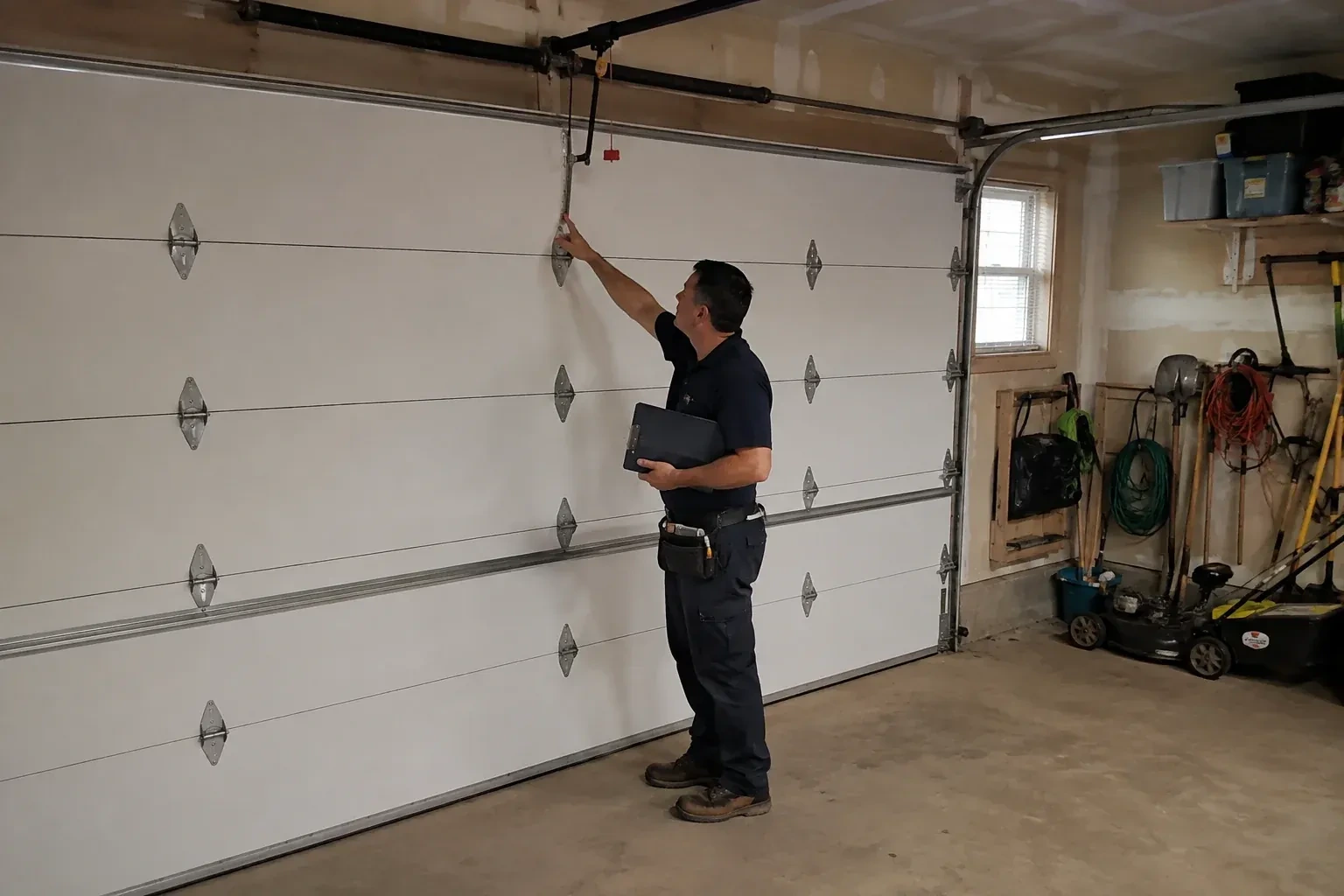
A seal visit runs in a set order. With the door closed, the technician looks for daylight along the floor line and notes whether the gap is even or concentrated at one point. The door is checked for level and the bottom section for straightness, then the retainer is identified and measured. The opener is disconnected and the door secured before the old strip comes out and the channels are cleaned. A new seal, cut a little long, is fed into the channels and trimmed. Finally the door is closed onto the new seal, the opener's limits are reset, and the reversing test is run before the tools go away.
How the visit goesThe gap under the door is a finger wide at one end and nothing at the other. The door itself looks straight, but the floor drops away toward the corner where the slab has settled, and drafts pour through the wedge.
Garage Door Bottom Seal Replacement
How the visit goes
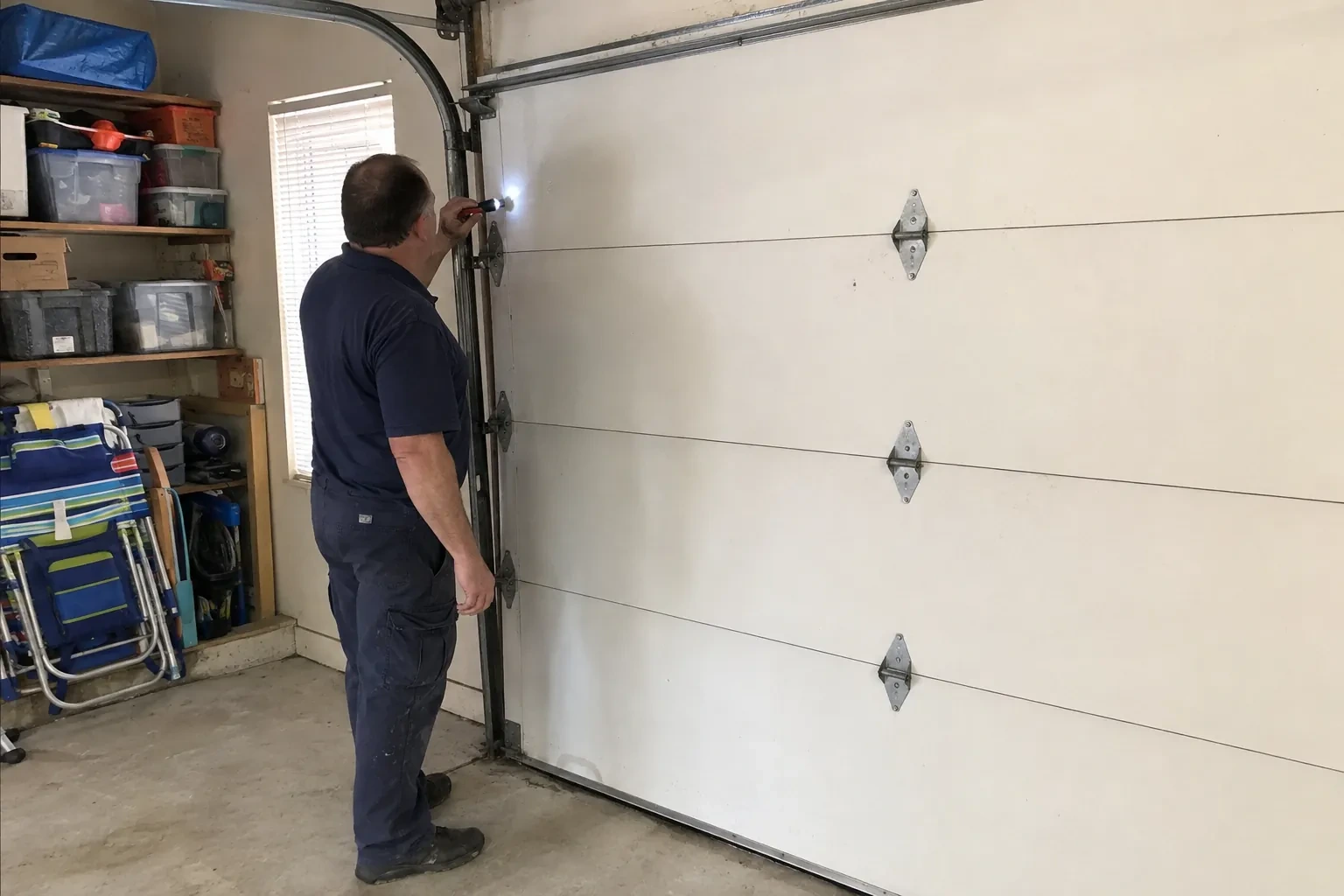
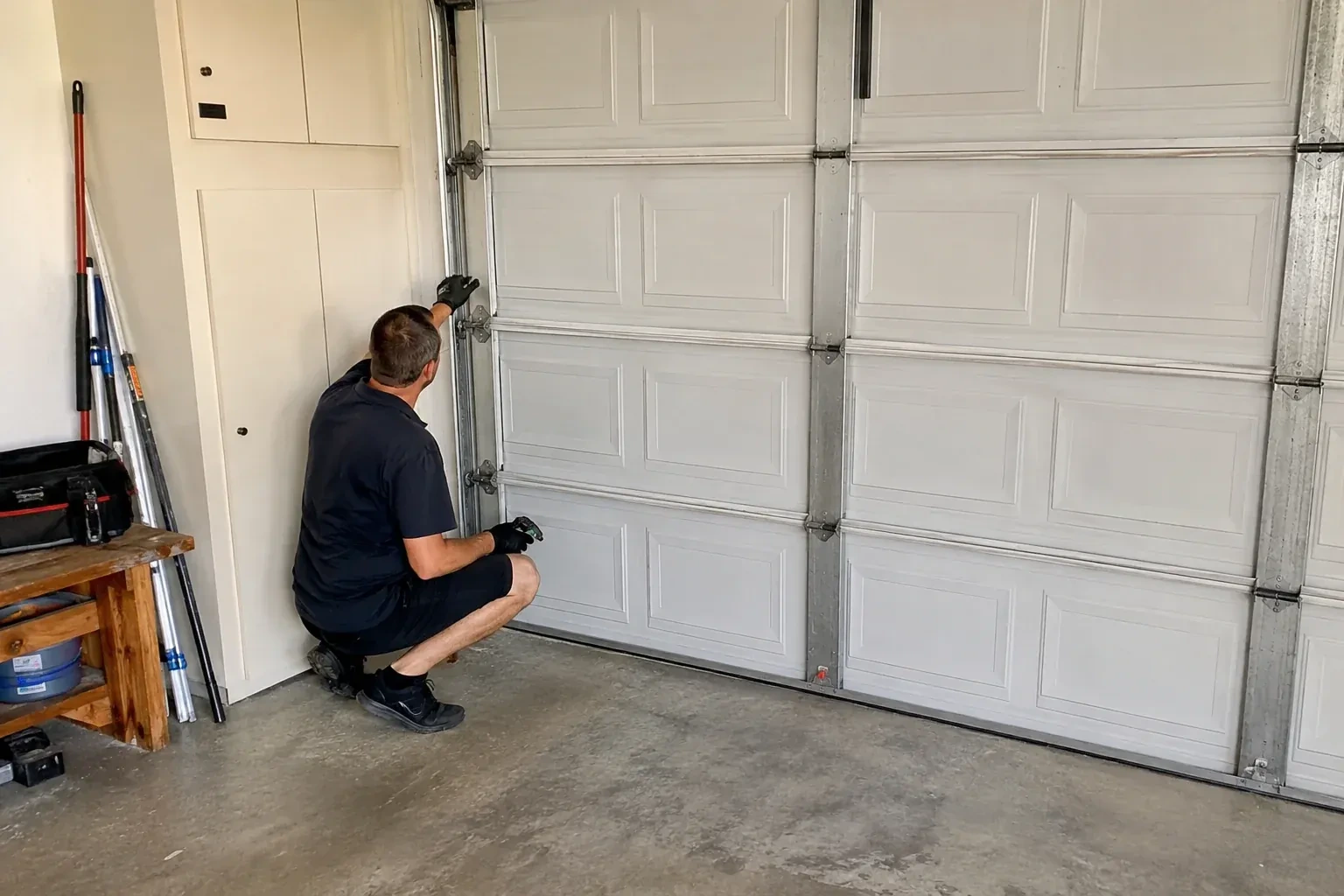
Is the door hanging level?
A gap that is wider at one corner is often the door rather than the seal. The technician checks that the door sits square in the opening by comparing the bottom edge to the floor at both ends and looking at how each lift cable wraps its drum. A stretched cable, a drum that has crept on its shaft or uneven spring tension drops one corner a centimetre or two, and setting the door level is what closes that wedge. If the door is out of level, the adjustment is explained as its own item and done first, and the seal is then sized to the gap that remains. Getting the order right saves fitting a seal twice.
Taking the old seal out
With the door secured, the ends of the old strip are freed from any caps or folds and the seal is drawn out of its channels from one end. A supple seal slides; a hardened one is coaxed with a flat blade and a little silicone, or cut into short lengths and removed a piece at a time. Old nails come out of a wood rail with a claw. The channels are then cleaned of grit, rust flakes, salt crust and any remnants of the previous strip with a wire brush and a scraper, because a clean channel is what lets the new seal feed through without tearing.
A door that meets the floor in one line
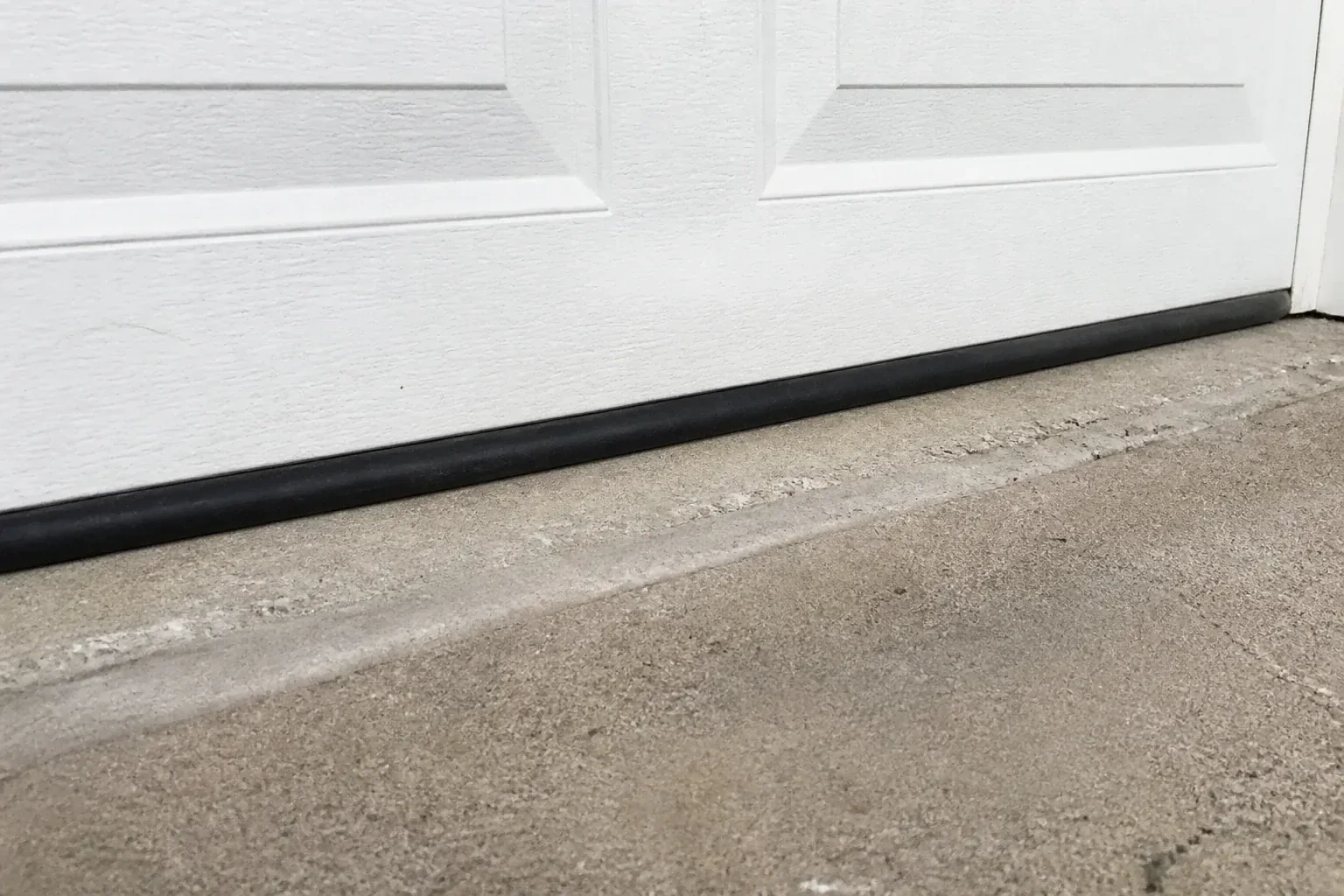
The first thing you notice is the absence of daylight. With the door closed and the lights off, the floor line is dark from one jamb to the other, and the draft that used to move across the floor is much reduced. The door lands softly, because the opener now stops when the seal is gently compressed rather than driving the section into the concrete. Leaves, grit and drifting snow are kept out far more often. If you crouch and look, the new bulb sits evenly along the slab, filling the low corner the old strip used to hover above.
Garage Door Bottom Seal Replacement
In the van
Track clamps
Seal end caps
Self-drilling retainer screws
Threshold seal and adhesive
T-style bottom seal
Garage Door Bottom Seal Replacement
What affects the quote
Material chosen
Standard vinyl, cold-flexible rubber and silicone are priced differently. Where the door faces the weather, the technician explains what the step up buys in flexibility and working life.
Door out of level
If one corner of the door hangs low because of cable or spring tension, levelling the door is separate work done before the seal goes in and is priced on its own.
Condition of the old seal
A supple strip slides out in a minute. One that has hardened and seized in its channel, or been torn and frozen into the corners, has to come out in pieces, which takes longer.
What to have ready
- Are the side and top weather strips also worn or torn?
- Have you seen mice or droppings in the garage?
- What is getting in: light, drafts, water, snow, leaves or pests?
Garage Door Bottom Seal Replacement: questions
QuestionsShould the side and top weatherstripping be replaced at the same time?
It is worth having them looked at while the technician is there. The vinyl fin on the stop moulding around the jambs and header shrinks, tears and hardens on the same schedule as the bottom seal, and a draft that survives a new bottom seal usually comes from the sides. Doing the perimeter in the same visit saves a return trip and leaves the door sealed on all four edges.
Can the seal be replaced in the middle of winter?
Yes, and winter is when most people notice they need one. Vinyl is stiffer in the cold, so the technician keeps the new roll warm until it is fed and takes a little longer working it across the channels. A seal frozen to the floor is freed by hand first. The door is then closed onto the new strip and the opener reset exactly as in summer, and the garage is sealed for the rest of the season.
How do I look after the new seal?
Wipe it clean of salt and grit a few times a year, and give it a light coat of silicone spray each autumn so meltwater has nothing to bond to. Keep petroleum products and solvents away from it, since they soften vinyl. Clear ice and packed snow from the threshold before running the door in winter. Once a season, look under the closed door for daylight. That is the whole routine.