Repairs · Hamilton
Garage Door Panel Replacement
Rust has crept along the bottom edge of the lowest section.
In plain words
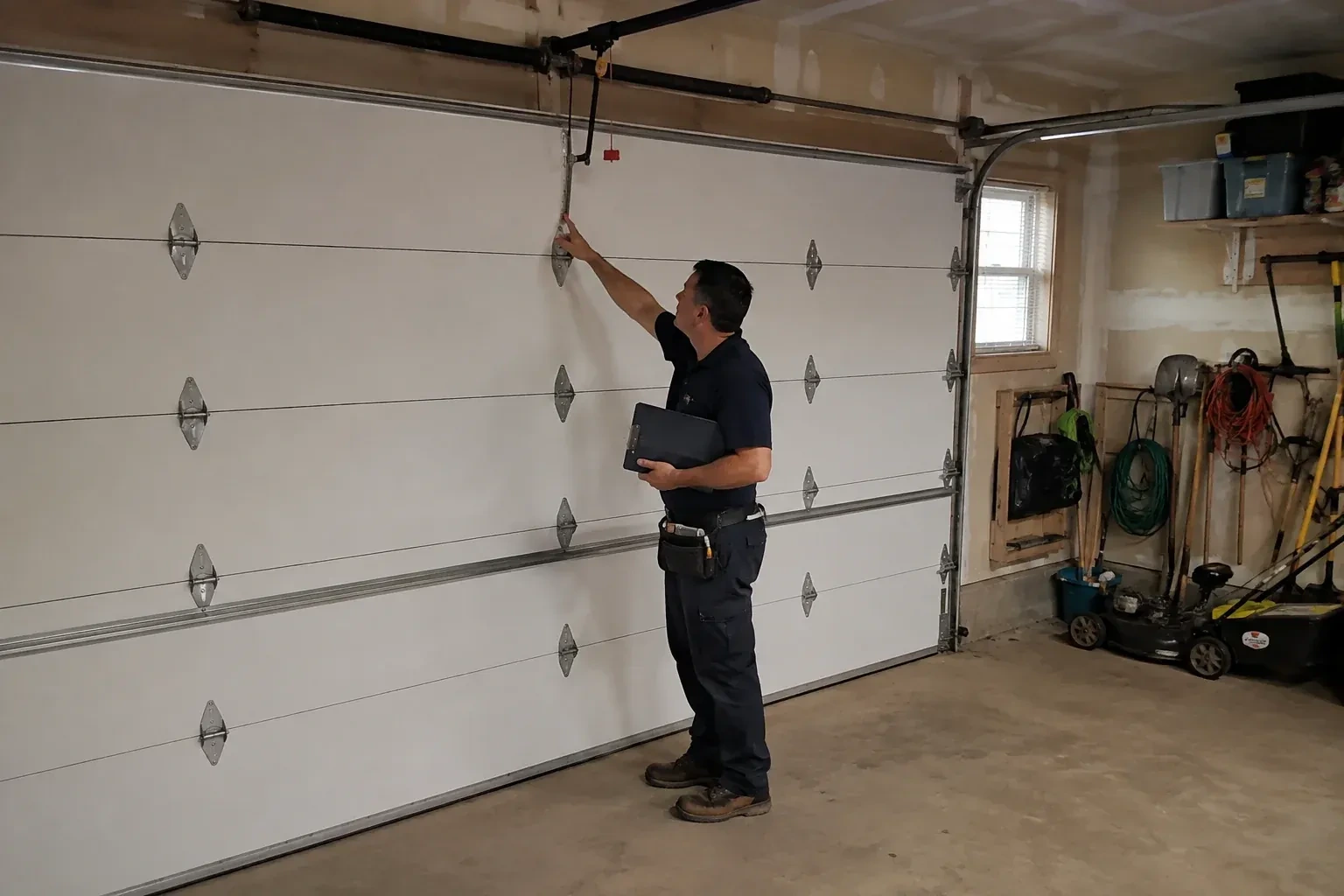
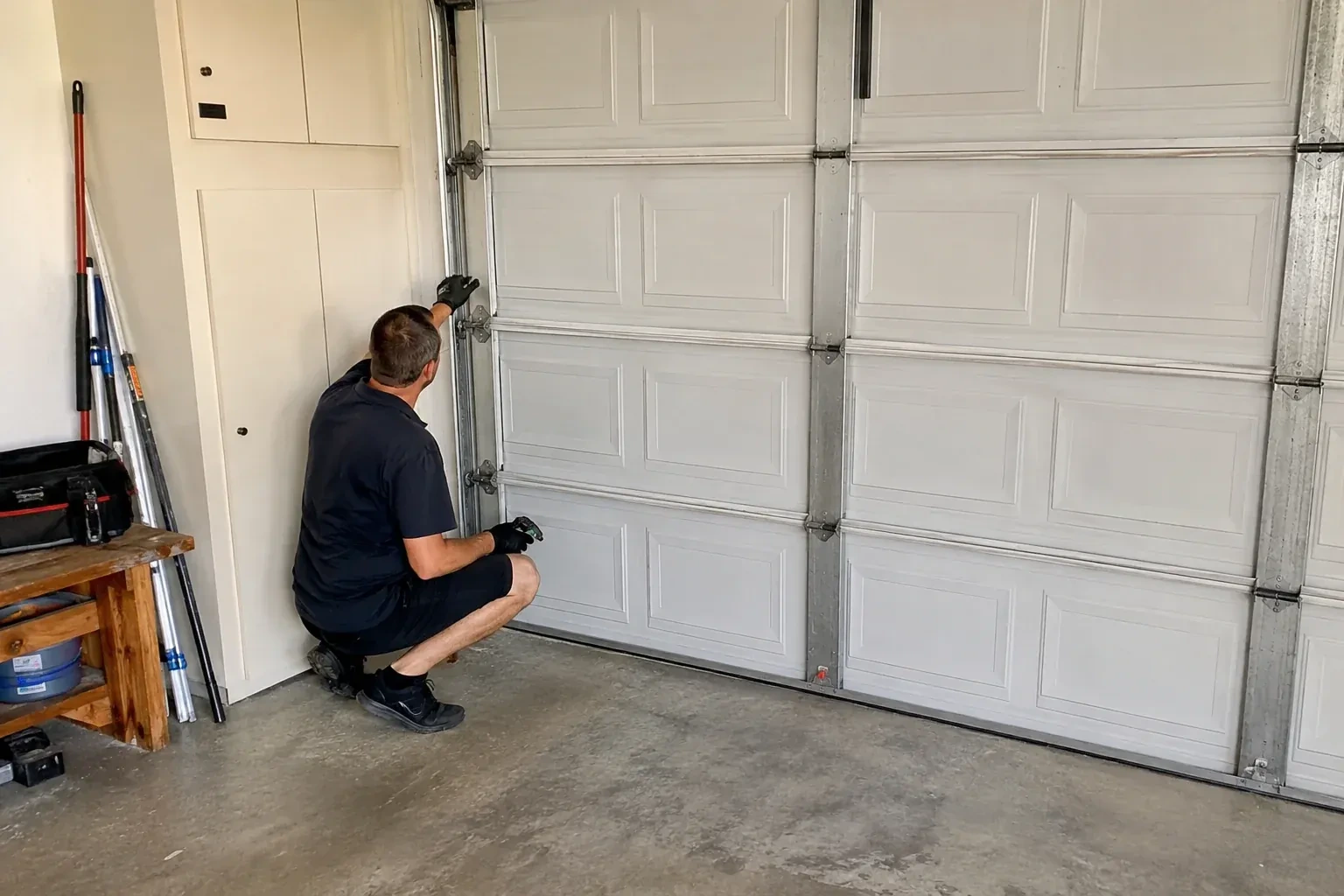
Expect two visits. On the first, the technician makes the door safe to use or safe to leave closed, identifies the manufacturer and model, measures the section, photographs the damage and its neighbours, and checks the hinges, rollers, tracks, cables and springs for anything the impact disturbed. The replacement section is then ordered to that specification, since sections are made to order for each model rather than kept on a shelf. On the second visit the section is installed, the hardware is refitted, the springs are re-tensioned if needed, and the door and opener are tested through full cycles before the technician leaves.
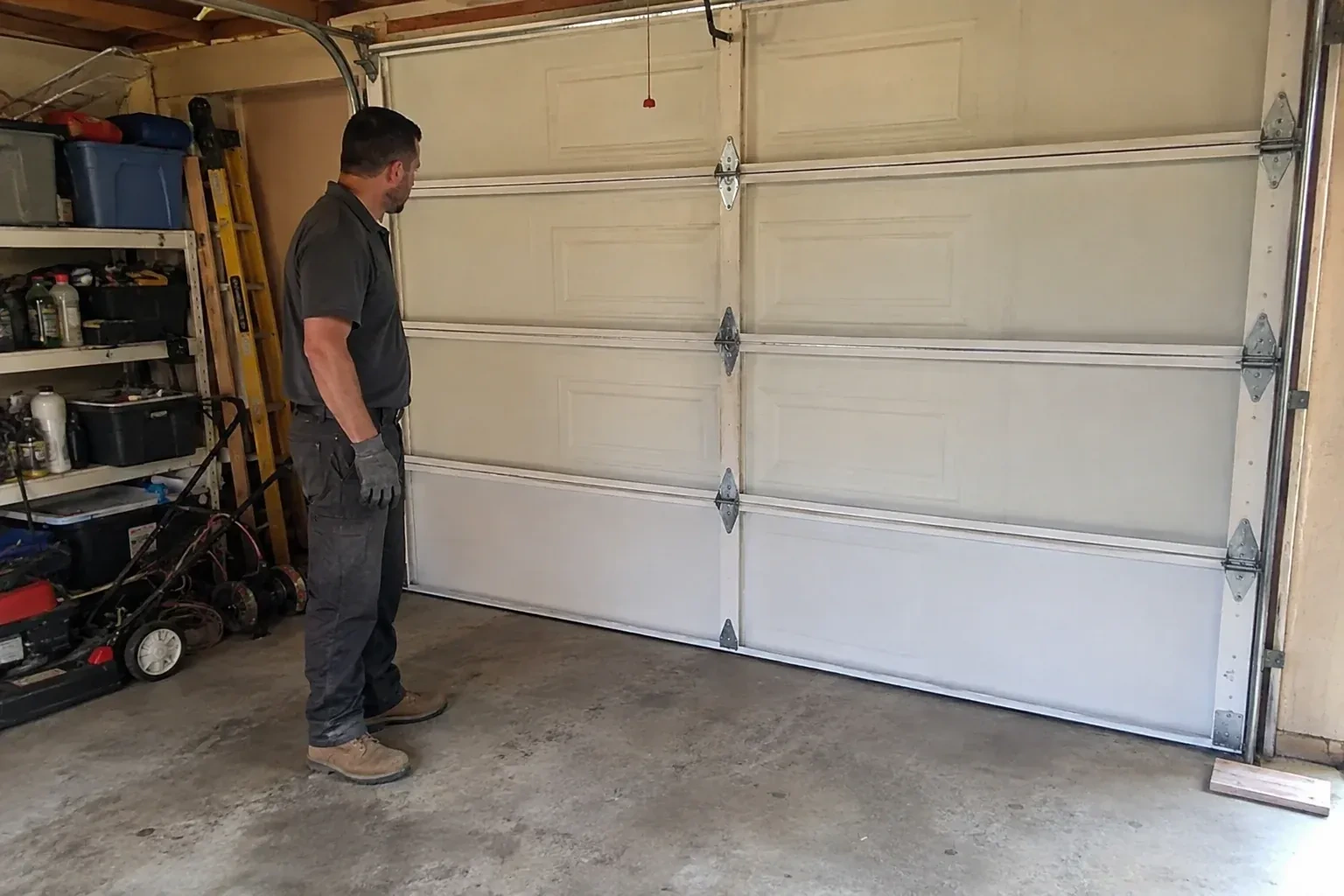
How the visit goesRust has crept along the bottom edge of the lowest section. What began as bubbling paint is now a soft, flaking strip, the seal retainer is working loose, and a screwdriver pressed against the worst spot goes through the steel.
Garage Door Panel Replacement
How the visit goes
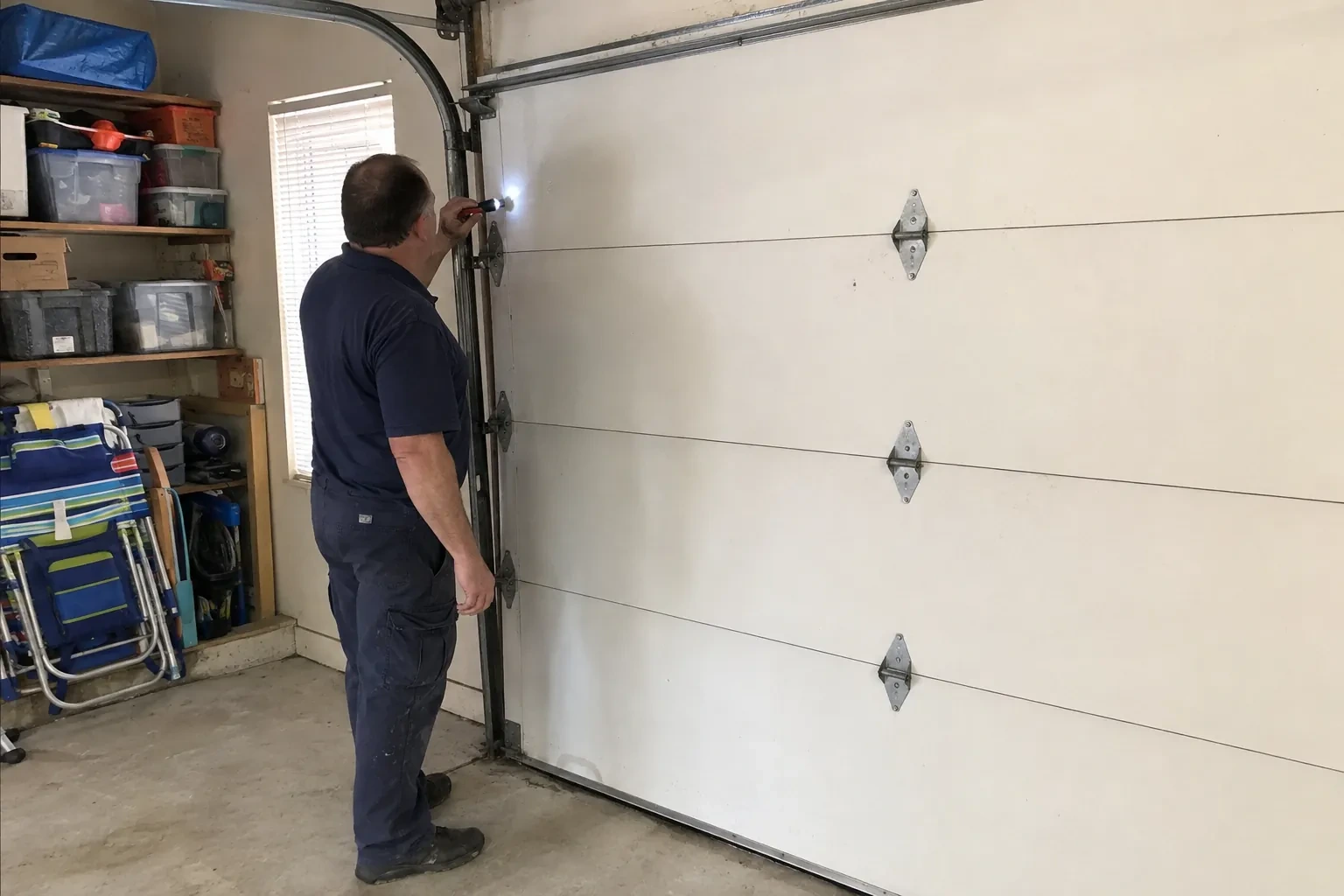
Mapping the damage on the section
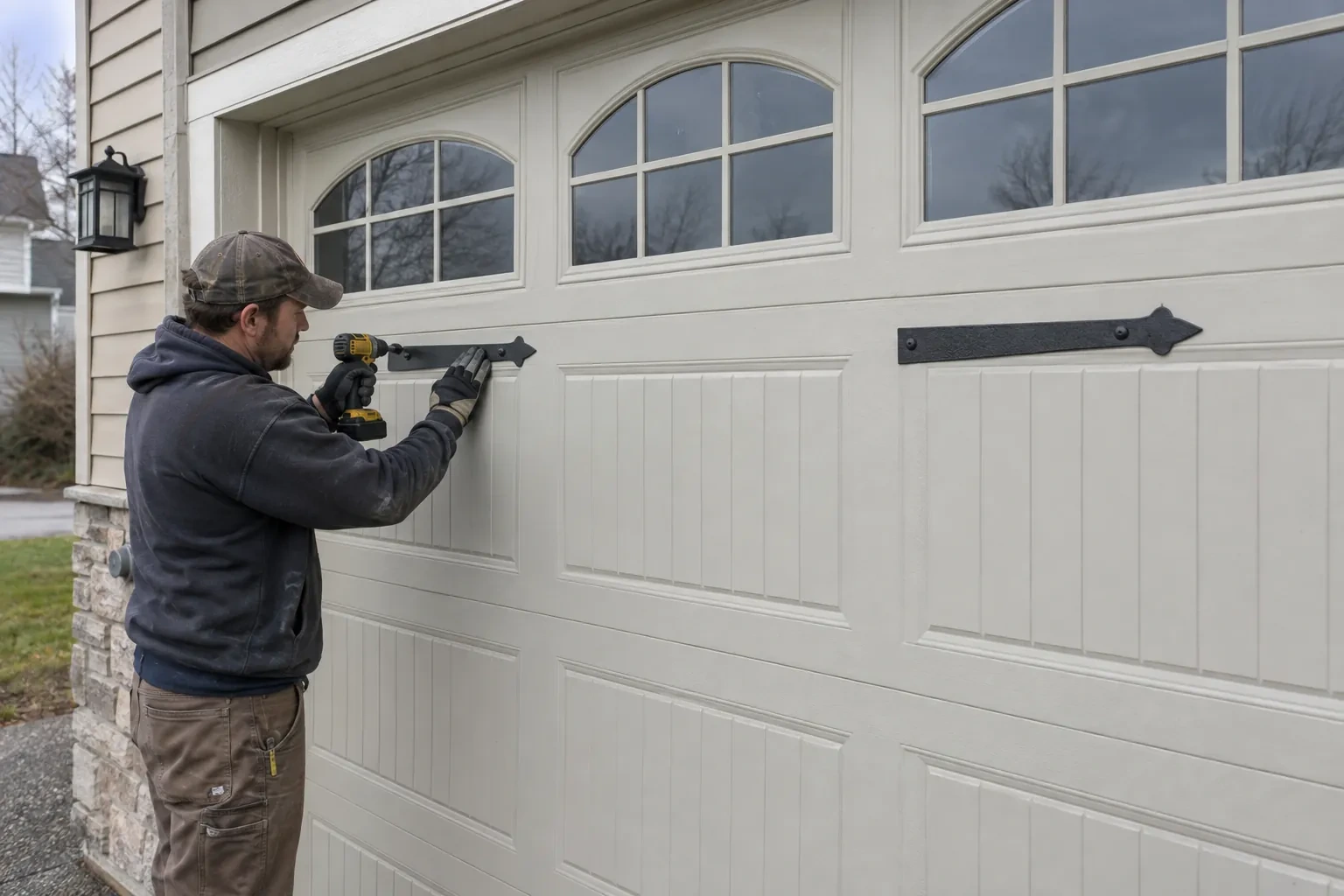
Where a dent sits matters as much as its size. A shallow dish in the middle of the skin is one thing; a crease that runs to the joint, a fold at an end stile, or a bend through a hinge point is another, because those areas carry the door's load as it moves. The technician records the depth of the damage, whether the inner skin or backer is affected, whether a strut has kinked and whether the section still lies flat when the door is closed. That map decides between working the dent out, replacing the single section, or looking harder at the rest of the door.
Re-tensioning and balancing the door
A replaced section can weigh a little more or less than the one that came out, especially when insulation or glazing differs, and the springs are set to the door as it now is. With the opener still disconnected, the technician winds the torsion spring to specification or rehangs the extension springs, then lifts the door by hand. A balanced door stays put around waist height, drifts neither up nor down, and moves through its travel with steady, even effort. Adjustments are made a quarter turn at a time until that is true, and the cables are checked for equal tension on both drums.
Keeping ice away from the bottom section
Since a bottom section frozen to the slab is the commonest way one gets bent, a few winter habits protect the new one. Sweep snow away from the outside of the door before it turns to slush and freezes under the seal. A light wipe of silicone on the new astragal helps it release from ice. If the door refuses to move on a cold morning, free the seal from the floor with warm water or a scraper before running the opener rather than letting the motor pull against it. A well-fitted bottom seal also keeps meltwater from wicking under the door in the first place.
Garage Door Panel Replacement
In the van
Bottom brackets with cable tabs
Adjustable top roller brackets
Numbered section hinges
Window frame insert and glazing
Garage-door lubricant
Garage Door Panel Replacement
What affects the quote
Spring work required
A bottom section means torsion springs are unwound and rewound, or, on an extension-spring door, the door is raised and secured so the springs relax and its hooks and cables are reset instead. A section changing the door's weight may call for a balance adjustment.
Special-order handling and freight
Made-to-order sections travel from the factory or distributor, and a long or glazed section needs careful handling in transit. Freight and order handling are shown as their own line rather than folded into labour.
Colour and finish decisions
The section comes in the manufacturer's current version of your colour. If you choose to repaint the whole door afterwards, or order a colour change across all sections, that becomes a separate item.
What to have ready
- Can you find a label or sticker with the manufacturer's name on the door or track?
- What caused the damage, and when did it happen?
- Does the door still open and close, by opener or by hand?
Garage Door Panel Replacement: questions
QuestionsCan one damaged section be replaced without replacing the whole door?
Usually, yes. A sectional door is built from separate sections joined by hinges, so a single creased, rusted or cracked section can be unhinged and exchanged while the others stay in place. The conditions are that a section for your make, model and size is still available and that the rest of the door and its hardware are in good order. When damage spans several sections or the design is discontinued, a full door is compared alongside.
Why is the bottom section handled differently from the others?
The bottom section is where the lift cables attach, through the bottom brackets at each end, and those cables are under the full pull of the springs. Before the brackets come off, the springs have to be unwound or unhooked so the cables go slack. The bottom section also carries the seal retainer and astragal that meet the floor. After the new section is in, the springs are re-tensioned and the balance reset.
Can a wood garage door section be replaced?
Yes, though wood doors are more often site-built or made in small runs, so a matching section may be made up by a door shop rather than ordered from a catalogue. The new section is primed and finished to match, the hardware is transferred, and the technician looks closely at the neighbouring sections for rot or splitting, since wood sections tend to age together. Where several are failing, a new door is discussed.