Springs · Hampton Heights
Garage Door Balance Adjustment in Hampton Heights
You pulled the red cord to move the door by hand during the power cut, lifted it to about waist height and let go.
In plain words
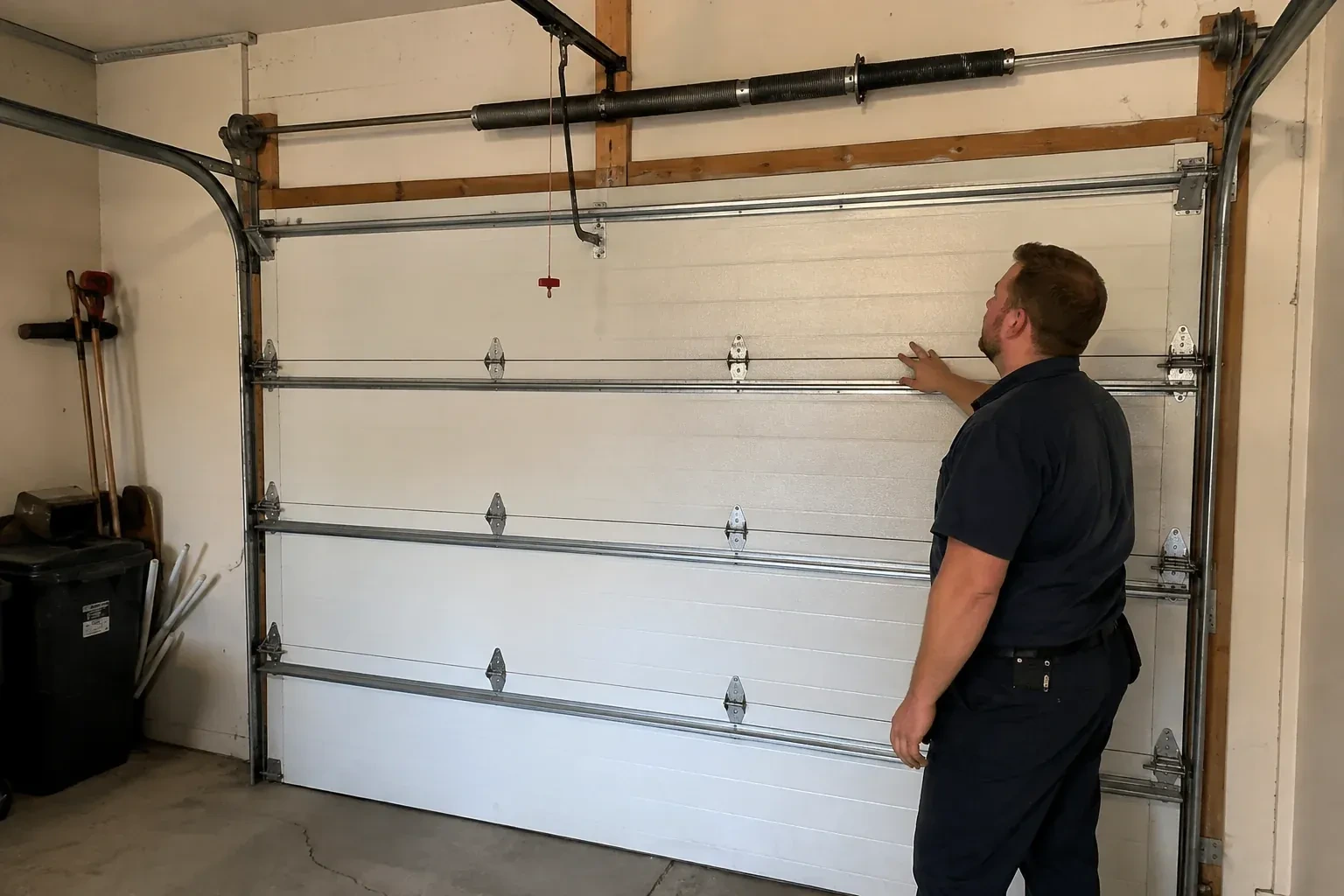
On a torsion door the springs sit on a shaft above the opening, and balance is set by how many turns of wind they carry. A seven-foot door typically needs a little over seven full turns; a quarter turn either way changes how the door feels. The technician clamps the door, fits winding bars into the cone, loosens the set screws, and adds or releases tension one quarter turn at a time, locking the cone again before each test. Both springs on a two-spring door are set alike so the shaft carries the load evenly. That precision is what makes the door hold wherever it is stopped.
How the visit goesYou pulled the red cord to move the door by hand during the power cut, lifted it to about waist height and let go. Instead of staying put, it kept climbing on its own and thumped into the fully open stop.
Garage Door Balance Adjustment
How the visit goes
Looking at the opener's settings without touching them yet
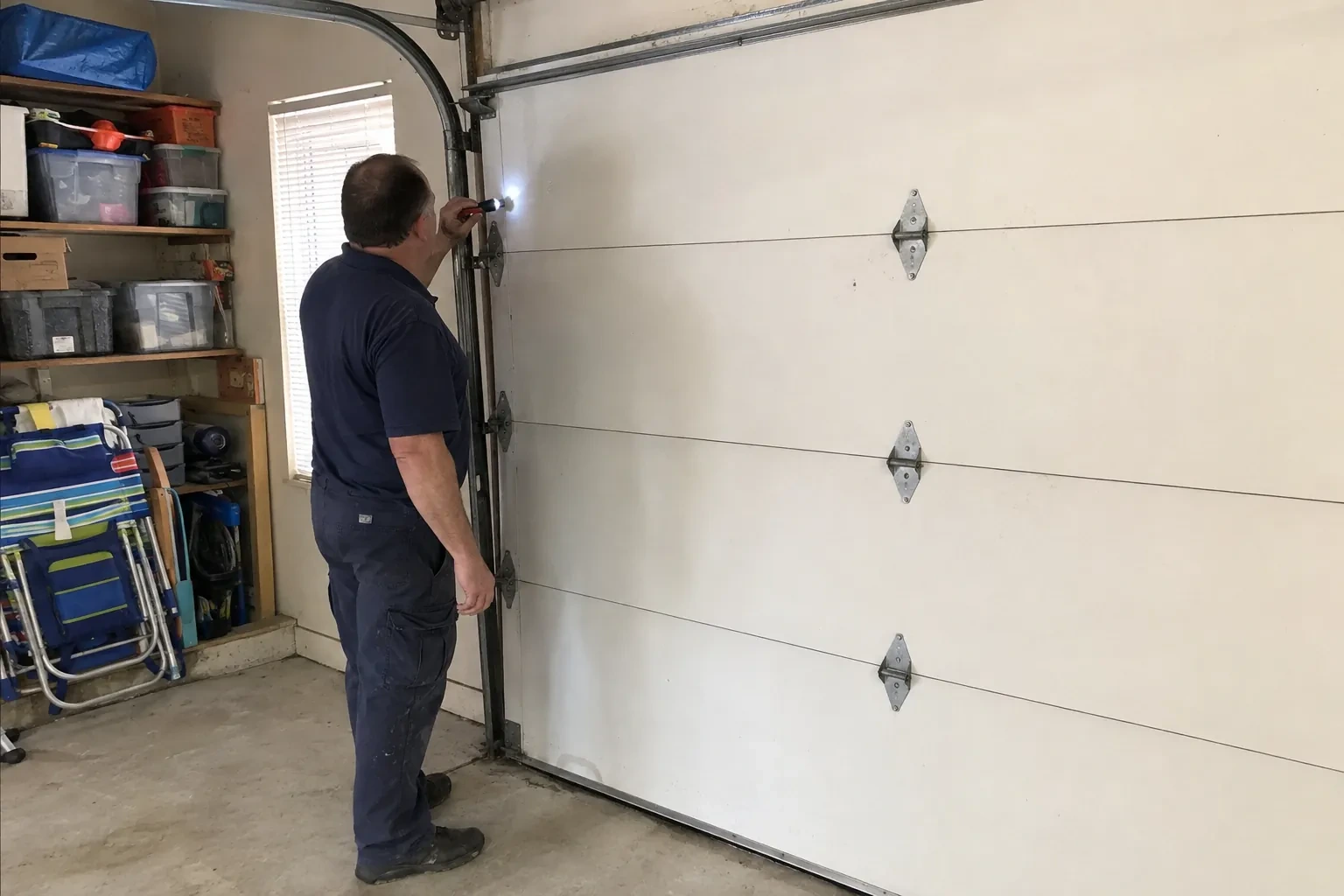
The opener is inspected as a witness rather than a cure. The technician checks its force and travel settings, listens for strain during a powered cycle, and notes whether it reverses near the floor or stalls part way up. A force setting that has been turned up over the years is a strong hint that someone has been compensating for a door that grew heavy. Those settings are left alone for now, because the right order is to balance the door first and then fit the opener to it. Any change made to the opener before the door is corrected would only mask what the door is asking for.
Removing the friction that made the door feel heavy
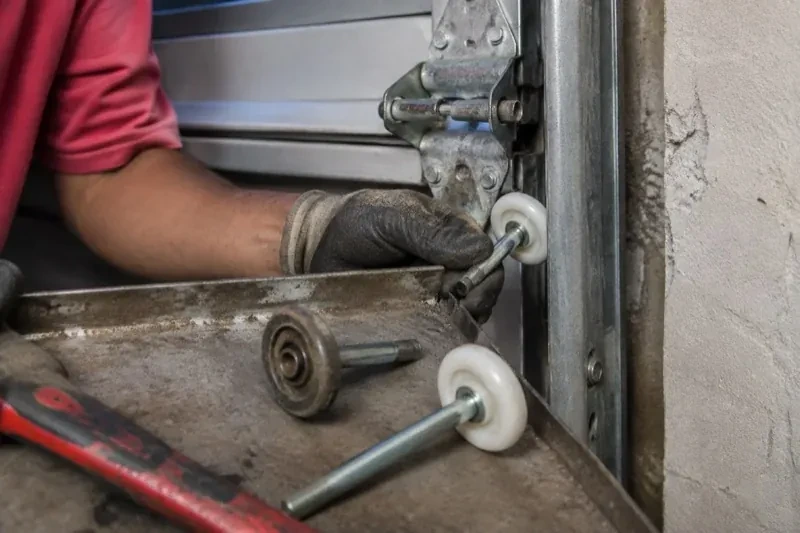
Where the inspection found drag, it is dealt with before the springs are judged. Seized or worn rollers are swapped for new ones, one hinge at a time so the door never leaves its track. Track sections knocked out of line are eased back plumb and their brackets tightened to the jamb; a dent is dressed out or the section replaced. Hinges with play are replaced and their screws driven into sound material. The springs, hinge pins, roller stems and bearings then receive a light coat of garage-door lubricant. After this the door is lifted again, and it is common for the heaviness to be largely gone before any turns are added.
A record of the setting
Before leaving, the technician tells you how the door was set: the number of turns on each torsion spring or the hook position on each extension spring, the spring dimensions, the door's measured weight if it was weighed, and any parts that were replaced. Writing this on a card by the opener or inside the manual saves a future technician from starting from scratch, and it gives a reference point if the door ever starts to drift. Springs age gradually, so a note that says the door held at a certain number of turns tells a later visit how far things have moved.
Garage Door Balance Adjustment
In the van
Winding cone set screws
Lift cables
Garage-door lubricant
Track clamps or locking pliers
Containment cables
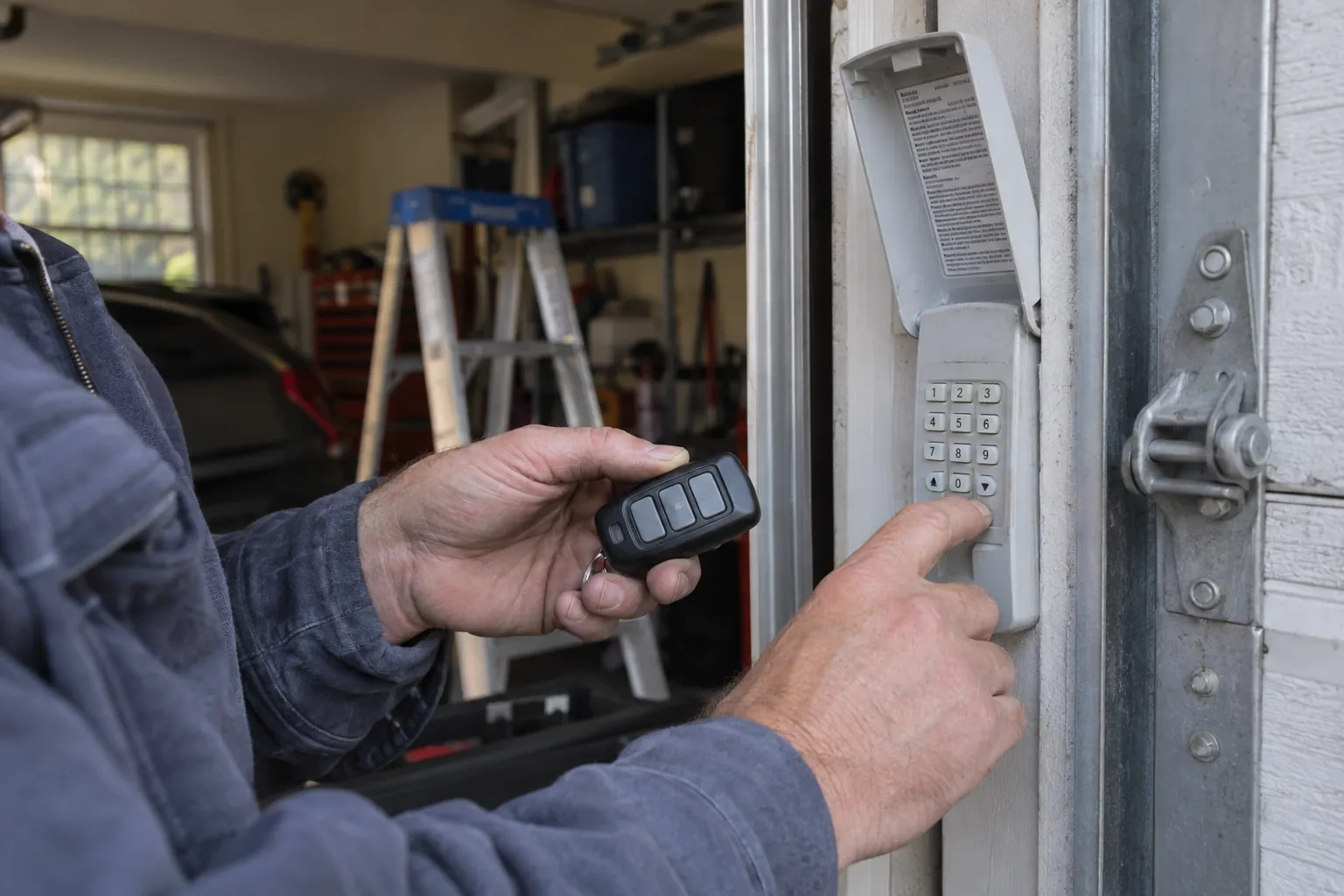
Garage Door Balance Adjustment
What affects the quote
Access to the spring shaft
Shelving, bikes or storage close to the header, a very high ceiling or a tight low-headroom installation slow the work. Clearing the area beforehand helps the time quoted.
Rollers, hinges and friction repairs
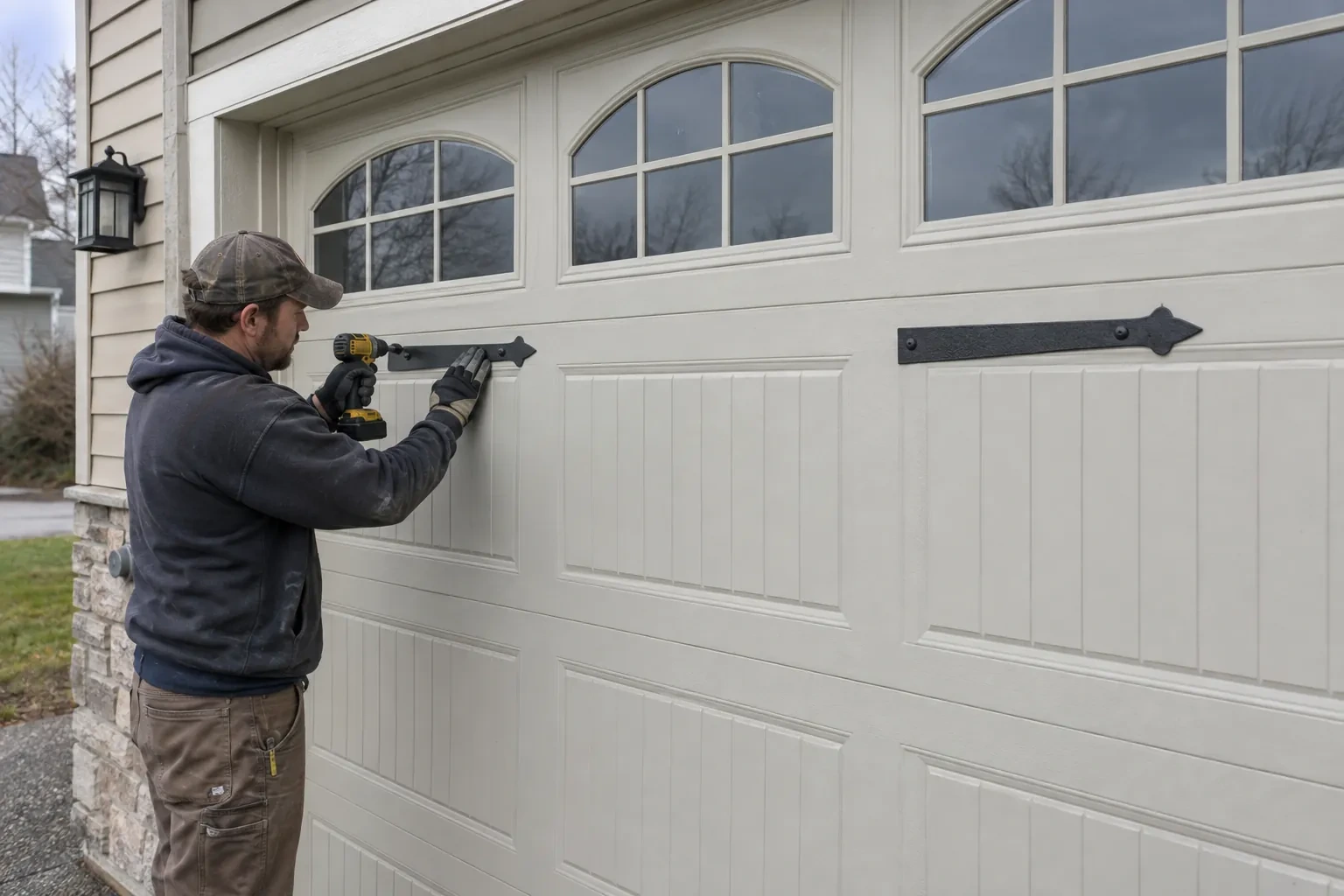
Seized rollers or worn hinges that made the door heavy are pointed out and offered as optional items, since replacing them while the technician is at the door is efficient.
Weight added to the door
Insulation kits, windows or replacement sections may have taken the door beyond what its springs can carry. Weighing the door and specifying new springs to suit is quoted separately from a simple adjustment.
What to have ready
- Does the opener strain, stall, or reverse before reaching the floor?
- Has anyone turned up the force setting on the opener?
- Did the heaviness come on gradually or all at once?
Garage Door Balance Adjustment: questions
QuestionsMy door has become noisy. Is that related to balance?
Often, yes. A door that has grown heavy makes the opener labour, the chain or belt slap, and the rollers and hinges complain under load they were never meant to carry. Balancing the door takes that load back onto the springs, and the lubrication and roller checks that come with the visit quiet the rest. A door that runs silently is usually a door that runs light.
How should I prepare the garage for the visit?
Move the car out if you can and clear the floor near the door and beneath the spring shaft, since the technician will be on a ladder there with winding bars. Take down anything hanging from the tracks or stored on top of the horizontal rails. Leave the door where it is, make sure the wall button and the opener are reachable, and have any spring or opener paperwork handy.
What safety tests are done after the adjustment?
Two are standard. A piece of two-by-four is laid flat on the floor in the door's path and the door closed onto it; it must reverse and return to open. Then, as the door closes, an object is passed through the photo-eye beam near the floor, and again the door must reverse. Both depend on a balanced door, which is why they come after the adjustment rather than before.
Related services
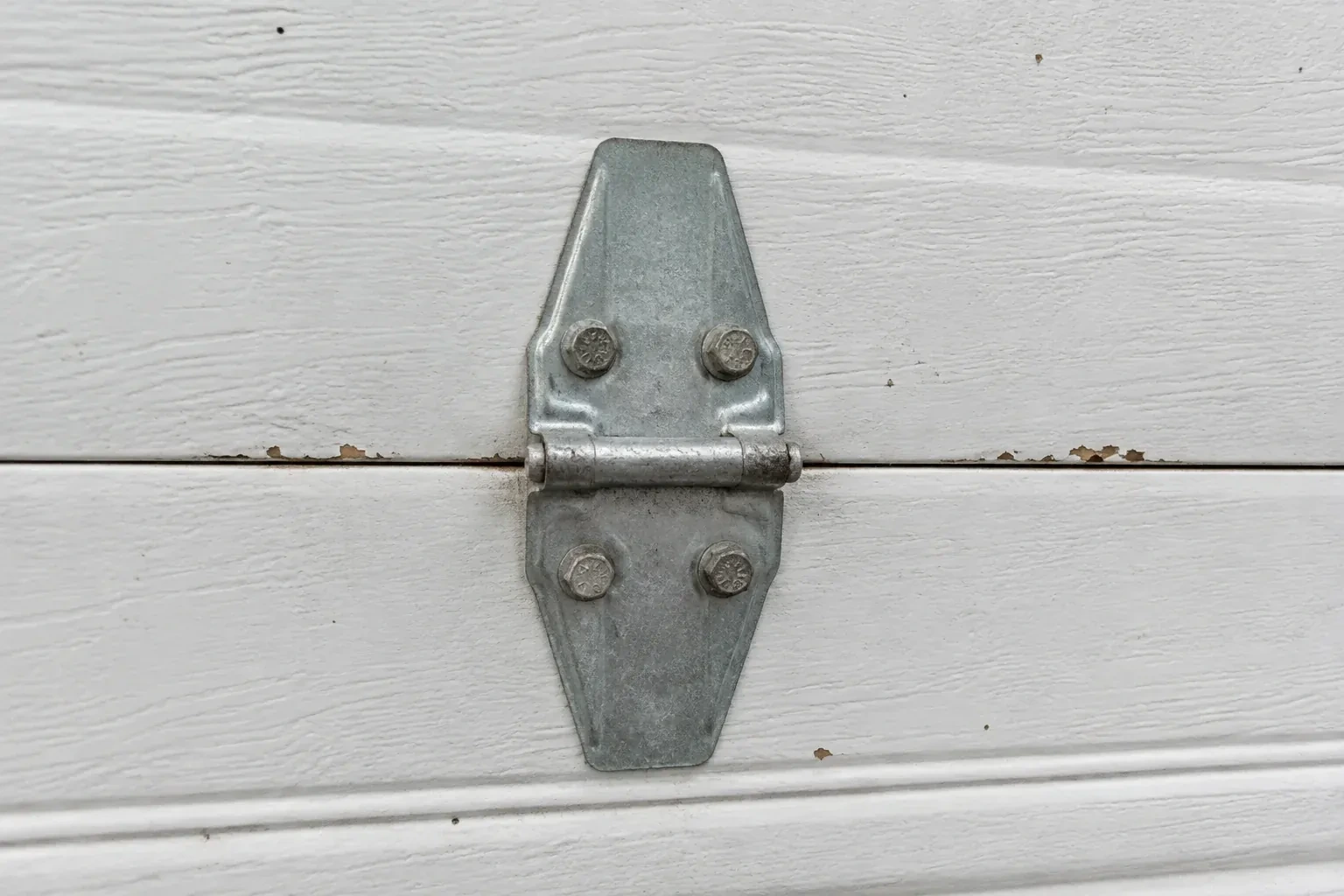
- Garage Door Hinge ReplacementPressing a hand against one of the middle hinges makes it rock on the panel.
- Garage Door Track Repair or ReplacementThe horizontal rail toward the back of the garage sags noticeably.
- Garage Door Cable ReplacementYour older door has springs along the tracks, and one cable has slipped off its pulley and dangles slack.