Springs · Rosedale
Garage Door Track Repair or Replacement in Rosedale
The horizontal rail toward the back of the garage sags noticeably.
In plain words
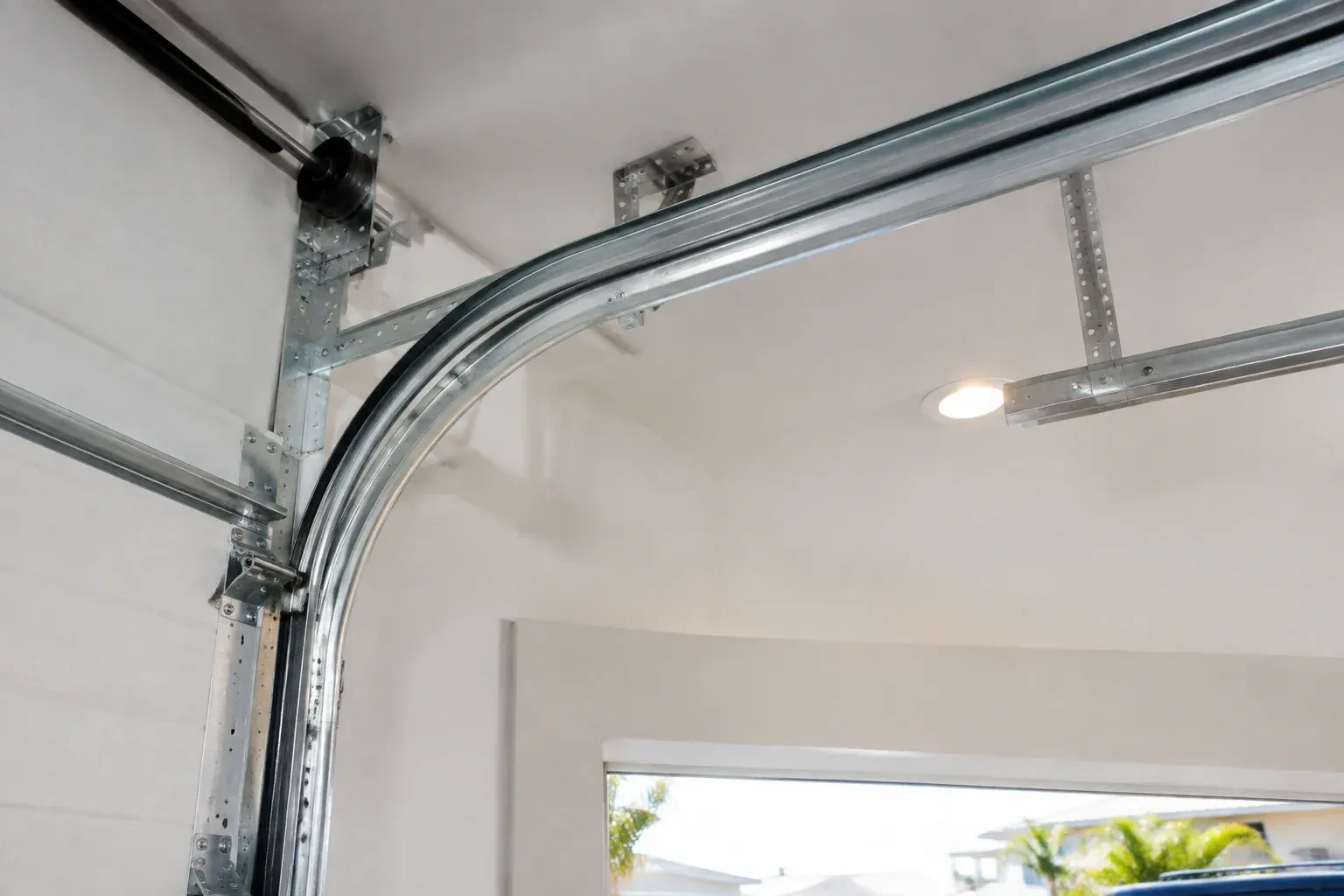
Whether a piece of track is straightened or replaced depends on where and how it is damaged. A shallow dent in the vertical run, away from the curve, can usually be dressed back to profile with track pliers and a block, and a channel that worn rollers have pried open can be squeezed closed. A kink, a crack, a bend in the curved section or steel thinned by rust calls for a new piece of the same profile and radius, because a roller path with a hard spot in it keeps catching. The technician shows you the damage and explains which option suits each piece before the work starts.
How the visit goesBacking out this morning, the mirror caught the track beside the door. Now there is a crease in the steel at about knee height, and the door stops with a bang every time a roller reaches it.
Garage Door Track Repair or Replacement
How the visit goes
Rollers, hinges and top fixtures along the path
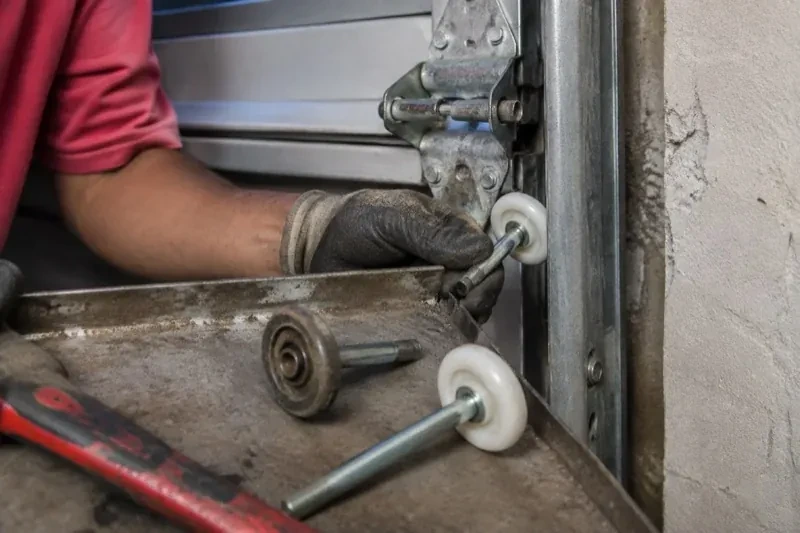
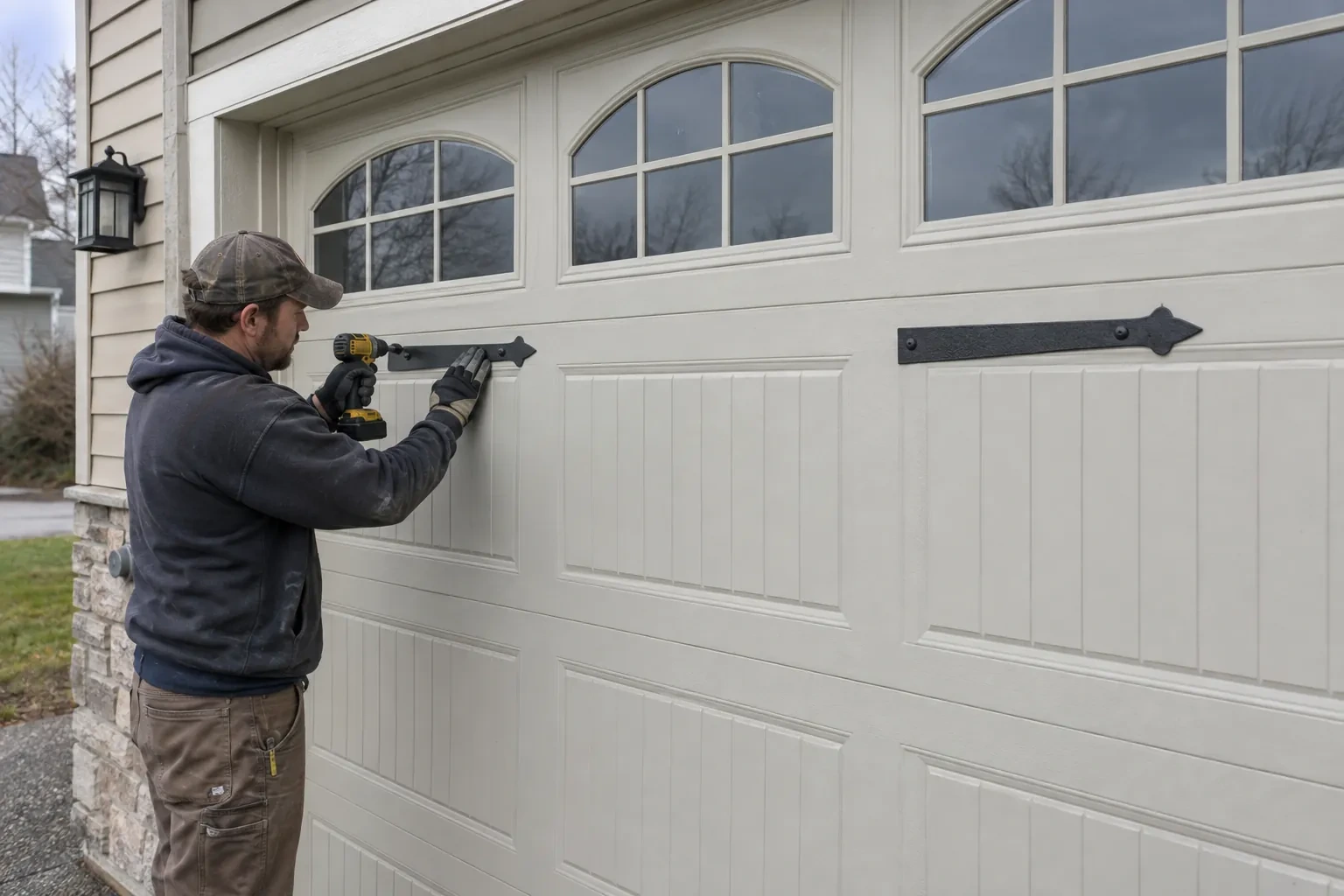
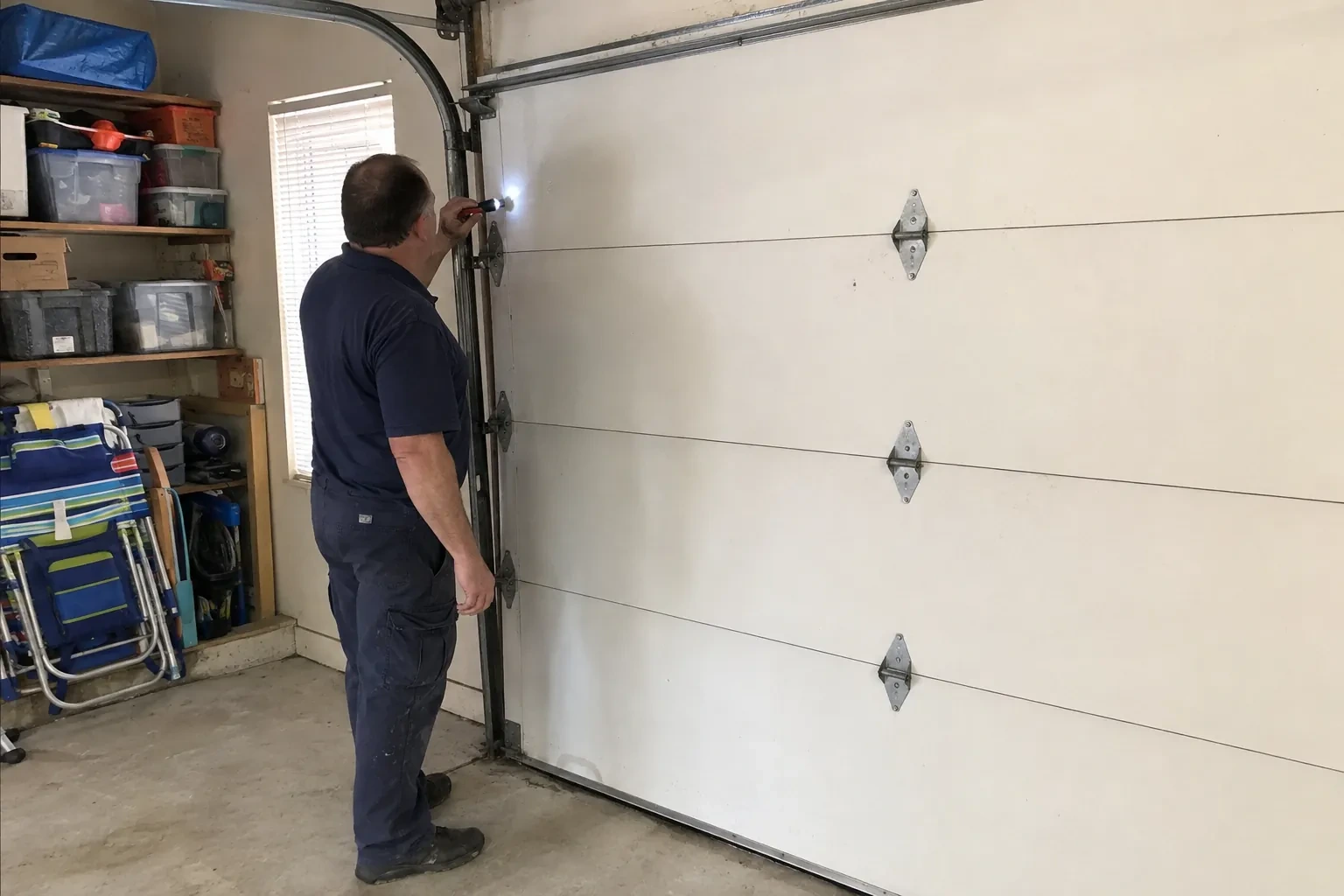
With the door held, the technician works along both sides checking how each roller sits. A roller should rest in the channel without being pinched, and its stem should turn and slide in the hinge or bracket that carries it. A stem that is stuck, a wheel riding up on the lip, or a roller that has popped free are signs of a spread or misaligned section nearby. Worn wheels are also a cause rather than just a casualty, since a roller that no longer rolls drags on the track edge and slowly opens it. The top fixtures are checked for bending, and hinges for splits, so the parts that guided the door into trouble are corrected with the track.
Tension back, balance and opener tests
Once the track is fixed and every roller is seated, the springs are wound back to the turns the door calls for and the clamps come off. The technician lifts the door by hand through its full travel, watching each roller through the curve and along the horizontal run for any catch, and checks that the door holds itself at roughly waist height. It is run up and down several times by hand before the opener is reconnected, and the opener's travel limits and force settings are then adjusted to the newly aligned door, with the reversing test done against a block on the floor. You watch the finished door make the trip before the tools are packed.
A door that runs the full path without a catch
The change is felt more than seen. The door rises without the bang or hesitation that marked the damaged spot, both sides climb together, and it turns the curve overhead without the top section twisting. Closed, it sits flush against the stop moulding on both jambs with no stripe of daylight, and open, it stays where the opener leaves it instead of drifting back. The opener sounds calmer because it is no longer dragging a door through a pinch point. Lifted by hand with the opener released, the door moves lightly and holds at waist height, which tells you the track and springs are working together again.
Garage Door Track Repair or Replacement
In the van
Lag screws and track bolts
Winding bars and track clamps
Jamb brackets or continuous angle
Replacement rollers and hinges
Flag brackets
Garage Door Track Repair or Replacement
What affects the quote
Track profile and radius
Two-inch track in a 12-inch or 15-inch radius is stock for most residential doors; three-inch track, unusual radii and high-lift pieces are ordered to the door and priced as such.
Condition of the jamb wood
Where the jamb is soft or split at the floor, sistering or replacing the lower length is carpentry added to the track work, and the lumber and fasteners are listed on their own line.
Springs that have to be unloaded
Work at the flag bracket or on the curve means winding the torsion springs down and back up. That adds time, and the quote says whether it applies to your repair.
What to have ready
- Has any roller come out of the channel?
- Where is the damage: near the floor, at the curve, or on the overhead run?
- Do you have the door's manual or a label with its model?
Garage Door Track Repair or Replacement: questions
QuestionsHow is the vertical track attached to the wall?
Two ways are common. Bracket-mounted track uses several L-shaped jamb brackets, each lag-screwed into the wood jamb, which lets the track be adjusted a little at each bracket. Angle-mounted track bolts to a full-height continuous angle, often chosen where sideroom is tight. In both cases the fasteners bite into the jamb, so the condition of that wood matters as much as the track itself.
How do I keep road salt from rusting the track?
Salt does its work in the bottom foot of each vertical track, where slush drips off the car and sits. Push slush clear of the door's inside edge rather than letting it pool, and on a mild day wipe or rinse the brackets and the lower channel. A little silicone spray on the bracket fasteners in autumn helps them shed water. Keeping the threshold free of ice also stops the door being pulled against a stuck bottom section.
My door came off its track last month. Is this the same service?
It is the follow-on. Putting a door back on its track deals with the rollers and gets the door running again; track repair deals with the reason it left. If the reset showed a spread channel, a bent section or loose brackets, those are corrected now so the rollers stay put. Where nothing on the track was at fault and the cause was a cable or an obstruction, the track is simply checked and confirmed.
Related services
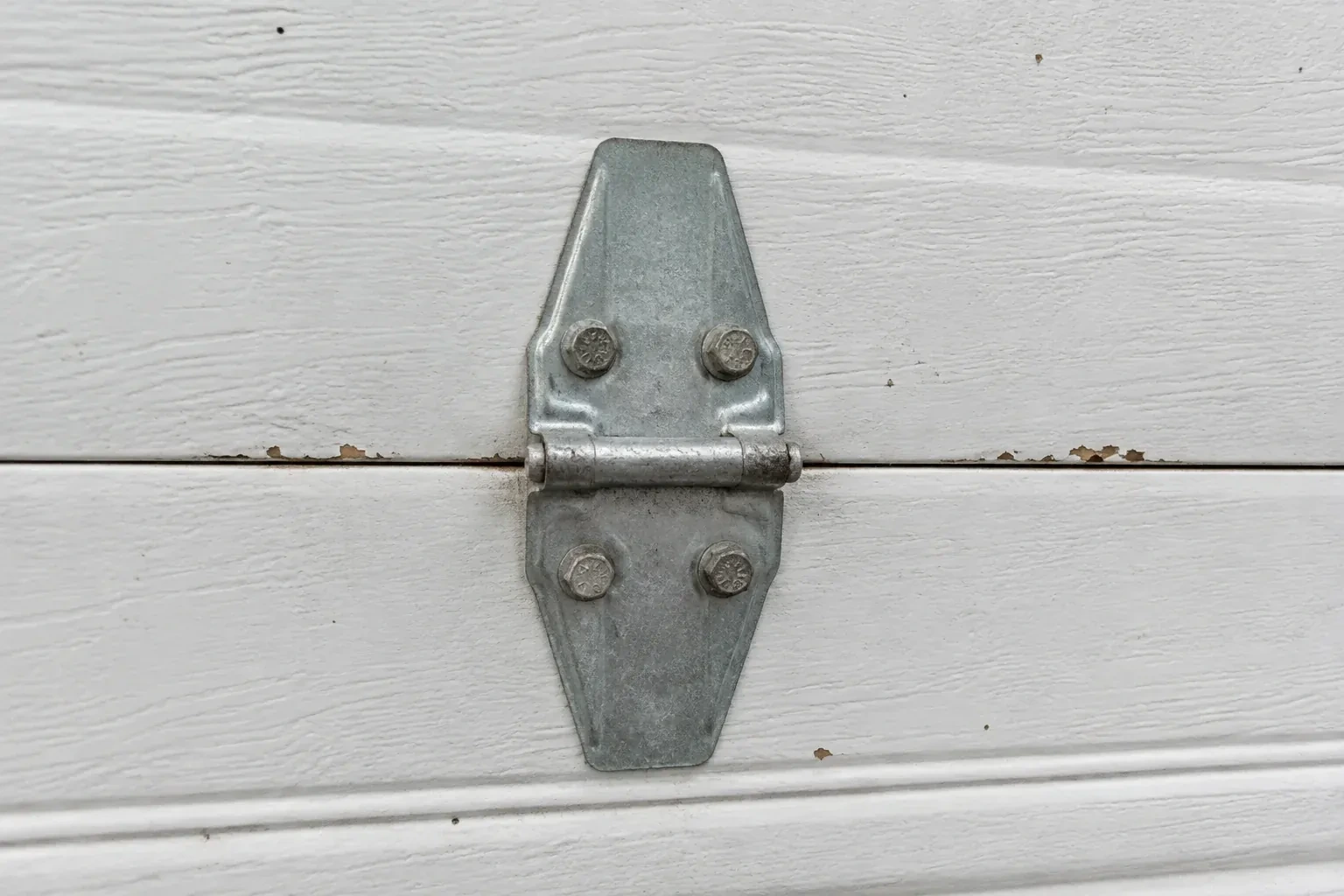
- Garage Door Hinge ReplacementPressing a hand against one of the middle hinges makes it rock on the panel.
- Garage Door Cable ReplacementYour older door has springs along the tracks, and one cable has slipped off its pulley and dangles slack.
- Torsion Spring ReplacementAfter pulling the red release cord, you tried lifting the door yourself and it would barely leave the floor.