Springs · Bartonville
Garage Door Track Repair or Replacement in Bartonville
The horizontal rail toward the back of the garage sags noticeably.
In plain words
Track rarely fails on its own; something moves it. A bumper creases the vertical run, vibration works lag screws out of the jamb, slush and salt eat the bottom foot of the channel, worn rollers slowly spread the lip, and a hanger pulling from the ceiling lets the horizontal run sag. Track repair treats the cause with the symptom: the jamb is repaired if it has gone soft, rollers are renewed if they did the spreading, hangers are refixed into joists, and the threshold is checked for ice ridges. Correcting the reason is what keeps the straightened track straight for years.
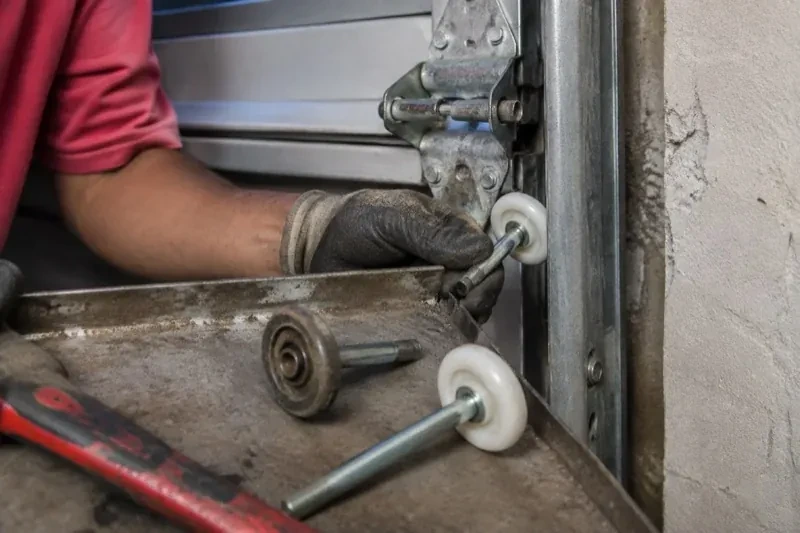
How the visit goesHalfway up, the door lurches and one roller rides onto the lip of the channel. Near the curve the track looks wider than the rest, and the door hesitates in the same place on the way down.
Garage Door Track Repair or Replacement
How the visit goes
The horizontal run and its hangers
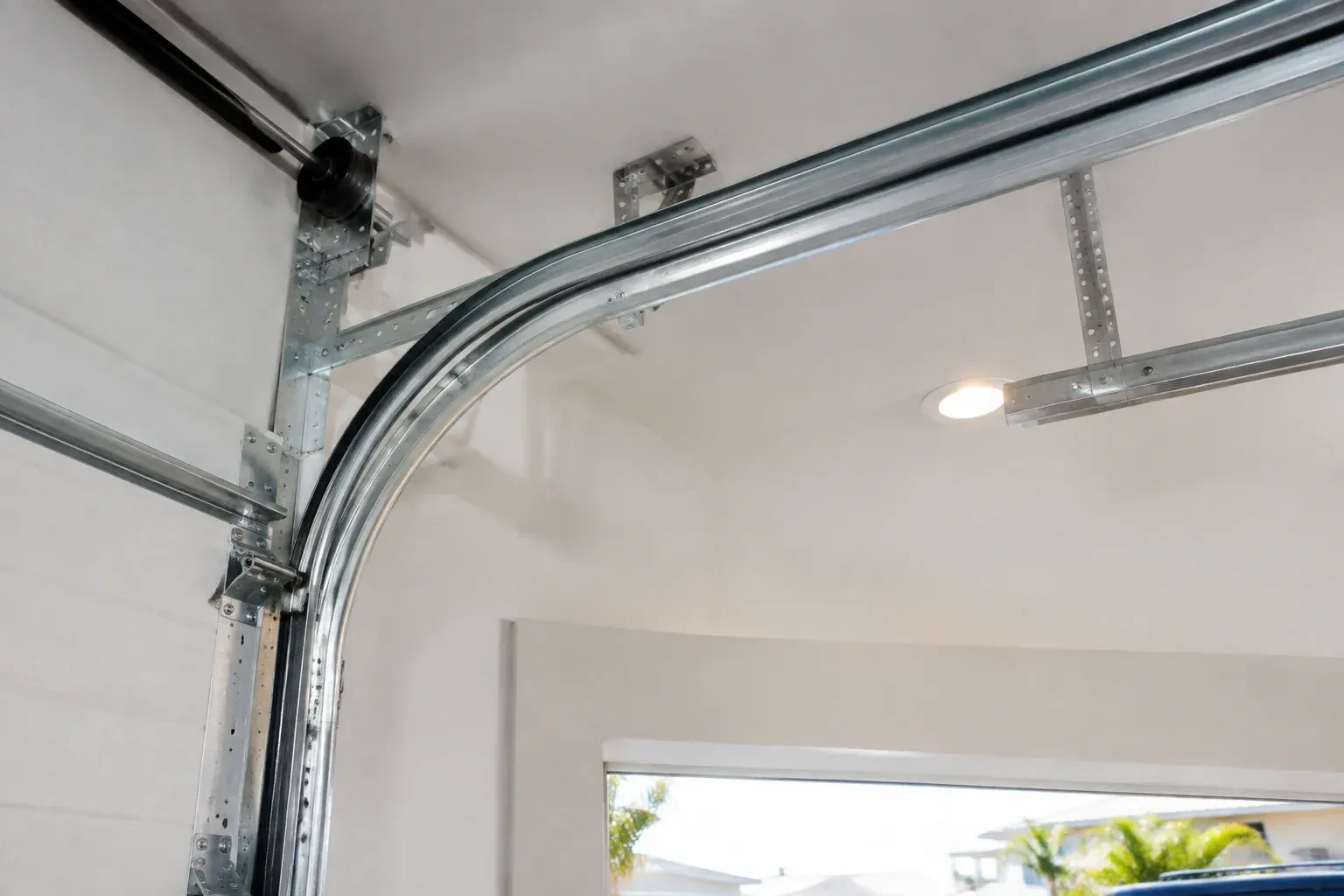
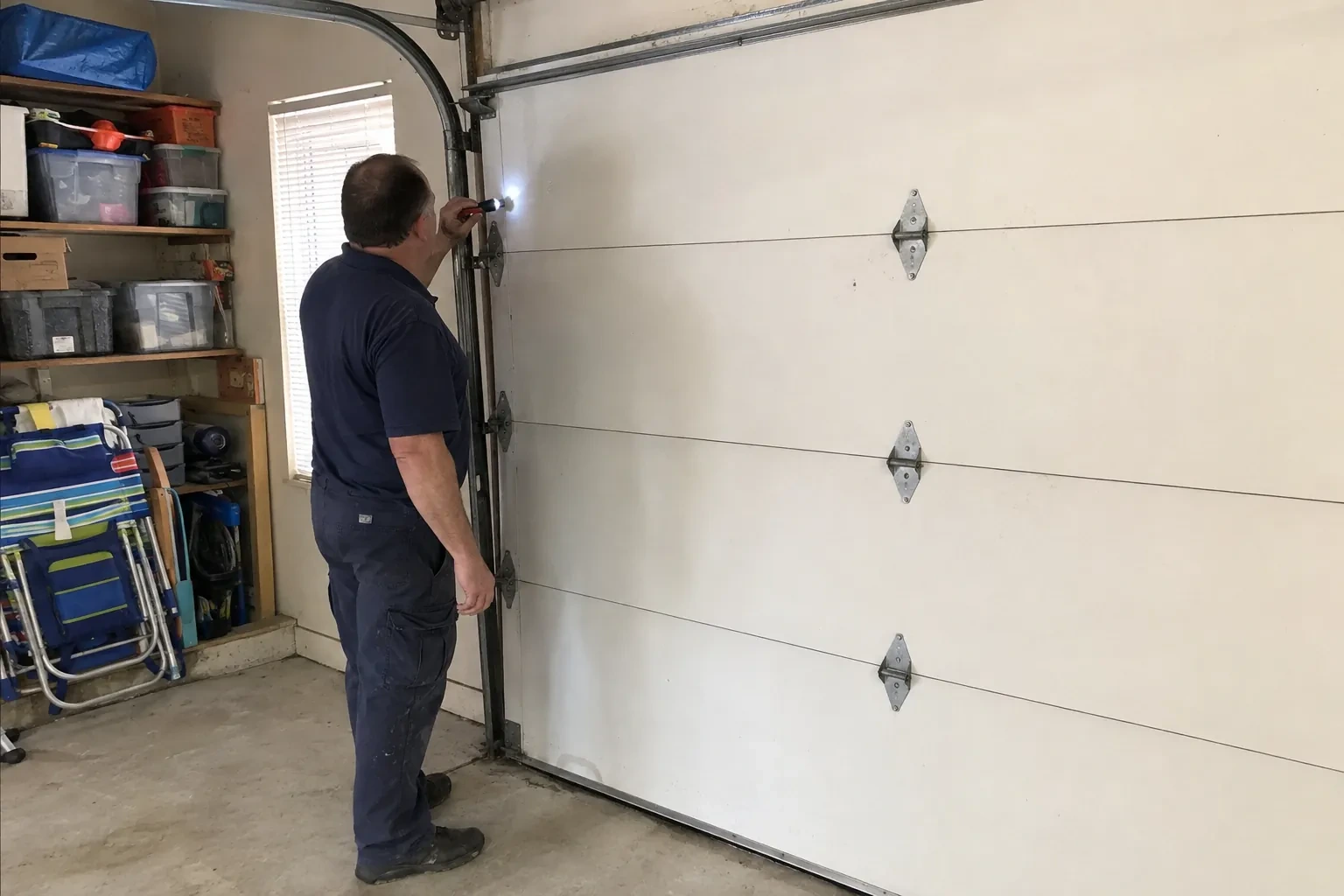
Overhead, the horizontal tracks should be level with each other, or set to the same pitch, held from the ceiling by back hangs of perforated angle screwed into joists. The technician sights along each run for sag, twist or a spread channel, checks the stiffening angle riveted to the track is intact, and puts weight on each hanger to check for flex. A run that droops at the rear slopes the wrong way rather than level or its intended pitch; one knocked sideways by a ladder or stored goods twists the top section as it travels. A door drifting back toward the opening once raised points to balance instead. Any hanger anchored into drywall alone is flagged for a joist.
Fixing into sound framing
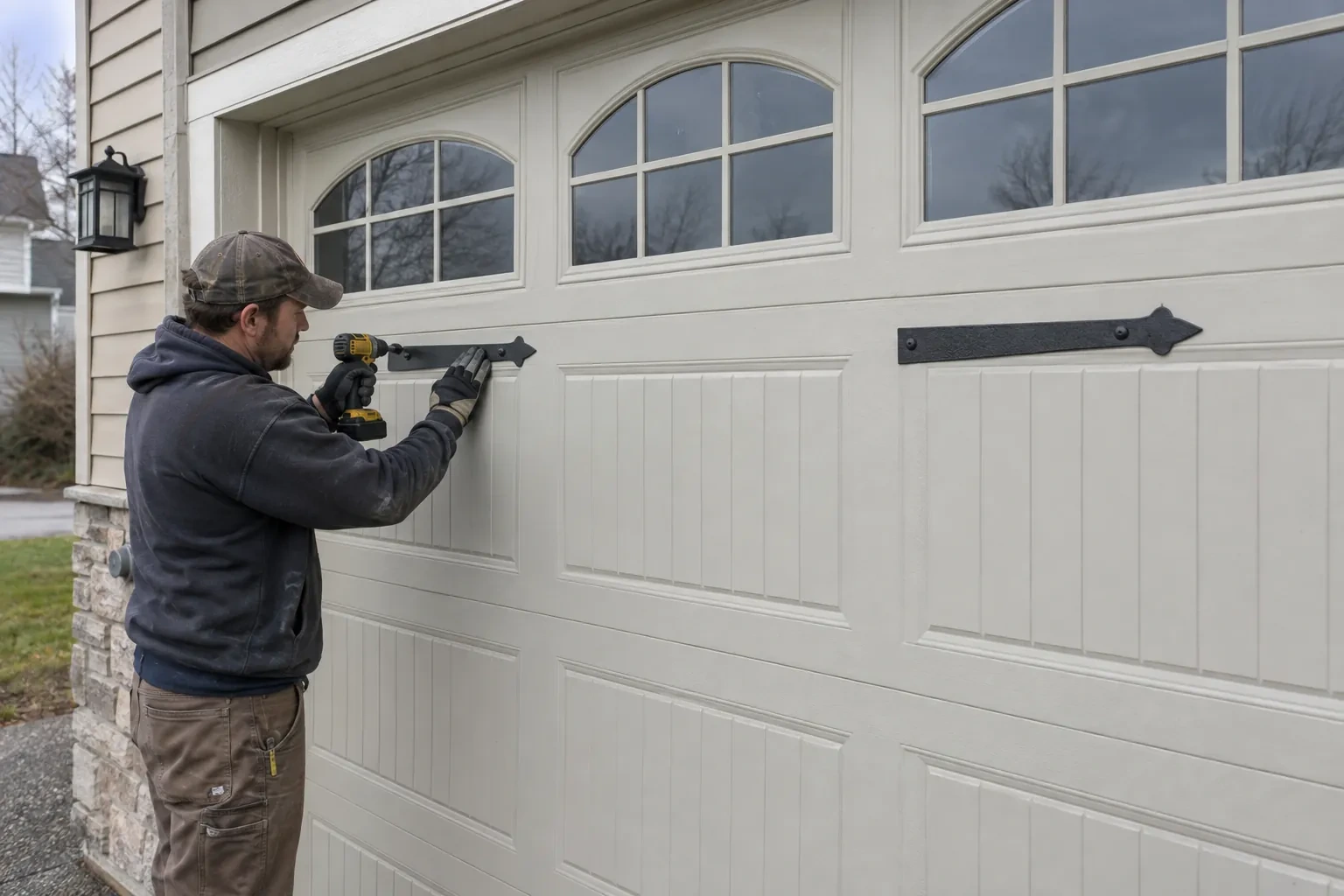
Track is only as steady as the wood it is screwed to. Where the bottom of a jamb has gone soft, the technician cuts back to solid timber and sisters a new piece alongside or replaces the lower length, fastening it through to the framing behind. Enlarged or stripped screw holes higher up are plugged and re-drilled, or the bracket is moved to fresh wood. Lag screws of the right length and diameter are driven into the jamb, and any hanger anchored into ceiling finish alone is moved to a joist or given a length of angle to reach one. This is unglamorous work, and it is the reason the alignment lasts.
Jamb wood that will hold a screw again
If the visit included repairing the jamb, you now have sound timber behind every bracket, and the small habits that keep it that way are simple. Keep the bottom of the jamb dry: slush pushed clear, a bead of exterior caulk where the trim meets the slab, and paint or stain kept up on the exposed face. Look once a year for the tell-tale dark, soft patch at floor level and for screws that seem to have moved. A jamb that stays dry holds lag screws for decades, and with the track now fixed into good wood, the alignment set today has something solid to rest on.
Garage Door Track Repair or Replacement
In the van
Lag screws and track bolts
Winding bars and track clamps
Jamb brackets or continuous angle
Replacement rollers and hinges
Flag brackets
Garage Door Track Repair or Replacement
What affects the quote
Track profile and radius
Two-inch track in a 12-inch or 15-inch radius is stock for most residential doors; three-inch track, unusual radii and high-lift pieces are ordered to the door and priced as such.
Low-headroom or high-lift hardware
Changing the layout, rather than repairing the existing one, brings new horizontal track, curve pieces, top fixtures and often drums and spring adjustment, and is quoted as a separate scope.
Bracket-mounted or continuous angle
Track on jamb brackets is adjusted bracket by bracket, while a full-height angle comes off and goes back as one piece. Each mounting style shapes the time and the fasteners quoted.
What to have ready
- Is there rust on the track or brackets near the floor?
- Is the door closed, fully open, or stuck partway?
- Is the wood beside the door soft, split or discoloured at the floor?
Garage Door Track Repair or Replacement: questions
QuestionsHow is the vertical track attached to the wall?
Two ways are common. Bracket-mounted track uses several L-shaped jamb brackets, each lag-screwed into the wood jamb, which lets the track be adjusted a little at each bracket. Angle-mounted track bolts to a full-height continuous angle, often chosen where sideroom is tight. In both cases the fasteners bite into the jamb, so the condition of that wood matters as much as the track itself.
How do I keep road salt from rusting the track?
Salt does its work in the bottom foot of each vertical track, where slush drips off the car and sits. Push slush clear of the door's inside edge rather than letting it pool, and on a mild day wipe or rinse the brackets and the lower channel. A little silicone spray on the bracket fasteners in autumn helps them shed water. Keeping the threshold free of ice also stops the door being pulled against a stuck bottom section.
My door came off its track last month. Is this the same service?
It is the follow-on. Putting a door back on its track deals with the rollers and gets the door running again; track repair deals with the reason it left. If the reset showed a spread channel, a bent section or loose brackets, those are corrected now so the rollers stay put. Where nothing on the track was at fault and the cause was a cable or an obstruction, the track is simply checked and confirmed.
Related services
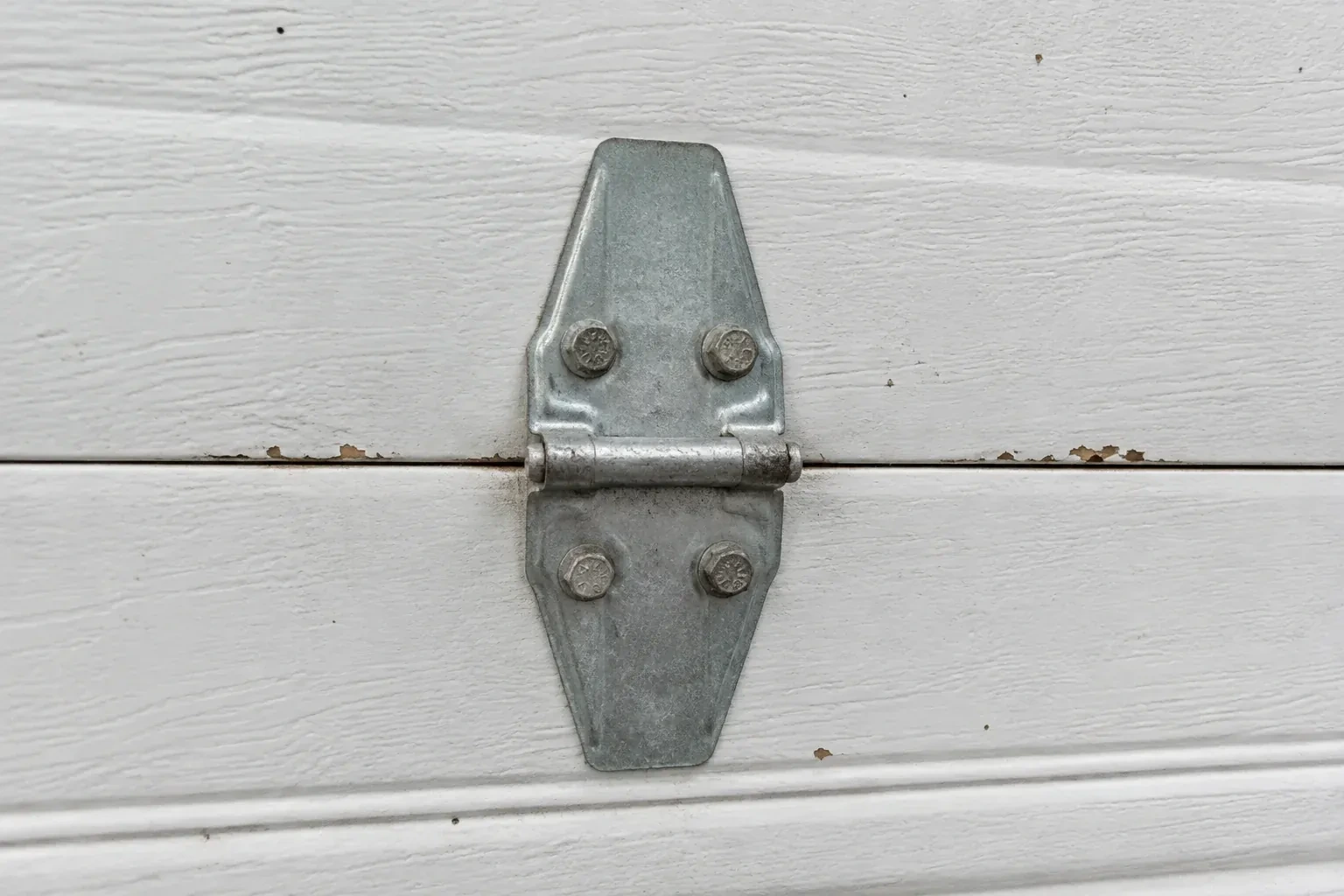
- Garage Door Hinge ReplacementPressing a hand against one of the middle hinges makes it rock on the panel.
- Garage Door Cable ReplacementYour older door has springs along the tracks, and one cable has slipped off its pulley and dangles slack.
- Torsion Spring ReplacementAfter pulling the red release cord, you tried lifting the door yourself and it would barely leave the floor.