Openers · Bartonville
Emergency Release Repair in Bartonville
A previous owner knotted the release cord around the rail and stacked storage shelves right beneath it.
In plain words
The release only earns its keep on a door that behaves once it is free of the opener, so the visit starts with the door closed and a balance test rather than with the handle. Disconnected, a healthy door lifts with modest effort, holds around a metre off the floor and stays put at the top. That is the door the release is designed for. If the door is heavy, drifts down or shoots up, the springs need attention first, work done with winding bars by a technician trained for tensioned hardware. Once the door passes, the release work goes ahead and the system is proven together.
How the visit goesAfter a week of lifting the door by hand you pressed the button, hoping it would catch. Instead the motor grinds, the trolley thumps against the end of the rail, and the little lever that should snap back stays stubbornly upright.
Emergency Release Repair
How the visit goes
Door closed before anything is touched
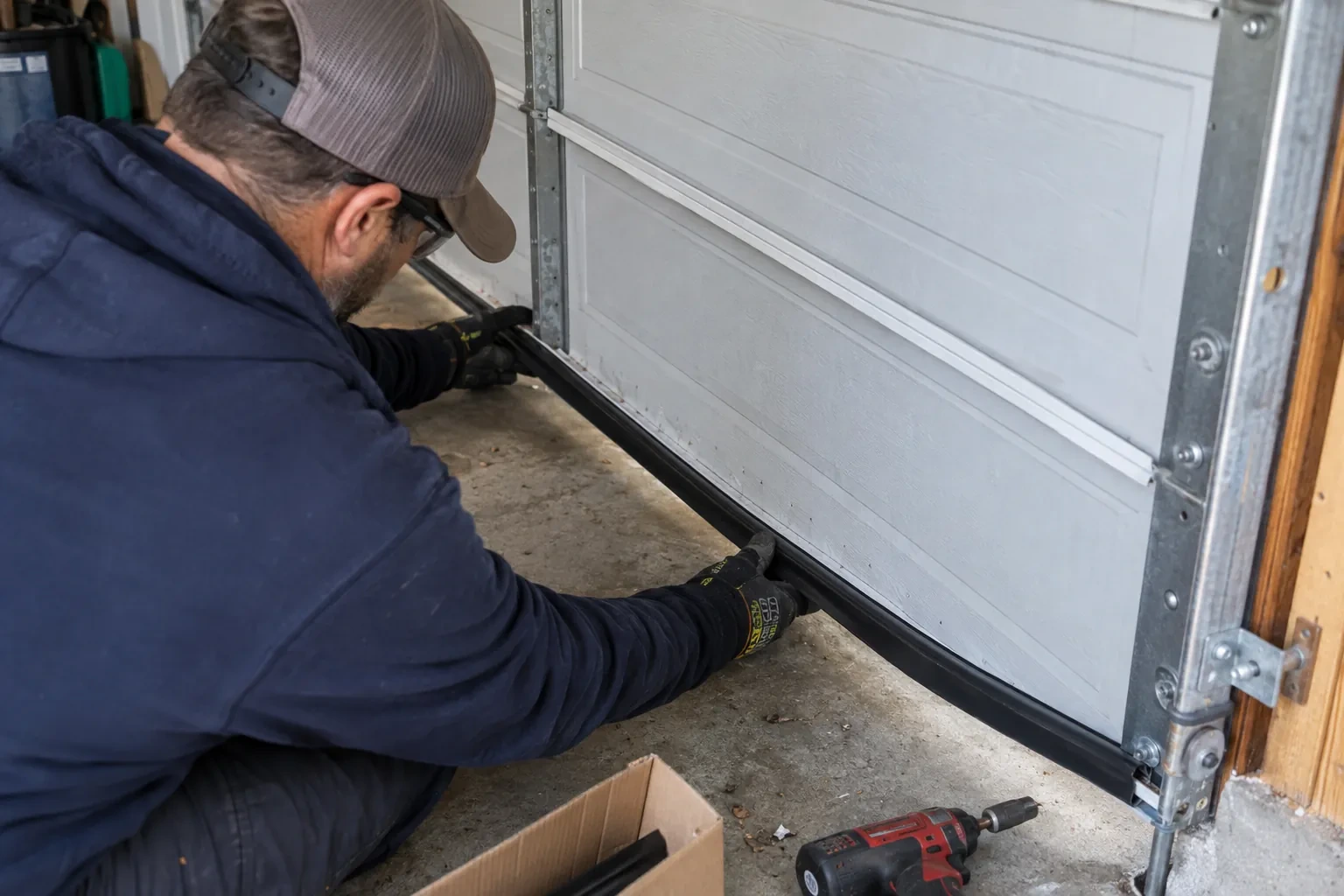
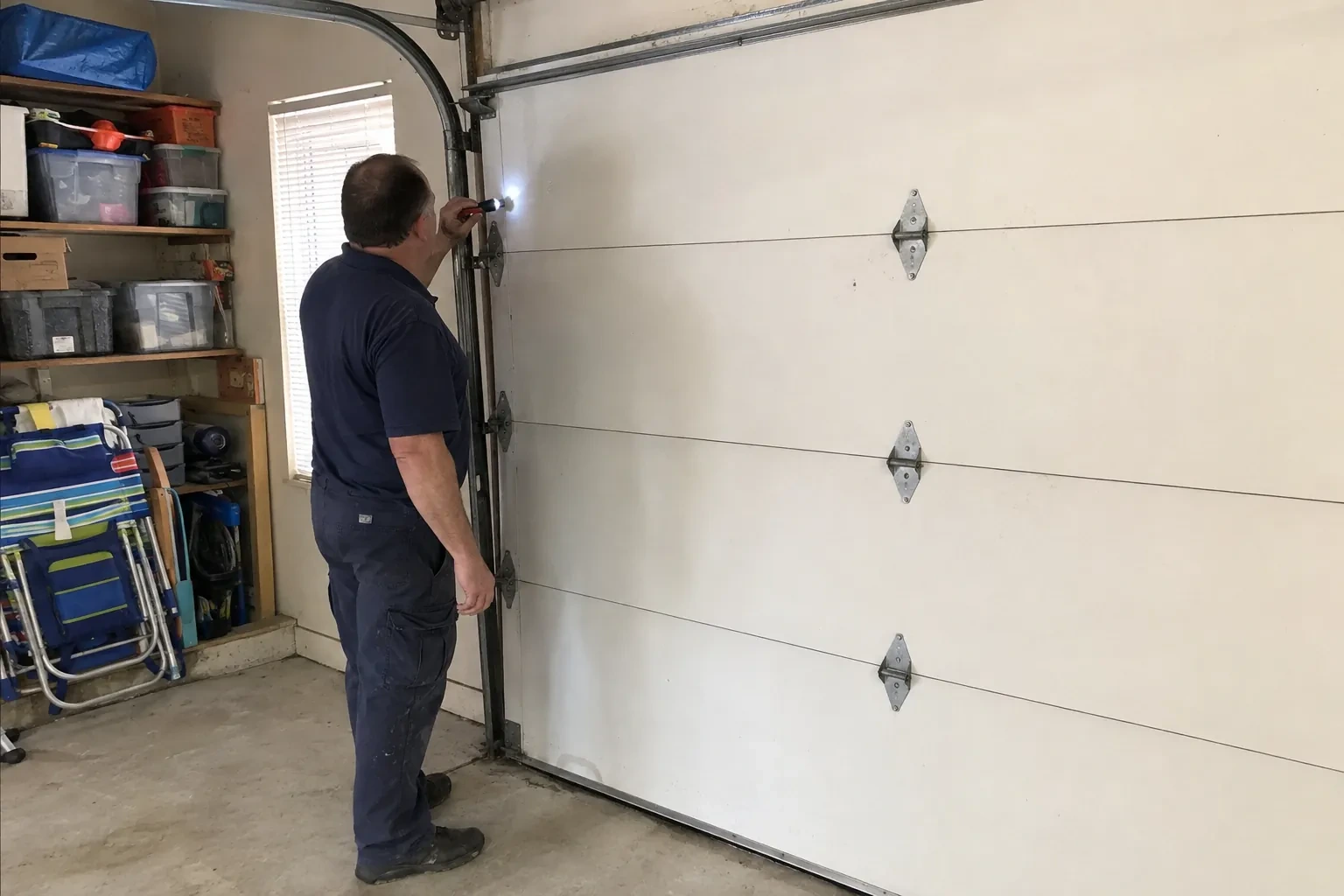
The first thing the technician does is get the door into a safe state. If it is closed, it stays closed while the release is examined. If it is stranded open or part-way, the door is supported and clamped, with the opener unplugged, before anyone reaches for the lever, because a door that is free of its opener is held only by its springs and an unbalanced one can move on its own. This is the same rule the industry checklist gives homeowners: disconnect with the door closed and keep the opening clear, since even a closed door can shift once free of the opener. Starting here keeps the risk low until someone decides to move the door.
Setup and safety tests after the work
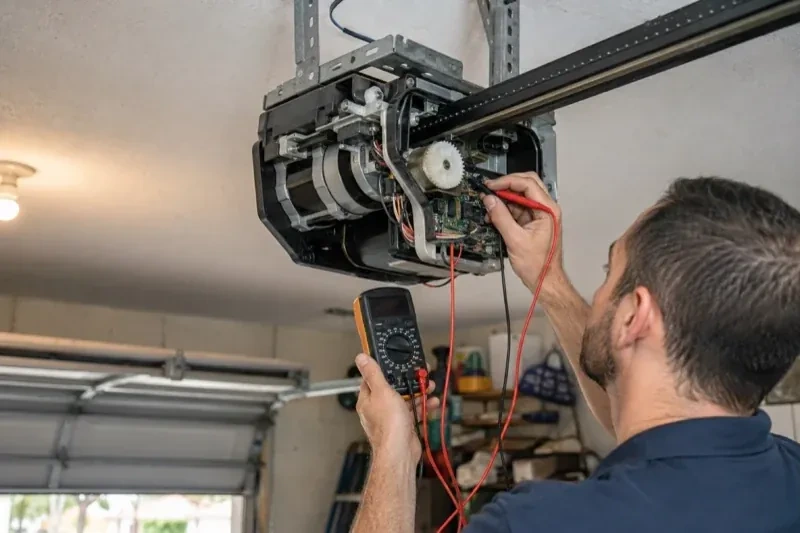
Because the drive tension, travel limits or trolley were disturbed, the opener is set up again before the visit ends. Travel is adjusted so the door seals on the floor without hammering and stops clear of the header; force is left as low as reliably moves the door. Then the two reversal tests: a 2x4 laid flat under the centre of the door must send it back up on contact, and an object passed through the photo-eye beam while closing must do the same. The release cord is checked one last time for height and clearance, and the door is run from each control you own.
Battery backup and outage-prone streets
If your street loses power a few times each winter, the technician may raise battery backup. Modern openers can carry a battery that opens and closes the door on stored power, which spares you the release altogether in most outages. The battery is a wearing part, generally replaced every few years, and the head unit signals when it is tired. The release remains the fallback when the battery is flat or the opener itself has failed, which is why both are kept in working order. You leave knowing which of the two your household relies on and how each one is checked.
Emergency Release Repair
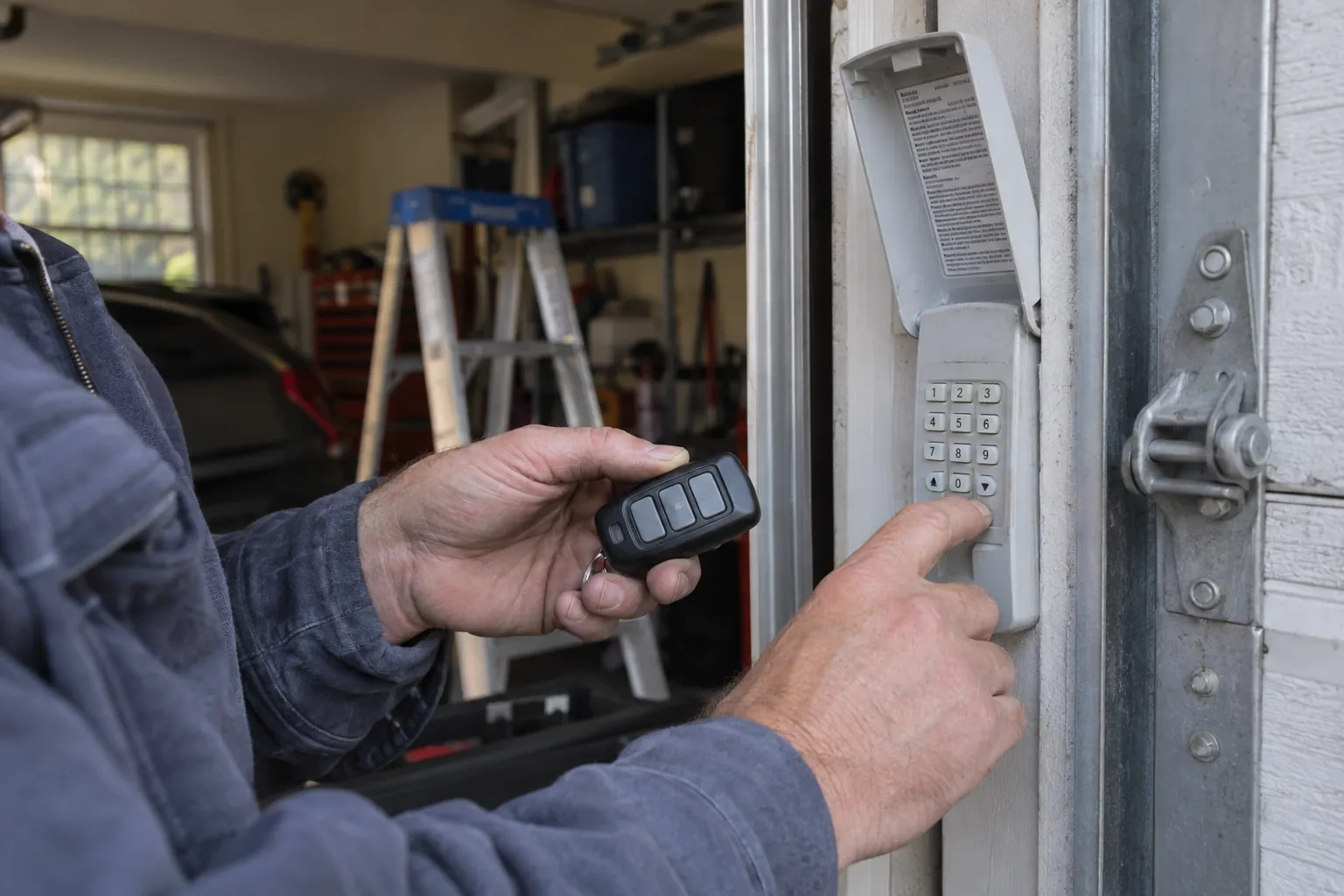
In the van
Dry lock lubricant and de-icer
Track clamps to hold the door
Door arm, clevis pins and clips
Garage door lubricant
Outside key release kit (lock, cable, keys)
Emergency Release Repair
What affects the quote
Number of doors and openers
A double garage with two openers, or a house with a detached garage as well, means two releases to check and possibly two sets of parts, and the quote counts each.
Demonstration and labelling
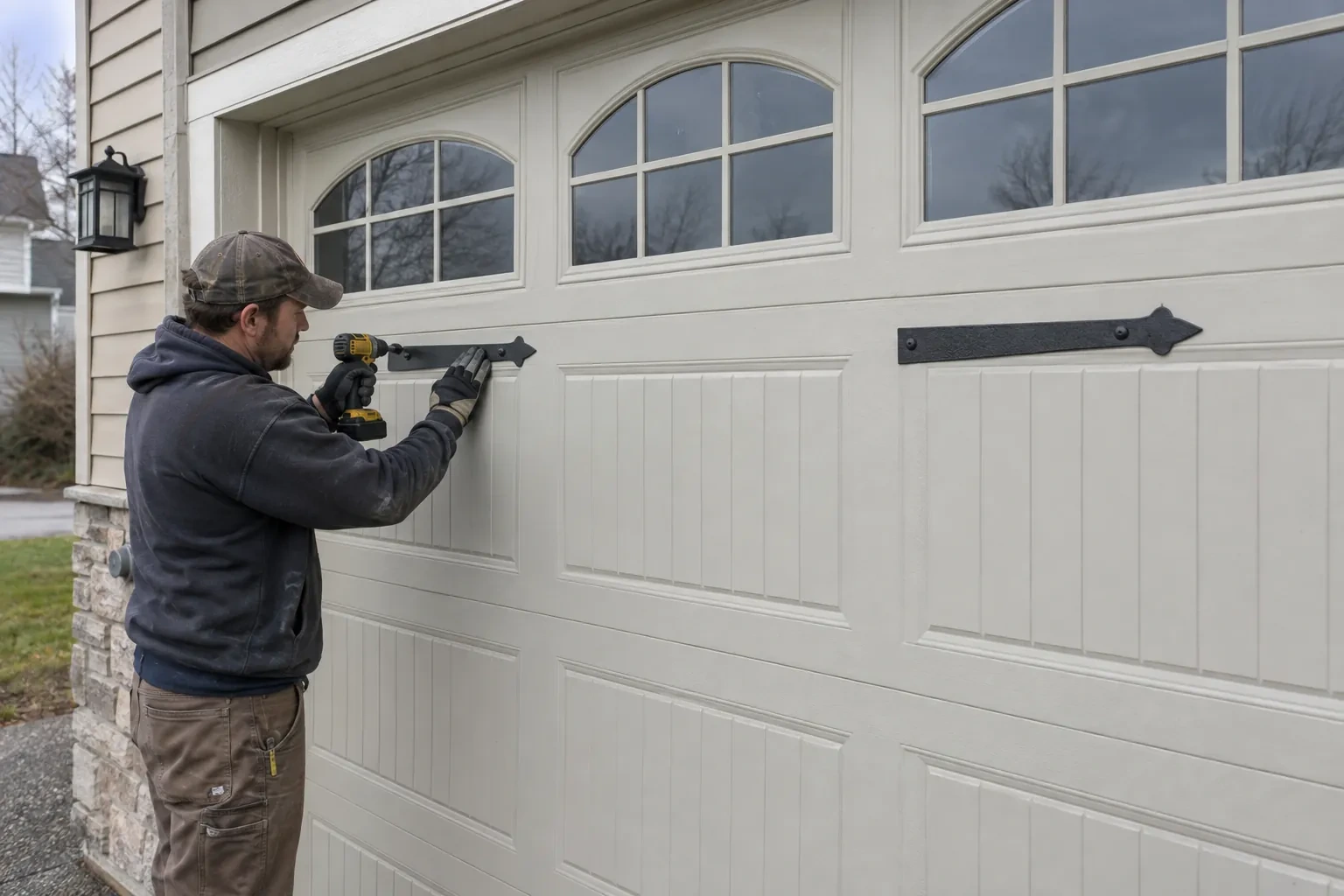
Walking the household through the release, fitting a fresh warning and instruction label near the wall control, and adding handles or gripping points to the door are small tasks that are itemized when they are part of the visit.
Distance to your door
Every visit includes the drive. A property on the edge of the service area or down a long rural road takes more of the technician's day than one a few streets away, and the quote allows for it.
What to have ready
- How does the door feel when you lift it by hand: light, heavy, or does it drift?
- Is anything stored under the rail or tied around the cord?
- Is there a small keyed lock near the top of the door outside, and do you have its key?
Emergency Release Repair: questions
QuestionsWhat happens if someone pulled the release while the door was open?
Sometimes nothing, if the door is well balanced and stayed where it was. If the door came down on its own, the technician checks what took the impact: the door arm, the carriage, the bottom brackets, the rollers and the panel around the arm bracket. A bent arm or carriage is replaced, and the balance test shows whether the springs contributed. Then the release is reconnected with the door closed and the household is shown the right sequence.
Does every type of opener have a release?
Yes, in different forms. Chain and belt units have the familiar red handle on a cord from the trolley. Screw-drive units release at the carriage on the rail. Wall-mounted openers beside the door use a handle on a cable that is pulled down until it clicks, since there is no rail overhead. The parts differ, so the technician identifies the model before choosing a cord, lever, trolley or cable, and shows you the sequence for your own unit.
The motor hums and the trolley is jammed at the end of the rail. What happened?
The trolley has been driven into the stop bolt or stop tab, usually because the travel limit let it run too far. The technician frees it by pulling the release, slackening the chain or belt a few turns, running the motor so the trolley walks off the stop, then correcting the travel limit and re-tensioning the drive. The reversal tests are repeated afterwards, since the limits were changed.
Related services
- Chain-Drive Opener RepairThe rail shakes when the door runs.
- Belt-Drive Opener RepairPress the remote and the motor runs its full cycle, lights on, the usual whir, but the door does not move a centimetre.
- Garage Door Opener ReplacementPress the button and the motor hums, but the door stays exactly where it is.