Openers · Bartonville
Garage Door Opener Replacement in Bartonville
Press the button and the motor hums, but the door stays exactly where it is.
In plain words
The most useful thing to know about a new opener is how little lifting it does. A garage door weighs as much as a small piano, and the springs hold nearly all of that weight so the door floats in the track. The operator only guides a door that is already balanced. That is why the replacement starts with the door disconnected and lifted by hand: if it holds its position partway up, the new operator will have a long, calm life. If it drops or drifts, the springs are tuned first, so the motor is never asked to do a job it was not built for.
How the visit goesThe bedroom above the garage shakes every morning at six when the chain drive fires up. Everyone in the house knows the moment someone leaves for work. The door itself is fine; the racket comes from the operator and its steel chain.
Garage Door Opener Replacement
How the visit goes
Lifting the door by hand first
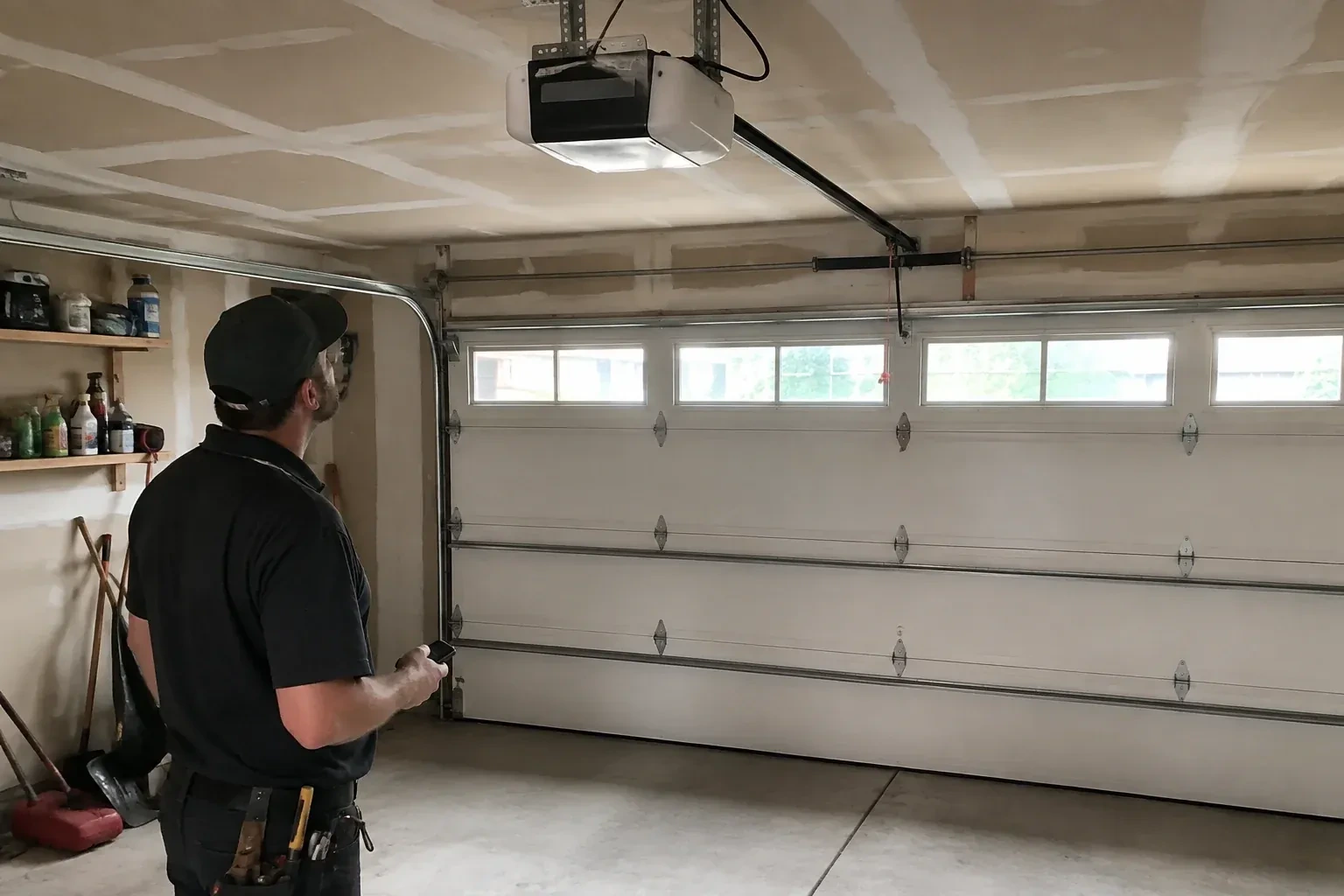
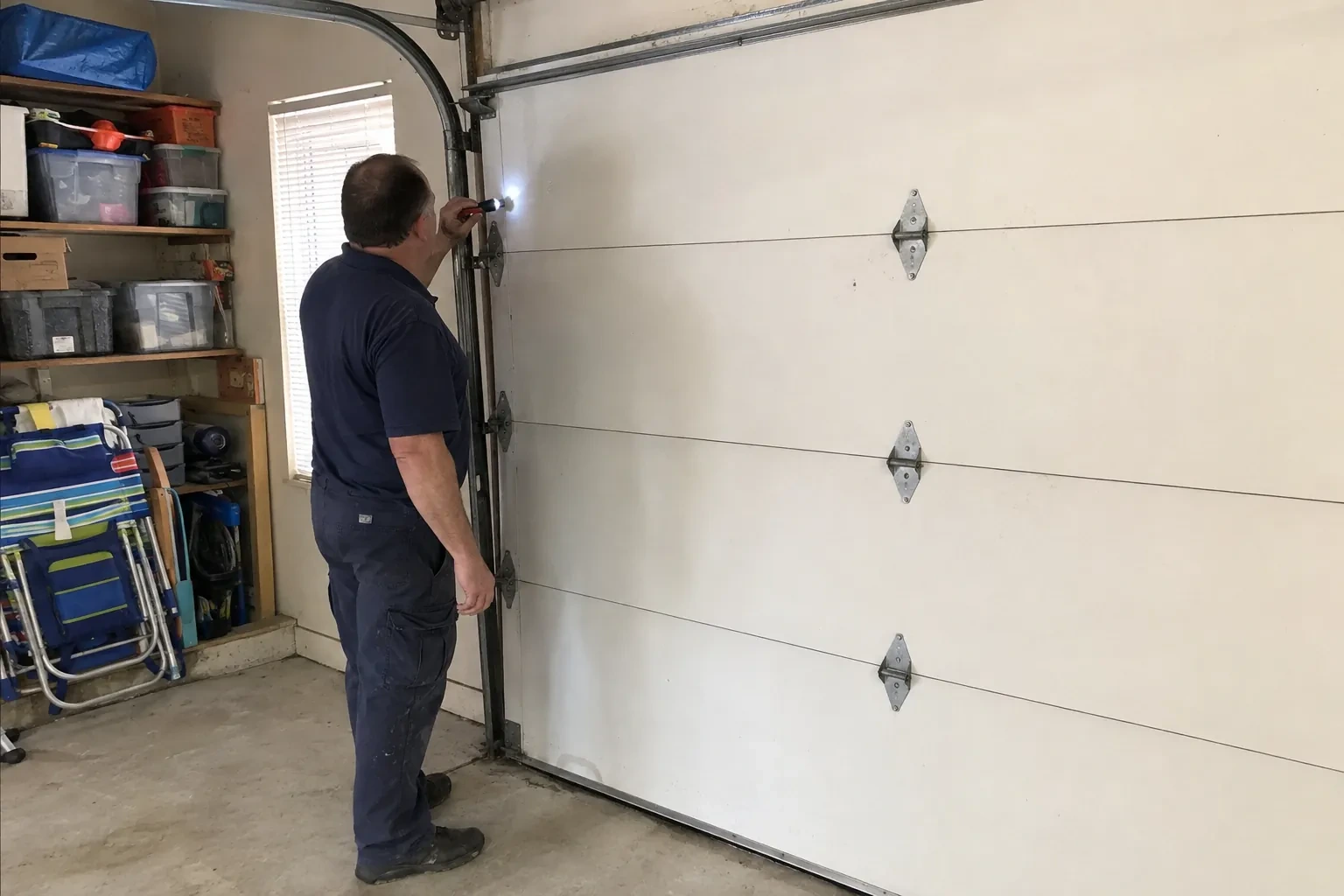
The first check has nothing to do with the opener. The technician unplugs the old unit, pulls the red release so the trolley lets go of the door, and lifts the door by hand. A healthy door rises with moderate effort, stays where it is left about a metre off the floor and comes to rest gently at the top and bottom. That balance is what the new opener depends on, because it moves the door rather than carrying it. If the door is heavy in the hands or drifts down, the springs need attention before any operator is chosen, and that conversation happens now rather than after the new unit is hanging from the ceiling.
Sensors, console and wiring
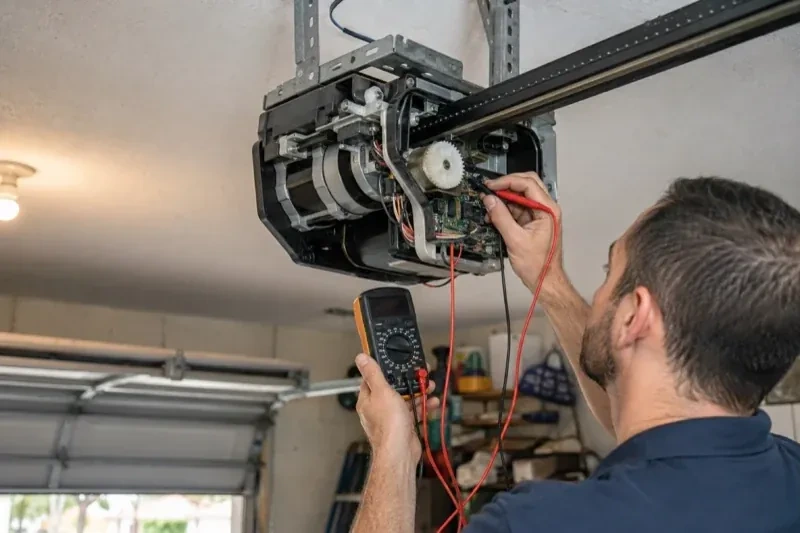
The photo eyes are mounted on both sides of the opening no higher than about 15 cm off the floor, aimed at each other until their indicator lights hold steady, and their wire is stapled neatly along the wall and ceiling to the head. The wall console goes at least 1.5 m above the floor, in clear sight of the door and away from moving parts, so it is out of reach of small children and the door can be watched while it runs. Low-voltage wire is kept clear of the rail and the chain. Finally the head is plugged into its grounded receptacle and powered up for the first time.
New codes, and old remotes that no longer work
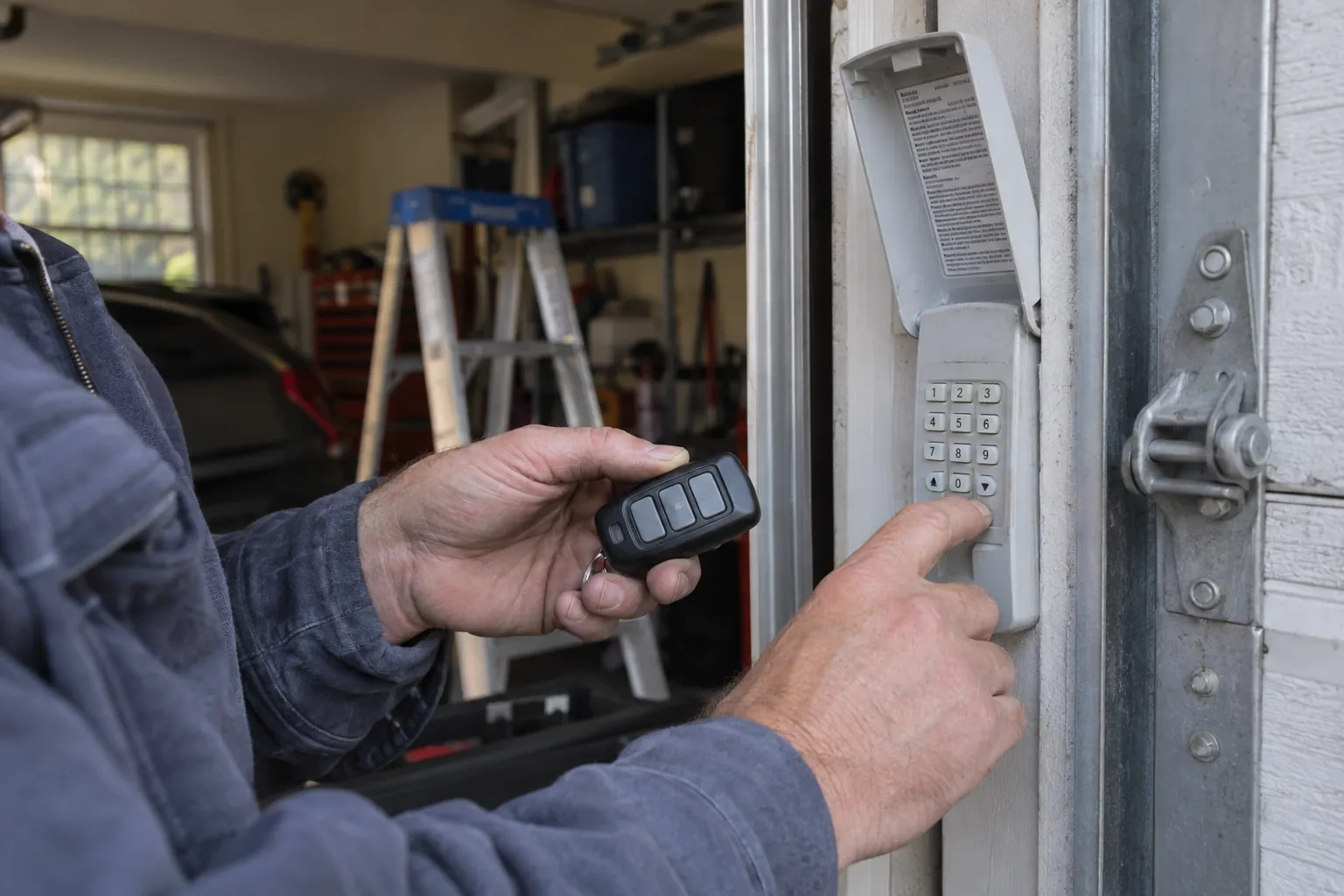
Every press of a new remote sends a code the operator has never seen before, so a signal recorded in your driveway is useless a moment later. The memory was cleared before your remotes were taught, which means any remote from the old unit, including one that went missing along with your house keys, is now just a piece of plastic. Keep the keypad code to yourself and change it if it has been shared with a contractor or house sitter; the console guide shows how. Adding a remote later is a matter of holding the learn button and pressing the new remote, and the technician leaves you with those steps written down.
Garage Door Opener Replacement
In the van
Opener head unit
Chain or reinforced belt
Low-voltage bell wire and staples
Rail sections and trolley
Remotes and wireless keypad
Garage Door Opener Replacement
What affects the quote
Top-section reinforcement
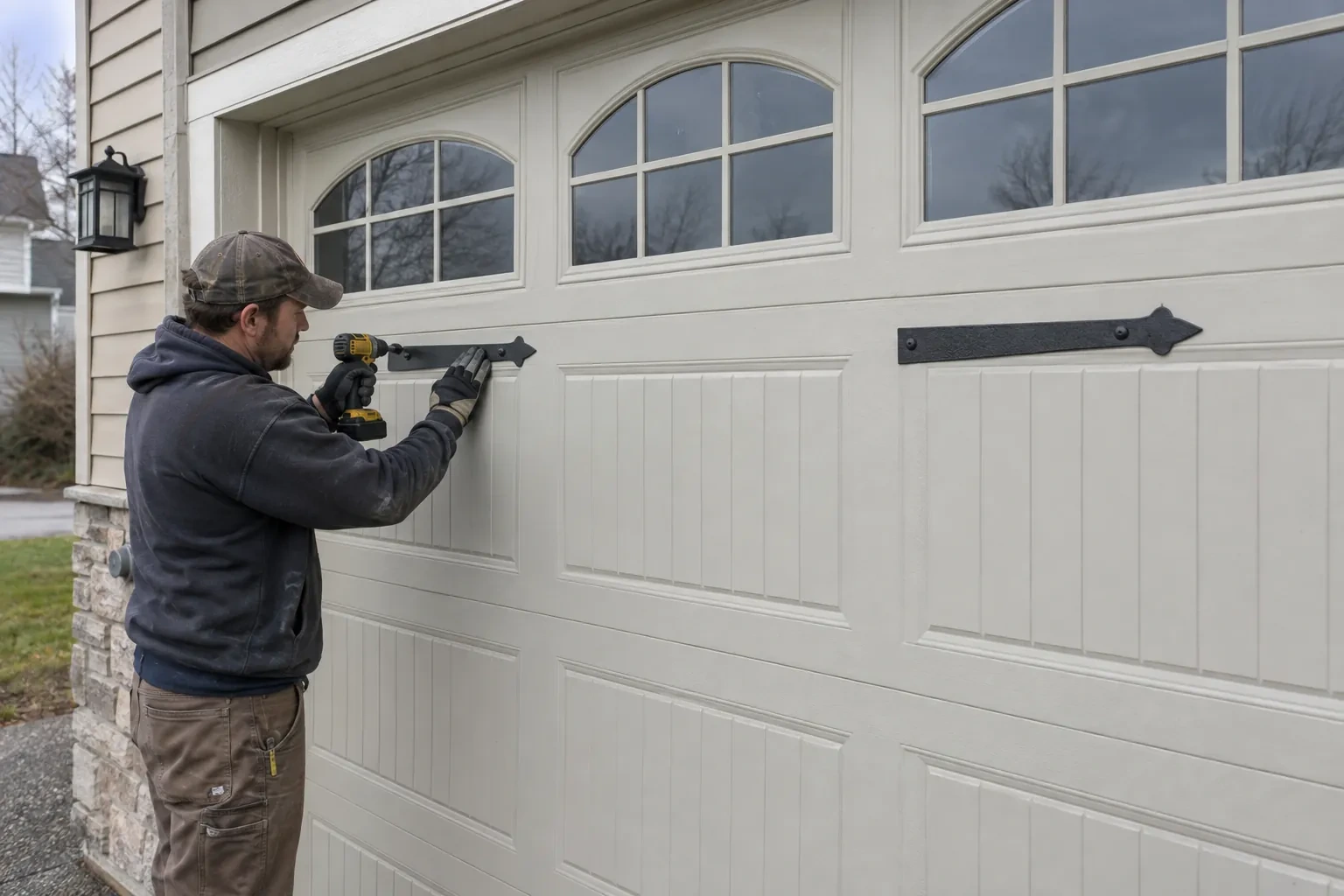
Lightweight steel, glazed and wide doors need a strut or operator bracket across the top section before the arm is attached, so the pull is spread across the door rather than concentrated at one point.
Connectivity and camera
Wi-Fi control from a phone, a built-in camera and a range extender for a detached garage with a weak signal are each optional items that the quote names individually.
A second door on the same visit
Replacing two operators in a double garage, or one at the house and one at a detached workshop, shares the travel and setup and is quoted as one visit with two installations.
What to have ready
- Is the door steel, wood or aluminum, and is it insulated?
- Does the door lift easily by hand and stay put halfway when the opener is disconnected?
- Can you send photographs of the opener, the top of the door and the ceiling?
Garage Door Opener Replacement: questions
QuestionsIs battery backup worth having?
For many households it is the feature they value most, especially where ice storms and winter outages are part of life. A backup battery inside or beside the head unit runs the door for a number of cycles when the power is off, so you can get the car out or put it away without heaving the door up by hand in the dark. The head unit chirps or lights an indicator when the battery needs renewing, which is every few years.
How do I test the safety reversal myself?
Two checks, once a month, each starting with the door fully open. For the first, set a scrap of 2x4 flat on the concrete where the door will land and press the close button; the moment it meets the wood it should climb back to the top. For the second, start the door closing and pass a broom or your arm across the low sensor beam; it should reverse just the same. Any hesitation means a small adjustment is due.
My old photo eyes still work. Can they stay?
Sensors and head unit are made for each other; a board reads its own maker's sensors, often a particular generation of them, so the pair in the box is what goes on the wall and the old ones come down with the old opener. The new pair sits low at each side of the doorway, roughly a hand's width above the concrete, and the technician confirms their indicator lights are steady before the door is tested against the beam.
Related services
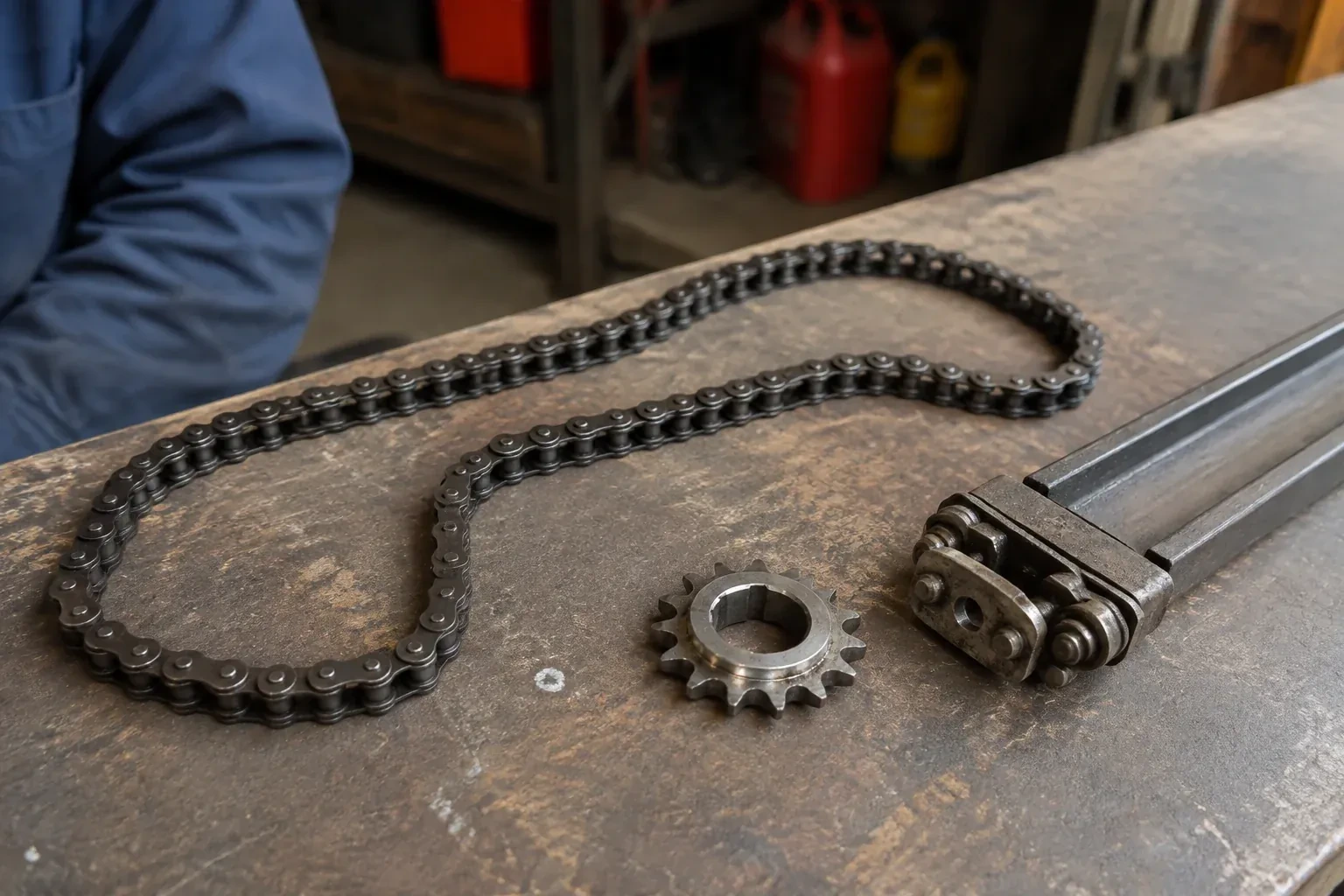
- Chain-Drive Opener RepairThe rail shakes when the door runs.
- Belt-Drive Opener RepairPress the remote and the motor runs its full cycle, lights on, the usual whir, but the door does not move a centimetre.
- Photo-Eye Sensor Alignment or ReplacementThe door will only go down while a finger stays on the wall button; let go and it stops or reverses.