Openers · The Delta
Garage Door Opener Replacement in The Delta
Press the button and the motor hums, but the door stays exactly where it is.
In plain words
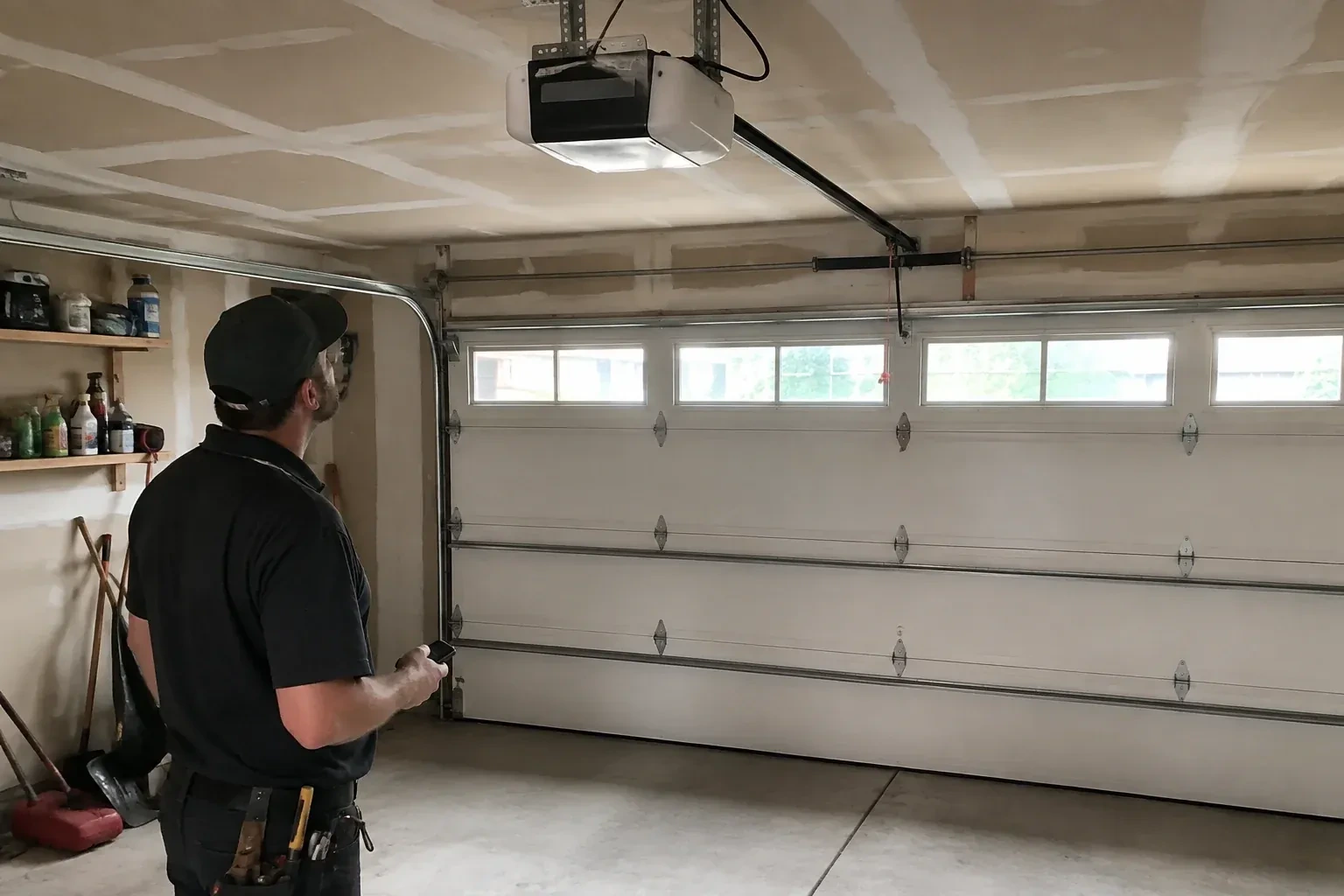
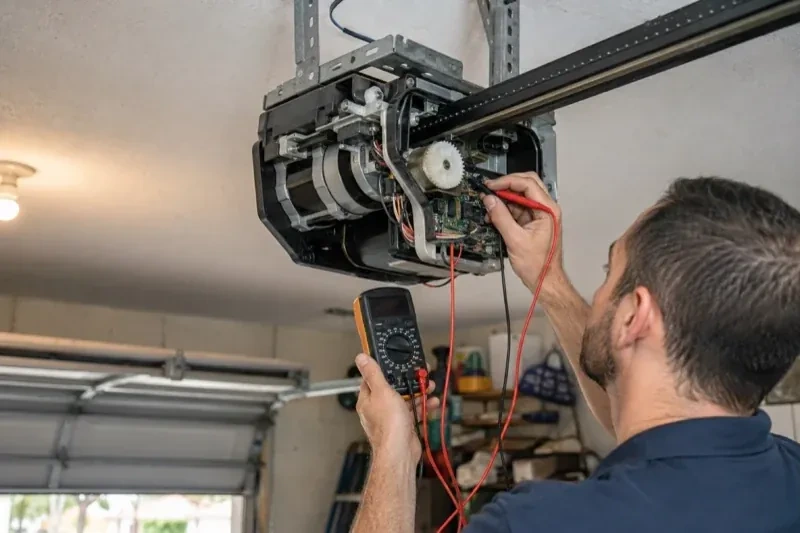
How do you tell whether an opener has reached its end or simply needs a part? A snapped gear or a worn trolley on an otherwise sound, recent unit is a repair. Replacement makes sense when the operator predates photo-eye sensors, when the board or motor has failed and is no longer made, when the same fault keeps returning, when the door has become heavier, or when you want features it was never built for, such as battery backup or phone control. The technician lays both paths side by side so the choice is yours, and a new operator brings the door up to today's safety standard.
How the visit goesThe bedroom above the garage shakes every morning at six when the chain drive fires up. Everyone in the house knows the moment someone leaves for work. The door itself is fine; the racket comes from the operator and its steel chain.
Garage Door Opener Replacement
How the visit goes
Lifting the door by hand first
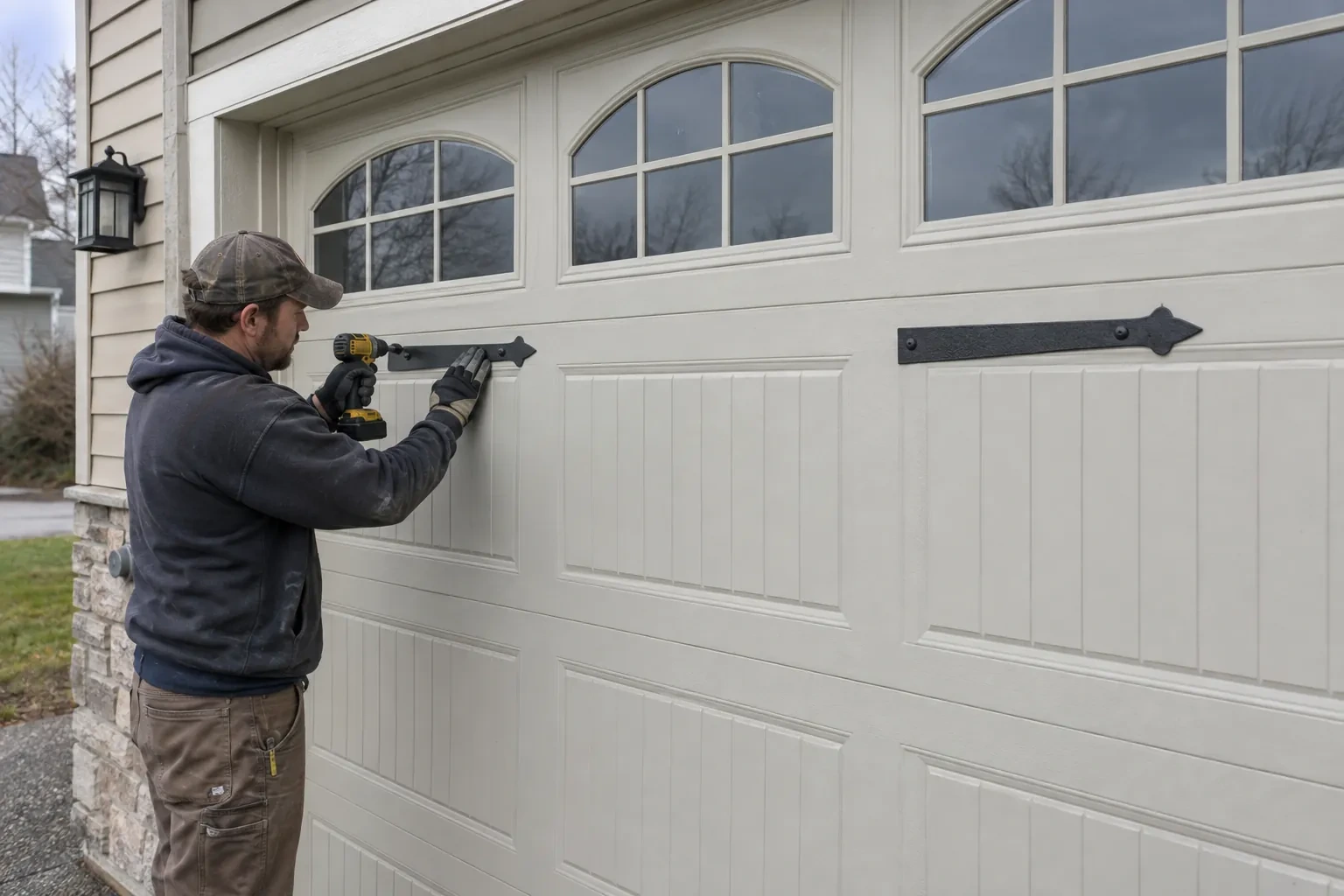
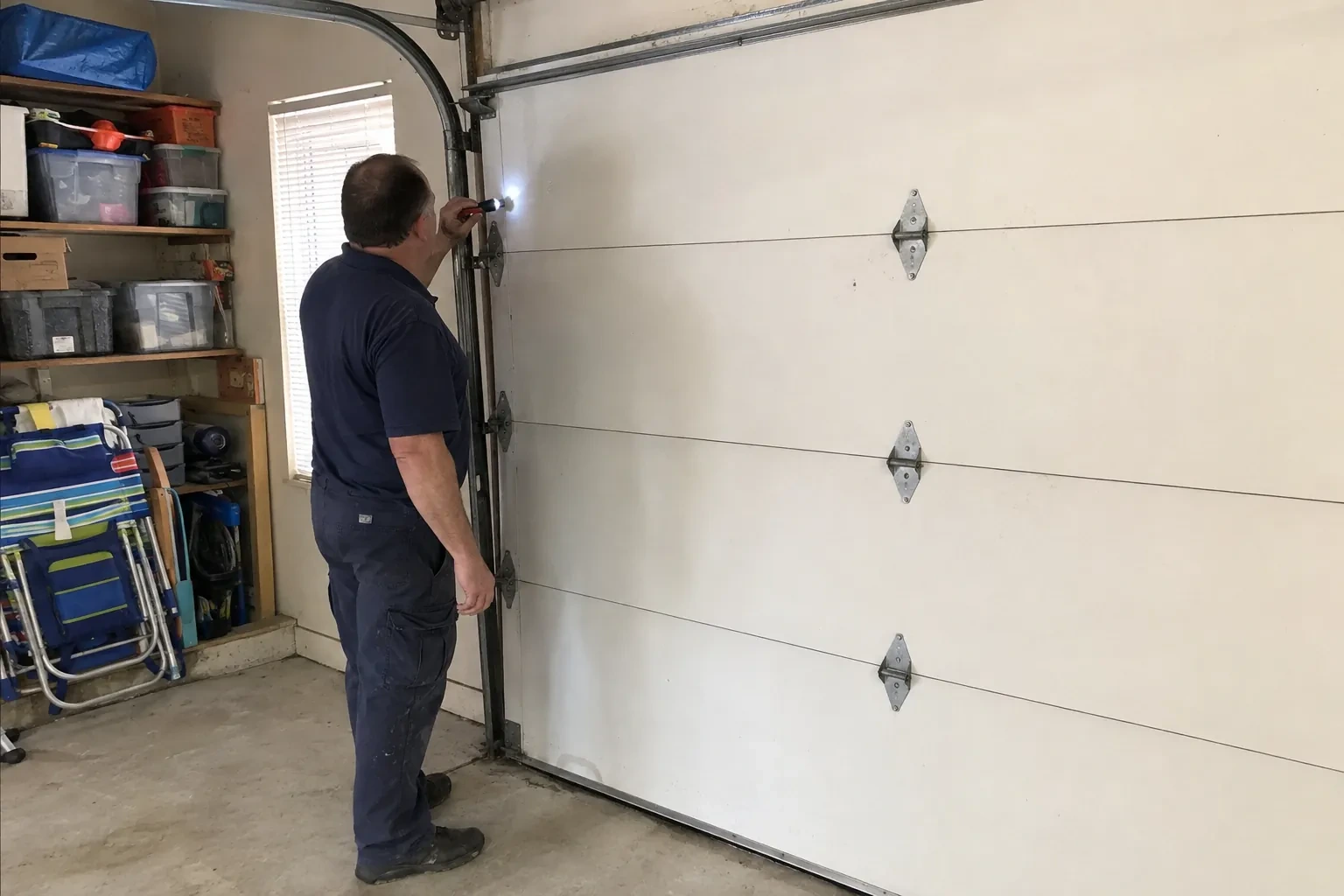
The first check has nothing to do with the opener. The technician unplugs the old unit, pulls the red release so the trolley lets go of the door, and lifts the door by hand. A healthy door rises with moderate effort, stays where it is left about a metre off the floor and comes to rest gently at the top and bottom. That balance is what the new opener depends on, because it moves the door rather than carrying it. If the door is heavy in the hands or drifts down, the springs need attention before any operator is chosen, and that conversation happens now rather than after the new unit is hanging from the ceiling.
Setting travel and force
With power on, the technician teaches the operator where the door starts and stops. Newer units run a learn cycle that measures the travel and the effort the door needs; others have open and close limit screws and force dials that are set by hand. The close limit is set so the bottom seal compresses gently against the floor without the door straining, and the open limit so the top section stops short of the header bracket. Force is set to the lightest level that moves the door reliably in the garage's normal temperature, which is what lets the operator notice an obstruction and reverse rather than push through it.
Ready for the next outage
If you chose battery backup, the door keeps opening and closing on stored power when the lights go out, and the operator tells you with a beep or a light when the battery is low or due for renewal every few years. Whether or not you have a battery, you now know where the red handle hangs and what it does: a pull detaches the door from the trolley so it can be lifted by hand, and reconnecting is either a second pull or simply running the operator, depending on the model. Practise it once with the door closed so that the first time you need it in the dark is not the first time you try it.
Garage Door Opener Replacement
In the van
Opener head unit
Chain or reinforced belt
Low-voltage bell wire and staples
Rail sections and trolley
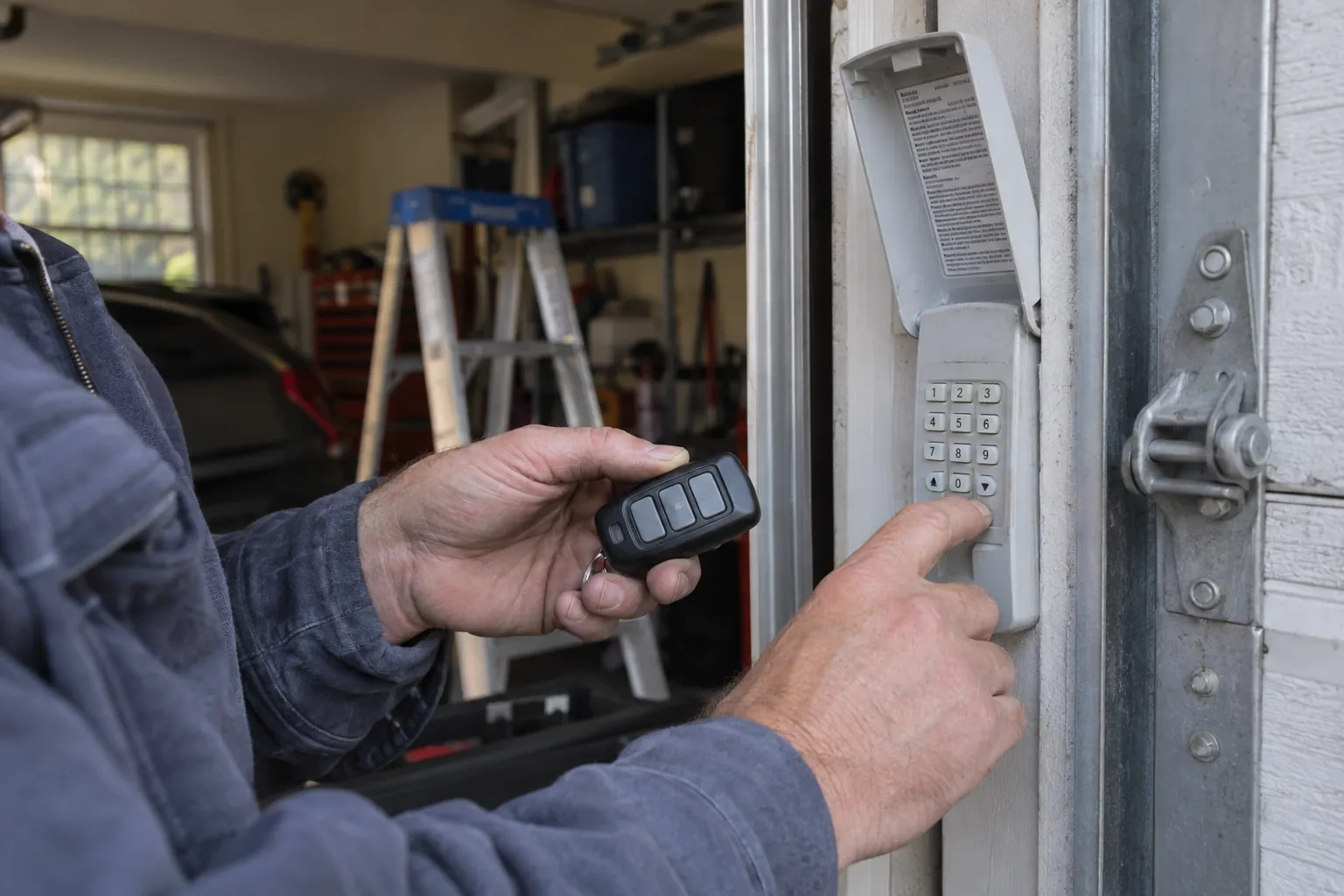
Remotes and wireless keypad
Garage Door Opener Replacement
What affects the quote
Power at the head unit
If a grounded receptacle is already close to the operator, nothing is added. If one must be installed or moved, that electrical work is quoted separately by an electrical contractor.
Top-section reinforcement
Lightweight steel, glazed and wide doors need a strut or operator bracket across the top section before the arm is attached, so the pull is spread across the door rather than concentrated at one point.
Detached or unheated garage
An operator rated for deep cold, a cold-rated lubricant and sometimes a heavier battery are chosen for a garage that sees winter temperatures, and those choices show in the equipment list.
What to have ready
- Is there a bedroom or living space above or beside the garage?
- Is the door steel, wood or aluminum, and is it insulated?
- Is there a grounded receptacle in the ceiling near the opener, or is it running from an extension cord?
Garage Door Opener Replacement: questions
QuestionsIs battery backup worth having?
For many households it is the feature they value most, especially where ice storms and winter outages are part of life. A backup battery inside or beside the head unit runs the door for a number of cycles when the power is off, so you can get the car out or put it away without heaving the door up by hand in the dark. The head unit chirps or lights an indicator when the battery needs renewing, which is every few years.
How do I test the safety reversal myself?
Two checks, once a month, each starting with the door fully open. For the first, set a scrap of 2x4 flat on the concrete where the door will land and press the close button; the moment it meets the wood it should climb back to the top. For the second, start the door closing and pass a broom or your arm across the low sensor beam; it should reverse just the same. Any hesitation means a small adjustment is due.
My old photo eyes still work. Can they stay?
Sensors and head unit are made for each other; a board reads its own maker's sensors, often a particular generation of them, so the pair in the box is what goes on the wall and the old ones come down with the old opener. The new pair sits low at each side of the doorway, roughly a hand's width above the concrete, and the technician confirms their indicator lights are steady before the door is tested against the beam.
Related services
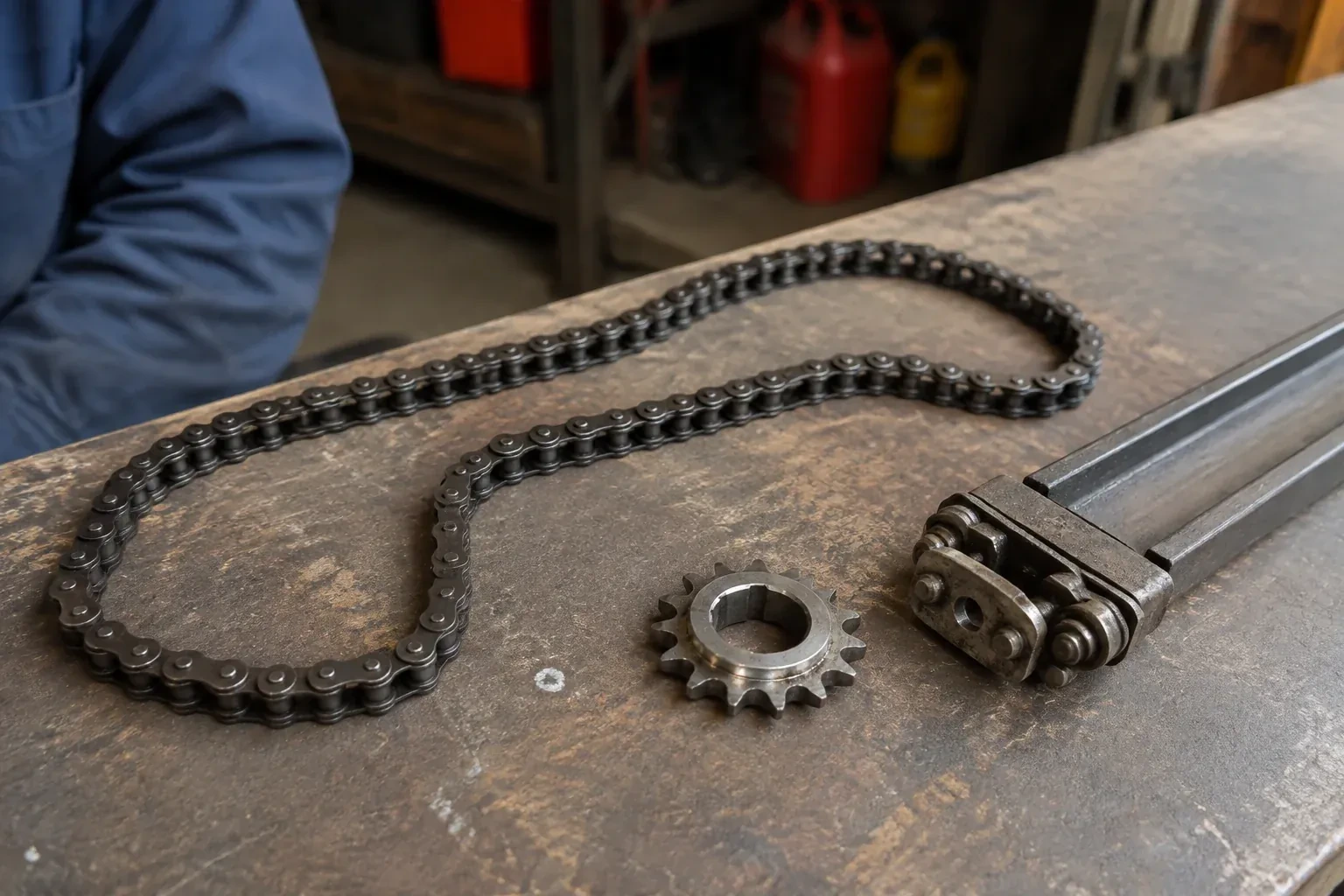
- Chain-Drive Opener RepairThe rail shakes when the door runs.
- Belt-Drive Opener RepairPress the remote and the motor runs its full cycle, lights on, the usual whir, but the door does not move a centimetre.
- Photo-Eye Sensor Alignment or ReplacementThe door will only go down while a finger stays on the wall button; let go and it stops or reverses.