Springs · Leckie Park
Torsion Spring Replacement in Leckie Park
After pulling the red release cord, you tried lifting the door yourself and it would barely leave the floor.
In plain words
Think of the opener as a helper, not a lifter. It is built to push and pull a door that already weighs almost nothing thanks to the springs; asking it to hoist a full-weight door strains the trolley, bends the top section and wears the gear drive. Spring replacement puts the load back where it belongs. After fitting and winding the new spring, the technician balances the door, then reconnects the opener and resets its force and travel settings so it runs within its design limits. Owners usually notice the opener sounds calmer and the door moves more evenly afterwards.
How the visit goesNothing broke outright, but the door has grown heavier each winter, opens more slowly and squeals as it moves. The springs on an older door have lost tension and the coils show pitting, so the system is asking for attention before it fails.
Torsion Spring Replacement
How the visit goes
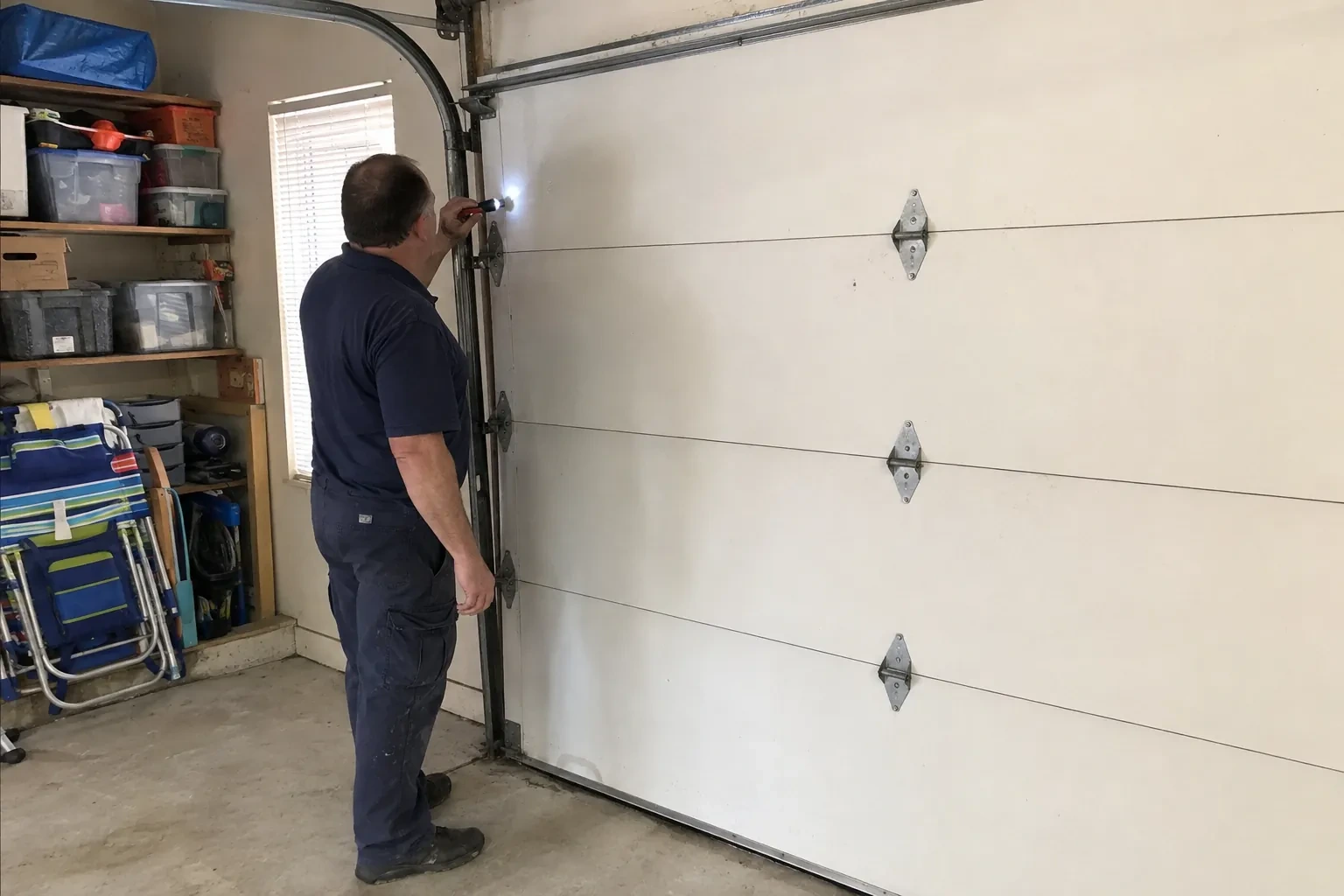
Looking for damage the break left behind
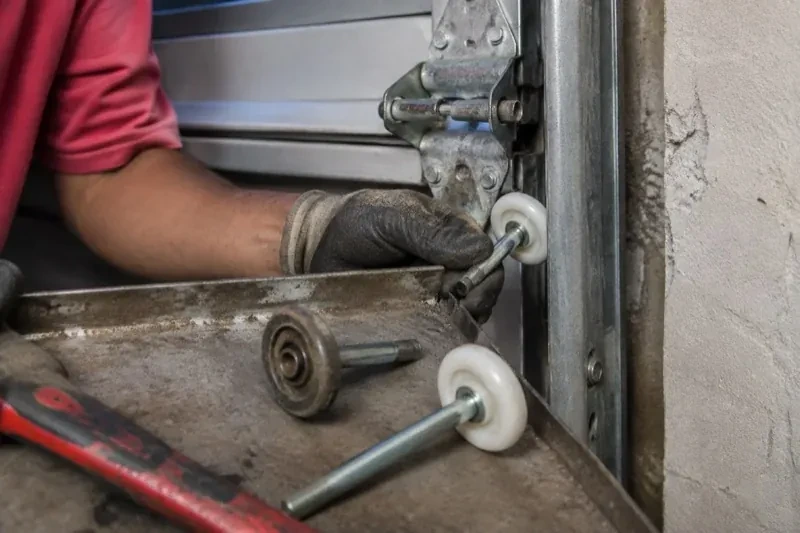
When a spring snaps, the door's full weight suddenly lands on parts that were never meant to carry it. The technician checks the top section for a bow or crease where the opener trolley pulled, looks at the trolley and rail for bending, and inspects hinges and roller stems along the top panel. If the door came down crooked, the rollers and track are examined for a jump or a dent. Catching these effects before the new spring goes in means the balanced door runs on straight hardware rather than dragging a distorted section through the tracks.
Setting the cables and drums
A balanced door depends on both cables pulling equally, so drum work gets careful attention. Each lift cable is wound into the grooves of its drum with the loop secured on the drum pin, and the drums are slid firmly against the end bearing plates. The technician rotates the shaft to take up slack, then sets tension so both cables are equally taut with the door fully closed; a level across the shaft confirms it is sitting true. Drum set screws are tightened to the shaft in this position. Even cable tension keeps the door square in its tracks through every part of its travel.
Signs worth noticing going forward
A healthy spring system is quiet and even, so changes stand out. Listen for a new grinding or popping sound as the door moves, watch that both sides of the door rise together, and look at the cables for fraying or a loop that has left the drum groove. Rust streaks below the shaft, a door that takes noticeably more effort by hand, or an opener that starts to strain are all early indicators that something in the balance system wants attention. Catching these early keeps repairs small and lets the household plan a visit rather than face a stuck door.
Torsion Spring Replacement
In the van
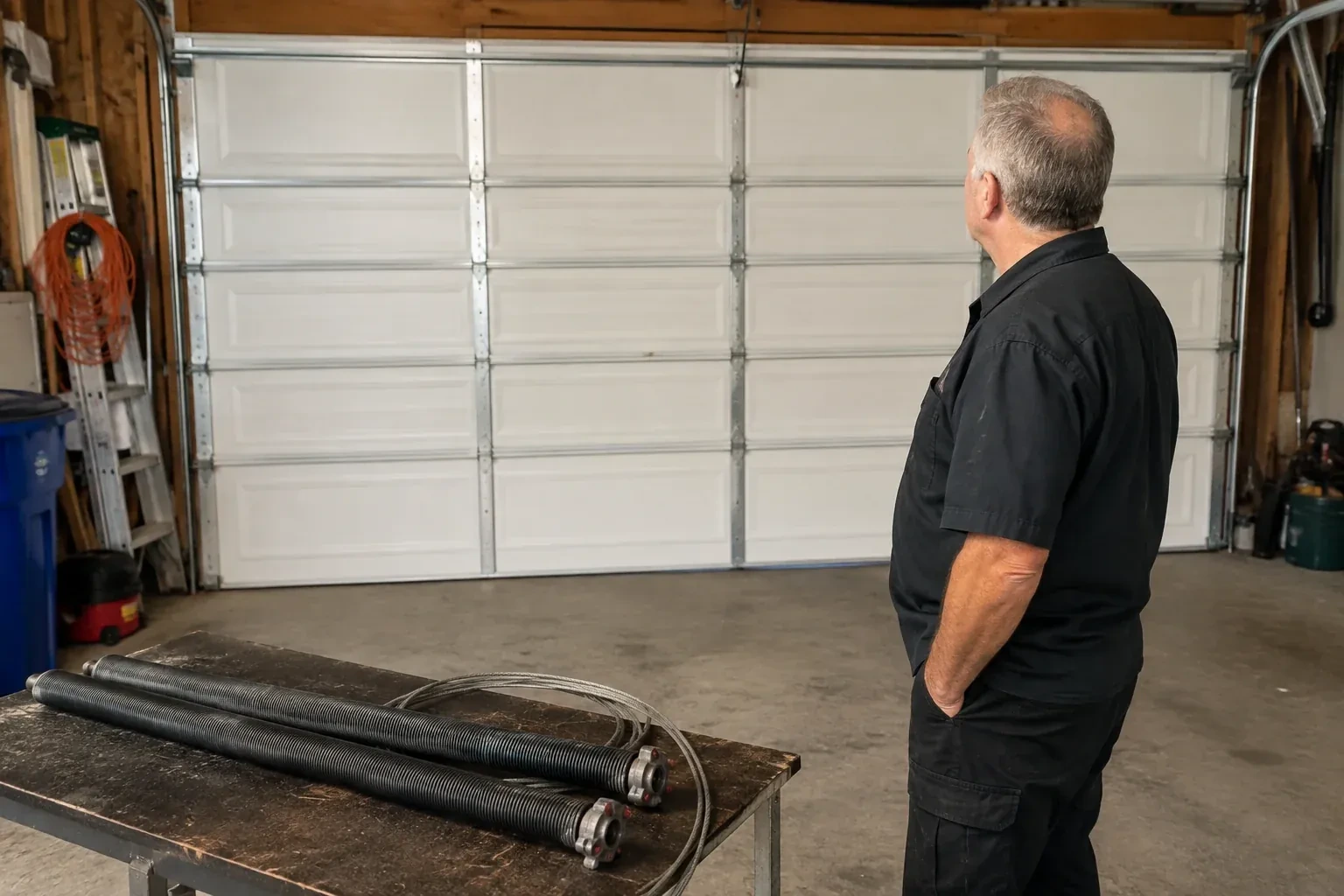
Torsion springs, oil-tempered or galvanized
Torsion shaft and coupler
Lift cables
Cable drums
Wire gauge and tape measure
Torsion Spring Replacement
What affects the quote
Age of the door and matching hardware
Older doors sometimes carry shaft diameters, bearing plates or drum patterns that are no longer common. Sourcing compatible hardware or adapting the mounting adds to the scope for these doors.
Damage from the break
If the opener was run against a broken spring, the top section may be bowed, the trolley bent or a hinge strained. Correcting these so the balanced door runs on straight hardware adds to the scope.
Oversize or non-standard doors
Very wide doors, tall doors, carriage-house doors with heavy overlays and light-commercial doors may need duplex springs, multiple springs or larger drums, which changes both the hardware and the method.
What to have ready
- Are the cables on either side still tight, or hanging loose?
- Can you send a photo of the spring area and the opener?
- Can you see a gap in the spring above the door?
Torsion Spring Replacement: questions
QuestionsWhat is the difference between torsion and extension springs?
Torsion springs mount on a shaft above the door and twist to store energy, lifting the door through cables and drums. Extension springs run alongside the horizontal tracks and stretch as the door closes, pulling it up through pulleys. Torsion systems tend to lift more evenly, take up less space beside the tracks and are the standard on most modern doors. Both are professional service items because of the energy they hold.
What other parts are often replaced with the spring?
The shaft is free during a spring change, which makes it the natural time to renew the centre bearing and end bearings if they grind or wobble. Lift cables that show fraying or rust at the bottom brackets are replaced so the new spring pulls on sound steel, and cracked or worn drums are swapped. On older doors, a corroded centre bracket or loose lag bolts may also be addressed. Each item is shown and explained before it is added.
Will the new spring look the same as the old one?
Not necessarily, and that is fine. The paint colour on the winding cone or coil is a code that identifies wire size and wind direction, and different suppliers use their own schemes, so a matched replacement can carry a different colour than the spring it replaces. What matters is that the wire size, diameter, length and wind direction suit the door's weight and height, which is confirmed by the balance test.
Related services
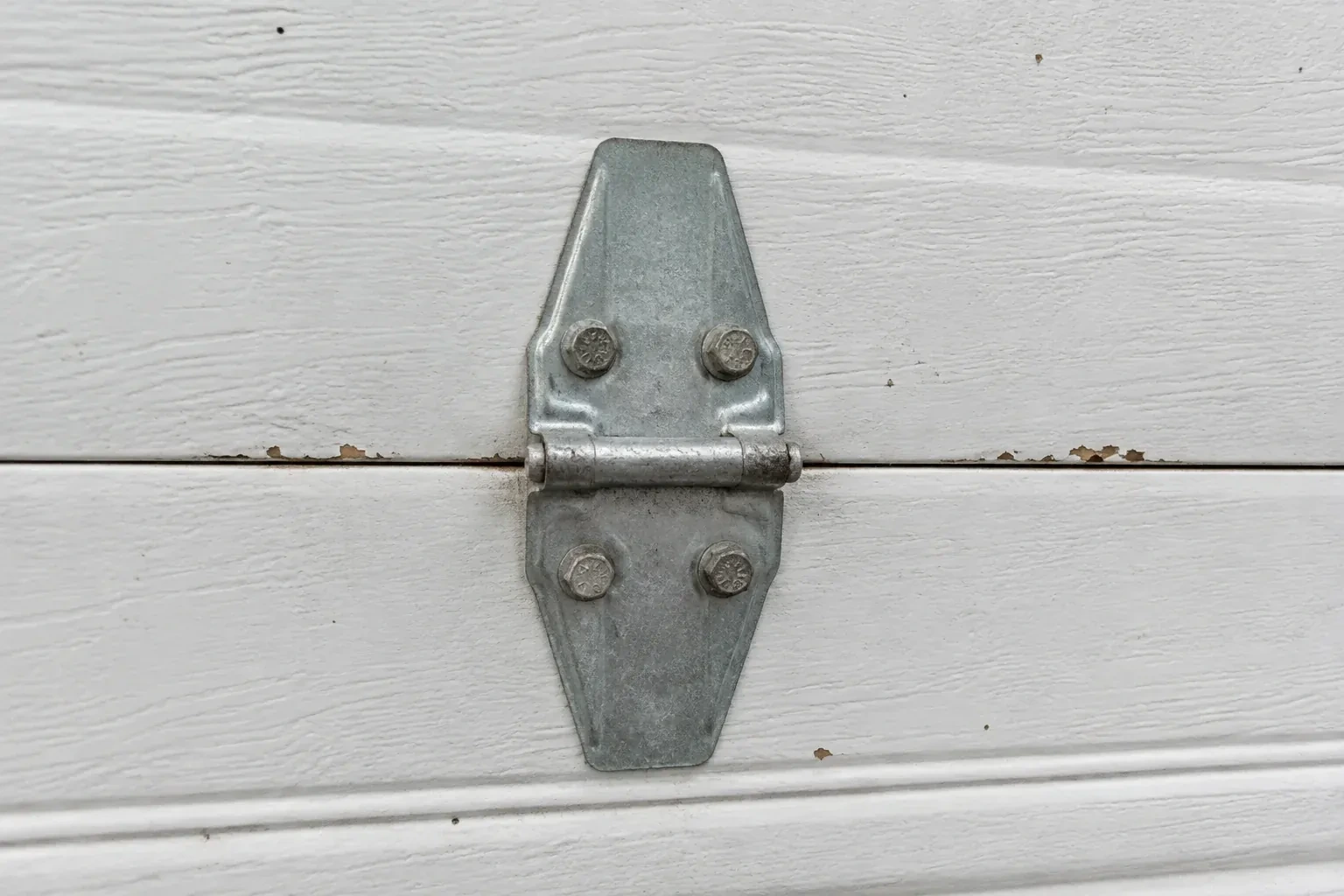
- Garage Door Hinge ReplacementPressing a hand against one of the middle hinges makes it rock on the panel.
- Garage Door Track Repair or ReplacementThe horizontal rail toward the back of the garage sags noticeably.
- Garage Door Cable ReplacementYour older door has springs along the tracks, and one cable has slipped off its pulley and dangles slack.