New Doors · King's Forest
Commercial Sectional Door Repair in King's Forest
The door reaches the floor, then reverses before staying closed.
In plain words
For a facility with several sectional doors, the repair visit can separate one isolated failure from wear shared across similar openings. Door identification, cycle demand and service history help explain why one bay developed loose hinges, tired rollers or spring imbalance first. The affected opening receives the defined repair, while comparable components on adjacent doors can be visually noted for planning. A clear service record then identifies what changed, which settings were tested and what routine observations facility staff can continue between visits.
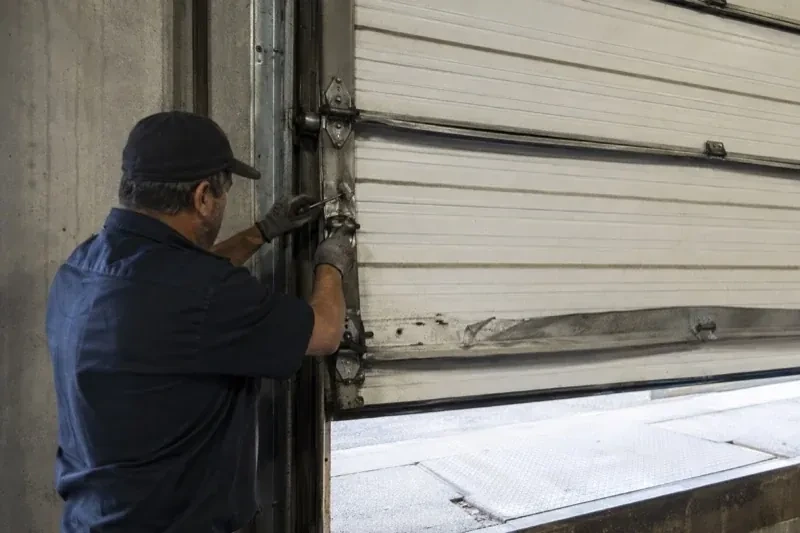
How the visit goesA forklift clipped the bottom panel while backing through the bay. The section is creased near an end stile, the lower roller rubs the track, and daylight now shows along one corner when the door closes.
Commercial Sectional Door Repair
How the visit goes
Reading an uneven door
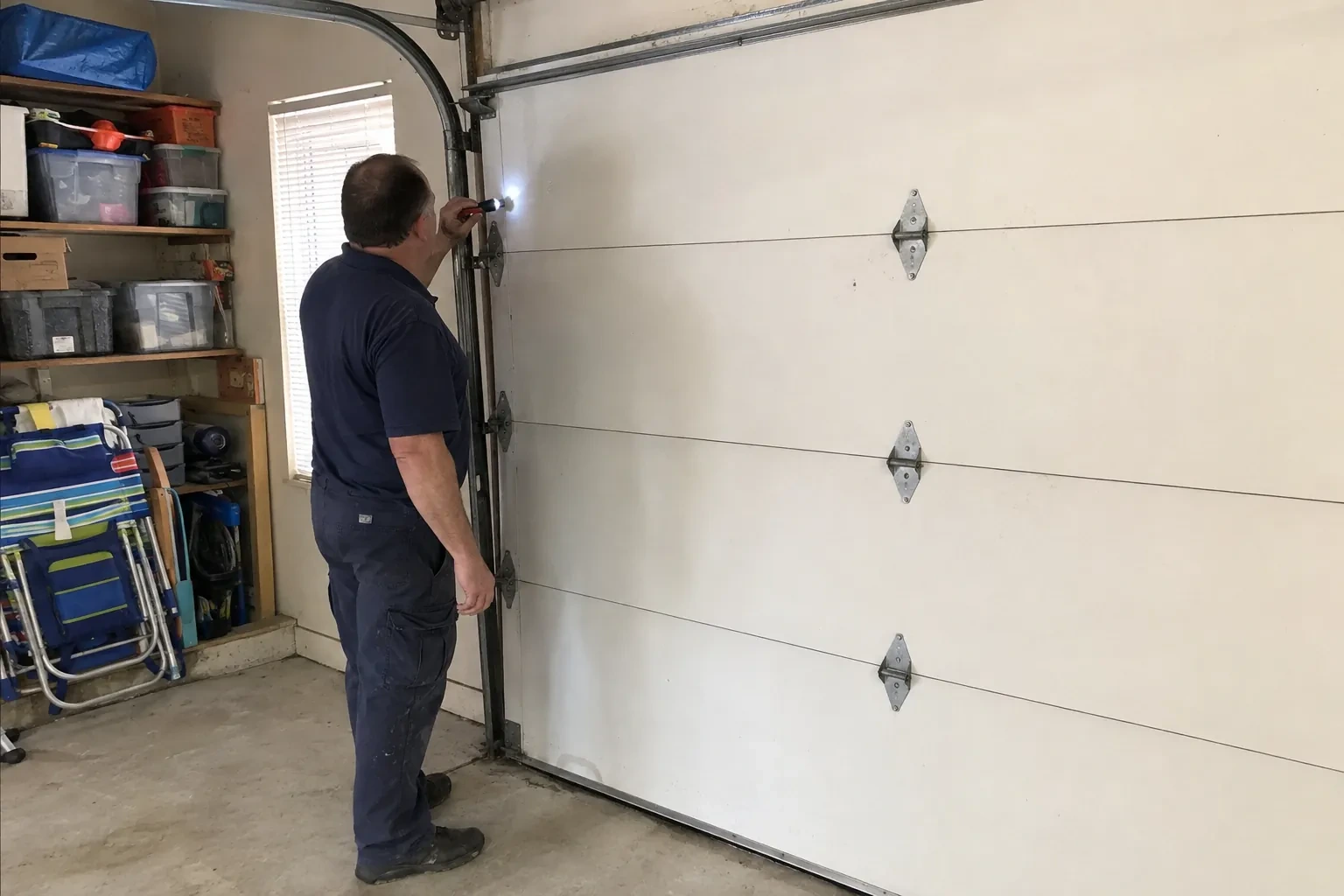
A crooked bottom edge leads to a side-by-side comparison. Cable condition and length, drum grooves, shaft position, bearing movement and bottom fixtures are viewed together. The technician notes whether one cable is slack, crossed or frayed and whether a roller has left its normal track position. Measurements at the tracks show if the guides remain parallel and plumb. The door is then secured so its weight cannot deepen the imbalance during inspection. These findings reveal whether the repair belongs in the lifting system, track alignment or impact-damaged hardware.
Re-establishing the weather seal
A damaged bottom seal is removed from its retainer, and the retainer is straightened or replaced when impact has distorted it. The new seal is sized for the door and floor condition, then fed evenly so it reaches both corners without stretching. Side and header weatherstrip are positioned for continuous contact while leaving the door free to move. If an uneven landing caused the original gap, cable level or track position is corrected first. The final fit is viewed from both sides with the door closed and checked again after cycling.
Level movement through the opening
After cable, spring or track work, the door should rise with its bottom edge level and move without a side lag. Facility staff can watch the first few routine cycles from a clear position and note whether both cables remain neatly seated on their drums. A new tilt, rubbing sound or loose strand is useful information to report before the opening sees heavier traffic. Keeping pallets and vehicles outside the marked travel zone also protects the restored alignment and gives operators a clear view of the complete door path.
Commercial Sectional Door Repair
In the van
Vertical and horizontal track
Torsion springs
Photoelectric sensors and sensing edges
Commercial door sections
Track brackets and back hangs
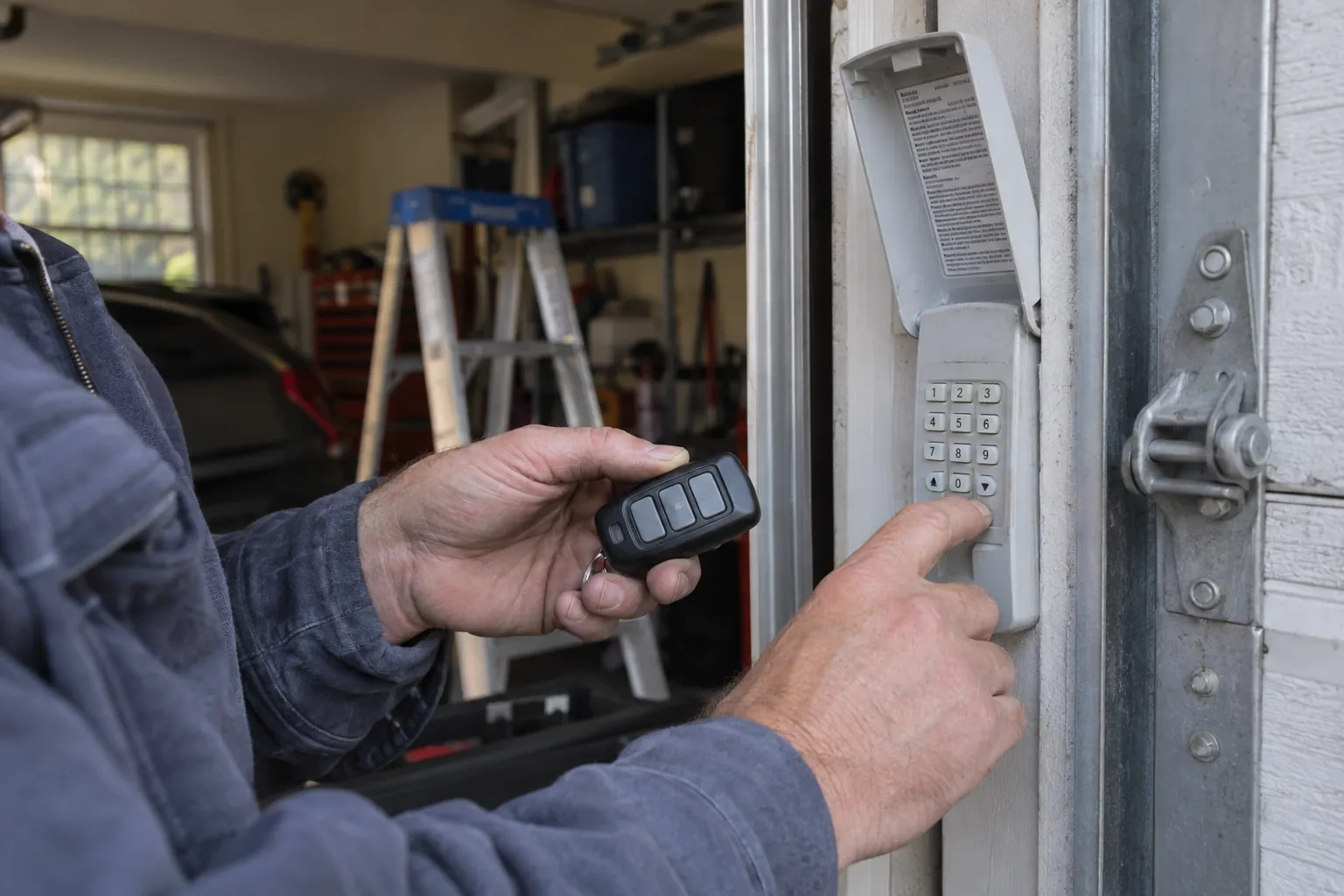
Commercial Sectional Door Repair
What affects the quote
Position of the stopped door
A door resting closed, hanging partly open or displaced from its tracks requires a different stabilization plan before repair work and component removal can begin.
Door size and moving weight
Opening dimensions, panel construction, reinforcement and overall door weight determine component ratings, handling methods and how much support is required during the repair.
Documentation or rated-assembly needs
Door labels, fire-safety records, site procedures and required test documentation can add coordination and component-verification steps to work on a regulated closure.
What to have ready
- Is the door identified as part of a rated closure?
- Do you have the model, serial number and service record?
- Which controls or sensors show unusual behaviour?
Commercial Sectional Door Repair: questions
QuestionsWhat information helps identify replacement parts?
A clear photo of the interior label, model and serial details, opening width and height, panel thickness and the affected component are useful. For springs or cables, door weight and lift configuration also matter. Photos showing the entire inside of the opening help reveal standard, high-lift or vertical track. Existing service records can confirm earlier component changes.
How are springs and cables handled during repair?
The technician first controls the door's weight and position with suitable supports or clamps. Stored spring energy is then managed with proper winding tools and a defined sequence before connected parts are loosened. Cables, drums and springs are matched to the door and lift geometry, installed with the system secured, and checked for level tension through controlled movement.
How should a repaired door be lubricated?
Use the product and interval specified by the door manufacturer. Hinges, roller bearings, shaft bearings and springs may have defined lubrication points, while track generally benefits from being clean rather than coated with material that holds grit. High-use openings may need a different schedule. The service record can note what was applied and where for consistent future care.
Related services
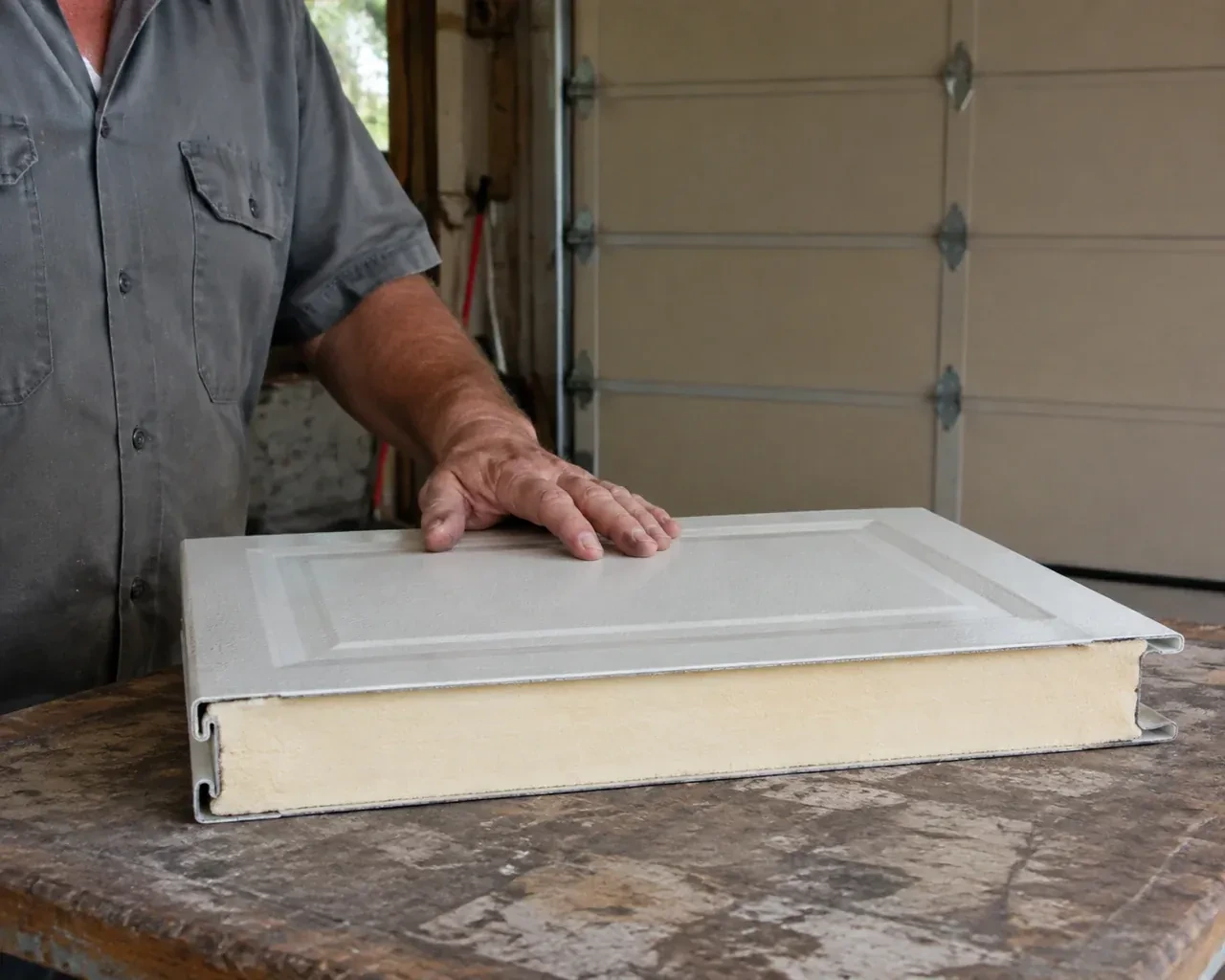
- Insulated Steel Garage Door InstallationDaylight appears beside the closed door and powdery snow collects just inside after windy weather.
- Wind-Rated Garage Door ReplacementThe current double door shudders when pressure changes outside, and daylight appears briefly along one edge.
- Carriage-House Garage Door InstallationYour garage door works, yet its broad plain panels feel disconnected from the brick, gables and entry details around them.