Openers · King's Forest
Belt-Drive Opener Repair in King's Forest
Press the remote and the motor runs its full cycle, lights on, the usual whir, but the door does not move a centimetre.
In plain words
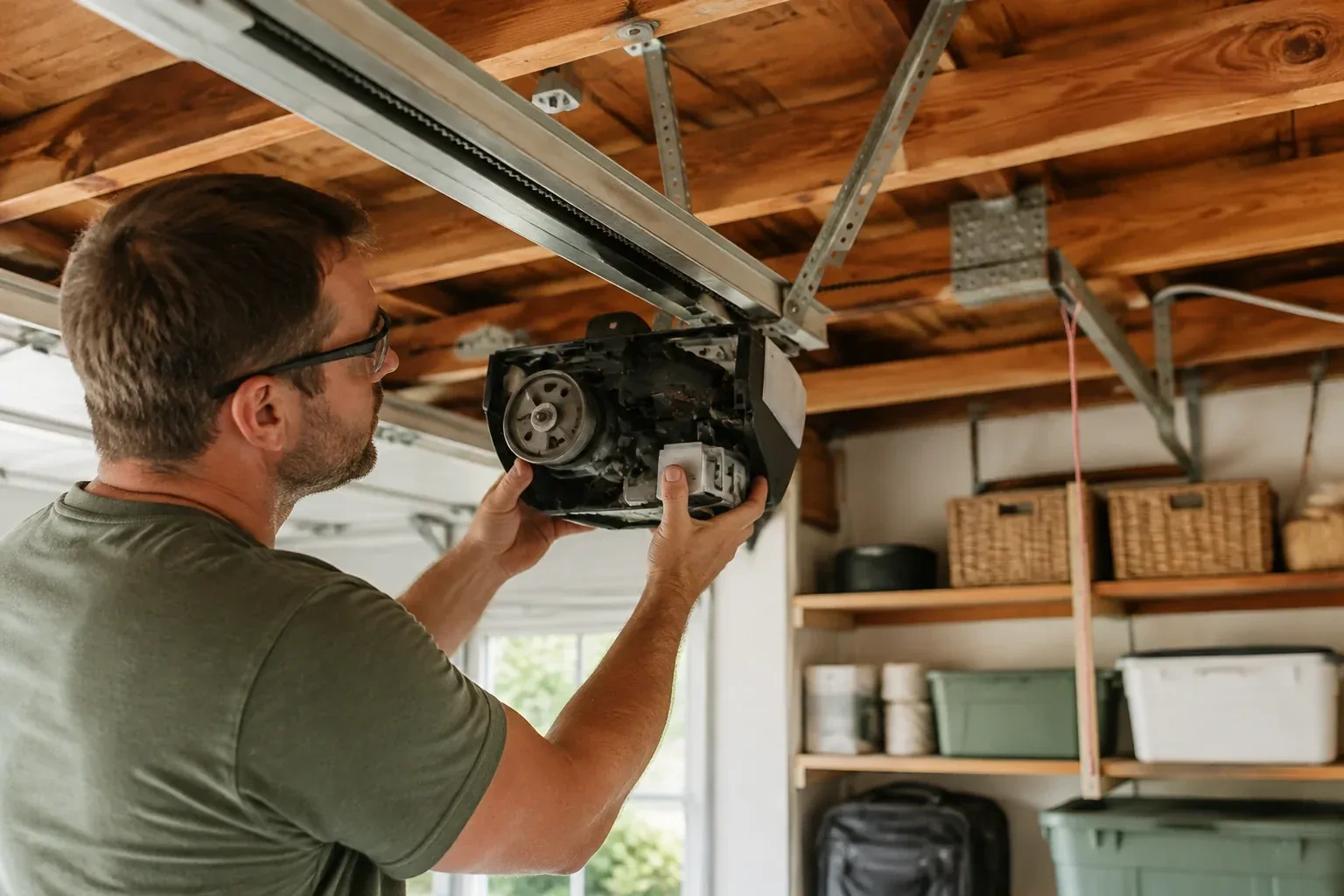
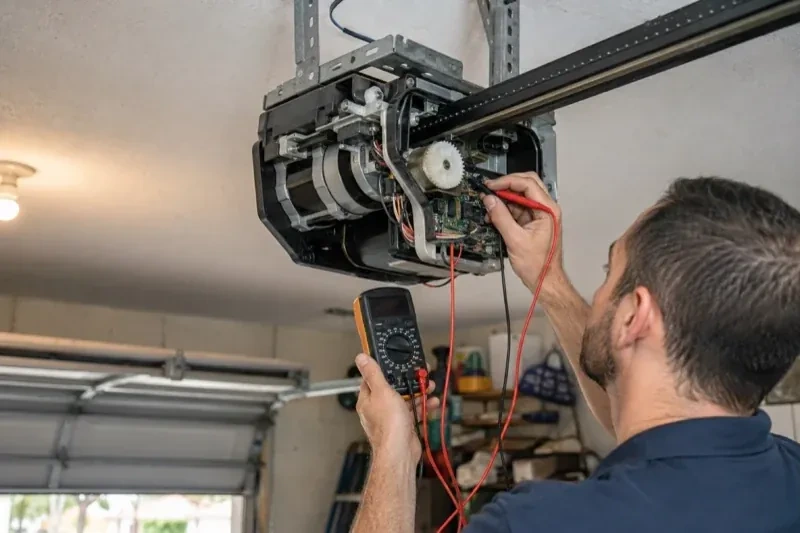
Belt-drive opener repair fixes the part of a belt-driven operator that has failed. The drive train is simple: a reinforced rubber belt runs from a sprocket on the motor head, along the rail, around an idler pulley at the far end and back, pulling a trolley that is linked to the door by an arm. When the belt stretches, cracks, sheds teeth or loses its clip, or the trolley, sprocket or pulley wears, the door stalls, clatters or stops short. The technician tests the door's balance, finds the worn piece, replaces or adjusts it, brings the motor and trolley back into step and re-runs the safety tests.
How the visit goesSomeone tightened the belt last month to stop the sag. Now the opener sounds like a chain drive, the motor labours on the way up, and the whole rail vibrates under the ceiling.
Belt-Drive Opener Repair
How the visit goes
How tight is tight enough
Belt tension is measured, not guessed. At the inner trolley a threaded shaft carries a coil spring and a square nut; turning the nut draws the belt tighter and compresses the spring, and the maker states the spring length that means the belt is right, roughly the width of a thumb. The technician checks that length, presses the belt at mid-span for a little give, and watches it run. A belt hanging below the rail is loose and will skip teeth. A belt pulled drum-tight makes sprocket noise, loads the motor bearings and wears the idler pulley. Both are corrected on the spot, and an adjuster wound to its end tells the technician the belt has stretched past saving.
Putting motor and trolley back in step
Any time the belt has been off the sprocket, the operator's sense of where the door is can drift from where the trolley actually sits, so this step is done before the door is reconnected. The technician lifts the belt clear of the sprocket, runs the operator until the sprocket turns to its closed position and stops on its own, then slides the trolley to the closed end of the rail and refits the belt. Motor and trolley now agree. On operators with a mechanical limit assembly, the middle contact is adjusted instead. Without this step, the door stops short at one end no matter how the travel limits are turned.
A record of what was done
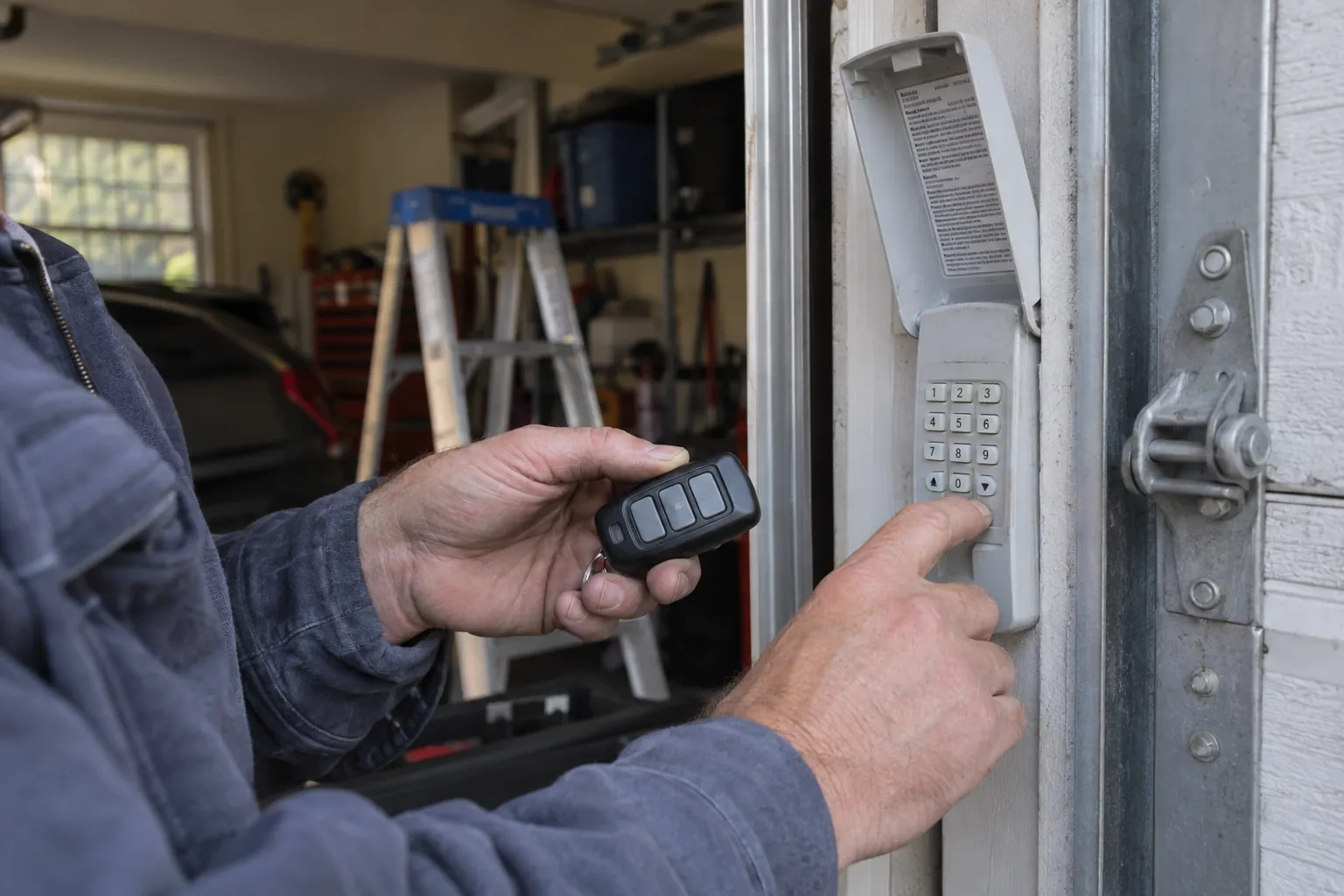
Before leaving, the technician writes down the operator's model and serial number, which belt or parts went in, the tension setting used and the date, and hangs the note with the manual near the wall control. You are shown what was replaced and why, and the old parts are yours to keep or are taken away. Keep the note; a belt has a service life measured in years and cycles, and knowing when this one went in tells the next technician where to look. Any settings the operator lost during the work, such as remotes or a keypad code, have been re-taught and tested with you.
Belt-Drive Opener Repair
In the van
Reinforced drive belt with clip
Inner and outer trolley
Belt tension spring and square nut
Idler pulley and bearing
2x4 offcut for the reversal test
Belt-Drive Opener Repair
What affects the quote
A second operator on the same property
Where a double garage has two belt drives, or a workshop has its own, both can be looked at in one trip, and the quote shows the two repairs on a single visit.
Detached or unheated garage
A cold garage still gets the belt tensioned to the maker's specified measurement, but calls for a cold-rated lubricant on the door hardware, a small item that a winter quote names.
Rail straightening or re-hanging
A bent rail, a sagging hanger or a misaligned rail joint that has been fraying the belt is corrected as part of the repair so the new belt runs clean, and the labour appears on the quote.
What to have ready
- What make and model is printed on the motor head, and roughly how old is it?
- Is anything hung from the ceiling or rail, such as a bicycle hook or storage rack?
- Can you send a photograph along the rail showing the belt, and one of the label?
Belt-Drive Opener Repair: questions
QuestionsWhat are the plastic shavings under the motor head?
They are from the drive gear inside the head unit, which is stripping its teeth. On a belt drive the gear turns the sprocket that moves the belt, so a stripped gear leaves the motor humming and the belt still. The gear-and-sprocket kit is replaced as a set, the shaft's end play is checked, and the belt is refitted and phased.
How long does a belt-drive repair take?
A tension adjustment with the safety tests is a short visit. Replacing the belt, trolley or idler pulley, then phasing the motor, relearning limits and running the reversal tests, is usually an hour or two. A gear-and-sprocket kit at the motor head takes longer because the head unit is opened. If the balance test turns up spring work, that is agreed as a separate job with its own time.
Can the belt just be tightened, or does it need replacing?
Tightening is the first thing tried. Tension is set at the inner trolley by a square nut that compresses a spring to the length the maker specifies. If the belt reaches that setting and runs without sprocket noise, it stays. If the adjuster is wound to its end and the belt still sags, or the rubber is cracked, glazed or missing teeth, a new belt is the right repair.
Related services
- Chain-Drive Opener RepairThe rail shakes when the door runs.
- Garage Door Opener ReplacementPress the button and the motor hums, but the door stays exactly where it is.
- Photo-Eye Sensor Alignment or ReplacementThe door will only go down while a finger stays on the wall button; let go and it stops or reverses.